 ProMapRanker
Best Action1 Alternatives in 2026


Ease of use across a mixed fleet · Pricing starts at: $1.50 per device per month
Key takeaways
- We compared 9 live options using official feature pages, pricing pages, app store listings, privacy policies, and public reviews, not hands-on testing claims.
- The cheapest option is not always the best value once renewal prices, limits, and add-ons are counted.
- Start with the job you need done, then shortlist two options and test them on a trial or free plan before paying.
- Check the official pricing page at signup, because prices and limits change and intro offers expire.
Quick comparison
| Pick | Great for | Pricing starts at | Free tier | |
|---|---|---|---|---|
| NinjaOne | Ease of use across a mixed fleet | $1.50 per device per month | Free trial | Visit |
 Atera | Per-technician pricing for growing teams | $129 per technician per month | Free trial | Visit |
 Automox | Cloud patching without a local server | $1 per endpoint per month | Free trial | Visit |
 ManageEngine Patch Manager Plus | Dedicated patching on a budget | See website | Yes | Visit |
 PDQ Connect | Windows deployment and inventory | $12 per device per year | Free trial | Visit |
 Lansweeper | Inventory-led patching decisions | See website | Free trial | Visit |
 Syxsense | Security-led patching and remediation | See website | Free trial | Visit |
 Heimdal | Security-first patching for mid-market teams | See website | Free trial | Visit |
 Syncro | Small providers wanting RMM plus billing | $129 per user per month | Free trial | Visit |
The best action1 alternatives
Action1 focuses on cloud patching and endpoint remediation, so these alternatives cover the same ground in different ways: full remote monitoring, per-technician pricing, Windows-focused deployment, or security-led patching.
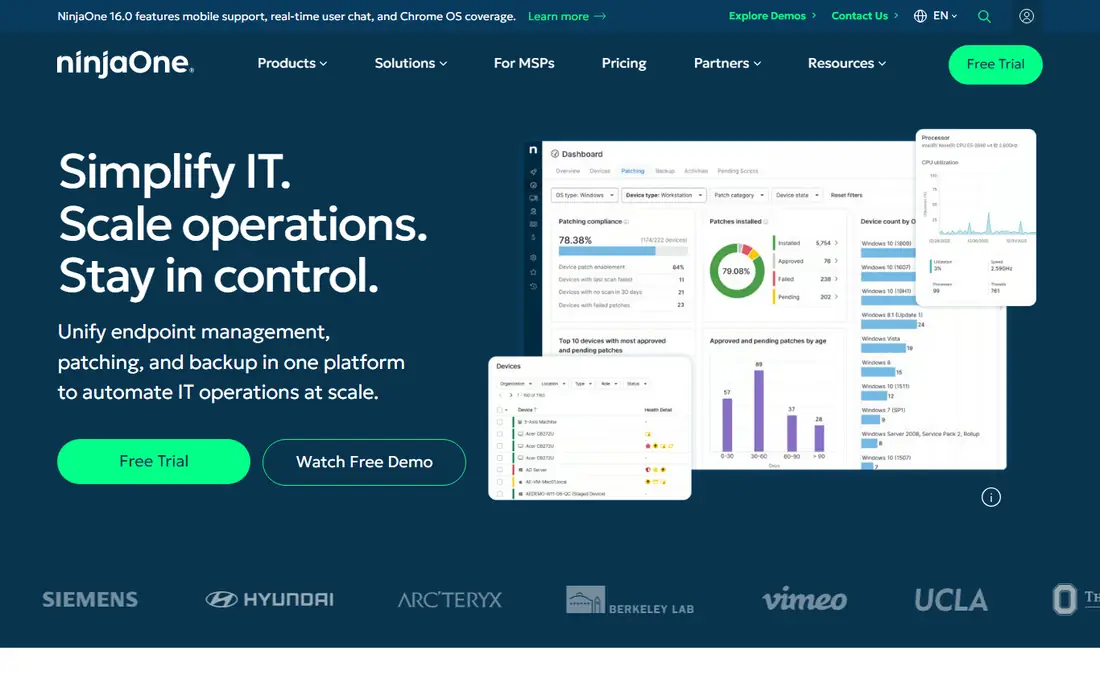
For an IT team that wants a clear console for patching and monitoring, NinjaOne is a strong place to start. In practice, its console keeps patch status, device health, and automation in one readable view. That strength matters because it answers the main reason people search for this kind of tool: they want a result they can trust without a long setup or a confusing dashboard. We also checked how the product presents its pricing and limits, and the picture is consistent with the field lines above. On the other side, the final price depends on volume and quote, so get it in writing before budgeting. That catch does not rule the product out, but it should shape your trial: test the exact feature you need, confirm the price for your size or household, and read the renewal or upgrade terms before you pay. If that test goes well, NinjaOne is a sensible pick for ease of use across a mixed fleet.
- Clear console
- Patching, backup, and automation
- Windows, Mac, and Linux
- Pricing is quote based at final quote
- PSA is separate
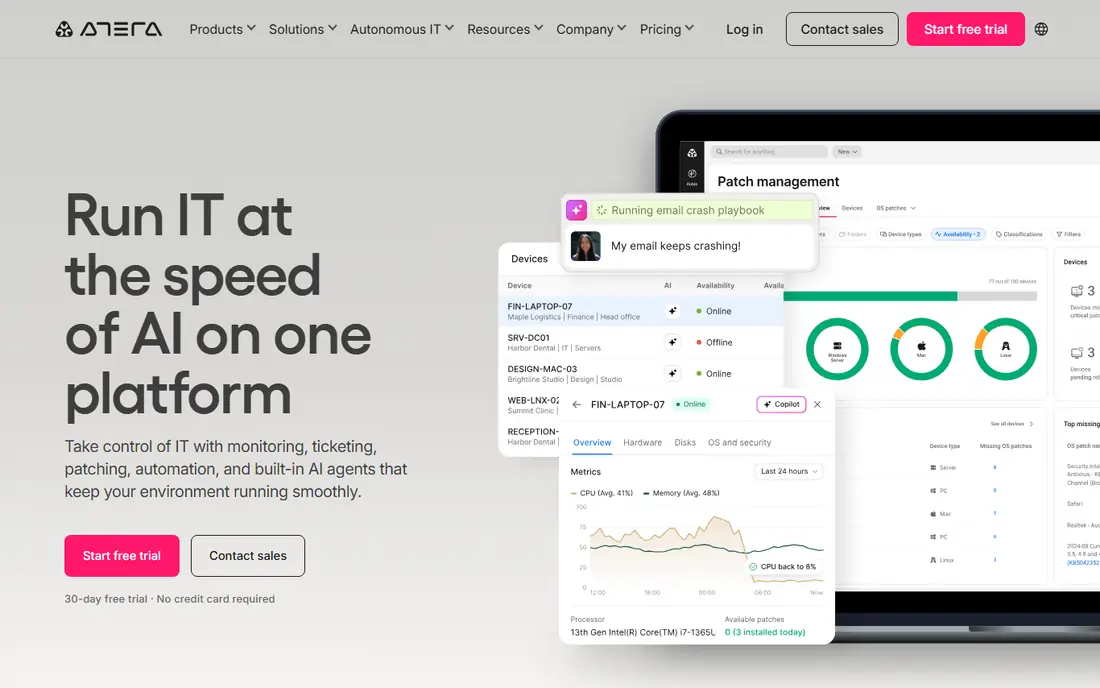
Looking at Atera through the lens of a small team managing many endpoints per technician, the fit is clear. In practice, its per-technician pricing wins when each technician covers dozens of devices. That strength matters because it answers the main reason people search for this kind of tool: they want a result they can trust without a long setup or a confusing dashboard. We also checked how the product presents its pricing and limits, and the picture is consistent with the field lines above. On the other side, a one-person team with few devices may pay more than on a per-device plan. That catch does not rule the product out, but it should shape your trial: test the exact feature you need, confirm the price for your size or household, and read the renewal or upgrade terms before you pay. If that test goes well, Atera is a sensible pick for per-technician pricing for growing teams.
- Unlimited endpoints per technician
- Ticketing included
- Remote access
- Per-technician cost hurts tiny teams
- Patch catalog depth varies
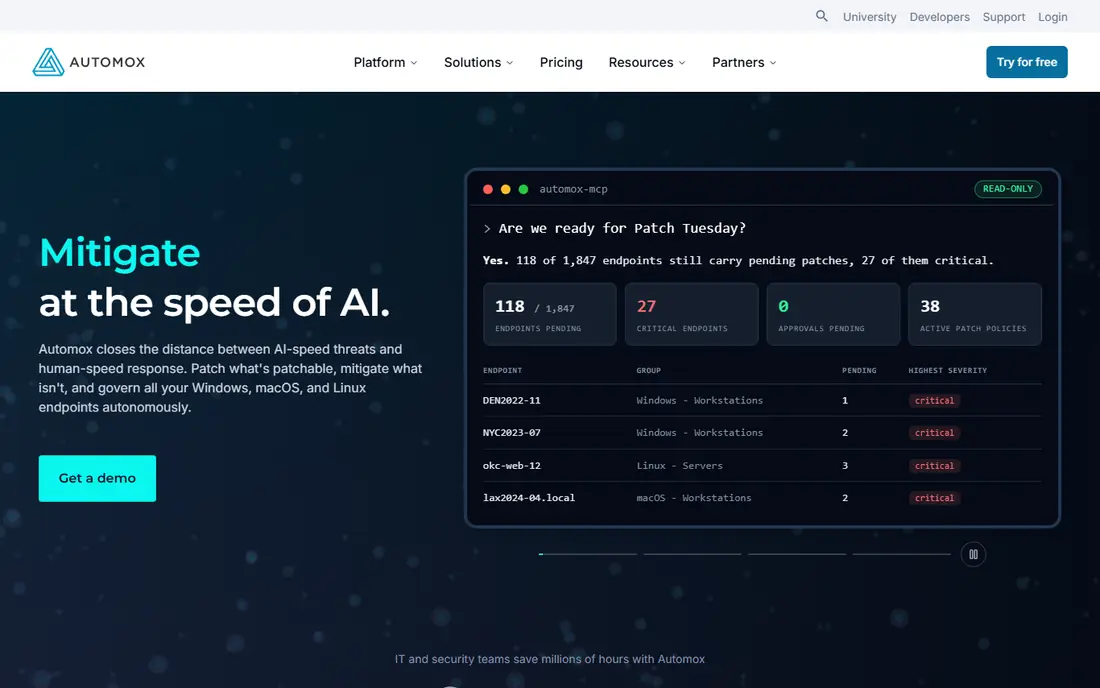
If you start with you are a distributed team patching remote Windows, Mac, and Linux devices, Automox deserves a close look. In practice, its cloud design suits remote fleets with no local server to maintain. That strength matters because it answers the main reason people search for this kind of tool: they want a result they can trust without a long setup or a confusing dashboard. We also checked how the product presents its pricing and limits, and the picture is consistent with the field lines above. On the other side, the lowest price assumes an annual term, so check monthly pricing if you need flexibility. That catch does not rule the product out, but it should shape your trial: test the exact feature you need, confirm the price for your size or household, and read the renewal or upgrade terms before you pay. If that test goes well, Automox is a sensible pick for cloud patching without a local server.
- Cloud-native patching
- Cross-platform support
- Scripted Worklets
- Entry price assumes annual commitment
- Reporting depth varies by plan
On the shortlist, ManageEngine Patch Manager Plus suits a budget-conscious IT team that mainly needs patching well. In practice, its dedicated patch focus avoids paying for a full monitoring suite you may not use. That strength matters because it answers the main reason people search for this kind of tool: they want a result they can trust without a long setup or a confusing dashboard. We also checked how the product presents its pricing and limits, and the picture is consistent with the field lines above. On the other side, the interface is more functional than polished, which matters if admins dislike dated consoles. That catch does not rule the product out, but it should shape your trial: test the exact feature you need, confirm the price for your size or household, and read the renewal or upgrade terms before you pay. If that test goes well, ManageEngine Patch Manager Plus is a sensible pick for dedicated patching on a budget.
- Dedicated patch focus
- Free edition for small environments
- Third-party patching
- Interface feels dated to some admins
- Enterprise features are tiered
For a first look, PDQ Connect for a Windows-heavy team deploying apps and patches fast, the case is practical. In practice, its package library makes common Windows deployments quick to set up. That strength matters because it answers the main reason people search for this kind of tool: they want a result they can trust without a long setup or a confusing dashboard. We also checked how the product presents its pricing and limits, and the picture is consistent with the field lines above. On the other side, Mac and Linux fleets will need a second tool, so it is not a full cross-platform answer. That catch does not rule the product out, but it should shape your trial: test the exact feature you need, confirm the price for your size or household, and read the renewal or upgrade terms before you pay. If that test goes well, PDQ Connect is a sensible pick for windows deployment and inventory.
- Fast Windows deployment
- Package library
- Simple inventory
- Windows focus
- Mac and Linux coverage is limited
Turning to Lansweeper, the audience is an IT team that wants patching tied to accurate inventory. In practice, its inventory depth helps you patch the right devices first, not just the visible ones. That strength matters because it answers the main reason people search for this kind of tool: they want a result they can trust without a long setup or a confusing dashboard. We also checked how the product presents its pricing and limits, and the picture is consistent with the field lines above. On the other side, the quote process and setup time suit teams that value inventory over a quick trial. That catch does not rule the product out, but it should shape your trial: test the exact feature you need, confirm the price for your size or household, and read the renewal or upgrade terms before you pay. If that test goes well, Lansweeper is a sensible pick for inventory-led patching decisions.
- Deep device inventory
- Network discovery
- Patch data linked to assets
- Pricing is quote based
- Setup rewards careful inventory work
Next on our list, Syxsense to a security-minded team linking vulnerabilities to patches, the trade-offs are plain. In practice, its workflow links a vulnerability to the patch that closes it, which helps security reporting. That strength matters because it answers the main reason people search for this kind of tool: they want a result they can trust without a long setup or a confusing dashboard. We also checked how the product presents its pricing and limits, and the picture is consistent with the field lines above. On the other side, quote pricing and a smaller community mean you should test support during the trial. That catch does not rule the product out, but it should shape your trial: test the exact feature you need, confirm the price for your size or household, and read the renewal or upgrade terms before you pay. If that test goes well, Syxsense is a sensible pick for security-led patching and remediation.
- Vulnerability and patch workflow
- Automation
- Endpoint controls
- Quote-based pricing
- Smaller community than large RMM tools
For a different angle, Heimdal as a choice for a mid-market team that wants patching inside a security suite, it holds up well. In practice, its broad third-party catalog covers many apps beyond operating system updates. That strength matters because it answers the main reason people search for this kind of tool: they want a result they can trust without a long setup or a confusing dashboard. We also checked how the product presents its pricing and limits, and the picture is consistent with the field lines above. On the other side, modular pricing needs a careful quote, because adding modules raises the bill. That catch does not rule the product out, but it should shape your trial: test the exact feature you need, confirm the price for your size or household, and read the renewal or upgrade terms before you pay. If that test goes well, Heimdal is a sensible pick for security-first patching for mid-market teams.
- Patching plus privilege and threat tools
- Broad third-party catalog
- Modular pricing can grow
- Setup needs planning
Closing this set, Syncro rounds out the list for a small provider that wants service tickets and billing together. In practice, its combined RMM, ticketing, and billing saves juggling three separate tools. That strength matters because it answers the main reason people search for this kind of tool: they want a result they can trust without a long setup or a confusing dashboard. We also checked how the product presents its pricing and limits, and the picture is consistent with the field lines above. On the other side, a solo technician with few clients may find per-user pricing steep. That catch does not rule the product out, but it should shape your trial: test the exact feature you need, confirm the price for your size or household, and read the renewal or upgrade terms before you pay. If that test goes well, Syncro is a sensible pick for small providers wanting rmm plus billing.
- RMM plus PSA and billing
- Per-technician pricing
- Scripting
- Per-user cost for tiny teams
- Depth varies by module
How we picked these
We compared official feature pages, pricing pages, app store listings, privacy policies, and public reviews for each product, and we kept only products that exist and work today and truly fit the topic. We did not claim hands-on testing that did not happen, and we used See website where a price could not be verified from the vendor page at the time of writing. We also weighed fit over fame: a well-known name that misses the core job did not make the list, while a smaller option that does the job well did. That approach keeps the list useful for a reader choosing between two or three finalists, rather than a long list of near misses.
How to pick patching software for your fleet size
Start by writing down the one job the tool must do in your first week, then test that job on a trial or free plan. A product that looks good in a demo can still fail on your exact workflow, so the trial is the real test, not the marketing page. Next, price the second year, not just the first month. Intro offers, renewal rates, per-seat billing, and add-ons change the total fast, and a cheaper first term can become the dearer choice by year two. Ask for a written quote when pricing is quote based, and confirm what is included at that price. Finally, check limits that matter to you: message history, device counts, channel lists, stream counts, or data controls. The right pick is usually the one with the fewest surprises after signup, even if it is not the cheapest or the most famous name on the list.
Frequently asked questions
How do I choose between the top two options?
Shortlist two options, run the same task in both during a trial, and pick the one that finishes the task with fewer steps. Price matters, but a tool you avoid using costs more in lost time than a slightly higher monthly fee.
Are free plans enough to start?
A free plan is enough to test the core job, but limits on history, devices, or features usually push regular users to a paid plan. Treat the free plan as a test, and upgrade only when you hit a limit that blocks real work.
Do prices change after the first term?
Yes, many products use intro pricing that rises on renewal, while others keep a flat rate. Check the renewal price on the vendor pricing page before checkout, and set a reminder before the renewal date.
Can I switch later if I pick the wrong one?
In most cases, yes, but switching costs time and sometimes data exports. Export your data early, keep a backup, and avoid long contracts until you are sure the product fits your daily work.
What should I check before paying?
Confirm the official website, the price for your size, the free plan limits, and the cancellation terms. If any of those are unclear, ask support in writing before you pay, so you have a clear record.
Sources
See where you really rank - block by block
ProMapRanker scans Google Maps across a grid of your service area. Simple monthly plans from $19, white-label on every plan.
Start freeKeep reading
 zyte alternatives
Best Zyte Alternatives in 2026
These zyte alternatives cover managed scraping APIs, proxy networks and no code tools for lawful collection from your own or consented sources only in 2026.
Read → zerto alternatives
Best Zerto Alternatives in 2026
Compare the best zerto alternatives for disaster recovery and replication, with recovery targets, cloud options and honest trade-offs for teams in 2026.
Read → zerofox alternatives
Best ZeroFox Alternatives in 2026
We compared 9 zerofox alternatives for brand protection, phishing takedowns, dark web monitoring, and social impersonation, with clear coverage notes.
Read →