 ProMapRanker
Best WebCEO Alternatives in 2026

Key takeaways
- Semrush and Ahrefs are the strongest all-round replacements for agencies and in-house teams.
- SE Ranking offers a strong middle ground for small agencies that need white-label reporting.
- Moz Pro and Mangools suit beginners and small businesses that want simpler SEO tools.
- AccuRanker suits teams that care most about precise rank tracking and client reports.
- Serpstat, Raven Tools, and SpyFu add value options for research, reporting, and competitor checks.
Quick comparison
| Pick | Great for | Pricing starts at | Free tier | |
|---|---|---|---|---|
 Semrush | All-round SEO and marketing | $139 per month | Free trial | Visit |
 Ahrefs | Backlinks and keyword research | $129 per month | No | Visit |
 SE Ranking | Small agencies and white-label reports | See website | Free trial | Visit |
 Moz Pro | Beginners and local SEO | $49 per month | Free trial | Visit |
 Mangools | Small sites and bloggers | $29 per month | Free trial | Visit |
 Serpstat | Value all-in-one SEO | $55 per month | Free trial | Visit |
 Raven Tools | Agency reporting | $79 per month | Free trial | Visit |
 SpyFu | Competitor PPC and SEO research | See website | Free trial | Visit |
 AccuRanker | Precise rank tracking | $249 per month | Free trial | Visit |
The best WebCEO alternatives
WebCEO is an agency-oriented SEO platform with rank tracking, audits, and white-label reporting. The tools below cover that same work with different mixes of research depth, reporting, and price. The right pick depends on whether you need a full suite, a reporting engine, or a focused tracker.
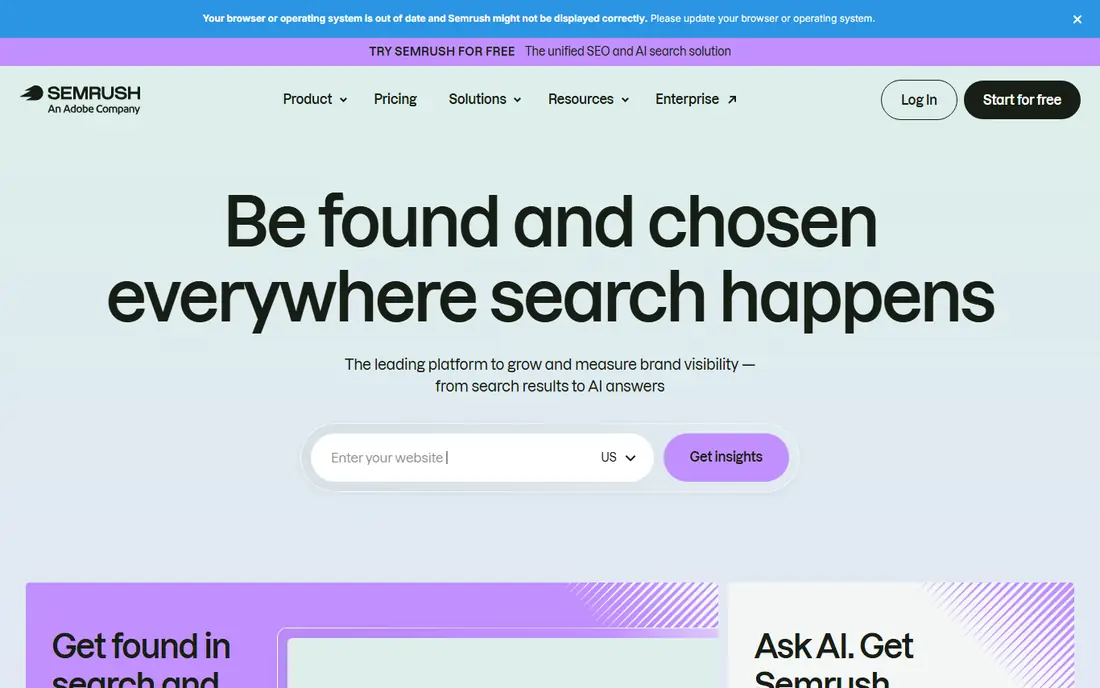
Semrush is the broadest replacement for WebCEO, because it covers rank tracking, audits, keyword research, backlinks, and paid search in one platform. A team that runs SEO alongside PPC and content will find most of its reporting in one place, which reduces tool switching. Its competitor research is also deeper than most rivals, which helps when a client asks why a rival outranks them.
The cost and complexity are the main drawbacks. The Pro plan starts around $139 per month, and the many toolkits can feel busy for a beginner. A small site that only needs tracking and audits will pay for capacity it never uses, while a larger team will use far more of the platform.
For agencies and in-house teams that want one suite, Semrush is a strong top pick. For a solo site owner, a smaller tool may be better value.
- Broad SEO, PPC, and content tools
- Strong competitor research
- Large keyword data
- High entry price
- Interface can overwhelm new users

Ahrefs leads on backlink and keyword data, which makes it a strong choice when link building and competitor research drive the work. Its Site Explorer shows which pages and links support a rival's rankings, and its keyword tools help a team judge difficulty before targeting a term. Rank Tracker adds position monitoring to that research base.
The limits are price and reporting. The Lite plan starts at $129 per month, and white-label client reporting is not a standard strength, so agencies may need extra work to brand reports. There is also no free plan for the paid toolkit, although Webmaster Tools cover verified sites with limited features.
We recommend Ahrefs when research depth matters more than agency reporting polish. When white-label reports are central, SE Ranking or Raven Tools may fit better.
- Large backlink index
- Strong keyword research
- Rank Tracker included on paid plans
- Higher entry price
- No white-label reporting on standard plans

SE Ranking is a strong middle ground between a focused tracker and a large suite. It covers rank tracking, site audits, keyword research, and competitor checks, with reporting options that suit small agencies. White-label reports help an agency present results under its own brand without building reports by hand.
The main caution is pricing change. SE Ranking revised its plans during 2026, so older guides quote prices that no longer apply. Check the current vendor page for the plan that matches your keyword count, and add local marketing or content add-ons only if you will use them.
For a small agency leaving WebCEO over price or interface, SE Ranking is a sensible first trial. It covers the core agency workflow without enterprise pricing.
- Rank tracking plus audits and research
- White-label reporting options
- Clear project structure
- Plan lineup changed during 2026, so verify current pricing
- Add-ons raise total cost
Moz Pro suits a small business or beginner who wants SEO tools that explain themselves. Its metrics, guides, and learning resources help a new user understand what to fix first, and its local tools help businesses that serve a city or region. The entry price of $49 per month is also lower than the large suites.
The trade-off is data depth. Moz Pro does not match Ahrefs or Semrush on backlink coverage or keyword database size, which matters more for competitive national niches than for local work. Larger agencies will also hit limits sooner and need higher tiers.
For a small business or a team learning SEO, Moz Pro is a friendly and affordable pick. For a competitive research-heavy team, a larger suite will give more depth.
- Clear metrics and learning resources
- Local SEO tools
- Simpler interface than large suites
- Backlink and keyword data are thinner than Ahrefs and Semrush
- Higher tiers needed for scale
Mangools is the simplest suite on this list, which is why bloggers and small site owners like it. Its tools cover keyword research, SERP analysis, rank tracking, and basic backlink checks in a clean interface. A new user can learn the whole bundle in an afternoon, which is not true of Semrush or Ahrefs.
The limits are update frequency and depth. Lower plans update ranks weekly, with daily updates on higher tiers, so a team that needs daily movement data should check plan details. Backlink coverage is also thinner, which matters less for small sites and more for link-focused campaigns.
For a small site on a budget, Mangools offers the best ease-of-use value here. It will not replace a large research suite, but it covers routine SEO work well.
- Simple interface
- Keyword research plus SERPWatcher tracking
- Low entry price
- Rank updates are weekly on lower plans
- Backlink data is thinner than large suites
Serpstat gives a team an all-in-one toolkit at a price below Semrush and Ahrefs, starting at $55 per month on entry plans. It covers rank tracking, site audits, keyword research, and backlink analysis, which makes it a credible WebCEO replacement for a team that wants breadth without enterprise cost. That breadth is its main selling point.
The drawbacks are polish and depth in some markets. Data coverage and interface quality can vary, and new users may need time to learn where each tool lives. A team in a highly competitive market should test keyword and backlink coverage for its niche during a trial.
For a budget-conscious team that wants a full suite, Serpstat is worth a trial. It trades some polish for price, and for many teams that trade is acceptable.
- Rank tracking, audits, backlinks, and research in one tool
- Lower price than large suites
- Interface and data depth vary by market
- Learning curve for new users
Raven Tools is built for agencies that live on client reports. It combines rank tracking, site audits, and competitor checks with reporting that can be branded and scheduled, which saves an agency hours each month. Multi-client management keeps separate accounts organized without a separate tool for each client.
The weakness is research depth. Raven Tools does not match the large suites on keyword and backlink data, so a research-heavy team may need a second tool. Some users also find the interface less modern than newer platforms, though that matters less once reports are automated.
We recommend Raven Tools when reporting is the main job. An agency that needs deep research should pair it with Ahrefs or choose a larger suite instead.
- Strong agency reporting and white-label options
- Rank tracking plus audits
- Multi-client management
- Research depth is below Semrush and Ahrefs
- Interface feels dated to some users
SpyFu suits a team that wants to see what competitors actually rank for and advertise on. Its keyword and ad history helps a marketer spot gaps, plan content, and judge paid search overlap, which complements a rank tracker well. Paid plans offer generous search limits, which helps research-heavy users.
The limit is scope. SpyFu is a research tool first, so rank tracking and site audits are thinner than in Semrush, SE Ranking, or Raven Tools. A team that needs a full agency platform will need another tool for reporting and audits.
We include SpyFu because WebCEO users often need competitor insight alongside tracking. Use it as a research companion, or as a primary tool only when competitor research is the main job.
- Competitor keyword and ad history
- Unlimited searches on paid plans
- Useful for PPC plus SEO
- Rank tracking is less central than in dedicated trackers
- Audit tools are thinner
AccuRanker is a specialist tracker, and that focus shows in its speed and report quality. Agencies that report rankings daily value fast updates and clean charts, because clients notice delays and messy reports quickly. Local tracking adds value for multi-location clients.
The price and scope are the trade-offs. Starting around $249 per month, AccuRanker costs more than general suites at entry level, and it does not replace research or audit tools. A team that needs both tracking and research will need a second subscription.
For a team where rank data is the deliverable, AccuRanker is a strong pick. For a team that needs a full suite, start with Semrush, Ahrefs, or SE Ranking instead.
- Fast and accurate rank data
- Clean client reports
- Local tracking options
- Higher starting price
- Limited research and audit depth
How we picked these
We compared official feature pages, pricing pages, and public reviews, and we kept only tools that still offer SEO tracking, audits, or research in October 2026. We checked rank tracking, keyword research, backlink data, audits, reporting, and pricing, and we flagged where a vendor changed plans during 2026. We did not claim hands-on testing.
How to choose an SEO platform
Start with the deliverable. An agency that sells monthly reports needs white-label reporting and multi-client management first. An in-house team that sells growth needs research and audit depth first. A site owner who only checks rankings needs a tracker first. Naming the deliverable narrows the list quickly.
Next, count keywords, sites, and users. Suites price by a mix of those limits, and a plan that looks cheap for one site can become costly for ten sites or five users. List the real counts, then match them to a plan, including any add-ons for local or content tools.
Finally, run a trial on your own sites. Track your real keywords, run an audit, and build one client report, then judge the output, not the feature list. A tool that looks strong in a demo can still miss your market data or produce reports your clients dislike, and a trial reveals both before a yearly contract.
Frequently asked questions
What is the best WebCEO alternative for agencies?
SE Ranking and Raven Tools are the strongest agency-first picks, because both offer white-label reporting and multi-client management at prices below the large suites. Semrush also works for agencies that need deeper research and can pay more. Choose by reporting needs first, then research depth.
Is Semrush better than Ahrefs?
Semrush is broader, with stronger PPC, content, and competitor marketing tools, while Ahrefs is stronger on backlink and keyword research depth. A team that runs several marketing channels will usually prefer Semrush, while a link-focused team will prefer Ahrefs. Many agencies use one as primary and the other for spot checks.
Which SEO tool is cheapest for a small business?
Mangools starts at $29 per month among the paid tools here, followed by Moz Pro at $49 and Serpstat at $55. The cheapest plan is only good value if its keyword limit, update frequency, and audit limits match your site. A small site with few keywords will find Mangools or Moz Pro enough.
Do I need rank tracking and an audit tool?
Most sites need both, because rankings show what changed and audits show why it may have changed. All-in-one tools bundle both jobs, while specialist trackers focus on rankings alone. If you only track rankings, a drop caused by a technical issue can stay unexplained.
Can I replace WebCEO with a free tool?
Partly. Google Search Console gives free rank and performance data for your own site, but it does not track competitors or produce agency reports. A free tool can support a paid tracker, but it rarely replaces a full agency platform on its own.
How often should I check rankings?
Daily checks suit competitive niches and agencies that report often, while weekly checks suit small sites with stable rankings. Check update frequency on your plan, because some tools update weekly on entry plans. A sudden drop still deserves a same-day check, even on a weekly plan, using Search Console as a backup.
Sources
See where you really rank - block by block
ProMapRanker scans Google Maps across a grid of your service area. Simple monthly plans from $19, white-label on every plan.
Start freeKeep reading
 zoho books alternatives
Best Zoho Books Alternatives in 2026
Compare the best zoho books alternatives for small business accounting, from QuickBooks Online and Xero to FreshBooks, Wave, and Sage in 2026, with pricing.
Read → zluri alternatives
Best Zluri Alternatives in 2026
Compare zluri alternatives for 2026, with SaaS management platforms for app discovery, spend tracking, renewals, and automation for IT, finance and procurement.
Read → zerobounce alternatives
Best ZeroBounce Alternatives in 2026
Best zerobounce alternatives for list hygiene: compare 8 email verification tools for bulk cleaning, real-time checks and catch-all handling in 2026 today.
Read →