 ProMapRanker
Best Uniqode Alternatives in 2026

Key takeaways
- QR TIGER is our pick for most readers who want a clear balance of features and price, while Flowcode suits buyers with a tighter budget.
- The cheapest entry point here is HiHello on its free or low-cost tier, but paid plans add the controls most teams will want.
- Check the billing unit before you compare prices, since per-user, per-device, and per-month plans do not mean the same thing.
- Start with a trial on real data or a real workflow, and check export options before you move records, codes, or tests into a new tool.
Quick comparison
| Pick | Great for | Pricing starts at | Free tier | |
|---|---|---|---|---|
 QR TIGER | Print and packaging QR codes | $7 per month | Yes | Visit |
 Flowcode | Campaigns with landing pages | $25 per month | Yes | Visit |
 QRCodeChimp | Budget QR codes and digital cards | $6.99 per month | Yes | Visit |
 Bitly | Teams already using Bitly links | $10 per month | Yes | Visit |
 Scanova | Polished QR campaigns with lead capture | See website | Free trial | Visit |
 QR Code Generator PRO | Simple dynamic codes for small teams | $9.99 per month | Yes | Visit |
 QRCode Monkey | Free static codes for print | Free | Yes | Visit |
 Blinq | Digital business cards for individuals and teams | $7.33 per month | Yes | Visit |
 HiHello | Simple digital cards for small teams | $6 per month | Yes | Visit |
The best Uniqode alternatives
Uniqode, formerly Beaconstac, combines dynamic QR codes with digital business cards, so the best replacement depends on which side you use most. We compared official feature pages, pricing pages, and public reviews for the tools below. The list covers QR-first platforms, link tools with QR codes, and card-first apps, and we left out Beaconstac itself because it is the former name of Uniqode.

For teams that want a familiar starting point, QR TIGER is a strong choice when the printed code itself matters, such as on packaging, posters, or product labels. Design controls cover logos, colors, eye shapes, and frames, while dynamic codes let you change the destination after printing. Paid plans start at $7 per month, and the free plan includes three dynamic codes at 500 scans each.
The strength is design plus scale. Bulk generation supports large print runs, and scan reports show location, device, and time, which helps a marketing team judge a campaign. That mix suits brands that print codes at volume.
The catch is the free tier. Scan caps mean a popular code can hit its limit quickly, and bulk tools sit on higher plans. Check the code and scan limits on the plan you pick, not just the monthly price.
- Logo and color design
- Bulk generation
- Detailed scan data
- Free plan caps scans
- Higher tiers needed for bulk work
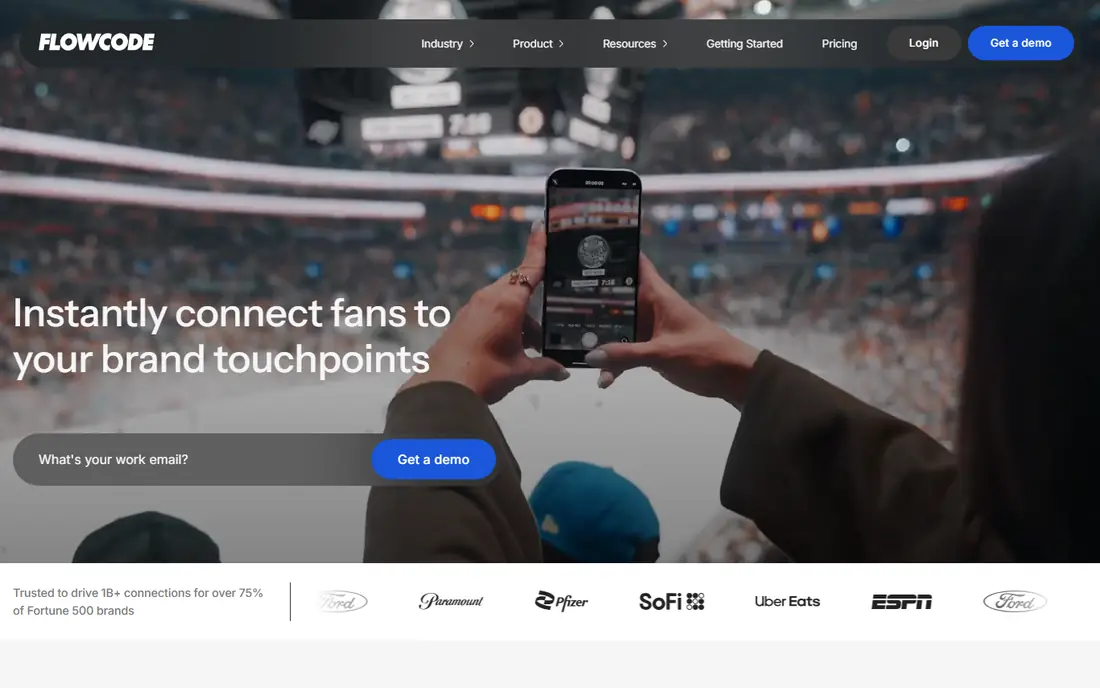
If ease of use matters more than deep customization, Flowcode pairs dynamic QR codes with hosted landing pages, which suits campaigns that need more than a simple redirect. A code can open a page with links, video, or a signup form, and analytics show how scans turn into actions. The free plan includes two codes with limited scans, while Pro Plus starts at $25 per month billed yearly.
The strength is the campaign flow. Instead of sending a scanner to a generic home page, you can send them to a page built for that poster, event, or product. That makes it easier to measure a specific campaign.
The downside is price. The entry paid plan is higher than several rivals, and a team that only needs simple redirects may pay for landing page tools it rarely uses.
- Landing pages
- Design-led codes
- Campaign analytics
- Higher entry price
- Some features need higher tiers

A practical pick for smaller budgets is QRCodeChimp covers both QR codes and digital business cards at a low entry price, which suits small businesses that need both. The free plan includes ten dynamic codes, and paid plans start at $6.99 per month billed yearly. Code types include URLs, vCards, Wi-Fi, and forms.
The strength is value. Ten free dynamic codes is more generous than most rivals, and the same account can create a shareable digital card for each staff member. That helps a small team start without a large monthly bill.
The trade-off is depth. Analytics and advanced design options improve on higher plans, and some templates look plain without custom branding work. Teams that need deep enterprise controls should compare a higher-tier rival.
- Many code types
- Digital business cards
- Generous free tier
- Analytics depth varies by plan
- Design templates can feel generic
For a team that needs room to grow, Bitly is mainly a link management platform, but its paid plans add QR codes alongside short links, which suits teams that already track clicks there. Core starts at $10 per month billed yearly and includes five QR codes per month, while Growth starts at $29 per month billed yearly.
The strength is a single view of links and codes. A campaign can use a short link in email and a QR code on print, and both report in the same dashboard. Branded domains also keep links consistent across channels.
The limit is the monthly QR cap. A team that needs many codes will hit the cap sooner than on a QR-first platform, and Bitly is not the best value if you do not use its link tools.
- Short links plus QR codes
- Link analytics
- Branded domains
- QR code caps per month
- Best value only for existing Bitly users
When control over the setup matters most, Scanova offers a clean dashboard for dynamic QR codes, with design controls and lead capture forms for campaigns that need contact details from a scan. It suits mid-size teams that want a tidy workflow without enterprise complexity. Pricing is listed on the vendor site, so we list it as See website, and a trial is offered.
The strength is the campaign workflow. A code can open a form, capture a lead, and report scans by location, device, and time, which helps a sales team follow up after an event or print run.
The downside is the lack of a permanent free plan. You will need a paid plan for ongoing dynamic codes, so it is less suited to a one-off free code than a static generator.
- Clean dashboard
- Lead capture forms
- Scan analytics
- No permanent free plan
- Paid plans needed for dynamic codes
A quieter option that still covers the basics is QR Code Generator PRO focuses on simple dynamic QR creation and tracking for individuals and small businesses. You can create codes, edit destinations, and view scan data without a large setup process. Paid plans start at $9.99 per month billed yearly, with a limited free option.
The strength is simplicity. The workflow is short, from code creation to download to tracking, which suits a team that needs codes quickly for menus, flyers, or events.
The limit is scope. It does not offer the same digital business card or enterprise team tools as broader platforms, so a team that needs cards at scale should pair it with a card tool or pick a broader rival.
- Dynamic codes
- Tracking
- Team sharing
- Limited free option
- Fewer card features than some rivals
For buyers who want a focused tool, QRCode Monkey is the right pick when you only need a static code that never changes, such as a link to a stable website or a contact card that rarely changes. It is free, needs no signup for basic use, and exports high-resolution PNG, SVG, PDF, and EPS files with logo and color options.
The strength is cost and quality. A free static code with a logo and vector export is enough for many print jobs, and there is no subscription to keep the code alive, since the destination is encoded in the pattern itself.
The catch is permanence. A static code cannot be edited, and it gives no scan reports. If the destination may change, or if you need scan data, choose a dynamic code platform instead.
- Free static codes
- Logo upload
- High-resolution exports
- Static only
- No scan tracking or editing after print
If you need something that works across many cases, Blinq covers the digital business card side of Uniqode, with cards that can be shared by QR code, link, or widget. The free plan includes two digital cards, card scanning, and contact notes, while Premium starts at $7.33 per month billed yearly. Optional NFC cards are sold separately.
The strength is sharing and contact capture. A recipient can save the contact in one tap, and the sender can scan paper cards and enrich contacts. Team plans add branding and admin controls for larger groups.
The downside is that the most useful features, such as unlimited scanning and full customization, sit on paid plans. NFC hardware also adds a one-time cost for teams that want tap-to-share cards.
- Two free cards
- Contact scanning
- CRM links
- Premium features need paid plan
- NFC cards cost extra
A good fit for a specific workflow is HiHello offers digital business cards with QR sharing, which suits individuals and small teams that want a simple card without a large platform. The free plan includes four cards with a monthly scan cap, while Professional starts at $6 per month billed yearly.
The strength is a generous free starting point. Four cards let one person keep separate cards for different roles, and sharing by QR, email, or text covers most meeting situations.
The limit is depth. Advanced CRM workflows and team admin controls need higher tiers, and the free scan cap can matter for a person who shares a card at large events.
- Four free cards
- QR sharing
- Team basics
- Scan caps on free plan
- Deeper CRM tools need higher tiers
How we picked these
We compared official feature pages, pricing pages, and public reviews, and favored tools that are live in October 2026 and offer dynamic codes, scan data, or digital cards. We checked free tier limits, code caps, and scan caps, since those details change the real cost. We left out static-only tools that cannot support a campaign, except for one free static option that suits a clear use case, and we left out Beaconstac as a separate listing because it is Uniqode under its former name.
How to choose a Uniqode alternative
Start with static versus dynamic. A static code is free and permanent, but it cannot be edited or tracked. A dynamic code costs a subscription, but you can change the destination and see scan data. Next, count codes and scans. A plan with three codes and 500 scans is not the same as a plan with fifty codes and unlimited scans, even at a similar monthly price. Then check what happens if you stop paying, since some vendors take dynamic codes offline when a subscription lapses. For cards, test the save flow on both iPhone and Android, and check whether contacts export cleanly to your CRM. Finally, run a small print test before a large run, and scan the code in normal light, low light, and at a distance.
Frequently asked questions
What is the difference between a static and a dynamic QR code?
A static code encodes the destination in the pattern, so it cannot be edited and needs no hosting. A dynamic code points through a hosted redirect, so you can change the destination and track scans, but you must keep the subscription active.
Which Uniqode alternative is cheapest?
QRCode Monkey is free for static codes. For dynamic codes, QRCodeChimp and QR TIGER offer low entry prices, while Flowcode and Bitly cost more but add landing pages or link tools. Compare code and scan caps, not just the monthly price.
Do I need a paid plan for digital business cards?
Not always. Blinq and HiHello offer free cards with limits, which suit one person. Teams that need branding, admin controls, and CRM sync will need a paid plan.
What happens to my codes if I cancel?
Static codes keep working, since they need no hosting. Dynamic codes often stop working or lose tracking when a subscription lapses, so check the vendor policy before you print a large run.
Can I use one tool for both QR codes and business cards?
Yes. QRCodeChimp covers both, and Uniqode rivals such as Flowcode focus more on codes. If cards are your main need, a card-first tool such as Blinq or HiHello may fit better.
Sources
See where you really rank - block by block
ProMapRanker scans Google Maps across a grid of your service area. Simple monthly plans from $19, white-label on every plan.
Start freeKeep reading
 zoho books alternatives
Best Zoho Books Alternatives in 2026
Compare the best zoho books alternatives for small business accounting, from QuickBooks Online and Xero to FreshBooks, Wave, and Sage in 2026, with pricing.
Read → zluri alternatives
Best Zluri Alternatives in 2026
Compare zluri alternatives for 2026, with SaaS management platforms for app discovery, spend tracking, renewals, and automation for IT, finance and procurement.
Read → zerobounce alternatives
Best ZeroBounce Alternatives in 2026
Best zerobounce alternatives for list hygiene: compare 8 email verification tools for bulk cleaning, real-time checks and catch-all handling in 2026 today.
Read →