 ProMapRanker
Best Trustpilot Alternatives in 2026

Key takeaways
- The right replacement depends on where your reviews live: a public profile, your own site, Google, or product pages.
- Reviews.io and Yotpo are the most direct options for online stores that want Trustpilot-style collection and display.
- Birdeye and Podium suit local and multi-location businesses that need Google and Facebook review management.
- Check who owns the reviews if you cancel, since some platforms keep reviews hosted on their site.
Quick comparison
| Pick | Great for | Pricing starts at | Free tier | |
|---|---|---|---|---|
 Birdeye | Multi-location reputation management | See website | No | Visit |
 Podium | SMS-first review collection | See website | No | Visit |
 Reviews.io | Trustpilot-style review collection | $29 per month | No | Visit |
 Yotpo | Online store reviews and photos | Free | Yes | Visit |
 Feefo | Verified-buyer reviews only | See website | No | Visit |
 Bazaarvoice | Enterprise retail syndication | See website | No | Visit |
 Trustmary | Importing and displaying reviews | Free | Yes | Visit |
 NiceJob | Simple review automation for local services | $75 per month | No | Visit |
The best trustpilot alternatives
Trustpilot is a public review platform where customers leave open reviews and businesses display them with widgets and ratings. These alternatives cover review collection, reputation management, and display, with different strengths for stores, local businesses, and larger brands.

Birdeye is built for businesses with more than one location. It pulls reviews from Google, Facebook, and other sites into one inbox, sends review requests by text and email, and adds listings management so business details stay consistent. That combination suits franchises, clinics, and service chains.
The cost is the main barrier. Pricing is quote-based and usually sits at the higher end of this list, so single-location shops may get better value from NiceJob or Trustmary. For teams managing ten or more locations, the per-location reporting and AI-assisted replies can save real staff time each week.
- Covers many review sites from one inbox
- Listings and survey tools
- Per-location reporting
- Quote-only pricing
- Broad feature set can be more than a single shop needs
- Setup takes time across locations
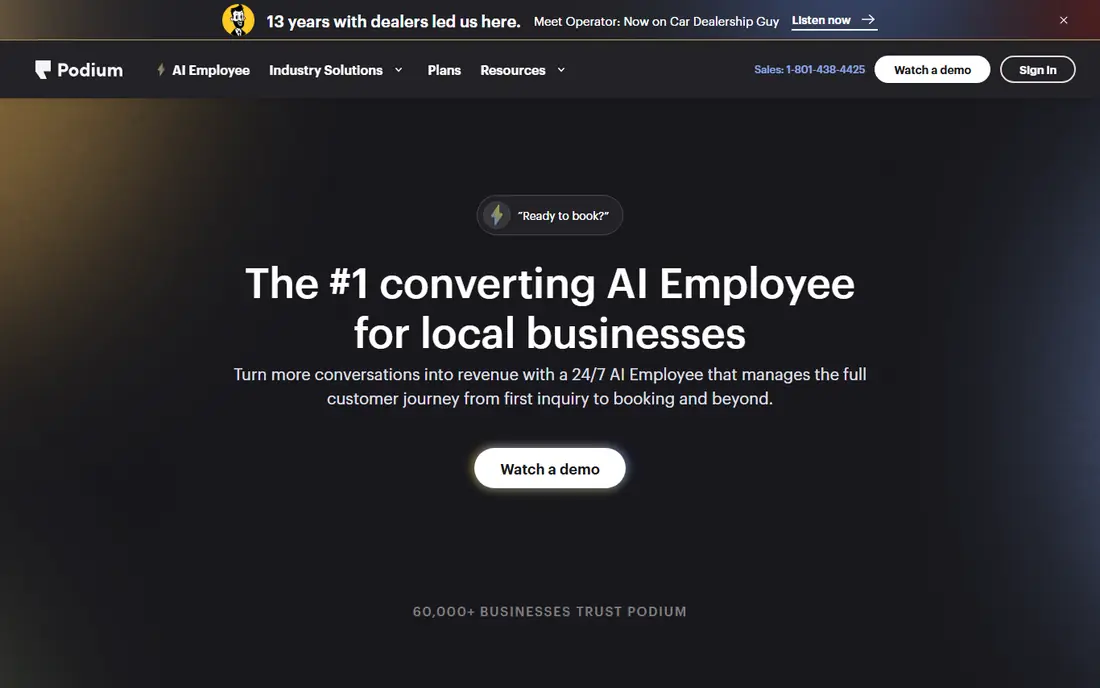
Podium started as a review tool and grew into a customer messaging platform. Its strength remains simple: send a text after a job or purchase, and the customer can leave a review with little friction. That SMS-first flow often produces more reviews than email-only requests.
The downside is price and breadth. You pay for messaging, payments, and lead tools even if you only want reviews, so compare the total cost against a review-only tool. Podium fits local service businesses that already want texting with customers, not just a review widget.
- Text message requests tend to get replies
- Messaging inbox for customer chats
- Payments and webchat in the same platform
- Quote-only pricing
- Bundles features beyond reviews
- Costly if you only need review collection
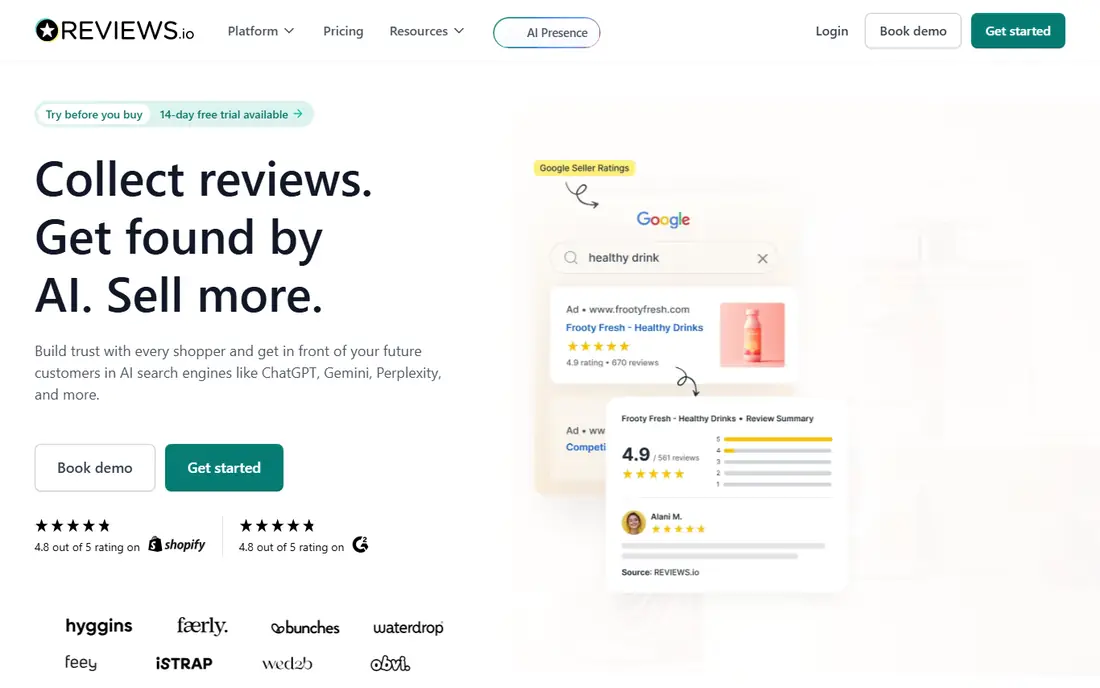
Reviews.io is the closest like-for-like swap for many online stores. It collects reviews by invitation, labels open reviews clearly, displays them on your site, and supports Google Seller Ratings. The starting price is published and lower than several rivals, which makes budgeting easier.
Public recognition is weaker than Trustpilot, so a Reviews.io badge may carry less weight with first-time buyers who have never heard of it. That matters less once reviews appear on your own product pages and in search results. For stores that want control over collection without an enterprise contract, it is a strong default.
- Clear starting price
- Invitation-based collection
- Google Seller Ratings support
- Review widgets
- No free tier for collecting reviews
- Smaller public recognition than Trustpilot
- Some features need higher tiers
Yotpo is built for online stores, especially on Shopify. It sends post-purchase review requests, collects photo and video reviews, and shows them on product pages and in marketing. The free tier lets small stores start collecting reviews without a monthly bill, and paid plans add syndication and richer display options.
It is not a local reputation tool. If your main goal is Google Business Profile reviews for a physical shop, Birdeye or Podium will serve you better. For an online store that needs product reviews that sell, Yotpo is one of the best-tested options in this group.
- Free tier for small stores
- Photo and video reviews
- Strong Shopify integration
- Loyalty and SMS add-ons
- Paid plans scale with orders
- Not built for local Google review management
- Full stack can get costly
Feefo only invites people who actually bought from you, so every review is tied to a verified purchase. That rule builds trust with cautious buyers and reduces fake or competitor reviews. Businesses that sell high-value products or services often value that credibility over raw review volume.
The limit is also the point: you will not collect open reviews from browsers or past customers outside the invitation system. Pricing is quote-based, so get a clear figure for your order volume before committing. Feefo suits established sellers who want verified proof more than a large public profile.
- Only verified buyers can review
- Strong trust signal
- Invitation-based collection
- Quote-only pricing
- No open public reviews from non-buyers
- Less reach than open platforms
Bazaarvoice is the enterprise option. It collects ratings and reviews and syndicates them to retailer sites, so a review left on your site can also appear where shoppers actually buy. That distribution is hard to match with a small review tool, and it comes with moderation, analytics, and API controls for large teams.
Small and mid-size stores should look elsewhere. Bazaarvoice is priced and built for brands and manufacturers selling through retailers, not for a single Shopify shop. If retail syndication is central to your sales, it is worth a quote; otherwise, Reviews.io or Yotpo will do the same core job for far less.
- Syndication to major retailers
- Enterprise moderation and controls
- Large brand and retail network
- Quote-only enterprise pricing
- Too large for small stores
- Implementation needs planning
Trustmary works well as a display layer for reviews you already have. You can import reviews from other platforms, collect new ones, and show them on your site with widgets. The free tier makes it easy to test whether review widgets lift conversions before paying.
It is lighter on collection automation than Birdeye, Podium, or Reviews.io, so teams that need heavy SMS and email campaigns may outgrow it. Think of Trustmary as the low-cost way to make existing reviews visible, and pair it with a stronger collection tool if volume is your main goal.
- Free tier for getting started
- Import reviews from other platforms
- Widgets for your site
- Paid pricing is shown after plan configuration
- Collection features are lighter than rivals
- Best as a display layer
NiceJob is our pick for most small local businesses that just want reviews to arrive without fuss. It automates requests after a job, gives you a dashboard, and provides a widget for your site. The flat monthly price is easy to budget, and there is no per-location pricing puzzle.
It does less than Birdeye or Podium, and that is intentional. You get no listings sync, no deep sentiment analysis, and no payments platform. For a plumber, salon, clinic, or restaurant, that simpler scope is often exactly enough, and the lower price leaves room to spend elsewhere.
- Flat published pricing
- Simple automated requests by email and SMS
- Website widget included
- No listings management
- Fewer analytics than Birdeye
- Narrower feature set overall
How we picked these
We compared official pricing pages, feature pages, and recent review platform comparisons for tools that collect, manage, or display customer reviews. We kept only platforms still offered in October 2026, and we favored a mix of public review sites, store review tools, and local reputation platforms so readers can match the tool to their business type. Where pricing is quote-only, we wrote See website.
How to choose a Trustpilot alternative
Start with where your customers already leave reviews. A local business lives on Google and Facebook, an online store lives on product pages, and a B2B software firm lives on sites like G2. Pick the tool that covers your two busiest review sources first, and treat other channels as a bonus.
Next, check ownership and portability. Ask whether you can export reviews, what happens to your public profile if you cancel, and whether reviews stay on your site or only on the vendor platform. A tool that locks reviews behind a subscription is a long-term cost, even if the entry price looks low.
Finally, test the request flow from the customer side. Send yourself a request by text and email, leave a review, and see how long it takes and how the widget looks on mobile. The best review tool is the one customers actually complete, not the one with the longest feature list. Reply to reviews promptly, including negative ones, since responses shape trust more than a perfect score.
Frequently asked questions
Is there a free alternative to Trustpilot?
Yes. Yotpo and Trustmary both offer free tiers, and Google Business Profile is free for local businesses. Free tiers are usually limited in volume or features, so check what collection and display options are included before relying on them.
Which alternative is best for online stores?
Reviews.io and Yotpo are the strongest store options. Reviews.io is a close Trustpilot-style replacement with published pricing, while Yotpo adds photo reviews and deep Shopify integration. Feefo suits stores that want verified-buyer reviews only.
Which alternative is best for local businesses?
Birdeye, Podium, and NiceJob lead for local businesses. Birdeye suits multi-location brands, Podium suits SMS-first teams, and NiceJob suits single shops that want simple automation at a flat price.
Can I move my Trustpilot reviews to another platform?
Some tools, such as Trustmary, let you import reviews from other platforms for display. Check each vendor's import rules and whether imported reviews keep their original source label, since display rules vary.
Should I reply to negative reviews?
Yes, in most cases. A calm, specific reply shows future buyers how you handle problems, and it gives you a chance to fix a real issue. Avoid arguing in public, and move detailed complaints to a private channel once you have acknowledged them.
Sources
See where you really rank - block by block
ProMapRanker scans Google Maps across a grid of your service area. Simple monthly plans from $19, white-label on every plan.
Start freeKeep reading
 zeffy payment processor stripe alternatives
Zeffy and Stripe Alternatives for Nonprofits in 2026
Explore zeffy payment processor stripe alternatives for nonprofits. We compare 8 fundraising platforms on fees, donor tools, and nonprofit focus. Check fees.
Read → workday alternatives
Workday Alternatives in 2026
Workday alternatives compared: we review 8 HR and payroll platforms that replace Workday, with pricing, strengths and honest limits for each team size.
Read → what's the best weather app
What's the Best Weather App in 2026
Wondering what's the best weather app? We compare 10 free and paid apps for forecasts, radar, alerts, and Colorado mountain weather for everyday and storm use.
Read →