 ProMapRanker
Thryv vs Birdeye

Key takeaways
- Thryv is an all-in-one business platform for small service companies, starting from $99 a month with CRM, scheduling and payments included.
- Birdeye is a reviews and customer experience platform for multi-location brands, and its price is quote only.
- Thryv fits a small business that wants one subscription for CRM, marketing, scheduling and invoicing.
- Birdeye fits a multi-location brand that wants reviews, messaging, surveys and AI tools at enterprise scale.
- The price gap is real, but the two tools solve different problems, so the choice turns on business size and daily workflow.
Quick comparison
| Pick | Great for | Pricing starts at | Free tier | |
|---|---|---|---|---|
 Thryv | Small business CRM and operations | $99 per month | No | Visit |
 Birdeye | Reviews, messaging and surveys at scale | quote only | No | Visit |
Thryv vs Birdeye in detail
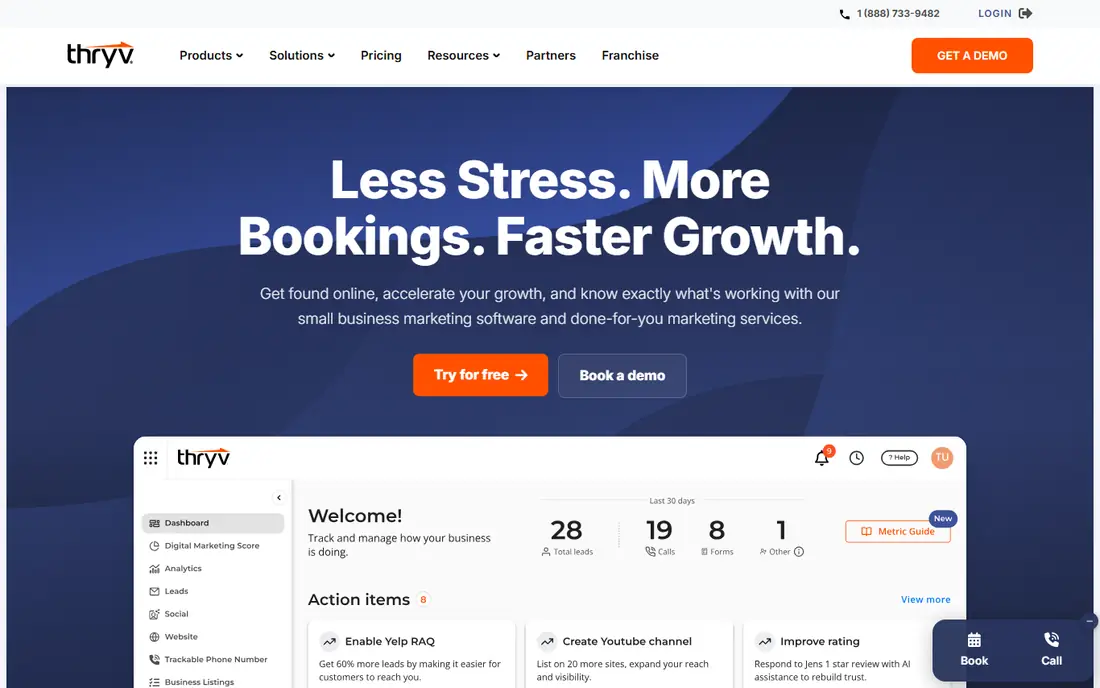
Thryv is a business management platform built for small service companies such as salons, plumbers, dentists, contractors and auto shops. Its plans start from $99 a month, according to vendor-published pricing read in 2026. The platform combines a CRM that tracks customers and conversations, online scheduling with automated reminders, invoicing and payments, email and text marketing, review requests, social media posting and a website builder. That breadth is the point: a small business can run most of its daily operations from one subscription instead of buying five separate tools.
Thryv includes a business centre that shows the day ahead, with appointments, payments due and messages waiting for a reply. It also includes an AI assistant that drafts messages, summarises calls and suggests follow-ups. The platform offers a mobile app, so an owner can check the schedule, send an invoice or reply to a customer from a job site. Thryv does not publish a free plan, and its website asks buyers to book a demo or talk to sales for the full feature list and the price of higher tiers. The $99 entry price is the clearest limit for a micro business: a solo operator with a handful of clients a month may find the cost hard to justify, and the value only appears when the business uses several features every week.
Thryv suits a small service business that wants one system for the whole working day. A salon that books appointments, sends reminders, takes payments and asks for reviews will use the platform daily. A contractor that sends estimates, schedules jobs and invoices from the field will too. It is less suited to a business that only needs reviews, because a dedicated review tool costs less, and it is less suited to a large brand, because Thryv is built for small teams rather than multi-location enterprises with role-based access and central reporting.
- CRM, scheduling, invoicing, payments and marketing in one subscription
- Built for small service businesses
- Starting price of $99 a month is high for a micro business
- No free plan and feature depth varies by tier
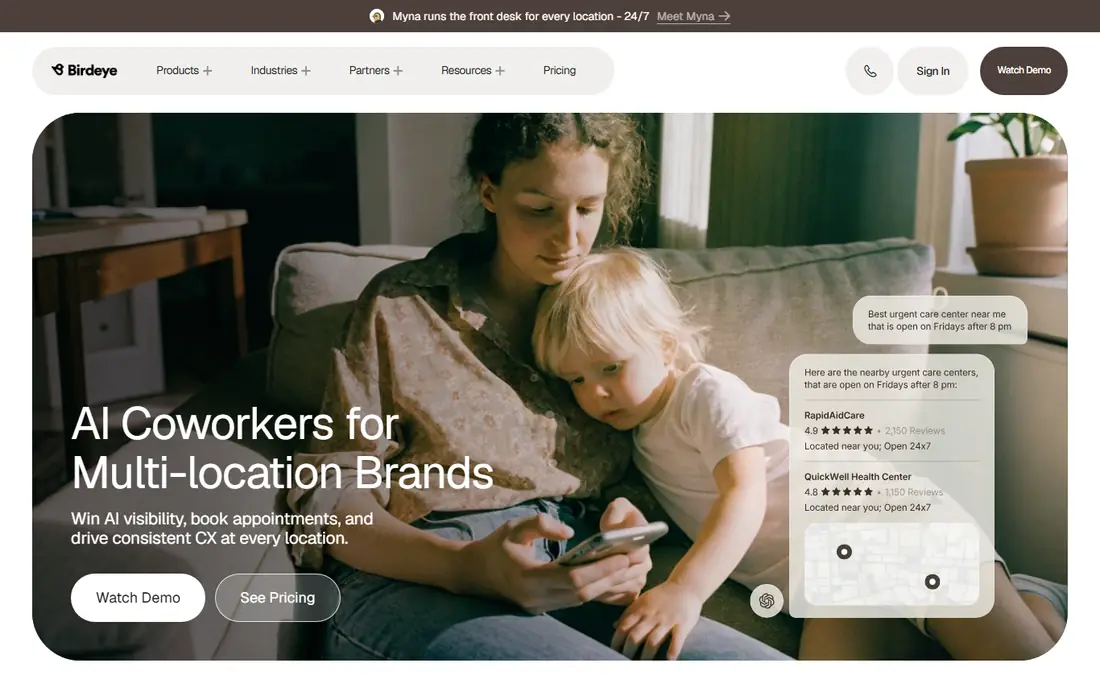
Birdeye is a customer experience platform for multi-location businesses, built around reviews, messaging, surveys and listings. It collects reviews from Google, Facebook and more than 150 other sites, lets teams reply from one inbox, sends review requests by text and email, and runs surveys that feed into the same dashboard. It also includes listings management, social publishing, webchat, payments and AI tools that draft replies and summarise customer sentiment. That breadth is the main reason large brands choose it: one platform covers the whole post-visit relationship, from the review request to the payment and the follow-up survey.
Birdeye does not publish a price. Its website asks buyers to book a demo or talk to sales, and third-party reports put the entry figure around $299 a month, though that number is not vendor-confirmed and the real price depends on location count, features and contract length. Birdeye offers no free plan, and the sales-led process means a small business cannot judge the cost from the website alone. The platform is built for scale, with multi-location dashboards, role-based access and reporting that suit franchises, healthcare groups, auto dealers and home services chains.
Birdeye suits a brand with many locations that wants one vendor for reviews, messaging and surveys. A single-location business with a tight budget will find the quote-only model and the enterprise feature set heavy, and a cheaper tool may cover its review requests for a fraction of the cost. An agency should confirm whether the price is per location, which AI features are included, and how the contract handles adding locations mid-term, since those three points drive the total more than the headline figure. A buyer who only needs a CRM and scheduling for one small business will find Thryv simpler and cheaper.
- Reviews, messaging, surveys, listings and AI tools in one platform
- Strong fit for multi-location brands
- Quote-only pricing with no published entry price
- Enterprise scale and sales process can be heavy for small buyers
Which one fits your setup
| Your setup | Pick | Why | Monthly cost from | | Solo service business, one system | Thryv | CRM, scheduling, invoicing and reviews in one plan | $99 | | Small team, 2 to 5 staff | Thryv | Shared calendar, reminders and payments for the team | $99 | | Single location, reviews are the priority | Birdeye | Review requests, inbox and surveys, if budget allows | Quote only | | Multi-location brand, 10 or more sites | Birdeye | Central dashboards and role-based access | Quote only | | Franchise or healthcare group | Birdeye | Reviews, messaging, surveys and AI in one platform | Quote only |
How we chose
We compared vendor pricing pages, product pages and documentation for both tools, and we read third-party reviews that quoted the vendor pages in October and November 2026. We checked the starting price of each plan, what the entry tier includes, whether a free plan or trial exists, and which features sit behind a higher tier or a sales quote. We compared the two on CRM, scheduling, invoicing, payments, review management, messaging, surveys and reporting, and we noted where each tool stops, such as Thryv being built for small teams and Birdeye keeping its price behind a sales conversation. We did not test either product hands-on, and we did not claim that one lifts rankings, since no vendor publishes a controlled test of that kind.
What to check before you buy
Check how big your business is and how your team works each day, because these two tools are built for different sizes. Thryv starts from $99 a month and covers CRM, scheduling, invoicing and marketing in one subscription, so count how many of those features you would actually use each week. Birdeye does not publish a price, so ask for a written quote that names the per-location price, the included features and the contract length. Confirm whether the price is per location, since a multi-location total grows fast. Check the trial and demo terms: Thryv asks buyers to book a demo, while Birdeye also sells through a demo with no free plan. Finally, confirm who owns the data and how exports work if you cancel, because moving customer records, review history and payment data to another platform takes planning. Before you buy, check which features are in the plan you are quoted, because Thryv sells several tiers and the depth of each feature varies, so a demo that shows the full platform may include tools that your tier does not. Ask for a written list of what your $99 plan covers, including the number of users, the number of appointments, the marketing limits and the payment processing fees, since processing fees are charged on top of the subscription and they change the real monthly cost. Check the scheduling limits too: how many staff calendars, how many reminders per booking and whether online booking is included, since a salon that books by phone will use those features every day. With Birdeye, ask for the same written list, including the per-location price, the number of review sites covered, the survey limits and the AI features in your tier. Confirm the onboarding help on both, since a small business that moves customer records, appointment history and payment details to a new platform needs support during the switch, and a vendor that leaves setup to the buyer can cost weeks of manual work. Finally, check the contract length and the cancellation terms on each, since Thryv agreements vary by tier and Birdeye agreements often run for a year, so a missed cancellation date can cost a full term.
Frequently asked questions
Is Thryv cheaper than Birdeye?
Yes, for most small buyers. Thryv publishes a starting price from $99 a month, while Birdeye does not publish a price and third-party reports put its entry figure around $299 a month. The gap reflects different scopes: Thryv sells an all-in-one platform for small service businesses, while Birdeye sells a reviews and customer experience platform for multi-location brands. A single-location business will spend less on Thryv, while a large brand may find Birdeye worth the quote.
Does Thryv include review management?
Yes. Thryv includes review requests by text and email, review monitoring and response tools as part of its platform, alongside CRM, scheduling, invoicing and marketing. The depth of the review features varies by tier, so confirm what your plan includes before you buy. Birdeye goes deeper on reviews, with collection from more than 150 sites, surveys and AI-drafted replies, which suits a brand that treats reviews as a core channel.
Does Birdeye publish its pricing anywhere?
No. Birdeye keeps its pricing behind a sales conversation, and its website asks buyers to book a demo for a quote. Third-party reports put the entry figure around $299 a month, but that number is not vendor-confirmed and the real price depends on location count, features and contract length. Ask for a written quote that names the per-location price and the included features.
Which tool is better for a plumbing company?
Thryv fits most plumbing companies, because scheduling, reminders, estimates, invoicing and payments match daily field work, and the CRM keeps customer history in one place. Birdeye fits a plumbing chain with many locations that wants reviews, messaging and surveys managed centrally. A single-location plumber will get more daily value from Thryv, while a multi-location group will get more from Birdeye central reporting.
Can Thryv replace Birdeye for reviews?
It can cover review requests and responses for a small business, since Thryv includes review tools alongside its CRM and scheduling. It does not match Birdeye for a large brand, because Birdeye collects reviews from more than 150 sites, runs surveys and offers AI tools built for multi-location teams. A small business that mainly needs review requests will find Thryv enough, while a brand that needs surveys and central review reporting should quote Birdeye.
Sources
See where you really rank - block by block
ProMapRanker scans Google Maps across a grid of your service area. Simple monthly plans from $19, white-label on every plan.
Start freeKeep reading
 Up Review alternatives
Up Review Alternatives
Up Review alternatives for local businesses and agencies: 8 review tools with real starting prices, free plans, and the trade offs that decide which one fits.
Read → Uberall vs Yext
Uberall vs Yext compared on listings, reviews, local pages and AI search. See which platform fits your location count, team and budget before you buy.
Read → Uberall vs Birdeye
: Which Local Suite Fits
Uberall vs Birdeye compared on listings, reviews and pricing, with the quote-only trap explained and cheaper picks for single shops and multi-location brands.
Read →