 ProMapRanker
SinglePlatform vs Yext

Key takeaways
- SinglePlatform is a restaurant menu and listings tool owned by Tripadvisor, built around publishing menus and business details to a small set of major sites.
- Yext is a broader enterprise listings platform that syncs business data direct to more than 200 publishers and AI assistants.
- Neither vendor publishes a price, so both require a sales conversation and a written quote before you can budget.
- Choose SinglePlatform when menus are the core job, and Yext when you run many locations across several business types and need direct publisher sync.
Quick comparison
| Pick | Great for | Pricing starts at | Free tier | |
|---|---|---|---|---|
 SinglePlatform | Restaurants that need menus published to major sites | quote only | No | Visit |
 Yext | Multi-location brands that need direct publisher sync | quote only | No | Visit |
SinglePlatform vs Yext head to head
SinglePlatform
Great for: Restaurants that need menus published to major sites
SinglePlatform is a restaurant menu and listings management tool based in New York. It was acquired by Constant Contact in 2012 and then by Tripadvisor in December 2019 for $51 million, and it now operates as a Tripadvisor subsidiary. A restaurant updates its menu, hours and business details in one dashboard, and SinglePlatform pushes that data to its direct partner sites: Google, Facebook, Tripadvisor, Yelp, OpenTable and Foursquare. The vendor also describes a publisher network of more than 100 sites, with smaller listing sites picking up changes over time from the major partners, a model often called trickle-down updating.
The menu is the heart of the product. Restaurants can publish several menus, such as takeaway, catering and in-store, and keep prices, dishes and hours current from one place instead of logging into each site separately. That matters because an out-of-date menu on Google or Tripadvisor turns diners away before they arrive. SinglePlatform also includes a basic social media scheduling tool, so a small restaurant team can plan posts without buying a separate scheduler. The direct tie to Tripadvisor helps too, since Tripadvisor restaurant pages draw large daily traffic from people who are already deciding where to eat.
The limits are clear. The vendor does not publish prices, and a third-party comparison page reports plans at $109 a month for Fundamental, $149 for Preferred and $199 for Exclusive, with contract terms, so a buyer should treat those figures as reported rather than confirmed. The same third-party page notes friction when cancelling, based on public reviews, so the contract length and cancellation terms deserve a direct question before signing. The direct partner set is also small, so listings on sites outside the core six depend on trickle-down updates that take longer. And the product is built for restaurants, so a business that is not a restaurant will find little here.
- Menu publishing is the core job, not an add-on
- Direct links to Google, Facebook, Tripadvisor, Yelp, OpenTable and Foursquare
- Part of Tripadvisor, so restaurant traffic is close by
- No published price and contract-based billing
- Small direct partner set, with wider reach relying on trickle-down updates
- Restaurant-only focus limits other business types
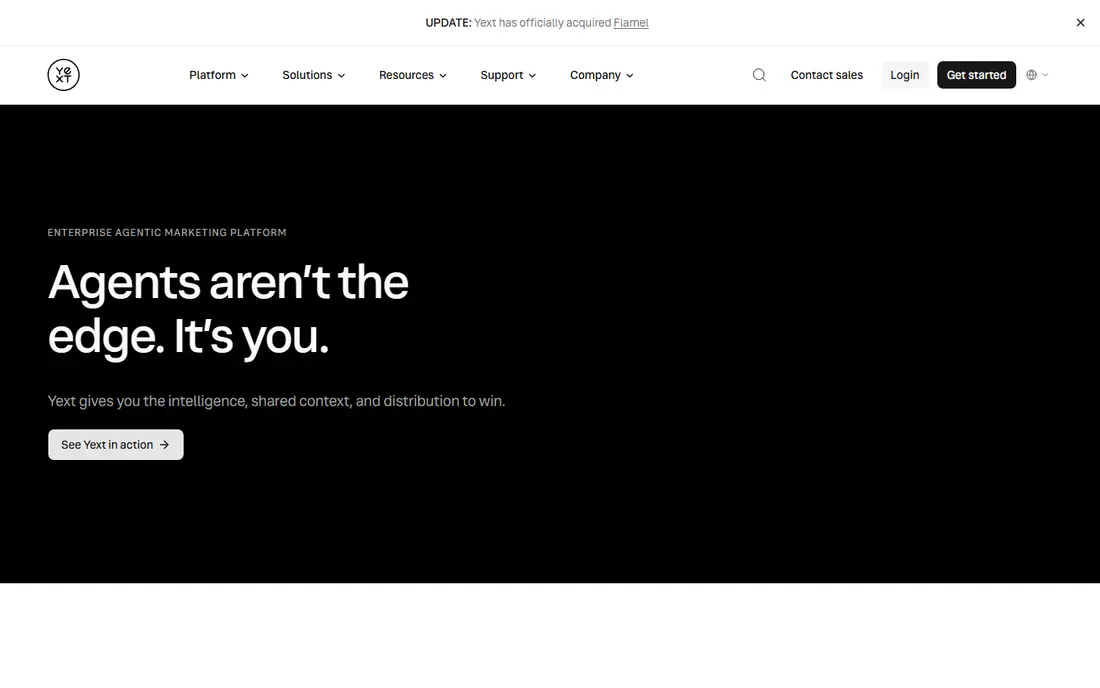
Yext is the enterprise option in this pair. It pushes verified business data direct to more than 200 publishers and AI assistants, rather than routing it through data aggregators, so changes reach search, maps and voice answers faster than with a trickle-down model. The platform covers listings, reviews, local pages and analytics in one workspace, and its Knowledge Graph holds the business facts that feed each channel. For a brand with hundreds of locations, that direct connection is the core selling point, since one edit in Yext can update Google, Apple Maps, Bing, Yelp and voice assistants from the same source of truth.
The controls around that sync are built for large teams. Roles and approvals let head office set which fields local managers can change, and the analytics show how each location performs in search and reviews. That structure helps franchises and chains keep hundreds of profiles consistent without letting one store rewrite brand details. Yext also works on AI search visibility, so business facts are structured for the answers that chatbots and voice assistants give. The vendor does not publish prices, and third-party comparison pages report entry plans near $199 per location per year, with higher tiers near $449, but those figures come from third parties and need a live quote to confirm.
The cost of that depth is a sales-led buying process. There is no free plan, no free trial and no published price, so budgeting starts with a call and a quote. Third-party pages report annual billing as the norm for core plans, which means a buyer should ask for the full first-year total in writing, including setup fees and any minimum term. A single restaurant with one location will usually find the process heavy for the job, and a restaurant-focused tool with a simpler setup may cover menus and listings at a lower cost and with less admin.
- Direct sync to more than 200 publishers and AI assistants
- Listings, reviews, local pages and analytics in one platform
- Strong controls for large teams
- No published price and no free plan
- Annual billing is the norm for core plans
- Enterprise focus makes it heavy for small teams
How we chose
We compared the vendor pricing pages, product pages and documentation for both tools on 14 November 2026. We checked which sites each tool covers, how edits reach publishers, whether a free plan or trial exists, and what each vendor publishes about price. We did not test either product hands-on, and we did not count review site scores or third-party ratings. Where the vendor hides its price we wrote quote only and said so plainly. Third-party price reports are labelled as such in the text and are not treated as vendor prices, since only the vendor can confirm what a buyer will actually be charged.
We also weighed the buying model itself, not just the feature list. SinglePlatform sells restaurant plans on contract terms through a sales team, so its value depends on how many menus you run and how often they change. Yext sells direct to brands with a self-serve dashboard and approval controls, so its value depends on how many locations you run and how often their details change. A buyer with a stable set of locations and rare changes will feel the difference in workflow more than the difference in publisher counts.
What to check before you buy
- Ask both vendors for a written first-year total, including setup, per-location fees and any minimum term, before you sign anything.
- Ask SinglePlatform for the contract length and the cancellation terms in writing, since public reviews mention friction when cancelling.
- Ask SinglePlatform which sites get direct updates and which rely on trickle-down, and how long trickle-down updates take to appear.
- Ask Yext which publishers are covered by direct sync on the plan you are quoted, since lower tiers may cover fewer of them.
- Check whether review replies are included in your tier or need a higher plan on either platform.
- Confirm who owns the listings data if you cancel, and how long corrections stay live after you leave.
- Ask both vendors how duplicate listings are handled, and whether suppression of duplicates is included or charged extra.
- Ask both vendors for a named support contact and a written response time for support tickets.
| Business type | SinglePlatform | Yext | | One restaurant | Menu publishing to Google, Facebook, Tripadvisor, Yelp, OpenTable and Foursquare from one dashboard | Likely more than you need, with a sales-led process and annual billing | | Small restaurant group, 2 to 10 sites | Reported plans from $109 to $199 a month, contract terms to confirm | Third-party reports put entry plans near $199 per location per year | | Large chain, 100 or more sites | Restaurant-only focus and trickle-down reach limit the fit | Direct sync to 200 or more publishers and approval controls suit head office teams | | Non-restaurant business | Not built for your business type | Listings, reviews, local pages and analytics cover many business types |
Frequently asked questions
Which is cheaper, SinglePlatform or Yext?
Neither vendor publishes a price, so no honest comparison of list prices exists. A third-party comparison page reports SinglePlatform plans at $109, $149 and $199 a month, while third-party pages report Yext entry plans near $199 per location per year. Both figures need a live quote to confirm, since neither comes from the vendor pricing page. Ask each vendor for a written first-year total on the same location count.
Does SinglePlatform have a free plan?
No. SinglePlatform does not list a free plan or a free trial on its site, and its plans are sold on contract terms through a sales team. Tripadvisor itself offers free tools for restaurants, such as responding to reviews and updating a business listing, but those are separate from the SinglePlatform subscription. Ask the sales team whether a trial location is possible before you sign.
Does Yext have a free plan?
No. Yext does not offer a free plan or a free trial for its core listings platform, and it does not publish prices. You buy through a sales quote, and third-party pages report annual billing as the norm. Ask for a demo on your own locations and a written quote that covers setup, per-location fees and the contract term before you agree to anything.
Is SinglePlatform good for a single restaurant?
Yes, for a restaurant that changes its menu often. One dashboard keeps menus, hours and business details current across Google, Facebook, Tripadvisor, Yelp, OpenTable and Foursquare, which saves time against updating each site by hand. The trade-off is contract billing and a sales process, so a restaurant with a stable menu may find the admin heavier than the time it saves.
Is Yext good for restaurants?
Yext can work for restaurant chains, since its direct sync covers the publishers diners use, and its review and local page tools fit multi-location brands. For a single restaurant, though, the enterprise focus and annual billing are usually more than the job needs. A restaurant-focused tool that treats menu publishing as the core job will normally fit a single site better and cost less to run.
Sources
See where you really rank - block by block
ProMapRanker scans Google Maps across a grid of your service area. Simple monthly plans from $19, white-label on every plan.
Start freeKeep reading
 SOCi vs Birdeye
: Which Local Platform Wins
SOCi vs Birdeye compared on reviews, listings, social and pricing. Find which local marketing platform fits your locations and what each one costs in 2026.
Read → SOCi alternatives
9 Best SOCi Alternatives for Multi-Location Brands
Compare 9 SOCi alternatives for multi-location brands, with real pricing, reviews, listings and local social features, and a clear pick for each team size.
Read → ServiceM8 alternatives
Best ServiceM8 Alternatives for Field Service
Compare the best ServiceM8 alternatives for field service teams, with starting prices, trial terms, and strengths for solo techs and growing crews today.
Read →