 ProMapRanker
Best Owler Alternatives in 2026


Funding and startup research · Pricing starts at: $29 per user per month
Key takeaways
- Crunchbase leads for funding and startup research at a price a small team can afford.
- ZoomInfo and Apollo lead when the goal is verified contacts and outbound work, not just company news.
- PitchBook and CB Insights suit investors and strategy teams that need deeper private-market analysis.
- Owler strength is lightweight competitive alerts, so a replacement should be judged on alerts, not database size alone.
Quick comparison
| Pick | Great for | Pricing starts at | Free tier | |
|---|---|---|---|---|
| Crunchbase | Funding and startup research | $29 per user per month | Yes | Visit |
 ZoomInfo | Verified contacts and intent | See website | Yes | Visit |
 Apollo | Outbound plus company data | $49 per user per month | Yes | Visit |
 LinkedIn Sales Navigator | Network-based account research | $99.99 per user per month | No | Visit |
 PitchBook | Private-market deal research | See website | No | Visit |
 CB Insights | Technology market intelligence | See website | No | Visit |
 Similarweb | Website traffic and market share | See website | Yes | Visit |
 Tracxn | Startup and emerging tech tracking | See website | Yes | Visit |
The best Owler alternatives
Owler is known for company profiles, news alerts, and competitive tracking at a modest price. The tools below cover different parts of that job, from funding data to contact databases and web traffic, so the right pick depends on whether you track competitors, find buyers, or research markets. We compared official feature pages, pricing pages, and public reviews.
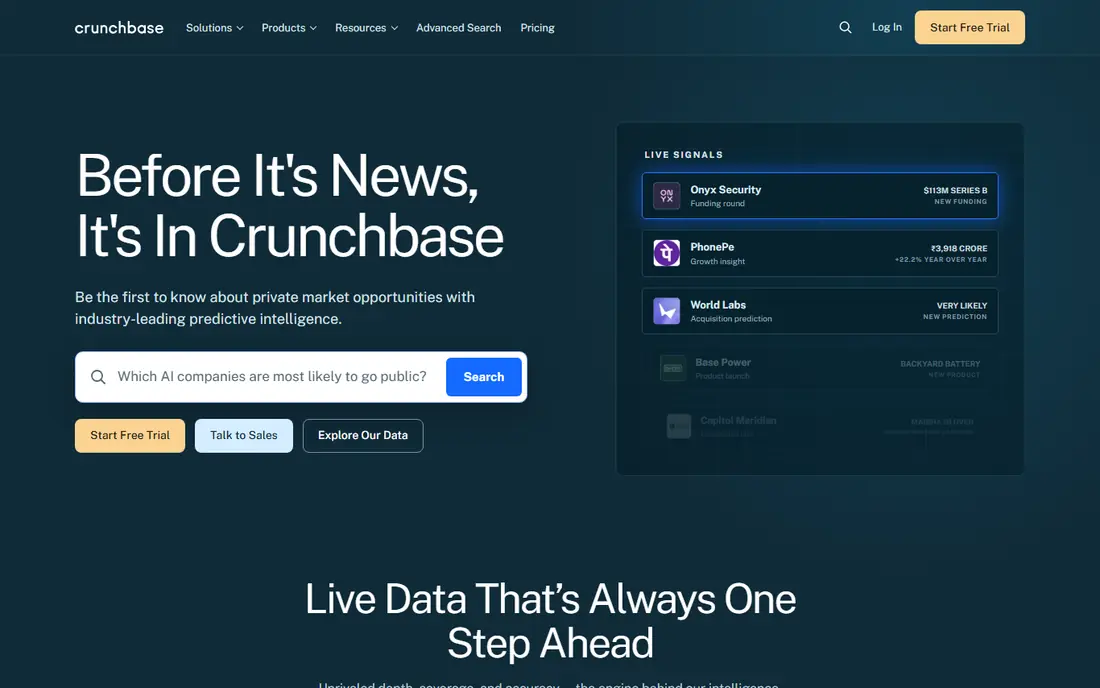
Crunchbase is the natural first replacement for Owler users who track funding, growth, and competitors in the startup world. Company profiles, funding rounds, acquisitions, and people moves are searchable, and lists help a team map a market or watch a set of rivals. A free basic tier lets a solo researcher start without a sales call.
The gap is contacts. Crunchbase is a research tool first, and it does not provide verified emails and direct dials at the depth of a sales database. Teams that need to contact decision makers should pair it with Apollo or ZoomInfo, or choose one of those tools instead.
- Large private-company and funding database
- Funding alerts and lists
- Self-serve monthly plans
- Contact data is limited
- Data freshness varies for smaller and non-US companies

ZoomInfo suits sales and go-to-market teams that need to move from a company name to a verified contact, a direct dial, and an intent signal. Its database covers hundreds of millions of professional profiles, and CRM integrations help enrich accounts without manual exports. Company news and funding signals sit alongside contact data, which helps prioritise outreach.
Cost is the barrier. Pricing is custom, with reported annual totals well above self-serve tools, and annual terms are common. Small teams should trial the free lite tier and compare Apollo before committing to an enterprise contract.
- Very large verified contact database
- Intent signals and org data
- Native CRM integrations
- Pricing is custom and aimed at larger teams
- Annual contracts are common
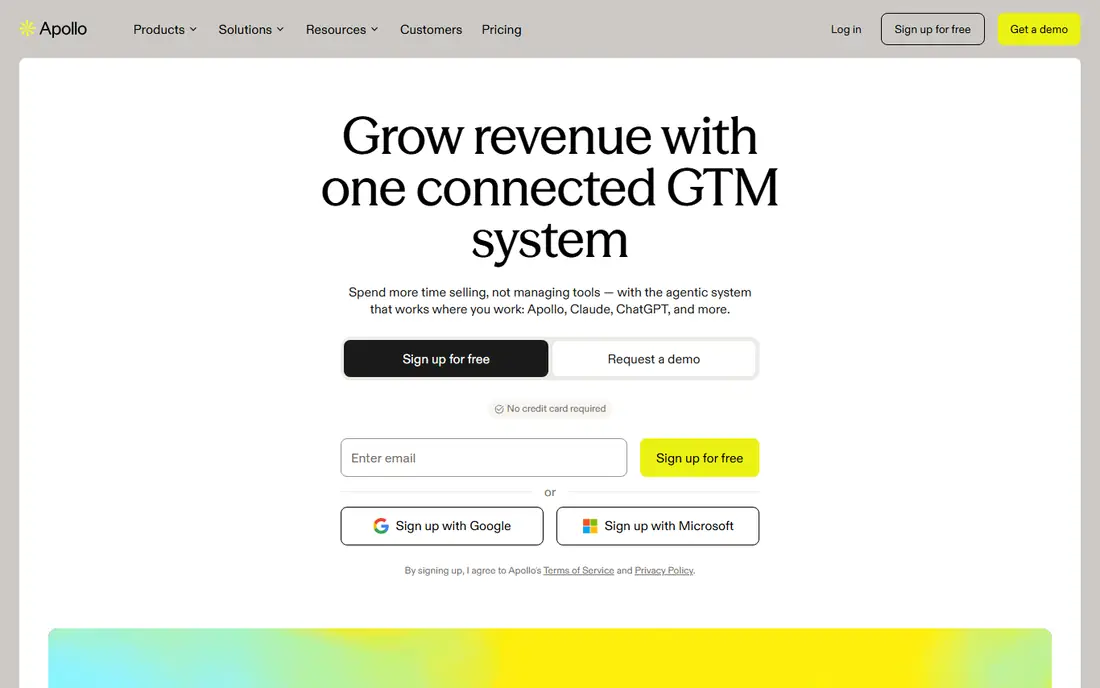
Apollo combines a contact database with outbound sequencing, so a team can find companies, verify contacts, and run email outreach from one account. The free plan lets a small team test search and enrichment, and paid plans start at 49 dollars per user per month. That self-serve shape is a clear contrast with enterprise-only vendors.
Credit limits are the catch. Searches, exports, and enrichments draw on credits, so a heavy prospecting month can hit a cap. Contact accuracy also varies by market, so verify a sample before a large campaign. For SMB outbound, Apollo is the most practical Owler complement on this list.
- Large contact database plus email sequencing
- Self-serve pricing
- CRM integrations for Salesforce and HubSpot
- Contact quality varies by segment
- Credit limits gate some searches and exports
LinkedIn Sales Navigator helps sellers research accounts through the network itself. Advanced search, saved leads, account alerts, and job change signals support warm outreach, where a shared connection or a recent role change opens a conversation. CRM validation links also help keep account records current.
It does not provide emails or direct dials, so it works best alongside a contact tool rather than as a replacement for one. At 99.99 dollars per user per month, it suits sellers who already live on LinkedIn. Researchers who only need company news will find cheaper options here.
- LinkedIn-native account and lead data
- Warm introduction paths
- Job change and engagement signals
- No verified emails or phone numbers included
- Price is high for research alone
PitchBook serves investors, corporate development teams, and advisors who need private-market depth. Deal histories, valuations, fund performance, and investor networks go far beyond a company news feed. That depth makes it the right tool for deal sourcing, benchmarking, and due diligence.
It is not a sales tool. Contact data is limited, and pricing is custom at an enterprise level, so a small marketing team will find it out of reach. For investment research, PitchBook is a specialist pick that justifies its price through data depth rather than breadth of users.
- Deep private equity, venture, and M and A data
- Fund and investor profiles
- Deal comparables and financials
- Pricing is custom and enterprise-level
- Not built for outbound contact work
CB Insights focuses on technology markets, emerging companies, and funding trends, with analyst research behind its data. Market maps, industry reports, and company profiles help strategy teams spot trends and track competitors in a sector. That curated view differs from a raw database, since analysis is part of the product.
Pricing is custom and aimed at larger companies, and the tool does not serve outbound sales. Teams that need market intelligence for strategy, partnerships, or investment screening will value it. Teams that need contacts should look at ZoomInfo or Apollo instead.
- Analyst-curated technology and market data
- Startup and funding tracking
- Industry reports and market maps
- Pricing is custom and high
- Contact and outbound features are minimal
Similarweb answers a different competitive question: how much traffic does a rival actually get, and where does it come from. Traffic estimates, audience geography, referral sources, and market share help marketing teams benchmark a competitor site and spot rising rivals. A free tier gives a basic view of a domain before a paid commitment.
Estimates are the limit. Similarweb figures are modelled, not taken from a rival analytics account, so small sites can show wide variance. Use it for direction and comparison, not as a precise traffic count. For digital competitive tracking, it complements Owler-style news alerts well.
- Website traffic, audience, and market share estimates
- Competitor benchmarking
- App and keyword data on higher plans
- Traffic figures are estimates, not exact analytics
- Full data needs a paid plan
Tracxn tracks startups and emerging technologies with detailed sector taxonomies, which helps investors and strategy teams find companies in a narrow niche. Funding, acquisitions, and sector reports support market mapping and deal sourcing, especially for technology and startup-heavy markets. A free tier offers a basic view before a sales conversation.
Full access is priced through sales, and coverage depth varies by region. Teams focused on US startups may find Crunchbase simpler, while teams tracking emerging tech globally may prefer Tracxn taxonomies. For niche market research, it is a credible Owler alternative.
- Broad startup database with sector taxonomies
- Funding and acquisition tracking
- Emerging technology reports
- Pricing is custom for full access
- Data depth varies by region and sector
How we picked these
We compared official feature pages, pricing pages, and public reviews, and we kept only platforms that are live and cover company research, competitive tracking, funding data, or contact data. We included research-first, sales-first, and market intelligence tools, since Owler users split across those jobs. Where pricing is custom, we wrote See website rather than repeating a third-party estimate as a firm price.
What to check before you buy
Start with the job you actually do each week. If you read competitor news and funding alerts, a research tool such as Crunchbase fits. If you contact buyers, a contact database such as Apollo or ZoomInfo fits. If you benchmark websites, Similarweb fits. Buying a large database for a news-alert job wastes budget.
Test alerts on your own competitors
Set up alerts for five companies you already track and compare them with your current alerts for two weeks. Check speed, relevance, and duplicate noise, since alert quality decides whether a tool gets used. A database that looks large on a sales page can still miss a small rival you care about.
Check data freshness for your market
Search for ten companies in your niche, including small and non-US firms if relevant, and check funding dates, headcount, and leadership. Freshness varies by vendor and market, and a tool that is strong for US startups may be thin elsewhere. That sample test is more useful than a headline database size.
Frequently asked questions
What is the closest Owler alternative?
Crunchbase is the closest for company and funding research at a comparable self-serve price. For competitive news alerts alone, a combination of Crunchbase alerts and Similarweb traffic data covers much of the Owler job.
Which alternative is best for sales prospecting?
Apollo is the best self-serve prospecting pick here, with contacts and sequencing in one account. ZoomInfo offers deeper verified data and intent signals, but at enterprise pricing.
Is there a free Owler alternative?
Crunchbase, Apollo, Similarweb, and Tracxn all offer free tiers, though full data and exports need paid plans. Free tiers suit occasional research, while regular competitive tracking usually needs a paid plan.
Which alternative is best for investors?
PitchBook leads for private-market deal research, with fund and valuation data that research tools do not match. CB Insights suits technology market analysis, while Crunchbase suits early-stage startup screening at a lower price.
How accurate is company data on these platforms?
Accuracy varies by company size, region, and update frequency. Funding data can lag the actual close by weeks or months, and contact data needs verification before outreach. Check a sample of companies you know well before trusting a new tool for decisions.
Sources
See where you really rank - block by block
ProMapRanker scans Google Maps across a grid of your service area. Simple monthly plans from $19, white-label on every plan.
Start freeKeep reading
 zoho books alternatives
Best Zoho Books Alternatives in 2026
Compare the best zoho books alternatives for small business accounting, from QuickBooks Online and Xero to FreshBooks, Wave, and Sage in 2026, with pricing.
Read → zluri alternatives
Best Zluri Alternatives in 2026
Compare zluri alternatives for 2026, with SaaS management platforms for app discovery, spend tracking, renewals, and automation for IT, finance and procurement.
Read → zerobounce alternatives
Best ZeroBounce Alternatives in 2026
Best zerobounce alternatives for list hygiene: compare 8 email verification tools for bulk cleaning, real-time checks and catch-all handling in 2026 today.
Read →