 ProMapRanker
Best Orca Security Alternatives in 2026

Key takeaways
- Wiz is the closest agentless CNAPP match for multicloud posture, identity, and attack path analysis.
- Palo Alto Cortex Cloud suits teams already invested in Palo Alto tools, while Microsoft Defender for Cloud suits Azure first teams.
- CrowdStrike Falcon Cloud Security is a natural fit where Falcon already covers endpoints, and Sysdig leads for Kubernetes runtime depth.
- Aqua Security, Lacework FortiCNAPP, and Check Point CloudGuard each trade breadth for strength in containers, behaviour detection, or compliance.
- Most enterprise CNAPP pricing is quote based, so compare licensing units, runtime coverage, and code scanning before judging cost.
Quick comparison
| Pick | Great for | Pricing starts at | Free tier | |
|---|---|---|---|---|
 Wiz | Multicloud CNAPP | See website | Free trial | Visit |
 Palo Alto Cortex Cloud | Palo Alto estates | See website | No | Visit |
 Microsoft Defender for Cloud | Azure first teams | Free | Yes | Visit |
 CrowdStrike Falcon Cloud Security | Falcon endpoint customers | See website | No | Visit |
 Sysdig Secure | Kubernetes runtime | See website | No | Visit |
 Aqua Security | Container security | See website | No | Visit |
 Lacework FortiCNAPP | Behaviour based detection | See website | No | Visit |
 Check Point CloudGuard | Compliance heavy estates | See website | No | Visit |
The best orca security alternatives
Orca Security is known for agentless cloud scanning, posture management, and risk mapping across cloud workloads. The platforms below were judged on that same core job, plus where they differ: runtime protection, code scanning, container depth, and ease of deployment. We compared official product pages, documentation, and public reviews, and we treated third party price reports as directional only, since most vendors do not publish a full rate card.

Wiz is the most direct alternative for teams that want Orca style agentless coverage with strong risk prioritisation. It connects to cloud accounts, scans workloads, identities, and configurations, and maps attack paths so teams can see which issues are actually reachable. That focus on reachable risk helps security teams triage a long finding list, rather than treating every misconfiguration as equal.
The main drawback is pricing transparency, since Wiz does not publish a full rate card and contracts are typically sized by cloud footprint. Runtime protection also relies on an optional sensor, so teams that need deep live detection should test that part separately. For posture and prioritisation across AWS, Azure, and Google Cloud, Wiz is a strong first shortlist pick.
- Agentless multicloud visibility
- Attack path analysis
- Broad workload and identity coverage
- No published list price
- Runtime depth depends on an optional sensor

Palo Alto Cortex Cloud, formerly Prisma Cloud, is the broadest suite in this list, covering posture, workload protection, network security, and code scanning through its Bridgecrew lineage. For organisations already running Palo Alto firewalls or Cortex tools, that integration can reduce the number of consoles and policies a team must maintain. It also suits hybrid estates where cloud and on premises controls need to work together.
Breadth comes with complexity. Deployment and tuning can take longer than with a leaner agentless tool, and smaller teams may find the platform more than they need. Pricing is quote based and module dependent, so get a scoped quote tied to your cloud accounts and workload count. Choose Cortex Cloud when breadth and existing Palo Alto investment matter most.
- Broad CNAPP coverage
- Network, workload, and identity protection
- Deep Palo Alto integration
- Complex deployment for smaller teams
- Enterprise pricing through sales
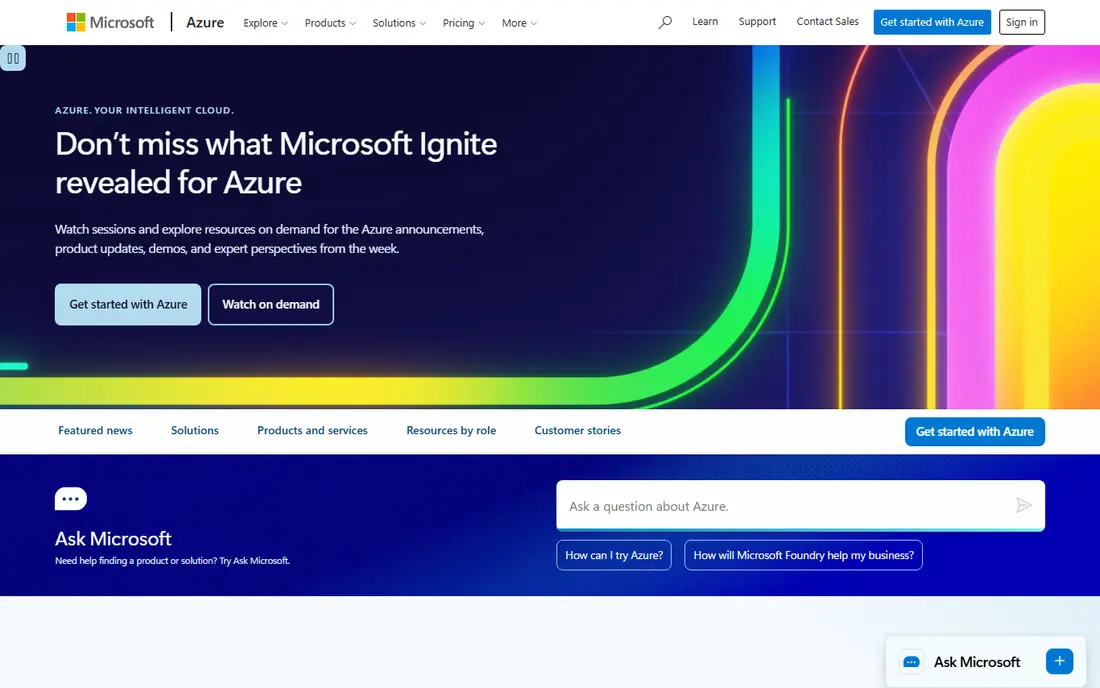
Microsoft Defender for Cloud is the natural starting point for Azure heavy organisations. A free basic tier covers foundational posture recommendations, while paid Defender plans add workload protection for servers, containers, databases, and other resources. Native integration with Azure policy, Microsoft Sentinel, and Microsoft 365 Defender tools makes triage and response easier inside a Microsoft estate.
Multicloud coverage has improved, including Google Cloud support, but Azure remains the strongest area. Costs also vary by workload plan, so the bill depends on which resources are protected rather than a single flat price. For teams centred on Azure, Defender for Cloud offers good value and low deployment friction. For multicloud first teams, compare its non Azure coverage carefully against Wiz or Orca style tools.
- Native Azure integration
- Free basic posture tier
- Works with Microsoft Sentinel
- Multicloud depth lags Azure features
- Workload plans add cost by resource type
CrowdStrike Falcon Cloud Security extends the Falcon platform from endpoints into cloud posture, workload protection, and identity entitlements. Teams already running Falcon get a shared sensor and a familiar console, which can cut deployment time and reduce agent sprawl. CrowdStrike threat intelligence is another draw, since cloud detections benefit from the same research that informs endpoint protection.
The trade-off is fit outside Falcon. Organisations without Falcon still get a capable CNAPP, but they lose the consolidation benefit that makes this option stand out. Pricing is enterprise and quote based, so scope it by cloud accounts, workloads, and modules. If Falcon is already standard in your estate, this is a logical shortlist candidate.
- Shared Falcon sensor
- Strong threat intelligence
- Posture plus runtime in one agent story
- Best value depends on existing Falcon use
- Pricing is quote based
Sysdig Secure is the runtime first choice in this list, built around containers and Kubernetes. Its agent watches live processes and system calls, using Falco rules that Sysdig originated, and it can filter vulnerabilities by whether packages are actually loaded at runtime. That distinction matters in container estates, where a long image scan list often includes packages that never run.
Posture management is present, but Sysdig is not the broadest CNAPP for account level governance alone. Teams that need both deep runtime and broad posture may pair Sysdig with a posture tool, or choose a broader suite and accept lighter runtime depth. For Kubernetes heavy teams where live detection is the priority, Sysdig is hard to beat.
- Deep Kubernetes runtime detection
- Falco based rules
- Runtime based vulnerability filtering
- Posture coverage is narrower than full CNAPP suites
- Pricing is quote based
Aqua Security covers the container lifecycle from image scanning in pipelines through runtime protection in clusters, plus cloud posture management. That end to end container focus suits teams that ship containerised apps often and need policy enforcement at build, deploy, and run stages. Behavioural runtime analysis adds a second layer beyond static image findings.
Public reviews note that the developer experience can feel uneven, and pricing requires a sales conversation. Aqua also competes with broader CNAPP suites that now include container modules, so the case for Aqua rests on container depth rather than breadth alone. If containers are your main risk surface, Aqua deserves a trial. If general cloud posture is the main job, a broader CNAPP may be simpler.
- Strong container and Kubernetes pipeline coverage
- Runtime protection
- Broad cloud workload support
- Developer experience is mixed in public reviews
- Pricing is not published
Lacework FortiCNAPP, now part of Fortinet, uses behaviour based anomaly detection to spot cloud threats that signature rules may miss. It combines posture, workload, container, and code related coverage with investigation context, which helps analysts understand why an alert fired. Fortinet integration is a plus for organisations already using Fortinet network security, since cloud and network context can sit closer together.
Pricing is metered by coverage, with starter packs reported from $25,000 per year, so small estates should confirm the entry cost before shortlisting. Deployment mixes lightweight agents and log based collection, which needs planning for larger estates. Choose Lacework FortiCNAPP when reducing alert noise through behaviour analysis is a top goal.
- Anomaly based threat detection
- Code to cloud coverage
- Fortinet fabric integration
- Pricing is metered and can scale quickly
- Agent plus log model adds deployment planning
Check Point CloudGuard CNAPP covers posture, workload, identity, and data related controls across clouds, with compliance templates that help regulated teams map findings to frameworks. Network based protection and CloudBot style automation for recurring misconfigurations are useful extras, especially where network policy is a core control. It fits organisations that already use Check Point network products and want cloud governance in a familiar vendor family.
The limit is developer focus. CloudGuard is enterprise and security team oriented, and its code scanning is thinner than code first CNAPP options. Pricing is also quote based. For compliance heavy, network aware estates, CloudGuard is a solid alternative. For developer led, code to cloud teams, Wiz or a code focused platform may fit better.
- Multicloud posture and compliance templates
- Network security controls
- Automated remediation options
- Developer workflow is enterprise focused
- Code scanning is limited beside code first tools
How we picked these
We compared official product and documentation pages, pricing pages where available, and public reviews, and we kept only platforms that are still sold and that cover cloud posture as a core function. We weighted agentless versus agent deployment, runtime depth, container and Kubernetes coverage, identity and attack path analysis, and code scanning, since those are the areas where CNAPP buyers most often feel a gap after purchase. We did not claim hands-on testing, and we did not treat third party price reports as vendor list prices. Run a proof of concept on your own accounts before committing, since CNAPP results vary sharply by cloud mix and workload type.
How to shortlist without a long trial cycle
Start with your cloud mix and your main risk. Multicloud posture with attack paths points to Wiz. Azure first points to Defender for Cloud. Falcon estates point to CrowdStrike. Kubernetes runtime points to Sysdig. Container pipelines point to Aqua. Behaviour detection points to Lacework FortiCNAPP. Compliance and network controls point to CloudGuard. Palo Alto estates point to Cortex Cloud.
Then test on a real account, not a demo tenant. Connect one production like account, review the top findings, and check how many are reachable, how many are duplicates, and how long remediation guidance takes to act on. Finally, confirm licensing units in writing: accounts, workloads, hosts, sensors, and log volume all change the price, and a quote that uses a different unit from your estimate will not compare cleanly.
Frequently asked questions
What is a CNAPP?
A Cloud Native Application Protection Platform combines posture management, workload protection, identity entitlements, and often code and data security into one platform. The goal is to show cloud risk in context, from code and configuration through runtime, rather than in separate tools.
Is Wiz a direct Orca Security replacement?
Yes, in posture terms. Both offer agentless multicloud scanning and risk mapping, although their runtime, code, and pricing models differ. Test runtime coverage and alert triage in your own estate before treating them as identical.
Does Microsoft Defender for Cloud cover Google Cloud and AWS?
Defender for Cloud offers multicloud connectors, with the strongest depth on Azure. Check current connector coverage for each workload type you run, since some protections remain Azure specific.
Do I still need runtime protection if I have posture management?
Posture tools find misconfigurations and vulnerable images, while runtime tools detect live attacks and active behaviour. Many teams need both, either in one CNAPP or by pairing a posture tool with a runtime focused platform such as Sysdig.
Why do most CNAPP vendors not publish prices?
Enterprise CNAPP pricing depends on cloud footprint, workload count, modules, and log volume, so vendors quote per estate. Ask for a written quote using your account and workload counts, and confirm what counts as a billable unit.
Can a small team use these tools?
Some can, especially Defender for Cloud with its free basic tier, but most tools here are enterprise priced. Small teams should start with native cloud posture tools, then add a commercial CNAPP when multicloud complexity or compliance needs justify the cost.
Sources
See where you really rank - block by block
ProMapRanker scans Google Maps across a grid of your service area. Simple monthly plans from $19, white-label on every plan.
Start freeKeep reading
 zoho books alternatives
Best Zoho Books Alternatives in 2026
Compare the best zoho books alternatives for small business accounting, from QuickBooks Online and Xero to FreshBooks, Wave, and Sage in 2026, with pricing.
Read → zluri alternatives
Best Zluri Alternatives in 2026
Compare zluri alternatives for 2026, with SaaS management platforms for app discovery, spend tracking, renewals, and automation for IT, finance and procurement.
Read → zerobounce alternatives
Best ZeroBounce Alternatives in 2026
Best zerobounce alternatives for list hygiene: compare 8 email verification tools for bulk cleaning, real-time checks and catch-all handling in 2026 today.
Read →