 ProMapRanker
Best NordVPN Alternatives in 2026

Key takeaways
- Surfshark is the value leader for households, because it covers unlimited devices on every plan at a lower long-term price than many rivals.
- Proton VPN has the strongest free plan in this list, with unlimited data on its free tier, which makes it the best place to start without paying.
- Mullvad suits privacy-focused buyers who want a flat price, no email account, and a simple account number instead of a subscription profile.
- ExpressVPN costs more, but it remains the simplest premium option for people who want an app that just works across many devices.
- Long-term deal prices look low, but renewal prices are higher, so check what you will pay in year two before you commit to two years.
Quick comparison
| Pick | Great for | Pricing starts at | Free tier | |
|---|---|---|---|---|
 ExpressVPN | Premium simplicity | See website | No | Visit |
 Surfshark | Unlimited devices on a budget | See website | No | Visit |
 Proton VPN | Privacy with a real free tier | Free | Yes | Visit |
 CyberGhost | Streaming and beginners | See website | No | Visit |
 Private Internet Access | Power users and customization | See website | No | Visit |
 Mullvad | Maximum anonymity | See website | No | Visit |
 Windscribe | Flexible free tier | Free | Yes | Visit |
 IPVanish | Unlimited devices and TV apps | See website | No | Visit |
 Hide.me | Censorship resistance and free tier | Free | Yes | Visit |
The best NordVPN alternatives
We compared these VPNs on price, device limits, free tiers, privacy policies, and the features that matter day to day, such as streaming access and ease of use. NordVPN itself is not listed here, because this article is about replacements for it. Each pick below stands on its own as a working service in October 2026.
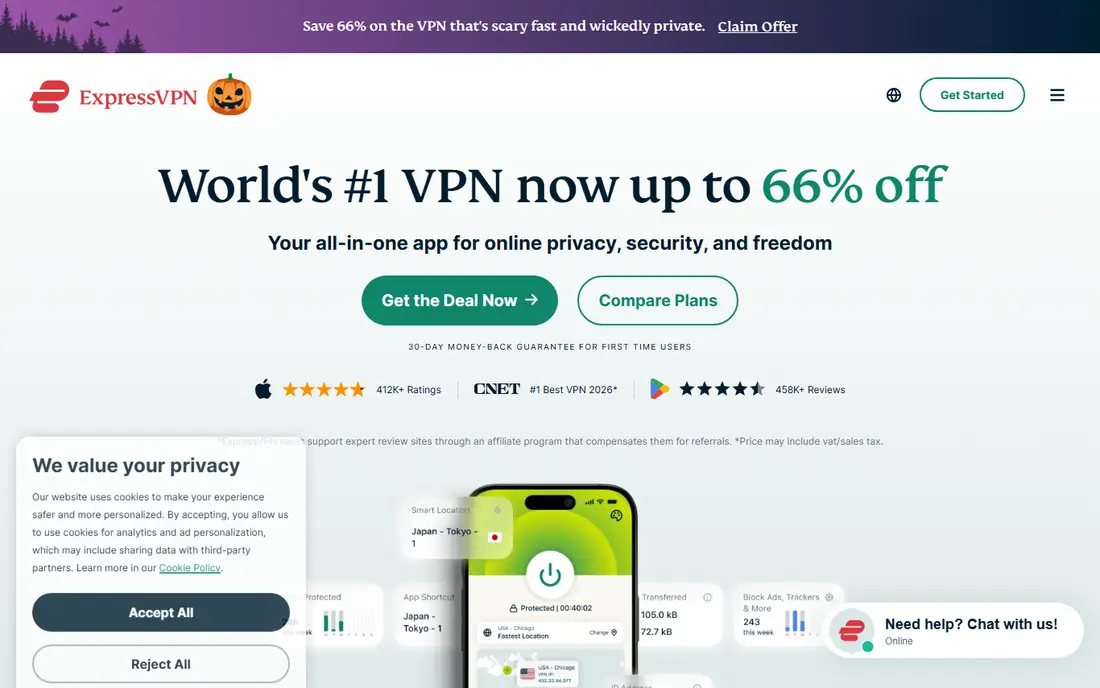
ExpressVPN is the pick for people who want a VPN that needs no fiddling. Its apps are clean on phones, laptops, routers, and TV devices, and its Lightway protocol tends to connect quickly and stay connected. That matters if you switch networks often, for example moving from home Wi-Fi to a coffee shop network, because a VPN that drops or stalls gets turned off, which defeats the point.
The price is the honest drawback. ExpressVPN costs more than Surfshark, CyberGhost, and Private Internet Access on comparable long-term plans, and it does not offer a free tier. Buy it if simplicity and dependable streaming access matter more to you than saving a few dollars a month. If price is the main driver, start further down this list.
- Very easy apps on many platforms
- Lightway protocol connects fast
- Audited no-logs policy
- Higher price than budget rivals
- Fewer devices than Surfshark on a single plan
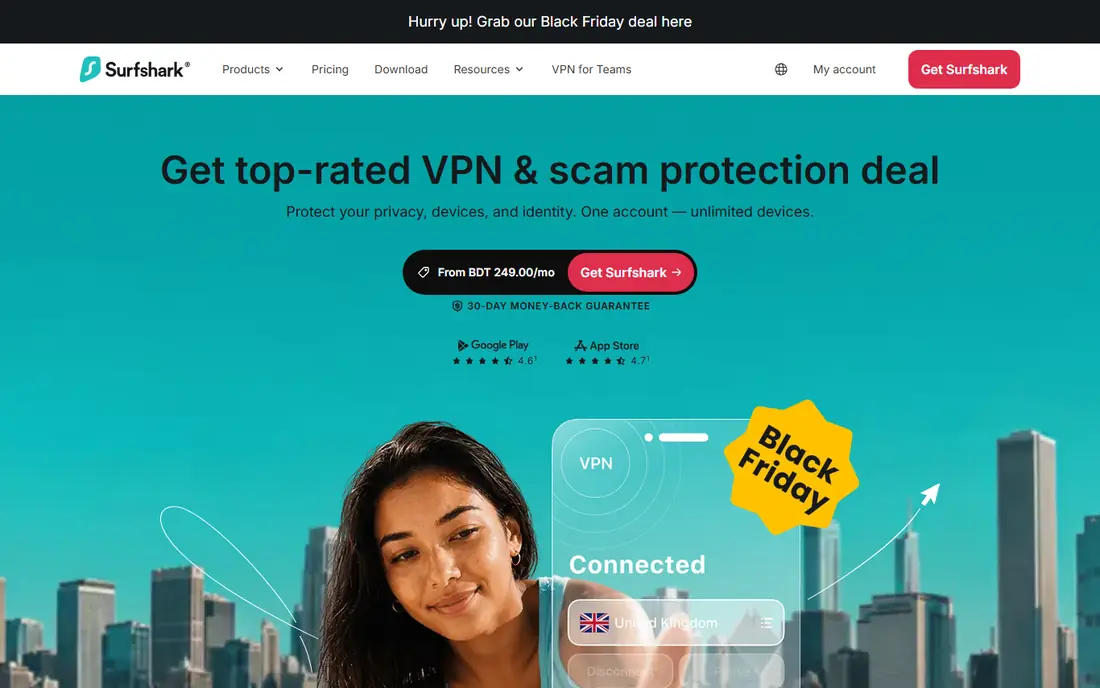
Surfshark wins on household value. One subscription covers every phone, laptop, and tablet in the house, with no need to count devices or buy a second plan for a partner or a child. That alone makes it cheaper for families than rivals that cap devices at five or ten, even when the headline monthly prices look close.
The service itself is a solid all-rounder, with a wide server network, ad and tracker blocking tools, and breach alerts on higher tiers. The main catch is the renewal jump that affects most VPNs in this list: the low price you see today is usually an introductory rate, and the renewal rate is higher. Set a reminder before renewal, and compare the renewal price, not just the first-term price.
- Unlimited simultaneous devices
- Low long-term pricing
- Extra security tools on higher tiers
- Renewal prices are higher than introductory prices
- Some advanced features sit on higher tiers
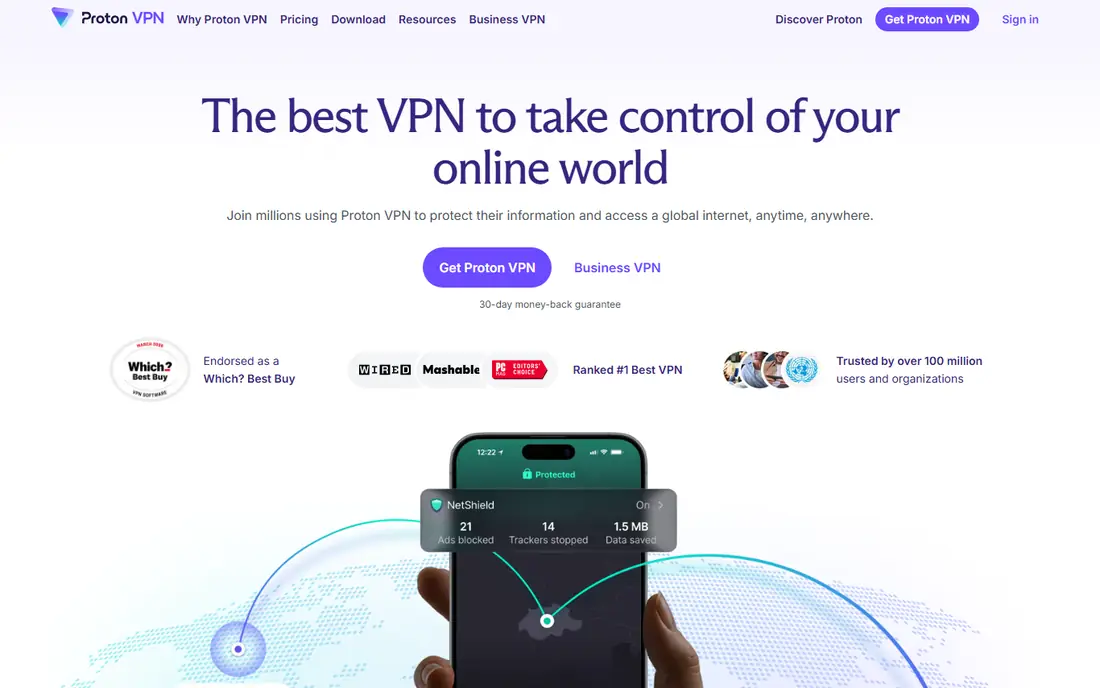
Proton VPN is the most credible free option here, and that is not a small claim in a market full of free VPNs that sell data or cap usage tightly. Its free plan offers unlimited data, which is rare, and it comes from a company with a public record on privacy, open-source apps, and independent audits. For basic protection on public Wi-Fi, the free tier is genuinely useful.
Paid plans add faster servers, streaming support, and more countries, plus features such as Secure Core routing through privacy-friendly locations. The free tier is slower by design, because free servers carry more users, so it will not suit heavy streaming or large downloads. Start free, and upgrade only if you hit those limits.
- Free plan with unlimited data
- Based in Switzerland
- Open-source apps and audited policies
- Free servers are slower and limited
- Streaming and faster speeds need a paid plan
CyberGhost is built for people who mainly want a VPN for streaming and everyday browsing without learning VPN jargon. Its apps label servers for specific streaming services, which removes the trial and error of guessing which server unblocks a given service. For a beginner, that labeling saves real time and frustration.
The long-term price is competitive, but the monthly plan is expensive, so CyberGhost rewards a longer commitment. Its privacy policy has been audited, and it operates NoSpy servers in Romania for users who want extra assurance. If you mostly need streaming and simple apps, CyberGhost is a strong, low-friction choice.
- Servers labeled for streaming services
- Beginner-friendly apps
- Long money-back period on longer plans
- Higher monthly price on short plans
- Based in Romania with a large server network to manage
Private Internet Access, often called PIA, is the tinkerer pick. It offers far more settings than most rivals, including port forwarding, split tunneling, and protocol choices, all in apps that are open source. Power users who want to tune their connection will find more here than in simpler apps, and the unlimited device limit makes it good value for households too.
Beginners may find the settings overwhelming at first, and the default setup is not as polished as ExpressVPN or Surfshark. Streaming access is decent but less consistent in public comparisons than the top streaming picks. Choose PIA if you value control and transparency over a minimal interface.
- Unlimited devices
- Deep settings for advanced users
- Open-source apps and audited no-logs policy
- Interface can feel busy for beginners
- Streaming support is less consistent than ExpressVPN
Mullvad takes a different approach from almost every other VPN here. You get an account number, not an email-based account, and you pay a flat monthly price that does not change with the term length. You can even pay by cash sent by post, which is unusual and tells you a lot about who this service is built for.
That privacy focus comes with trade-offs. There is no free tier, and streaming services often block Mullvad servers, because the company does not prioritize unblocking them. The server network is smaller than Surfshark or CyberGhost. If anonymity and a simple, honest price matter most, Mullvad is the best pick in this list. If streaming is your main use, look elsewhere.
- Flat monthly price with no long-term lock-in
- No email required
- Accepts cash and crypto payments
- No free tier
- Streaming support is limited
- Fewer servers than larger rivals
Windscribe offers a useful middle ground between a fully free VPN and a paid subscription. Its free plan gives a monthly data allowance that is enough for occasional public Wi-Fi use and light browsing, and it covers unlimited devices. The build-a-plan option also lets paid users buy access to specific locations rather than a full plan, which is rare.
The free allowance will not cover streaming or heavy use, and free servers can be slower. Paid plans remove those limits and add more locations and features. Windscribe suits people who want a free VPN for travel or occasional use, with a clear upgrade path if their needs grow.
- Free plan with a monthly data allowance
- Unlimited devices
- Flexible build-a-plan option
- Free data allowance is limited
- Speeds and server choice are better on paid plans
IPVanish is a practical choice for households with many devices and for people who run a VPN on a TV stick or Android TV box. Its TV apps are well regarded, and the unlimited device limit means you do not need to manage a device count. The service also offers a wide server network and standard privacy tools such as a kill switch and split tunneling.
The main point to weigh is jurisdiction: IPVanish is based in the United States, while some rivals are based in Switzerland, Panama, or the British Virgin Islands. Its no-logs policy has been audited, which helps, but privacy-focused buyers often prefer a non-US base. For everyday household and TV use, that trade may be acceptable.
- Unlimited devices
- Strong apps for TV devices
- Audited no-logs policy
- Based in the United States
- Streaming support varies by service
Hide.me is worth a look if you need a VPN that works on restricted or heavily filtered networks. It supports several protocols, including options designed to get through filtering that blocks standard VPN traffic, and its apps include tools for customizing connections. That flexibility is useful for travelers to countries with strict network controls.
The free plan is usable for light browsing, with a monthly data allowance and a smaller server choice. Paid plans add unlimited data, faster speeds, and streaming support, but they cost more than Surfshark or CyberGhost on long terms. Pick Hide.me for its protocol range and free tier, not as the cheapest paid option.
- Free plan with a data allowance
- Multiple protocols for restricted networks
- Audited no-logs policy
- Free tier limits servers and speed
- Paid plans cost more than budget rivals
How we picked these
We compared official pricing pages, privacy policies, audit statements, device limits, and free tier terms for each VPN, along with public comparisons checked in October 2026. We only listed services that are still operating, that publish a clear no-logs policy, and that offer apps for the main desktop and mobile platforms. We did not claim hands-on speed testing, because speeds vary by location, server load, and your own internet connection.
We also weighted renewal pricing, not just the introductory deal price, because that is where most buyers get surprised. A VPN is a long-term privacy tool, so a clear policy, a working kill switch, and a company that has been audited matter more than a single promotional price.
How to choose the right alternative
Start with your main use. If you stream a lot, pick a VPN with a record of unblocking the services you use, and use the money-back period to test it on your own connection. If you mainly want protection on public Wi-Fi, a free tier from Proton VPN or Windscribe may be enough, and you can upgrade later if you need more speed.
Next, count your devices. A household with many phones, laptops, and TVs will save money with an unlimited-device plan, even if the monthly price looks slightly higher than a capped rival. Finally, check the renewal price and the refund window before you pay for two years. A low first-term price is only a good deal if you are happy to pay the renewal rate or switch when it ends.
Frequently asked questions
What is the best NordVPN alternative overall?
For most households, Surfshark offers the best balance of price, unlimited devices, and everyday features. For privacy-first buyers, Proton VPN or Mullvad may fit better, depending on whether you want a free tier or maximum anonymity. There is no single best pick for every use, so match the VPN to your main need.
Are there good free alternatives to NordVPN?
Yes. Proton VPN has the strongest free plan in this list, with unlimited data, while Windscribe and Hide.me offer free plans with monthly data allowances. Free plans are slower and have fewer servers, but they are useful for basic protection on public Wi-Fi. Avoid free VPNs that do not publish a clear privacy policy.
Which alternative is best for streaming?
ExpressVPN and CyberGhost have the strongest records for streaming in public comparisons, with Surfshark close behind. Streaming access changes as services update their blocking, so test your specific services during the money-back period rather than trusting a general claim.
Do I need to pay for two years to get a good price?
No, but long-term plans are where the lowest monthly prices appear. Monthly plans cost much more per month, so they suit short-term needs such as a single trip. If you choose a long plan, note the renewal price and set a reminder before it renews.
Is Mullvad better than Surfshark for privacy?
Mullvad is stronger on anonymity, because it needs no email and accepts cash, and its price never changes with term length. Surfshark is stronger on value, device coverage, and streaming features. Choose Mullvad if anonymity is the priority, and Surfshark if household value and features matter more.
Will a VPN make me fully anonymous online?
No VPN alone makes you fully anonymous. A VPN hides your traffic from your internet provider and masks your IP address from websites, but your accounts, browser fingerprint, and online behavior can still identify you. Use a VPN as one layer, alongside good passwords, two-factor authentication, and careful sharing of personal information.
Sources
See where you really rank - block by block
ProMapRanker scans Google Maps across a grid of your service area. Simple monthly plans from $19, white-label on every plan.
Start freeKeep reading
 zeffy payment processor stripe alternatives
Zeffy and Stripe Alternatives for Nonprofits in 2026
Explore zeffy payment processor stripe alternatives for nonprofits. We compare 8 fundraising platforms on fees, donor tools, and nonprofit focus. Check fees.
Read → workday alternatives
Workday Alternatives in 2026
Workday alternatives compared: we review 8 HR and payroll platforms that replace Workday, with pricing, strengths and honest limits for each team size.
Read → what's the best weather app
What's the Best Weather App in 2026
Wondering what's the best weather app? We compare 10 free and paid apps for forecasts, radar, alerts, and Colorado mountain weather for everyday and storm use.
Read →