 ProMapRanker
NiceJob vs Birdeye

Key takeaways
- NiceJob publishes its prices: Starter costs $95 a month and Pro costs $135 a month, with a 14-day trial and no contract on self-service plans.
- Birdeye publishes no prices and sells by quote, with third-party reports putting one location near $299 a month on an annual agreement.
- NiceJob fits a single-location business that wants review requests, website widgets, and referrals at a fixed monthly price.
- Birdeye fits a multi-location business that wants reviews, listings, messaging, and social tools in one platform and can sign an annual agreement.
Quick comparison
| Pick | Great for | Pricing starts at | Free tier | |
|---|---|---|---|---|
 NiceJob | Single-location review generation | $95 per month (Starter) | Free trial (14 days) | Visit |
 Birdeye | Multi-location reputation management | quote only | No | Visit |
NiceJob vs Birdeye: head to head
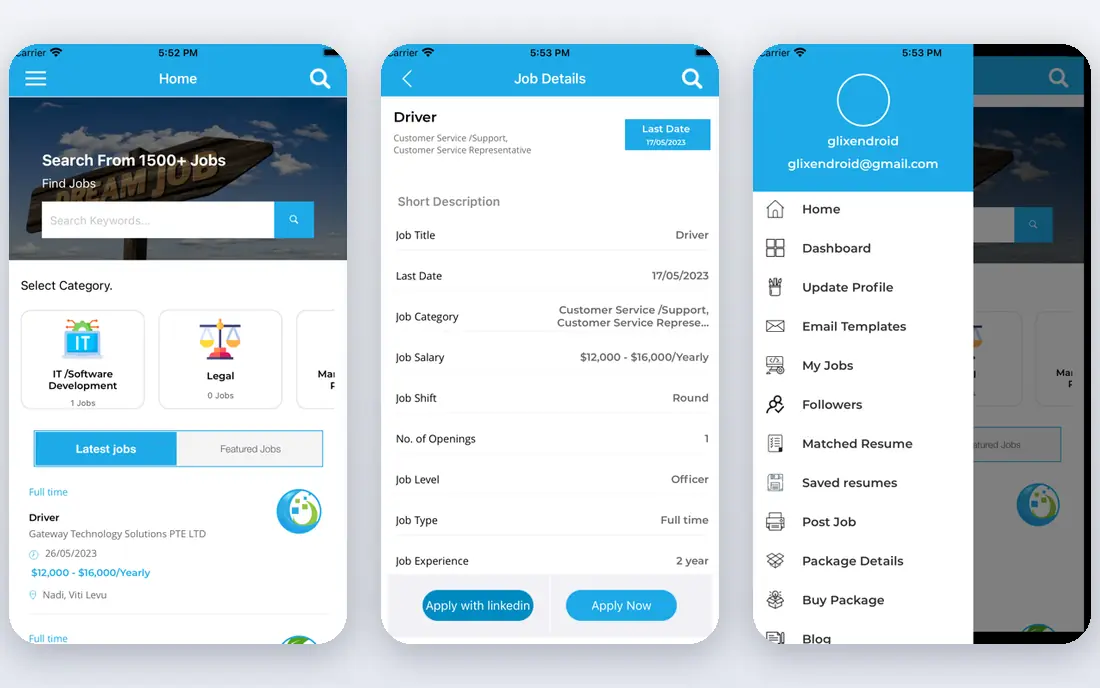
NiceJob is review generation software for local businesses. It sends automated review requests by text and email after a job, places review widgets on a website, posts new reviews to social media, runs a team leaderboard, and gives the business a hosted review microsite. The Starter plan costs $95 a month and the Pro plan costs $135 a month, both billed monthly in US dollars, with a 14-day free trial that needs no credit card. NiceJob states that self-service customers are not locked into a contract and can cancel at any time, and billing starts the day the trial ends. There is no annual billing option and no annual discount, so the monthly figure is the full subscription cost. A managed website add-on called Sites costs $99 a month plus a one-time $199 setup fee, charged on top of the review plan.
The split between the two plans matters more than the headline price. Starter covers review requests, social proof widgets, social sharing, the team leaderboard, and the microsite. Pro adds everything in Starter plus automated rebooking reminders, referral campaigns, email broadcasts, AI-drafted review replies, NPS surveys, and competitor tracking. That means a business that buys NiceJob mainly to answer reviews faster or to watch rival review activity has a real entry price of $135 a month, not $95. The price also moved recently: the same plans were listed at $75 and $125 in October 2026, and the current $95 and $135 figures replaced them, so older guides understate what a new customer pays now. Gifts, which used to appear under Pro, no longer appears on the pricing page.
NiceJob has clear limits. Each plan covers one business, with no per-user or per-location charge published for Starter or Pro, and franchises and multi-location businesses are routed to custom pricing. It does not manage business listings across directories, it has no webchat or AI chatbot for the website, and its social tools cover posting reviews rather than full social scheduling. A single-location roofer, dentist, salon, or contractor that wants a steady flow of Google reviews with little setup is the natural fit. Setup is short: connect the Google Business Profile, import the customer list, turn on automated requests, and add the widget to the website. Most small teams finish in an afternoon, with no implementation fee on the self-service plans.
- Published prices with no contract
- Automated review requests by text and email
- Simple setup for one location
- AI replies and competitor tracking need the $135 Pro plan
- No listings management or webchat
- Multi-location pricing is by quote
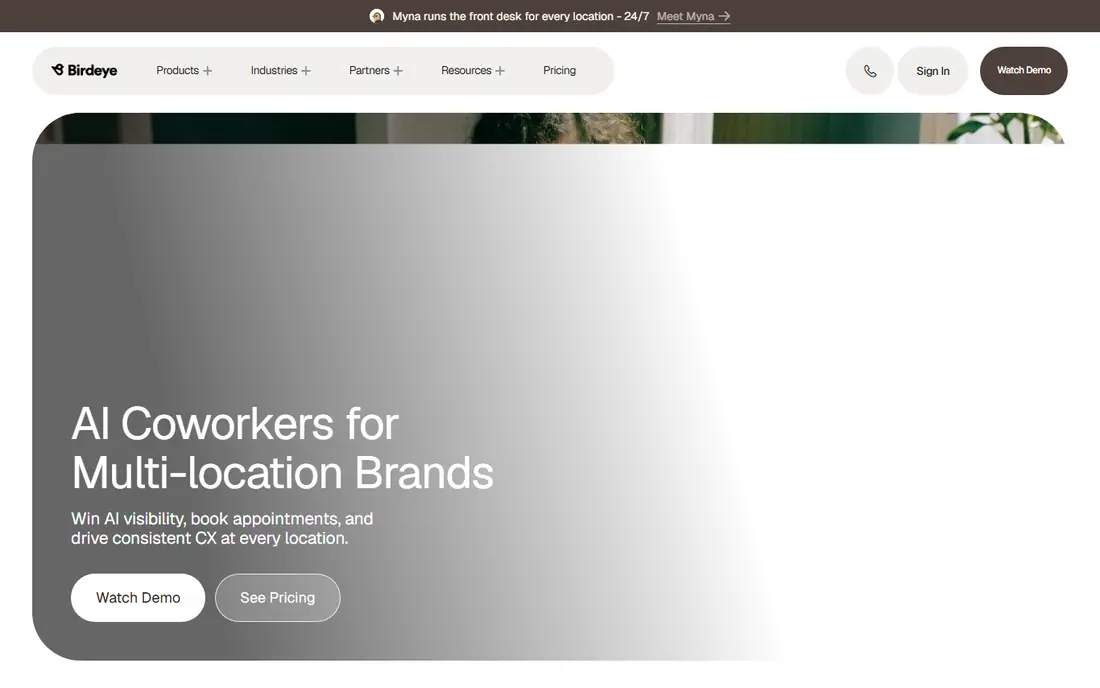
Birdeye is an all-in-one reputation platform built for businesses with more than one storefront. It covers review collection and AI-drafted replies, listings management across directories, messaging and webchat, social posting, surveys, an AI chatbot, and payments, all inside one dashboard per location. The pricing page at birdeye.com/pricing is a lead form rather than a price list: it asks for an email, company name, mobile number, and a location count in six bands, from 1 to 3 locations up to 40 to 249, then routes the buyer to sales. Birdeye states in its own cost article that pricing is per location, modular, and sold on annual agreements. Third-party trackers consistently report the same three tiers: Starter near $299 per location a month, Growth near $349, and Dominate near $449, with a custom Premium plan for four or more locations. Onboarding is reported at $500 to $1,500 per location, and add-on modules are reported at $50 to $150 a month each.
The breadth is the reason to pay the higher figure. A business with five locations can watch reviews, listings, messages, and social activity for every site from one screen, compare locations against each other, and run surveys and competitor monitoring without buying separate tools. Per-location rates fall as the location count rises, with third-party reports putting ten or more locations near $199 to $249 a location a month. The plans stack up in a clear order: Starter covers reviews, listings, and messaging; Growth adds social tools; Dominate adds the chatbot and deeper AI features. For a franchise group or a regional chain, that single contract replaces several subscriptions and gives head office one view of every location.
The cost side needs a careful read before signing. Because pricing is per location, the monthly figure multiplies with every site: five locations on the reported Growth tier run about $1,745 a month before add-ons, or about $20,940 a year. Almost every deal is structured as a 12-month annual contract that auto-renews, and sources report a 90-day written cancellation window and a renewal increase near 8 percent. Text messages sent on the business behalf also carry small per-message carrier fees, usually $0.01 to $0.03 each. A single-location shop that only needs review requests will pay for breadth it may not use, and should compare the reported $299 entry figure against NiceJob at $95 or $135 before booking a demo. Get the quote in writing at the real location count, with onboarding and add-ons itemized, and confirm the cancellation window in the contract.
- Reviews, listings, messaging, and social tools in one dashboard
- Per-location rates fall as locations are added
- Strong competitor monitoring
- No published prices and sales-led quotes
- 12-month annual agreements with a reported 90-day cancellation notice
- Cost multiplies per location
How we chose
We compared the vendor pricing pages, product documentation, and feature lists for both tools, read on 14 November 2026. NiceJob publishes its prices, so its figures come from its own pricing page. Birdeye publishes no prices, so its figures are third-party reports and are labelled as reported, not as vendor quotes. We compared plan contents, contract terms, location-based pricing, and which features sit behind each tier. We did no hands-on testing and we claim none. Prices change, so confirm the current figure on each vendor pricing page before you buy.
What to check before you buy
Check the contract first, because it shapes the real cost more than the monthly figure. Confirm whether the agreement is month to month or a 12-month term, how auto-renewal works, and how much notice cancellation needs. Ask for onboarding and setup fees in writing, and ask which add-ons the quoted price leaves out. Confirm who owns the review data and the customer list if the contract ends, and whether text message volume carries extra carrier fees. Check that the tool connects to the Google Business Profile and the booking or job system the business already uses, so review requests go out without manual work.
| Business size | Likely monthly cost | Pick |
|---|---|---|
| 1 location, reviews only | $95 to $135 | NiceJob |
| 1 location, reviews plus listings and chat | About $299, reported | Birdeye Starter |
| 5 locations, full suite | About $1,745, reported | Birdeye Growth |
| 10 or more locations | About $199 to $249 per location, reported | Birdeye Premium |
A one-location business that wants reviews flowing to Google with a fixed bill should start with NiceJob and move up only if it needs AI replies or competitor tracking. A business with several locations that wants one dashboard for reviews, listings, and messages should take the Birdeye demo and compare the written quote, including onboarding, against buying separate review and listings tools. Count the locations that will actually use the platform, since Birdeye charges per location and an unused site still counts. Check the trial terms too: NiceJob offers 14 days with no card, while Birdeye offers a demo and a quote rather than a trial.
Frequently asked questions
Is NiceJob cheaper than Birdeye?
Yes, for a single location. NiceJob Starter costs $95 a month and Pro costs $135 a month, with a 14-day trial and no contract on self-service plans. Birdeye publishes no prices, and third-party reports put one location near $299 a month on an annual agreement, so the gap is about $164 to $204 a month before onboarding and add-ons.
Does Birdeye publish its prices?
No. The Birdeye pricing page is a lead form that asks for an email, company name, mobile number, and location count, then routes the buyer to sales. Third-party trackers report Starter near $299, Growth near $349, and Dominate near $449 per location a month, with custom Premium pricing at four or more locations.
Which tool fits a single-location roofer?
NiceJob fits most single-location roofers better. It automates review requests by text and email after each job, adds review widgets to the website, and costs $95 or $135 a month with no contract. Birdeye adds listings, messaging, and social tools, but its per-location price and annual agreement suit multi-location businesses more than a one-crew shop.
Does NiceJob include listings management?
No. NiceJob covers review requests, review widgets, social sharing of reviews, referrals, and rebooking campaigns, but it does not sync business listings across directories. A business that needs listings cleanup and monitoring across many sites should look at Birdeye, which includes Listings AI in its Starter tier.
Can I cancel Birdeye at any time?
Not under the usual terms. Birdeye sells on 12-month annual agreements that auto-renew, and sources report a 90-day written cancellation notice before the renewal date. Missing that window can extend the contract for another year, so mark the notice date when signing and confirm the renewal increase in the contract.
Sources
See where you really rank - block by block
ProMapRanker scans Google Maps across a grid of your service area. Simple monthly plans from $19, white-label on every plan.
Start freeKeep reading
 Podium alternatives
7 Best Podium Alternatives for Local Businesses
Compare the best Podium alternatives for local businesses, with real starting prices, review tools, messaging features, and pros and cons to help you choose.
Read → Places Scout alternatives
7 Best Places Scout Alternatives for Local SEO
Places Scout alternatives compared side by side for local SEO: 7 tools with prices, free plans, rank tracking, citations and reviews to help you choose well.
Read → PinMeTo alternatives
8 Best PinMeTo Alternatives for Local Listings
Compare the 8 best PinMeTo alternatives for local listings, with real starting prices and free trials, so you can pick the right tool for your locations.
Read →