 ProMapRanker
Best MasterClass Alternatives in 2026

Key takeaways
- Creative platforms suit makers who learn by doing, while university platforms suit learners who want a credential.
- Per-course buying suits single skills, and subscriptions suit learners who take several courses a year.
- Free platforms cover foundations well, but they rarely offer career certificates or specialist craft teaching.
- Check recent reviews, update dates, and preview lessons before paying, whatever the platform.
Quick comparison
| Pick | Great for | Pricing starts at | Free tier | |
|---|---|---|---|---|
 Skillshare | Creative project-based classes | See website | Free trial | Visit |
 Udemy | Buy one course at a time | See website | Yes | Visit |
 Coursera | University and company certificates | $59 per month | Yes | Visit |
 LinkedIn Learning | Workplace skills with profile certificates | $39.99 per month | Free trial | Visit |
 Domestika | Creative courses you buy once | See website | No | Visit |
 CreativeLive | Photo, video, and design classes | See website | Yes | Visit |
 Khan Academy | Free academic foundations | Free | Yes | Visit |
 edX | University courses with free audit | See website | Yes | Visit |
The best masterclass alternatives
These platforms replace the famous-teacher format with different strengths: project practice, per-course buying, career certificates, or free foundations. The right pick depends on what you want at the end: a finished project, a new skill for work, or a certificate you can show an employer. Price alone is a poor guide, because a cheap course you abandon costs more than a dearer one you finish.
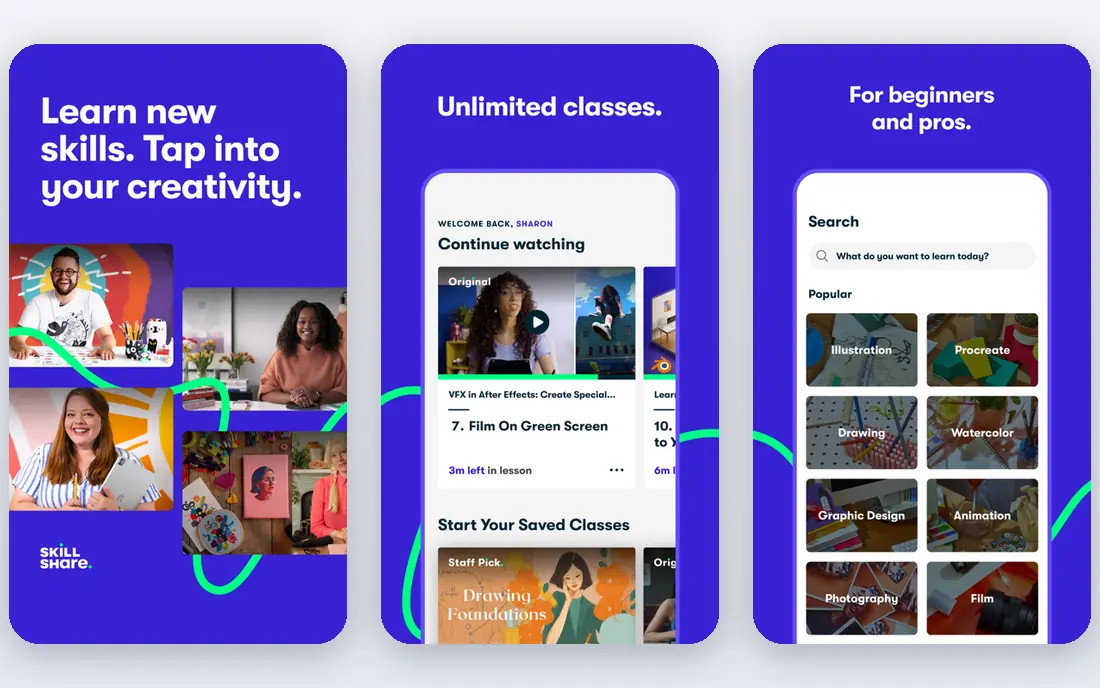
Skillshare feels closest to a creative workshop: short lessons, a project at the end, and a catalogue that leans hard into design, illustration, photography, and related crafts. The class format suits people who learn by making something, not by watching a long lecture and taking notes. You can dip into a single skill without committing to a full course.
The weakness is credential value. A Skillshare certificate will not carry the same weight as a university-backed certificate, and lesson quality varies because many teachers publish on the platform. Check the class reviews, the project gallery, and the teacher background before you start, and treat it as skill practice rather than a formal qualification.
- Large creative catalogue
- Short project-based lessons
- Class projects encourage practice
- Certificates carry less weight with employers
- Quality varies by teacher
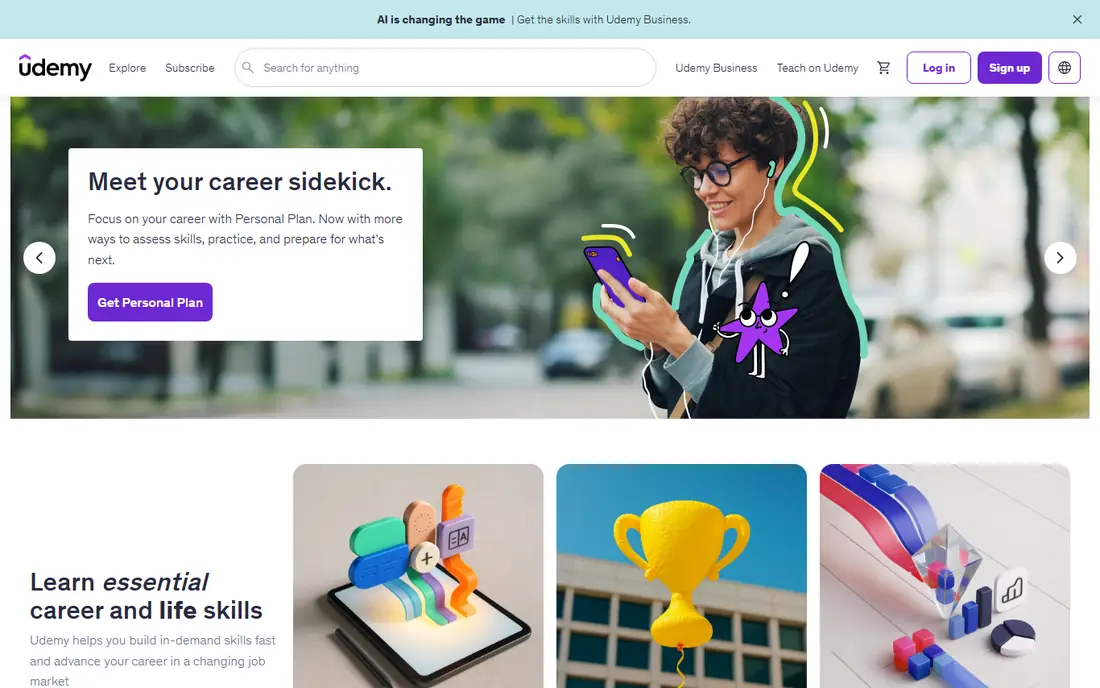
Udemy suits the learner who wants exactly one skill and does not want a subscription. You buy a course, keep access to it, and work through it at your own pace, which is a better deal than a monthly fee you forget to cancel. The catalogue covers almost every practical topic, from coding and data to music and photography.
The trade-off is uneven quality. Anyone can publish a course, so a popular topic may have dozens of options ranging from excellent to thin. Read recent reviews, watch the free preview lessons, and check when the course was last updated. A course that has not been updated in years may teach tools that have moved on.
- Huge catalogue across topics
- Pay per course with lifetime access
- Frequent sales
- Quality varies widely
- Sale prices make list prices hard to trust
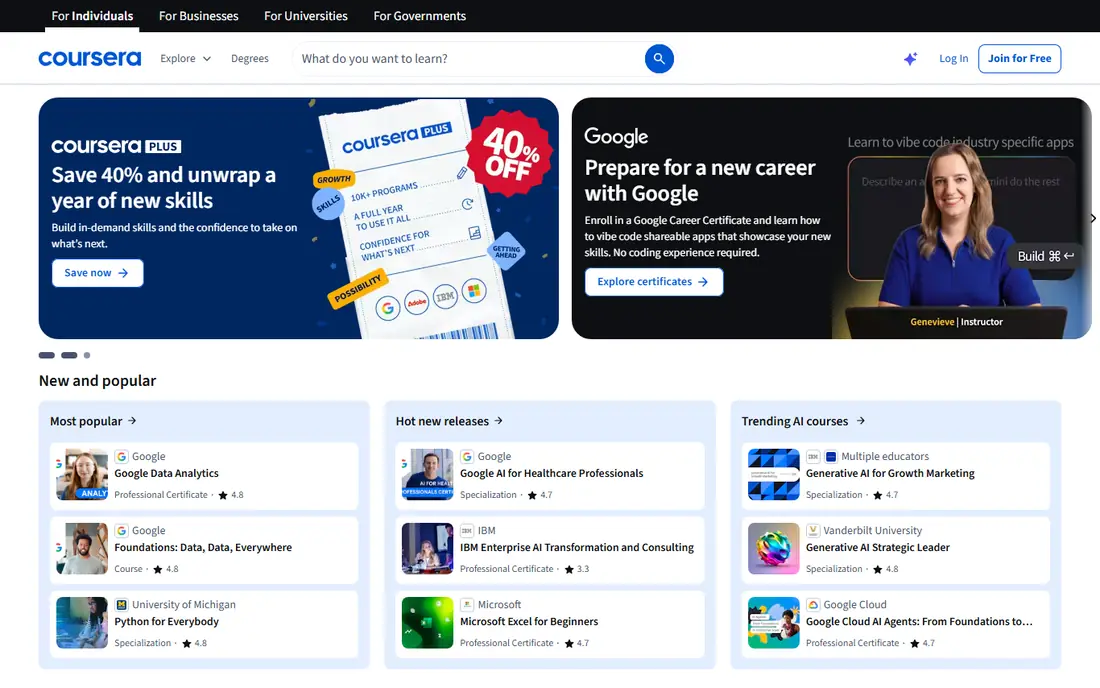
Coursera is the pick when a certificate matters. Courses come from universities and large employers, and many lead to certificates or full specialisations you can show on a resume or a LinkedIn profile. The audit option on many courses lets you watch the material for free and pay only if you want the graded work and the certificate.
The academic tone is not for everyone. Some courses feel like a university lecture, with reading and assignments that take real time, and a monthly subscription can add up if you pause for a month. Coursera works best when you have a clear career goal and a weekly study slot you will actually keep.
- Courses from universities and large companies
- Certificates for career profiles
- Audit option on many courses
- Subscription cost adds up
- Some courses feel academic rather than practical
LinkedIn Learning is built for the working professional who needs a skill for the job in front of them. Courses cover software, management, data, and communication, and learning paths bundle related courses into a sensible order. Completed courses can appear on your LinkedIn profile, which helps when a hiring manager checks your background.
The catalogue is thinner for pure creative hobbies and for deep academic subjects, and you cannot buy a single course outright. It also assumes you are comfortable learning in short, structured videos. If your employer already pays for access, it is an easy win; if you pay yourself, check whether you will use it monthly.
- Strong business and software coverage
- Certificates show on a LinkedIn profile
- Learning paths group related courses
- Less depth in creative arts
- Subscription only, no per-course buying
Domestika has built its name on creative courses taught by working artists and designers, with a strong focus on illustration, crafts, photography, and design. You buy a course once and keep it, which suits learners who return to a technique over months. The project-based format means you finish with work you can show, not just notes.
The range is narrower than a general platform. If you want coding, business, or academic subjects, Domestika will disappoint, and buying many courses one by one can cost more than a subscription elsewhere. Pick it when the topic is creative and you want a teacher who actually practices the craft.
- Strong art and design teachers
- Buy a course and keep it
- Project-based learning
- Mostly creative topics
- Per-course costs add up if you take many
CreativeLive started with photography and video, and that heritage still shows in a deep catalogue for makers who work with a camera. Live classes and free streams let you sample a teacher before you pay, and the community around a class can be genuinely helpful for feedback. It is a comfortable home for visual creatives.
The catalogue is smaller than the general platforms, and some older classes cover gear or software that has changed since recording. Check the recording date and the class reviews before buying, and use the free streams to test whether the teaching style suits you. For photo and video skills, it remains a strong specialist pick.
- Deep photo and video catalogue
- Live classes and free streams
- Buy or subscribe options
- Smaller overall catalogue
- Some content feels dated
Khan Academy is the free foundation option, and it does that job better than any paid platform on this list. Maths, science, computing, and test preparation are broken into short lessons with practice exercises that check understanding as you go. Students, parents, and adult learners returning to basics will all find something useful here.
The limit is scope and style. There are no famous practitioners giving inspirational talks, and most subjects do not end with a career certificate. Khan Academy is for building foundations and filling gaps, not for learning a creative craft from a working professional. Use it as the free base, then add a specialist platform for the craft itself.
- Completely free core lessons
- Strong maths, science, and test prep
- Self-paced practice
- No celebrity teachers
- No career certificates for most subjects
edX offers university courses in a format that lets you audit much of the material for free and pay only for a verified certificate. That makes it a low-risk way to test a subject from a real university before committing money. Subjects lean academic, covering science, computing, business, and humanities with real depth.
The academic pace is the catch. Assignments and reading can take several hours a week, and verified certificates are paid per course, so a full series adds up. edX suits learners who want depth and a credential from a known institution, and who can protect a regular study time each week.
- University-backed courses
- Free audit on many courses
- Verified certificates available
- Certificate costs add up
- Some courses are demanding in time
How we picked these
We compared official feature pages, pricing pages, app store listings, privacy policies, and public reviews for each option. We kept only tools that are still offered and maintained in October 2026 and that fit the topic without stretching the definition. Where a price could not be confirmed from the vendor, we wrote See website rather than guessing. We did not claim hands-on testing that did not happen, and we weighed one concrete strength against one honest weakness for every product.
How to pick a platform you will finish
Start with the outcome, not the catalogue size. If you need a certificate for a job search, filter for platforms that offer one in your field and check whether employers in that field recognise it. If you need a portfolio piece, choose a project-based platform and look at student projects, not just the sales page. If you are exploring a hobby, a free platform or a single cheap course is a smarter first step than an annual subscription.
Test the teaching before you pay. Watch preview lessons, read reviews from the last year, and check when the course was last updated. Set a weekly study time and a finish date, because most abandoned courses fail on schedule, not on content. If a platform offers a trial, use it for a real lesson, not just a browse, and set a calendar reminder before the trial ends.
Frequently asked questions
Are these platforms as good as learning from famous experts?
They serve a different purpose. Famous-teacher classes inspire and introduce a craft, while these platforms focus on practice, structure, and credentials. If you want inspiration, a single famous-teacher class can help, but if you want a skill you can use at work, a structured course with projects or a certificate usually teaches more.
Which platform is best for creative skills?
Skillshare and Domestika are the strongest creative picks, with project-based lessons and teachers who practice the craft. CreativeLive is a good specialist for photography and video. Compare a few class previews in your exact topic before choosing, because teacher quality matters more than platform branding.
Which platform gives a certificate employers recognise?
Coursera and edX offer university-backed certificates, and LinkedIn Learning certificates show directly on a LinkedIn profile. Check whether employers in your field value that specific certificate, because recognition varies by industry and role. A certificate alone rarely lands a job without a portfolio or experience to back it.
Can I learn for free?
Yes, for foundations. Khan Academy is free for core academic subjects, and Coursera and edX offer free audit access on many courses. Udemy and CreativeLive also list some free courses. Free access usually excludes graded work and certificates, so pay only when you need those.
Should I buy a subscription or single courses?
Buy single courses when you need one or two skills and want lifetime access without a recurring fee. Choose a subscription when you take several courses a year and will use it monthly. If you are unsure, start with a single course or a trial, and upgrade only after you finish something.
Sources
See where you really rank - block by block
ProMapRanker scans Google Maps across a grid of your service area. Simple monthly plans from $19, white-label on every plan.
Start freeKeep reading
 zoho books alternatives
Best Zoho Books Alternatives in 2026
Compare the best zoho books alternatives for small business accounting, from QuickBooks Online and Xero to FreshBooks, Wave, and Sage in 2026, with pricing.
Read → zluri alternatives
Best Zluri Alternatives in 2026
Compare zluri alternatives for 2026, with SaaS management platforms for app discovery, spend tracking, renewals, and automation for IT, finance and procurement.
Read → zerobounce alternatives
Best ZeroBounce Alternatives in 2026
Best zerobounce alternatives for list hygiene: compare 8 email verification tools for bulk cleaning, real-time checks and catch-all handling in 2026 today.
Read →