 ProMapRanker
Best Lambda Labs Alternatives in 2026

Key takeaways
- In this article, Lambda Labs means the GPU cloud and AI infrastructure company, not any other business with a similar name.
- RunPod and Vast.ai are the most flexible choices for developers who want hourly rentals and fast experiments.
- CoreWeave, Crusoe, and Nebius suit larger training jobs where networking, scale, and support matter more than the lowest hourly rate.
- Marketplace pricing can look cheap, but availability, reliability, and support vary by host, so test with a real workload first.
Quick comparison
| Pick | Great for | Pricing starts at | Free tier | |
|---|---|---|---|---|
 CoreWeave | Large-scale AI training | See website | No | Visit |
 RunPod | Developer GPU pods and serverless | See website | No | Visit |
 Vast.ai | Cheapest marketplace GPU rentals | See website | No | Visit |
 Modal | Serverless Python and AI workloads | See website | Free trial | Visit |
 Paperspace | Notebooks and managed GPU machines | See website | Free trial | Visit |
 Nebius | European GPU cloud capacity | See website | No | Visit |
 Crusoe Cloud | Large clusters with clean energy focus | See website | No | Visit |
 Hyperstack | Multi-node GPU clusters | See website | Free trial | Visit |
 TensorDock | Low-cost marketplace GPU rentals | See website | No | Visit |
The best lambda labs alternatives
We compared official feature pages, pricing pages, documentation, and public reviews for GPU clouds that rent NVIDIA hardware by the hour, run serverless inference, or provide managed clusters. Prices in this market change with GPU availability and commitment terms, so where a rate could not be verified from the vendor page at writing time, we wrote See website. The right choice depends on job size, reliability needs, and how much infrastructure work your team wants to handle.
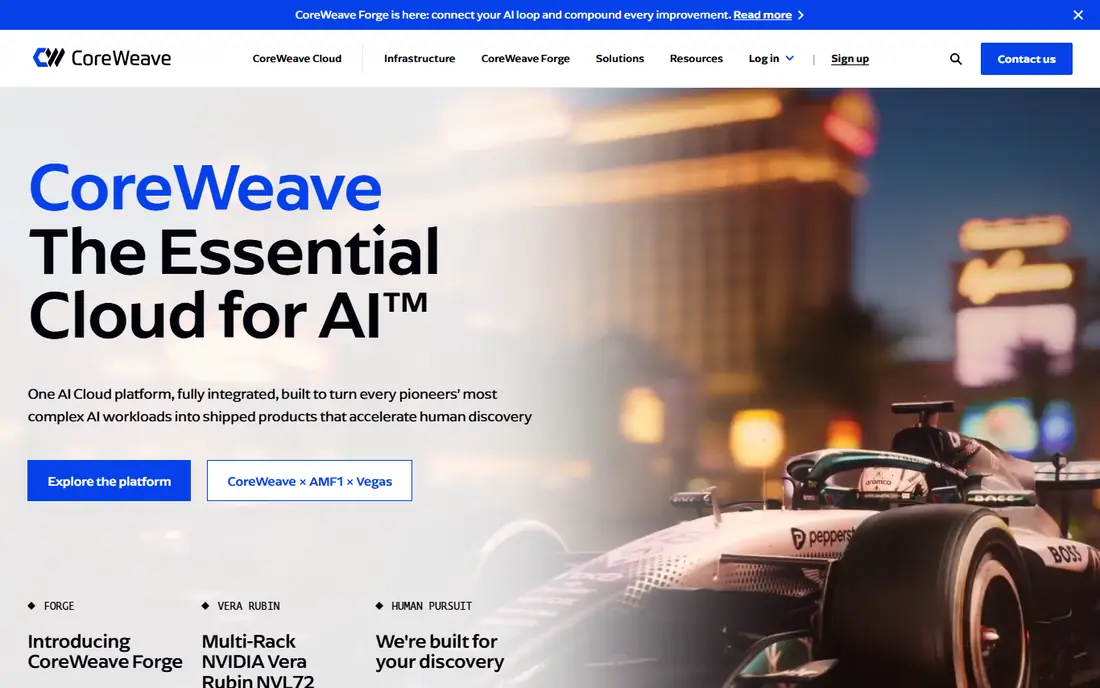
CoreWeave is the enterprise end of this list. It is designed for teams training large models or running sustained inference at scale, with cluster networking and infrastructure that single-machine rentals cannot match. If your job needs many GPUs working together for days or weeks, that engineering matters more than a small saving on a single card.
The trade-off is access. CoreWeave is not a casual hourly rental for a weekend experiment, and pricing usually follows a conversation about capacity and term. Smaller teams should trial a developer-focused cloud first, and move to CoreWeave when scale, reliability, and support justify the process.
- Built for large AI clusters with fast networking
- Strong enterprise support and capacity planning
- Wide range of NVIDIA hardware
- Pricing is largely contract-based
- Small teams may find onboarding and minimums heavy
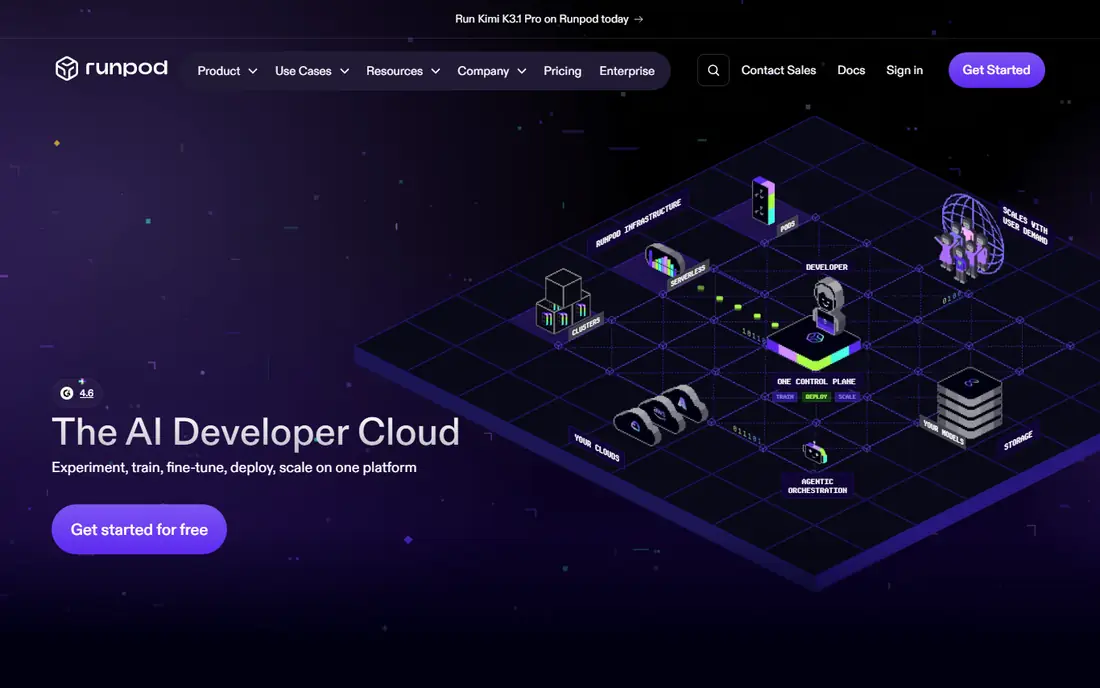
RunPod is a favorite with developers because it feels like renting a machine, not buying into a platform project. You can launch a pod with PyTorch and common libraries, attach storage, and shut it down when the job ends. Serverless workers add a second path for inference, scaling from zero and billing only for execution time.
The catch is the two-tier model. Secure Cloud machines run in managed data centers, while Community Cloud machines come from vetted hosts at lower prices. Community machines can be interrupted or vary in network speed, so use them for fault-tolerant experiments and Secure Cloud for work that must finish on time.
- Fast pod deployment with popular templates
- Serverless endpoints for inference
- Per-second billing on many workloads
- Community cloud reliability varies
- Multi-node cluster inventory is more limited than enterprise clouds
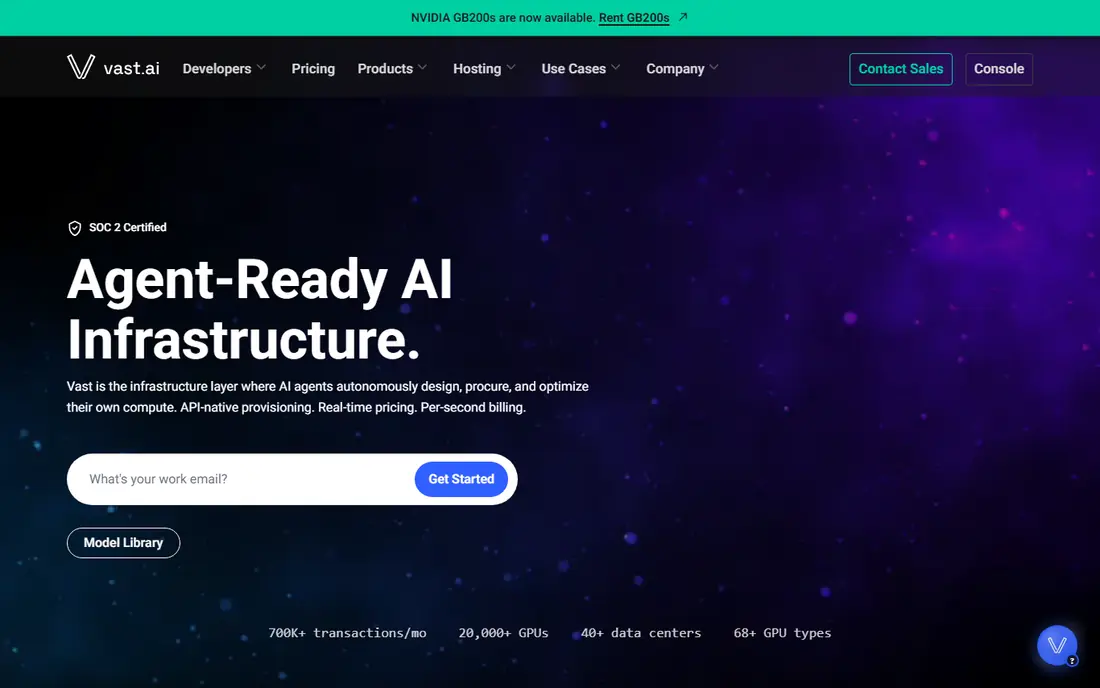
Vast.ai is a marketplace, not a single cloud, and that is both the appeal and the risk. Hosts set their own prices, so patient shoppers can find very low rates on cards that cost far more elsewhere. For prototyping, batch inference, and rendering jobs that can restart from a checkpoint, the savings add up fast.
For production work, the picture changes. Host quality varies, support is not the same as a managed cloud, and egress or storage costs depend on the host. Choose verified data center hosts for important jobs, keep checkpoints off the machine, and never assume a cheap spot instance will stay up for a long run.
- Often the lowest hourly rates in the market
- Wide choice of consumer and data center GPUs
- Good for short, resumable jobs
- Reliability and support depend on the individual host
- Spot machines can be interrupted
Modal takes a different approach from pod rental. You write Python functions, and Modal runs them on GPUs, scales them, and shuts them down when idle. That model suits inference endpoints, scheduled batch jobs, and apps that need GPU bursts without a standing fleet of machines.
The limit is scope. Teams that need custom cluster networking, long multi-node training, or bare-metal control will find Modal narrower than CoreWeave or Hyperstack. For app developers who want GPU power behind an API, though, the reduced operations work is a real advantage.
- Python-first serverless platform with fast scaling
- Good fit for inference APIs and batch jobs
- No servers to manage
- Less suited to long, multi-node training clusters
- Pricing depends on compute and usage details
Paperspace has long appealed to researchers and solo developers who want a notebook in the browser without configuring drivers and libraries by hand. You can pick a machine, open a workspace, and start training or testing, which lowers the barrier for students, freelancers, and small teams.
For very large training runs, Paperspace is not the first name most teams shortlist, and always-on machines can quietly add cost if you forget to stop them. Use it for exploration, coursework, and medium jobs, and move to a cluster cloud when a job needs many machines at once.
- Friendly notebook and machine setup for individuals and teams
- Managed infrastructure with storage options
- Part of DigitalOcean
- GPU choice and large-cluster options are narrower than specialist AI clouds
- Costs rise with always-on machines
Nebius suits teams that need GPU capacity with European hosting or that already run data and compliance work in Europe. It positions itself as a managed AI cloud, with clusters and infrastructure for training and inference rather than a pure marketplace. That managed layer helps teams that want support and predictable capacity.
The downside is familiarity. Public templates, community guides, and third-party tooling are thinner than for the longest-running developer clouds, so expect more setup work on unusual stacks. If data location is a requirement, though, that trade is often worth it.
- European data residency options
- Managed AI cloud with cluster capacity
- Growing range of NVIDIA hardware
- Pricing varies by region and commitment
- Smaller community of templates than RunPod
Crusoe Cloud targets teams that need serious cluster capacity and care about where the power comes from. Its pitch combines large GPU clusters with data centers built around lower-carbon energy, which appeals to companies reporting on energy use or procurement. For sustained training, cluster design and support matter as much as the card itself.
Casual users will find the sales-led process slow compared with self-serve pod rental. Crusoe makes sense when you have a defined training program, a budget for a term, and a team that can use cluster capacity well.
- Large HGX clusters for training
- Focus on energy-efficient data centers
- Enterprise support for sustained workloads
- Contract-led pricing
- Not aimed at casual hourly experimentation
Hyperstack is a practical middle ground between marketplace rentals and enterprise clouds. It offers on-demand GPUs and multi-node clusters with fast interconnects, which matters for training jobs that split across machines. Published comparisons have often placed its H100 rates below several larger rivals, though rates move with availability.
Region coverage is narrower than AWS or Google Cloud, so check that your data and users sit near a Hyperstack region before committing. For teams that need cluster performance without enterprise contract overhead, it is a strong trial candidate.
- Strong multi-node and NVLink cluster options
- Competitive on-demand rates in published comparisons
- Straightforward deployment
- Fewer regions than hyperscalers
- Enterprise support depth varies by plan
TensorDock follows the marketplace model, matching users with hosts that rent GPU capacity at lower rates than managed clouds. For rendering, batch inference, and short experiments, that price gap is the main reason to try it. Deployment is simple for single machines, and the catalog covers popular consumer and data center cards.
As with Vast.ai, the warning is reliability. Hosts differ, interruptions happen, and support will not match a managed cloud. Keep work checkpointed, test a host with a small job first, and reserve managed clouds for deadlines that cannot slip.
- Low marketplace rates for common GPUs
- Simple deployment for single-machine jobs
- Useful for rendering and batch work
- Reliability varies by host, like other marketplaces
- Limited enterprise features and support
How we picked these
We compared official feature pages, pricing pages, and documentation, plus public reviews and published price comparisons from October 2026. We kept only providers that offer live GPU rental, serverless GPU compute, or managed AI clusters, and we excluded the named company itself from the list. Because GPU rates shift with availability and term, we used See website where a vendor rate could not be verified at writing time, rather than repeating a stale hourly figure.
What to check before you rent
Start by sizing the job honestly. A single GPU for fine-tuning, a small cluster for training, and a serverless endpoint for inference are different purchases, and the cheapest hourly rate can be expensive if the job restarts or idles. Check the GPU model, memory, interconnect, and storage speed, not just the card name, since those details decide training time.
Next, model total cost. Add storage, egress, idle time, and failed runs to the hourly rate, and test interruption behavior on any marketplace host. Finally, run the same job on two providers during a trial, and compare wall-clock time and total bill, not just the advertised rate. That single test usually settles the choice.
Frequently asked questions
Is Lambda Labs the same as other companies called Lambda?
No. In this article, Lambda Labs means the GPU cloud and AI infrastructure company that rents NVIDIA hardware for AI training and inference. Other firms with similar names work in different fields and are not covered here.
What is the cheapest way to rent a GPU for experiments?
Marketplace providers such as Vast.ai and TensorDock often list the lowest hourly rates, especially for short and resumable jobs. Managed clouds cost more, but they offer steadier availability and support, so compare total job cost, not just the hourly figure.
Should I choose a marketplace or a managed cloud?
Choose a marketplace for fault-tolerant experiments and batch jobs where a restart is cheap. Choose a managed cloud for production inference, deadlines, and multi-node training, where reliability and support protect the schedule.
Do I need a cluster for fine-tuning?
Most fine-tuning jobs run well on one or a few GPUs, and a pod or serverless setup is enough. Clusters matter for large-model training, where many GPUs must work together with fast networking for days at a time.
How do I avoid surprise GPU bills?
Set spending limits where the provider offers them, stop idle machines, use spot or marketplace rates only for resumable work, and track storage and egress separately. A short trial with billing alerts will reveal idle costs before they grow.
Can I run inference without keeping a GPU running all day?
Yes. Serverless options such as Modal and RunPod serverless endpoints scale from zero and bill for execution time. That model suits APIs with uneven traffic, while steady traffic may cost less on a reserved machine.
Sources
- https://www.coreweave.com
- https://www.runpod.io
- https://vast.ai
- https://modal.com
- https://www.paperspace.com
- https://nebius.com
- https://www.crusoe.ai
- https://www.hyperstack.cloud
- https://www.tensordock.com
- https://lyceum.technology/magazine/lambda-labs-vs-runpod-vs-vast-ai/
- https://aidiscoverywire.com/best-cloud-gpu-for-ai/
See where you really rank - block by block
ProMapRanker scans Google Maps across a grid of your service area. Simple monthly plans from $19, white-label on every plan.
Start freeKeep reading
 zoho books alternatives
Best Zoho Books Alternatives in 2026
Compare the best zoho books alternatives for small business accounting, from QuickBooks Online and Xero to FreshBooks, Wave, and Sage in 2026, with pricing.
Read → zluri alternatives
Best Zluri Alternatives in 2026
Compare zluri alternatives for 2026, with SaaS management platforms for app discovery, spend tracking, renewals, and automation for IT, finance and procurement.
Read → zerobounce alternatives
Best ZeroBounce Alternatives in 2026
Best zerobounce alternatives for list hygiene: compare 8 email verification tools for bulk cleaning, real-time checks and catch-all handling in 2026 today.
Read →