 ProMapRanker
Best Informatica Integration Alternatives in 2026

Key takeaways
- Informatica covers enterprise ETL, data quality, and governance, so alternatives split between managed ELT and full ETL suites.
- Fivetran, Airbyte, Stitch, and Matillion suit warehouse-first teams that want automated ingestion.
- Talend, Boomi, and Workato suit enterprise or app integration work beyond simple warehouse loading.
- Azure Data Factory and AWS Glue suit teams already committed to Microsoft or Amazon cloud platforms.
- Price by volume, connectors, and transformation needs, not only by headline tier.
Quick comparison
| Pick | Great for | Pricing starts at | Free tier | |
|---|---|---|---|---|
 Fivetran | Automated SaaS ingestion | See website | No | Visit |
 Talend | Enterprise hybrid ETL | See website | No | Visit |
 Airbyte | Open source ingestion | Free | Yes | Visit |
 Matillion | Warehouse-native ELT | See website | No | Visit |
 Stitch | Simple replication for small teams | See website | Yes | Visit |
 Boomi | App and data integration | See website | No | Visit |
 Workato | App automation and integration | See website | No | Visit |
 Azure Data Factory | Microsoft cloud pipelines | See website | No | Visit |
 AWS Glue | Amazon cloud ETL | See website | No | Visit |
The best informatica integration alternatives
We compared official feature pages, pricing pages, and public reviews for connectors, transformation, change data capture, scheduling, and monitoring. Informatica is a broad enterprise platform, so no single tool matches it feature for feature. The list below groups tools by the job they do best.
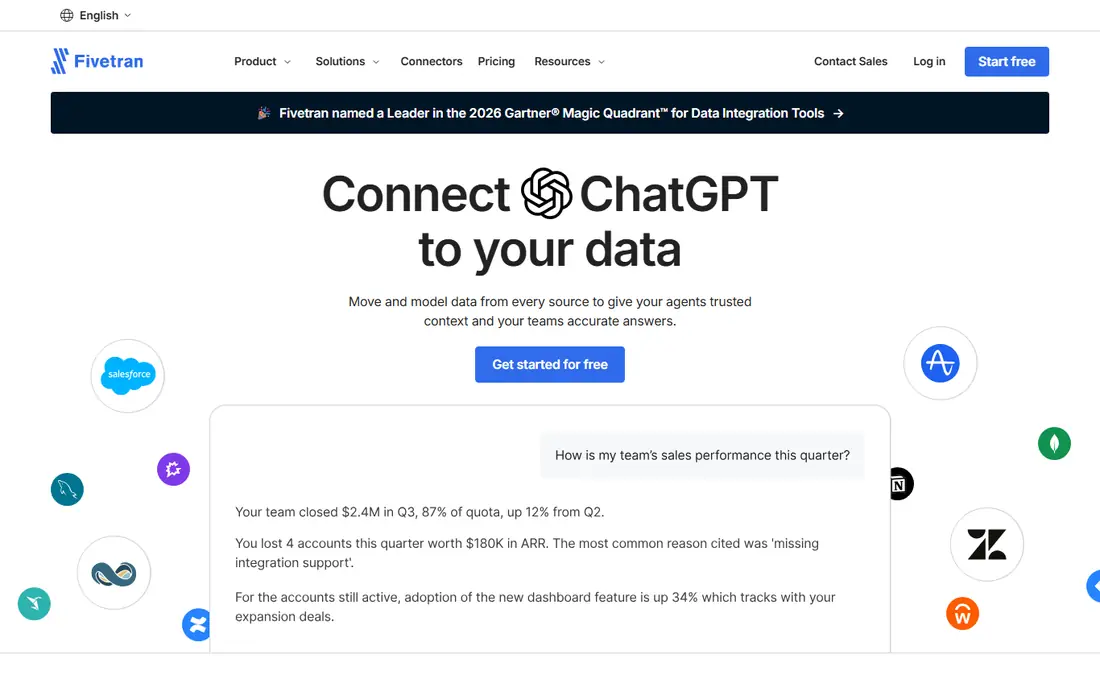
Fivetran suits teams that want SaaS and database data in a warehouse without building pipelines by hand. It offers hundreds of managed connectors, handles schema changes, and syncs on a schedule. That automation helps small data teams support many sources without a large engineering group.
The trade-off is price control and transformation depth. Fivetran charges by usage, often monthly active rows, so high-volume sources can cost more than expected. Transformation is mainly done in the warehouse with SQL or dbt, not in Fivetran itself. For hands-off ingestion, it is a strong, proven choice.
- Large managed connector catalog
- Automated schema handling
- Reliable ELT for warehouses
- Usage-based pricing can rise with volume
- Transformation needs dbt or warehouse SQL
- Custom connectors are limited

Talend, now part of Qlik, suits enterprise teams that need full ETL plus data quality and governance. It offers a visual designer, hundreds of connectors, and support for cloud and on-prem data. That breadth helps regulated teams that need transformation, cleansing, and governance in one platform.
The drawback is effort and cost. Talend needs training and skilled staff, and pricing is quote-based. Small teams that only need warehouse ingestion may find it heavier than Fivetran or Airbyte. For hybrid enterprise work, the depth is the reason to choose it.
- Visual ETL design
- Data quality and governance features
- Hybrid cloud and on-prem support
- Pricing is quote-based
- Learning curve is real
- Total cost can be high for small teams
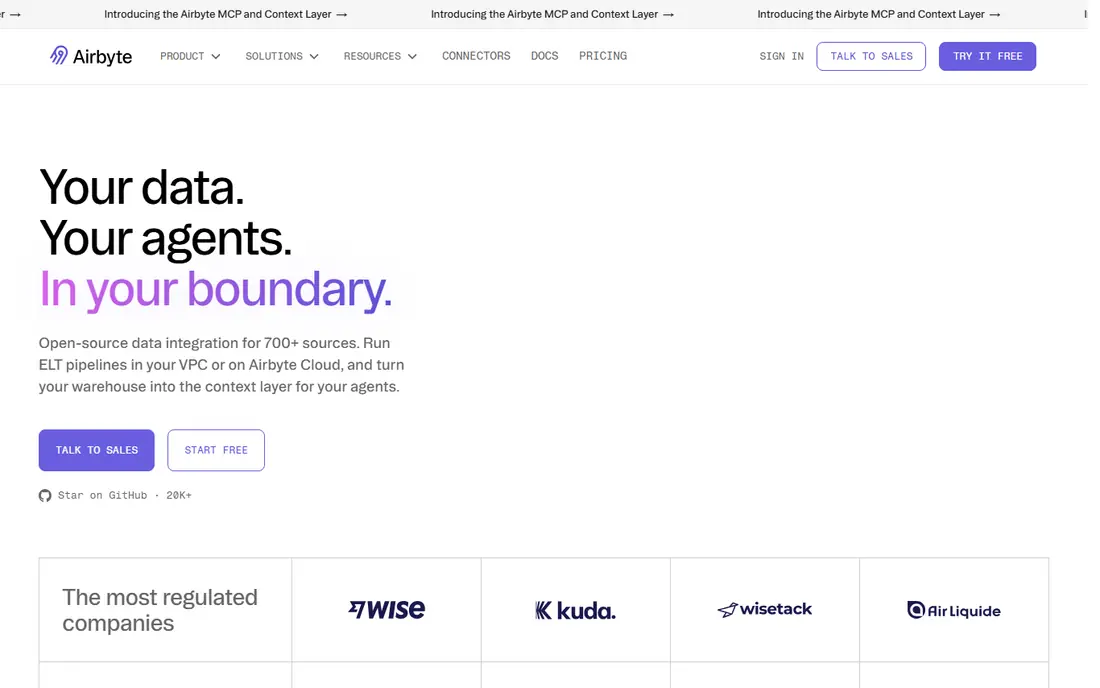
Airbyte suits data engineers who want control and no vendor lock-in. Its open source core offers hundreds of connectors, plus a connector builder for custom sources. Teams can self-host for free in software terms or use Airbyte Cloud for managed operation.
Self-hosting is not free in effort. You handle infrastructure, updates, monitoring, and scaling, and cloud pricing is usage-based. Transformation is mainly done in the warehouse, not in Airbyte itself. For engineering-led teams, the openness and connector range are major strengths.
- Open source core
- Large connector catalog
- Self-hosted or cloud deployment
- Self-hosting needs engineering care
- Cloud pricing is usage-based
- Transformation needs warehouse tools
Matillion suits teams that already run Snowflake, BigQuery, or Redshift and want ELT inside the warehouse. It offers visual pipeline design, SQL-based transformation, and warehouse-native performance, so data does not need to move through a separate engine. That design can keep pipelines fast and easier to audit.
The limit is scope. Matillion is a warehouse ELT tool, not a general app integration platform, and pricing is usage-based by credits or similar units. Teams without a cloud warehouse will not get the same value. For warehouse-first analytics, it is a focused, capable choice.
- Warehouse-native transformation
- Visual pipeline design
- Strong Snowflake, BigQuery, and Redshift fit
- Pricing is usage-based
- Warehouse choice matters
- Not a general app integration tool
Stitch suits small teams that need simple, reliable replication from common SaaS and database sources to a warehouse. Setup is fast, the interface is clear, and a free tier helps early testing. For a first warehouse pipeline, that simplicity matters more than advanced features.
The trade-off is depth. Stitch offers fewer connectors than larger rivals, and transformation is limited, since it is an ELT tool. Teams with complex transformation or many niche sources may outgrow it. For simple replication, though, Stitch is easy to adopt and easy to explain.
- Simple ELT replication
- Quick setup for common sources
- Free tier for early use
- Connector count is lower than Fivetran or Airbyte
- Transformation is limited
- Scaling costs need checking
Boomi suits teams that need to connect apps, not just load a warehouse. It offers low-code integration design, API management, and data integration, with connectors for many business systems. That breadth helps companies that move data between CRM, ERP, finance, and other apps every day.
Pricing is quote-based and depends on connections and usage, so scope matters. Boomi also needs an owner who understands integration design, since broad scope can become hard to maintain. For app-to-app integration plus data pipelines, Boomi is a strong enterprise option.
- Broad app and data integration
- Low-code design
- API and EDI support
- Pricing is quote-based and connector-driven
- Complexity grows with scope
- Needs integration ownership
Workato suits business and IT teams that want to automate workflows between SaaS apps. It offers recipes that trigger actions across CRM, finance, HR, and support tools, with a large connector catalog. That automation focus helps teams sync data and trigger work without custom code for every flow.
Workato is not a full ETL replacement. Deep data transformation, large warehouse loads, and complex data quality work may need a dedicated data tool. Pricing is quote-based and tied to usage, so monitor recipe and task volume. For app automation, it is a flexible, business-friendly choice.
- App automation and workflow recipes
- Broad SaaS connectors
- Business user friendly design
- Pricing is quote-based
- Task and recipe costs need monitoring
- Deep ETL work needs other tools
Azure Data Factory suits teams already committed to Microsoft Azure. It offers cloud data pipelines for batch and hybrid work, with visual design, code options, and connections to Azure services and many external sources. That fit helps Microsoft shops keep data work inside one cloud.
The limit is portability. Azure Data Factory is Azure-centric, so teams that run multi-cloud or on-prem estates may need another tool for those sources. Pricing is pay-as-you-go, and costs depend on pipeline runs and data movement. For Azure-first teams, it is a natural, scalable choice.
- Pay-as-you-go cloud pipelines
- Strong Microsoft and hybrid fit
- Visual and code design
- Azure-centric
- Pricing needs monitoring
- Learning curve for complex pipelines
AWS Glue suits teams already committed to Amazon Web Services. It offers serverless ETL with Spark, plus data catalog and job scheduling, all inside AWS. That native fit helps teams that store data in S3, Redshift, or other AWS services and want ETL without managing servers.
AWS Glue is AWS-only, so multi-cloud teams will need other tools for non-AWS sources. Complex jobs need Python or Scala skill, and pricing by DPU hours needs monitoring at scale. For AWS-first data teams, Glue is a practical, scalable ETL option.
- Serverless Spark-based ETL
- Strong AWS native fit
- Pay-per-use pricing
- AWS-only
- Needs Python or Scala skill for complex jobs
- Pricing needs DPU monitoring
How we picked these
We compared official feature pages, pricing pages, and public reviews for data integration work. We kept only tools that are live and sold in October 2026, and we did not list Informatica itself. We did not test these tools hands-on, and we did not invent prices where vendors publish none.
We favored tools with a clear integration function, from managed ELT to enterprise ETL and app integration. Where pricing was usage-based or quote-based, we wrote See website rather than repeating third-party estimates. That keeps the comparison honest, even though it means more work on quotes.
What to check before you buy
Start with your sources and destination. List every source, its volume, its change rate, and its destination warehouse or app. A tool with a missing connector for a key source will force custom work, and that cost can outweigh a lower headline price.
Next, test change data capture and transformation. Check whether the tool reads database logs for real changes or only polls on a schedule, and check where transformation happens. A pilot on one high-volume source and one complex transformation will reveal latency, cost, and maintenance needs.
Finally, plan for monitoring and ownership. Pipelines fail, schemas change, and sources go down, so alerts, logs, and retry handling matter. Assign an owner for each pipeline, and ask vendors how failures are surfaced. A tool with clear monitoring will save more time than a tool with a longer connector list but weak alerts.
Frequently asked questions
What is the best Informatica alternative for a small data team?
Fivetran and Airbyte are common starting points, since Fivetran offers managed ingestion and Airbyte offers open source control. Stitch suits even simpler replication needs. Choose by connector coverage, volume pricing, and whether your team wants managed service or self-hosting.
Do these tools replace Informatica data quality and governance?
Only partly. Talend offers the closest mix of ETL, data quality, and governance in this list, while managed ELT tools focus on ingestion and leave transformation and governance to warehouse tools. If data quality and governance drive your purchase, compare Talend and Boomi closely against your requirements.
What is the difference between ETL and ELT?
ETL transforms data before loading it into a warehouse, while ELT loads raw data first and transforms it inside the warehouse. ELT suits cloud warehouses with strong compute, while ETL suits cases where data must be cleansed or shaped before loading. Many modern tools support both patterns in different ways.
How much do data integration tools cost?
Most are usage-based or quote-based, so cost depends on volume, connectors, and transformation work. Managed ELT tools often charge by rows, volume, or credits, while enterprise suites use quotes. Run a pilot on real volume for a month to estimate cost before committing.
Can I use more than one integration tool?
Yes. Many teams use a managed ELT tool for warehouse ingestion, a transformation tool such as dbt in the warehouse, and an app integration tool for SaaS workflows. That mix can work well if owners, monitoring, and data models stay consistent. Avoid duplicating the same pipeline in two tools without a clear reason.
Sources
See where you really rank - block by block
ProMapRanker scans Google Maps across a grid of your service area. Simple monthly plans from $19, white-label on every plan.
Start freeKeep reading
 zoho books alternatives
Best Zoho Books Alternatives in 2026
Compare the best zoho books alternatives for small business accounting, from QuickBooks Online and Xero to FreshBooks, Wave, and Sage in 2026, with pricing.
Read → zluri alternatives
Best Zluri Alternatives in 2026
Compare zluri alternatives for 2026, with SaaS management platforms for app discovery, spend tracking, renewals, and automation for IT, finance and procurement.
Read → zerobounce alternatives
Best ZeroBounce Alternatives in 2026
Best zerobounce alternatives for list hygiene: compare 8 email verification tools for bulk cleaning, real-time checks and catch-all handling in 2026 today.
Read →