 ProMapRanker
Best HuraWatch Alternatives in 2026

Key takeaways
- This list includes only legal, licensed streaming services, and none of the options here host pirated movies or shows.
- Netflix is our pick for most households because its catalog spans originals, films, documentaries, and licensed series in one app.
- Tubi is the best free legal option, with ads supporting a large catalog of films and older series.
- Prime Video suits Amazon Prime members best, since the video service is included with a membership many households already pay for.
- No single service carries everything, so check where a specific show or film streams before you subscribe.
Quick comparison
| Pick | Great for | Pricing starts at | Free tier | |
|---|---|---|---|---|
 Netflix | Most households | See website | No | Visit |
 Hulu | Current TV and originals | See website | Free trial | Visit |
 Disney+ | Family and franchise films | See website | No | Visit |
 Max | Prestige series and films | See website | No | Visit |
 Prime Video | Amazon Prime members | See website | Free trial | Visit |
 Peacock | NBCUniversal shows and sports | See website | No | Visit |
 Paramount+ | CBS shows and live sports | See website | Free trial | Visit |
 Tubi | Free movies with ads | Free | Yes | Visit |
The best legal streaming services for movies and shows
These eight services license their catalogs from studios and networks, pay creators through those agreements, and stream in high quality with proper subtitles and device apps. Each one fits a different household.
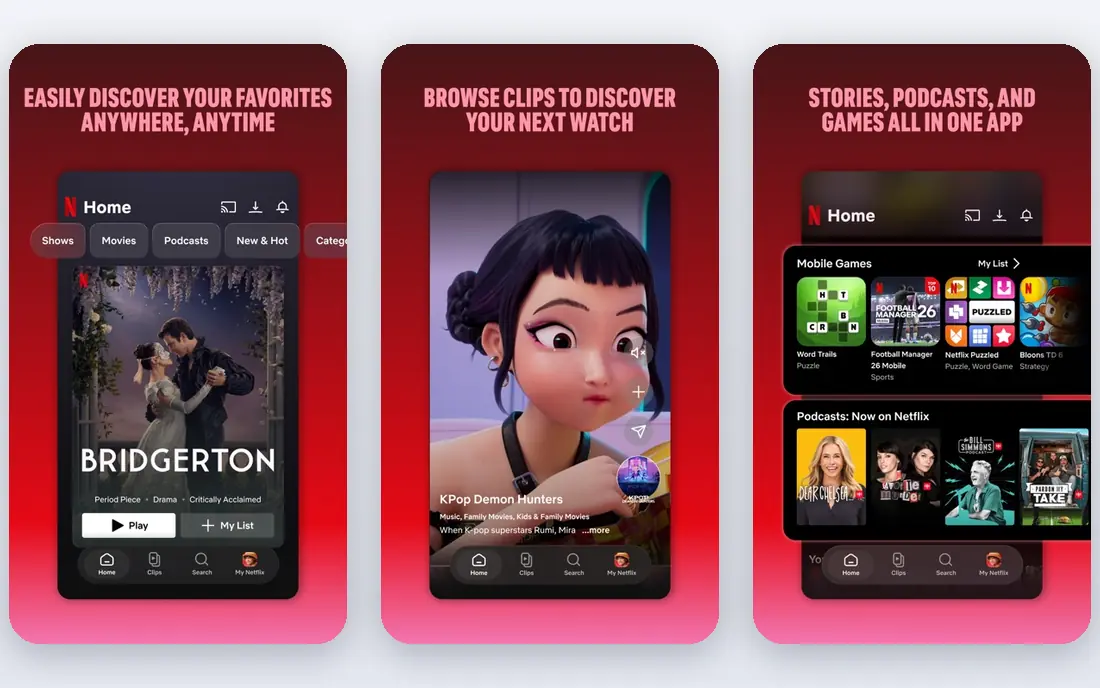
Netflix remains the simplest answer for a household that wants one paid service. Its original films and series cover drama, comedy, documentary, reality, and animation, and its licensed catalog still includes a wide range of older films and shows. Apps are available on smart TVs, phones, tablets, game consoles, and streaming sticks, and downloads make it useful for travel. Profiles and parental controls help households share one account without mixing recommendations.
The limits are cost and rotation. Netflix is no longer the cheapest paid service, and licensed titles can leave when a studio moves them to its own service. Originals stay, but a favorite licensed show may move elsewhere. If you watch a mix of genres and want one service that covers most evenings, Netflix is still the best starting point. If you mainly watch one franchise or network, a cheaper focused service may fit better.
- Broad catalog of originals and licensed titles
- Strong apps on nearly every device
- Downloads for offline viewing on many plans
- Prices have risen over time
- Some licensed titles leave as agreements expire
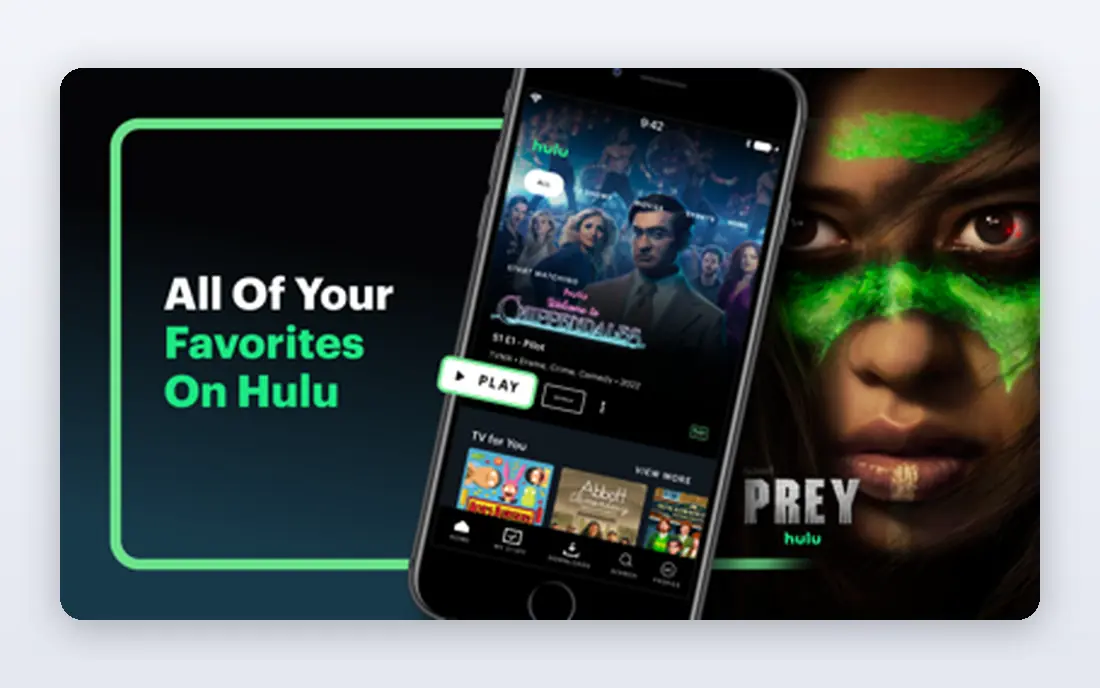
Hulu is the best legal choice for viewers who want current US television without cable. Many network shows appear the day after broadcast, and Hulu originals cover drama, comedy, and documentary. The base plan includes ads, with an ad-free tier available at a higher price. A live TV bundle is also offered for households that want live channels, sports, and news in the same app.
The ad-supported base plan can interrupt films and shows, which bothers some viewers more than others. Some titles also sit behind premium add-ons, so the catalog you see on the home page is not always included in the base price. For viewers who follow several network shows each week, Hulu saves the cost and hassle of separate network apps. For film-first viewers, another service may offer better value.
- Next-day episodes from many US networks
- Strong originals
- Optional live TV add-on
- Ads on the base plan
- Catalog varies and some titles need add-ons
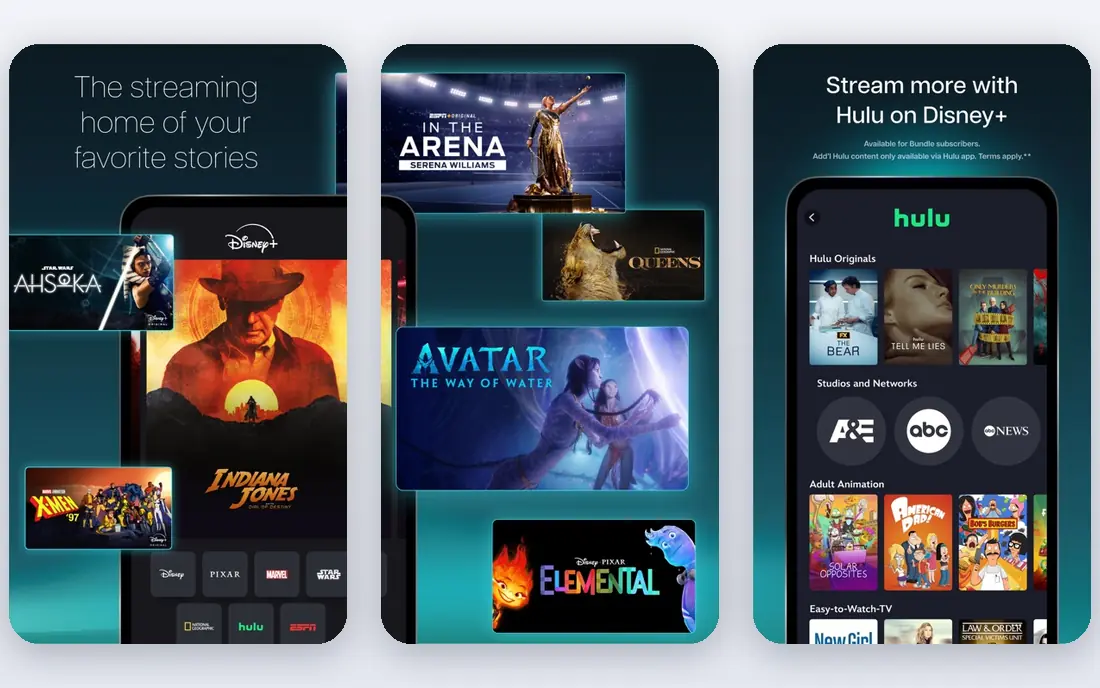
Disney+ gathers Disney, Pixar, Marvel, Star Wars, and National Geographic under one subscription. That makes it the clear pick for households with children, franchise fans, and viewers who rewatch animated classics. Family profiles, downloads, and 4K streaming on supported titles make it easy to use on trips and across devices. Bundles with Hulu and ESPN are also available in the US for households that want more than one service.
The catalog is brand-led, so viewers who want a broad range of adult drama, independent film, or current network shows will need a second service. Availability also varies by country, since licensing differs by region. If your household watches franchise films and family animation most nights, Disney+ is excellent value. If not, treat it as a second service rather than your only one.
- Disney, Pixar, Marvel, Star Wars, and National Geographic in one place
- Strong family profiles and downloads
- 4K on many titles
- Narrower range for adult drama outside its brands
- Some titles rotate to other services by region
Max, formerly HBO Max, centers on HBO series, Warner Bros. films, and a strong documentary and adult drama catalog. It is the best pick for viewers who follow prestige series and want a deep film library in the same app. Streaming quality is strong on supported plans and devices, and downloads are available on many tiers. For a household that plans evenings around a new series, Max often delivers the most talked-about shows.
Price is the main barrier, since Max sits above budget services and above ad-supported free options. Some titles also move as studio licensing changes, so a film you planned to watch may leave. If you watch one or two prestige series at a time and enjoy films, the cost is easy to justify. If you mainly want background viewing and older sitcoms, a cheaper service may serve you better.
- HBO series and Warner Bros. films
- Strong documentaries and adult drama
- High quality streaming on supported plans
- Higher price than some rivals
- Catalog changes as licensing deals shift
Prime Video is best judged as part of Amazon Prime rather than as a standalone purchase. Members get a large included catalog of films, series, and originals, plus the option to rent or buy titles that are not included. That mix is useful when a film is not on any subscription you hold, since you can rent it once instead of adding another monthly bill. Apps are widely available, and downloads work on mobile devices.
The interface mixes included titles with paid rentals, which can confuse new users about what is free with membership. The included catalog also rotates, and some popular titles are rental-only. If you already pay for Prime for delivery, Prime Video is a strong bonus service. If you do not use Prime delivery, compare its standalone price with Netflix or Hulu before you commit.
- Included with Amazon Prime in many plans
- Large film and series catalog
- Rentals and purchases alongside the subscription
- Interface can feel cluttered
- Some titles cost extra to rent or buy
Peacock brings NBCUniversal content together, including NBC series, Universal films, reality shows, and live sports coverage. It is a good fit for viewers who follow NBC comedies and dramas, enjoy reality television, or want sports without a cable bundle. The entry price is lower than several rivals, and higher tiers reduce or remove ads on much of the catalog. For US viewers, it also carries some live events that other services do not.
Ads on the base tier interrupt viewing, and the film catalog is smaller than Netflix or Max. Some sports and live events also sit on higher tiers or have separate blackout rules. If NBCUniversal shows and sports form a large share of your viewing, Peacock is a clear pick. If you want a broad film library, pair it with a free service such as Tubi rather than relying on it alone.
- NBC shows, Universal films, and live sports in one app
- Lower entry price than some rivals
- Originals and reality catalog
- Ads on lower tiers
- Smaller film catalog than Netflix
Paramount+ is the home of CBS series, Paramount films, and the Star Trek catalog, alongside live sports including NFL games in the US. It suits households that follow CBS dramas and reality shows, watch Star Trek, or want live sports without cable. Higher tiers add a live local CBS feed in many US markets and remove most ads. Downloads and profiles are available on supported plans.
The app experience is less polished than Netflix or Disney+, and some films leave sooner than viewers expect. The catalog is also narrower outside CBS and Paramount brands, so drama fans may still need another service. For CBS and Star Trek viewers, it is a direct and affordable choice. For general film viewers, it works best as a second service.
- CBS series, Paramount films, and live sports
- Star Trek catalog
- Local CBS station streaming on higher tiers in the US
- Interface and search can feel uneven
- Some films rotate out quickly
Tubi is the best free legal streaming service for most viewers. It is owned by Fox and licenses films and series from studios, so its catalog is legal and properly supported, with ads paying for the service. You can watch without a subscription, and creating a free account adds watchlists and resume features. The catalog leans toward older films, cult titles, and classic series rather than new releases, which suits viewers who enjoy browsing.
Ads are the trade-off, with breaks during films and episodes. New releases are rare, and picture quality and subtitle options vary by title. Even so, Tubi is an excellent companion to a paid service, or a standalone option for viewers who want to stop paying monthly fees. Pair it with a library card service or a second free app if you want more variety without a subscription.
- Free with no subscription
- Large catalog of films and older series
- Apps on most TVs and phones
- Ads interrupt viewing
- Fewer new releases
- No downloads on the free service
How we picked these
We compared official service pages, catalog focus, device support, pricing models, and free or trial options. We kept only services that license their content and operate as real businesses with support pages and clear terms. We left out any site that hosts pirated or unlicensed streams, since those services can expose viewers to malware, broken links, and legal risk. We also favored services available across the US on common devices, so the list works for most households.
How to choose a legal streaming service without overspending
Paying for every service at once is the most common mistake. A short plan keeps costs down and still covers what you actually watch.
Start with what you watch most
List the three shows or film types you watch each week, then check which service carries them. A household that watches CBS dramas needs Paramount+, while a household that watches franchise films needs Disney+. A service that covers two of your three habits is a better buy than a larger service that covers none of them well.
Rotate instead of stacking
Consider subscribing to one or two services at a time and rotating every few months. Watch the series you want on one service, cancel, and move to the next. Free services such as Tubi can fill gaps between paid months. This approach keeps legal viewing affordable and avoids paying for catalogs you rarely open.
Check devices, ads, and downloads
Before you pay, confirm the service works on your TV and phone, whether the plan you chose includes ads, and whether downloads are included for travel. A cheaper plan with ads may suit casual viewing, while an ad-free plan suits households that watch films most nights. Trial periods, where offered, are a good way to test the app before committing.
Frequently asked questions
What are alternatives to hurawatch?
The legal alternatives on this list are Netflix, Hulu, Disney+, Max, Prime Video, Peacock, Paramount+, and Tubi. They license their films and shows, offer official apps, and provide subtitles, support, and consistent streaming quality. They do not host pirated content.
Are these alternatives to hurawatch free?
Tubi is free with ads and needs no subscription. The paid services charge a monthly fee, with some offering trials or ad-supported tiers at lower prices. Prime Video is included with Amazon Prime on many plans. Check each vendor site for current prices, since plans and trials change.
Which legal service is best if I want to spend nothing?
Tubi is the best free starting point, with a large catalog of licensed films and older series supported by ads. It will not carry most new releases, but it covers a wide range of genres for no monthly cost. Add a second free service or a library streaming option if you want more variety.
Why do shows leave a streaming service?
Shows leave when a licensing agreement ends or when a studio moves a title to its own service. Originals usually stay, but licensed titles rotate. If a show matters to you, check its current home before subscribing, and watch it before its listed departure date where the service shows one.
Can I share a streaming account with family?
Most services allow multiple profiles and a set number of simultaneous streams, with rules that vary by plan and country. Sharing outside a household may breach the terms of some plans, so read the account rules for the plan you choose. Family plans and household profiles are the safest way to share legally.
Sources
See where you really rank - block by block
ProMapRanker scans Google Maps across a grid of your service area. Simple monthly plans from $19, white-label on every plan.
Start freeKeep reading
 steamunlocked alternatives
Best SteamUnlocked Alternatives in 2026
Looking for steamunlocked alternatives? These 8 legal game stores and subscriptions offer licensed PC games, sales, and cloud play without piracy risks.
Read → mangools alternatives
Best Mangools Alternatives in 2026
Looking for mangools alternatives? We compare 8 SEO tools for keyword research, rank tracking, and site audits, from Semrush and Ahrefs to Keysearch today.
Read → lemlist alternatives
Best Lemlist Alternatives in 2026
Looking for lemlist alternatives? We compare 9 cold email and outreach tools for 2026, covering pricing, deliverability, inboxes, and multichannel steps.
Read →