 ProMapRanker
Best FloQast Alternatives in 2026

Key takeaways
- Numeric is the clearest published-price option here, while most enterprise close tools are quote-based.
- BlackLine and Trintech Cadency suit large, multi-entity closes where control and volume matter most.
- Adra by Trintech and SkyStem give mid-market teams close automation without a full enterprise rollout.
- Workiva, Planful, and OneStream bundle the close with reporting, planning, or consolidation work.
- Pick by ERP, entity count, and audit needs first, then compare price on the same scope.
Quick comparison
| Pick | Great for | Pricing starts at | Free tier | |
|---|---|---|---|---|
 BlackLine | Large enterprise closes | See website | No | Visit |
 Numeric | Fast-growing teams on common ERPs | $30 per user per month | No | Visit |
 Adra by Trintech | Mid-market close automation | See website | No | Visit |
 SkyStem | Mid-market reconciliation and close | See website | No | Visit |
 Workiva | Public company reporting and controls | See website | No | Visit |
 Planful | Close plus planning in one platform | See website | No | Visit |
 OneStream | Consolidation plus close at scale | See website | No | Visit |
 HighRadius | Close tied to receivables automation | See website | No | Visit |
 SolveXia | Automation for recurring finance processes | See website | No | Visit |
The best floqast alternatives
We compared official feature pages, pricing pages, and public reviews for close management, reconciliation, journal entries, and audit trails. The tools below cover a wide range of team sizes, so a small team and a global controller group will not land on the same shortlist.

BlackLine is built for finance teams that close many accounts across many entities and need strict control over each step. Its account reconciliation, transaction matching, journal entry, and task management tools sit in one system, which helps auditors follow the trail from source data to sign-off. For a large team, that structure is the main appeal.
The trade-off is effort. BlackLine usually needs a dedicated owner, careful setup, and time to configure matching rules and controls. Teams with a simple close may pay for depth they never use. Ask for a scoped quote tied to your entity count and account volume before you judge the cost.
- Deep reconciliation and matching controls
- Broad ERP coverage
- Auto-certification for low-risk accounts
- Implementation can be long
- Pricing is quote-based
- Smaller teams may find it heavier than needed
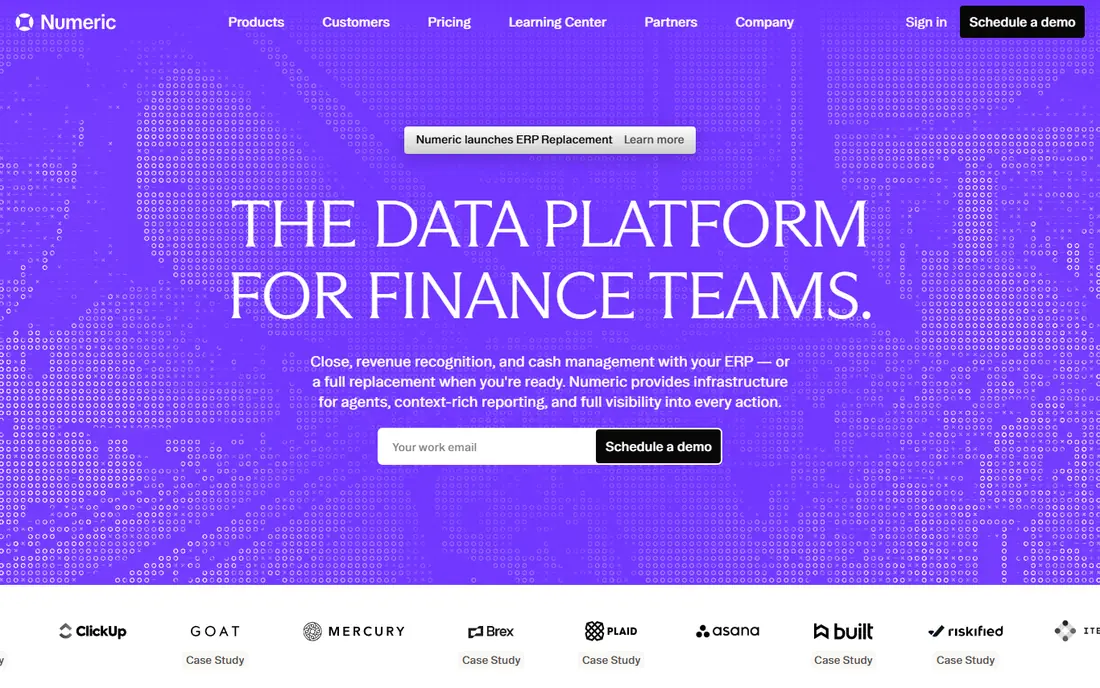
Numeric suits teams that want to move off spreadsheets without buying an enterprise platform. It combines close task tracking, account reconciliation, and variance checks, so preparers and reviewers can see status in real time. The published Essentials price also makes early budgeting easier than with quote-only rivals.
The catch is scope. If your company runs a less common ERP or a complex multi-entity structure, Numeric may not fit as cleanly. Check the supported ERP list and the tier that includes the reconciliation depth you need. For many growing teams, though, the speed of setup is a real strength.
- Published starting price
- Close tasks, reconciliations, and flux analysis in one place
- Fits QuickBooks, Xero, and NetSuite
- ERP coverage is narrower than enterprise tools
- Higher tiers are quote-based
- Some workflow limits appear in public reviews

Adra is Trintech's mid-market close product, and it covers the core work well: balance sheet reconciliations, transaction matching, close tasks, and journal entries. It also offers an audit trail and compliance reporting, which matters when reviewers and auditors need clear evidence. Teams on Workday often cite the native integration as a plus.
Adra is not a self-serve purchase. Pricing is quote-based, and the modules you choose will shape both cost and setup time. It is still usually lighter than a full enterprise rollout. Get a demo on your own account structure to see how matching rules handle your exceptions.
- Reconciliation and transaction matching
- Close task and journal workflows
- Workday integration depth
- Pricing is not published
- Implementation scope varies by module
- Enterprise needs may point to Cadency instead
SkyStem targets accounting teams that want a clearer close without rebuilding their whole finance stack. Its reconciliation tools and task tracking help teams assign work, track progress, and keep supporting documents tied to each account. That focus can be a plus for teams that mainly struggle with reconciliations.
The main limit is scale and breadth. SkyStem does not try to be a full planning or consolidation platform, so teams that need those functions will need another tool. Price is also quote-based, so request a proposal based on account count. For a mid-market close, the narrower focus can mean faster adoption.
- Focused reconciliation workflow
- Close task tracking
- Audit-ready documentation
- Pricing is not published
- Smaller vendor footprint than BlackLine or Trintech
- Feature depth varies by plan
Workiva is a stronger pick when the close feeds directly into external reporting. It links data, documents, and controls so a number can be traced from a report back to its source. Public companies often use it for financial reporting, regulatory filings, and control testing alongside close tasks.
That breadth is also the drawback. If you only need reconciliations and checklists, Workiva may feel broad and costly. It works best when finance, reporting, and compliance teams share one source of truth. Ask how close tasks, controls, and filings connect in a demo using your reporting calendar.
- Connected reporting and controls
- Strong fit for SEC and SOX work
- Document and data linking
- Pricing is quote-based
- Broader than a pure close tool
- Setup needs clear reporting ownership
Planful appeals to teams that want the close and the forecast to live together. It covers reconciliations, close task management, consolidation, intercompany eliminations, and currency translation, plus budgeting and planning. That combination can cut down on handoffs between close and planning teams.
The price of breadth is complexity. A team that only wants a checklist and reconciliations may find the wider platform more than it needs. Planful makes most sense when planning and close owners already work closely together. Compare the close module on its own merits, not just the planning pitch.
- Close, consolidation, and planning in one system
- Intercompany eliminations
- Familiar spreadsheet-style work
- Pricing is quote-based
- Breadth adds implementation work
- Close-only teams may not need planning tools
OneStream is an enterprise platform that unifies consolidation, close, and planning in one system. For groups with many entities, currencies, and reporting requirements, that single model can reduce reconciliation between separate tools. Close tasks, journals, and consolidation steps can follow one workflow.
It is not a light purchase. Pricing is quote-based, implementation is a project, and ongoing administration needs trained staff. Small and mid-market teams will likely find faster, cheaper options elsewhere. For a large group already consolidating in a separate tool, the unified approach can be worth the effort.
- Unified consolidation, close, and planning
- Strong multi-entity support
- Single data model
- Enterprise pricing and implementation
- Needs skilled admins
- Overkill for small teams
HighRadius is best known for accounts receivable and order-to-cash automation, and that work often feeds the close. If late receivables, disputed invoices, or unapplied cash slow your month-end, fixing that upstream flow can matter more than a new checklist tool. Its reconciliation and close-related tools sit within that wider suite.
The trade-off is focus. Teams that mainly need account reconciliations and close tasks may find a dedicated close tool simpler. HighRadius fits best when receivables automation is already a priority. Map your close delays first, then check whether receivables or reconciliation is the real bottleneck.
- Broad order-to-cash automation
- Reconciliation support
- Useful when receivables drive close delays
- Pricing is quote-based
- Close is part of a wider suite
- Fit depends on receivables volume
SolveXia helps finance teams automate recurring processes such as reconciliations, data preparation, and reporting. Instead of only tracking tasks, it can run repeatable steps on a schedule, which can cut manual work in the close. That approach suits teams with stable, rules-based processes that repeat every month.
It is not a direct copy of a dedicated close suite. Control, checklist, and audit features should be checked against your requirements, especially for regulated closes. Pricing is quote-based, so scope the processes you want to automate before requesting a quote. For process-heavy teams, the automation angle is the draw.
- Automation for repeatable finance work
- Reconciliation and reporting support
- No-code style building for many tasks
- Pricing is not published
- Close feature depth differs from dedicated close suites
- Needs process mapping up front
How we picked these
We started from close management needs: task tracking, reconciliations, journal entries, matching, and audit evidence. We then compared official feature pages, pricing pages, and public reviews, and kept only tools that are live and sold in October 2026. We did not test these tools hands-on, and we did not invent prices where vendors publish none.
We favored tools with a clear close or reconciliation function and a credible ERP fit. Where pricing was not published, we wrote See website rather than repeating third-party estimates. That keeps the comparison honest, even though it means more work on quotes for enterprise buyers.
What to check before you buy
Start with your ERP and your account list. A tool that lacks a clean connection to your ERP will create manual exports, and that erodes most of the time saving. Count entities, accounts, and preparers, and ask each vendor to price that exact scope.
Next, test matching and exceptions. Clean accounts are easy for every vendor. Ask for a demo on messy data: partial matches, timing differences, intercompany items, and multi-currency rounding. The way exceptions are routed and approved will shape your close far more than the dashboard.
Finally, involve your auditors early. Confirm what evidence format they accept, how sign-offs are recorded, and whether auto-certification rules meet your control standards. A tool that speeds the close but weakens the audit trail is a poor trade. A short pilot on one close cycle will tell you more than a long sales deck.
Frequently asked questions
What is a FloQast alternative?
A FloQast alternative is close management or reconciliation software that tracks close tasks, reconciliations, journal entries, and approvals without relying on spreadsheets alone. The best fit depends on your ERP, entity count, and audit needs. Some tools focus only on the close, while others bundle reporting, planning, or receivables work.
How much do FloQast alternatives cost?
Prices vary widely. Numeric publishes a starting price of $30 per user per month for its Essentials plan, while BlackLine, Trintech, Workiva, Planful, OneStream, HighRadius, and SolveXia are quote-based. Always request a quote for your entity count, account volume, and modules, since list estimates from third parties can mislead.
Which alternative is best for a small accounting team?
Numeric and SkyStem are the most natural starting points for smaller teams, since they focus on the close and reconciliation work without a full enterprise rollout. Check ERP support first, since a missing connection can undo the time saving. If your team is very small, your accounting tool plus a disciplined checklist may still be enough.
Do these tools replace spreadsheets completely?
They replace most recurring reconciliations, task tracking, and sign-offs, but ad-hoc analysis often stays in spreadsheets during a transition. The goal is to move rules-based, repeatable work into the system while keeping one-off analysis flexible. Over time, teams usually reduce spreadsheet use as matching rules and controls mature.
Can auditors rely on these close tools?
Yes, when the tool enforces segregation of duties, approval workflows, and an audit trail that cannot be quietly changed. Most leading platforms are built with those controls in mind. Involve auditors early to confirm the evidence format they expect and to test how auto-certification or auto-matching is documented.
Sources
- https://www.blackline.com
- https://www.numeric.io
- https://www.trintech.com
- https://www.skystem.com
- https://www.workiva.com
- https://www.planful.com
- https://www.onestream.com
- https://www.highradius.com
- https://www.solvexia.com
- https://www.numeric.io/blog/5-best-alternatives-to-floqast
- https://dokka.com/floqast-alternatives/
See where you really rank - block by block
ProMapRanker scans Google Maps across a grid of your service area. Simple monthly plans from $19, white-label on every plan.
Start freeKeep reading
 zoho books alternatives
Best Zoho Books Alternatives in 2026
Compare the best zoho books alternatives for small business accounting, from QuickBooks Online and Xero to FreshBooks, Wave, and Sage in 2026, with pricing.
Read → zluri alternatives
Best Zluri Alternatives in 2026
Compare zluri alternatives for 2026, with SaaS management platforms for app discovery, spend tracking, renewals, and automation for IT, finance and procurement.
Read → zerobounce alternatives
Best ZeroBounce Alternatives in 2026
Best zerobounce alternatives for list hygiene: compare 8 email verification tools for bulk cleaning, real-time checks and catch-all handling in 2026 today.
Read →