 ProMapRanker
Best Expired Websites Alternatives in 2026


Free expired domain discovery · Pricing starts at: Free
Key takeaways
- ExpiredDomains.net is the best free starting point for finding names, while DropCatch, SnapNames, and NameJet compete to catch names at the drop.
- GoDaddy Auctions, Namecheap, Dynadot, and Sedo cover names still in expiry auctions or listed for sale by owners.
- SpamZilla helps check backlinks and history before you bid, but no tool can prove a domain is clean on its own.
- Always check trademark risk, past content, and renewal cost before bidding, since a cheap catch can become an expensive problem.
Quick comparison
| Pick | Great for | Pricing starts at | Free tier | |
|---|---|---|---|---|
| ExpiredDomains.net | Free expired domain discovery | Free | Yes | Visit |
 GoDaddy Auctions | Large expiry auctions | See website | No | Visit |
 Namecheap Marketplace | Buying and registering auction names | See website | No | Visit |
 Dynadot | Expiry auctions and closeouts | See website | No | Visit |
 DropCatch | Catching names at the drop | $59 per backorder | No | Visit |
 SnapNames | Backorders for valuable names | $69 per backorder | No | Visit |
 NameJet | Backorders and premium auctions | $69 per backorder | No | Visit |
 Sedo | Marketplace for listed domains | See website | No | Visit |
 SpamZilla | Checking expired domain quality | See website | No | Visit |
The best expired websites alternatives
This list covers tools for finding, checking, and registering expired domains and websites. That angle matters, because an expired domain is not just a name: it carries history, backlinks, and sometimes a trademark risk. Use these tools to find candidates, check their past use, and register them through a proper auction or backorder, and always verify a name before you build a site on it.
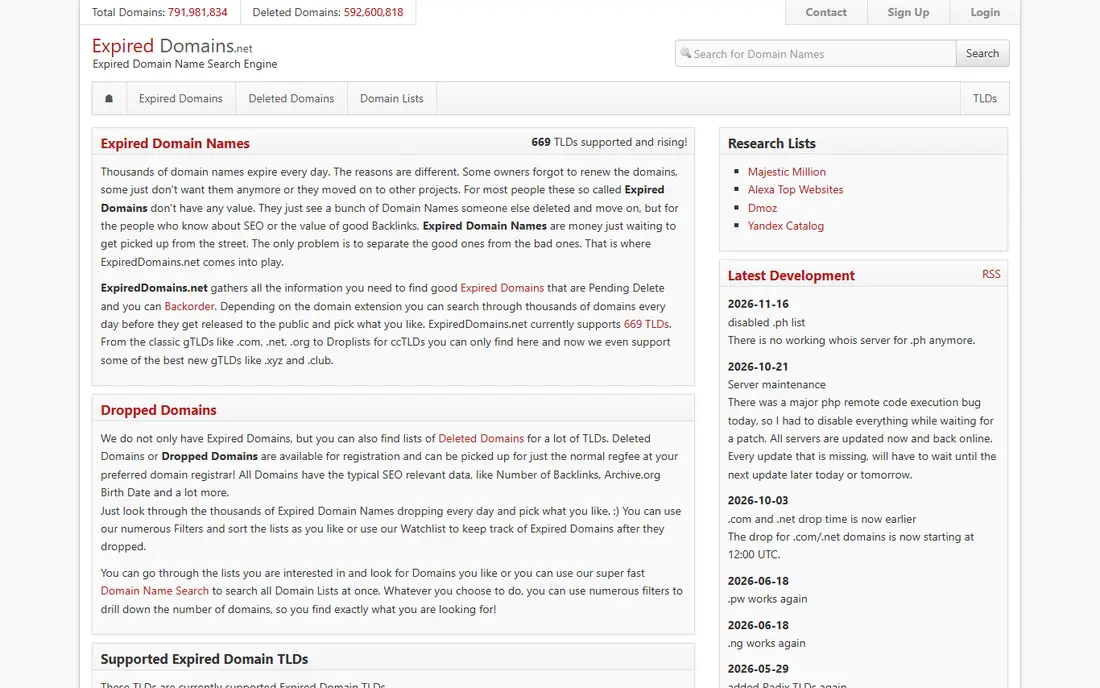
ExpiredDomains.net is where most expired-domain searches start, because it lists expiring and deleted domains for free each day. Filters for extension, length, and third-party metrics help narrow a huge daily list to a short set of candidates worth checking. You can search without buying anything, which makes it a low-risk way to learn how the expiry cycle works.
The lists are unfiltered, so most names on them have little value, and the metrics shown are only a starting point rather than proof of quality. A name with strong-looking metrics can still carry a penalty, a trademark issue, or spam history that a list cannot show. Use ExpiredDomains.net to find candidates, then check history and backlinks elsewhere before spending money.
- Free daily lists of expiring and deleted domains
- Filters for length, extension, and metrics
- No purchase needed to search
- No vetting of listed names
- Volume is large and mostly low quality
- Metrics need outside checks
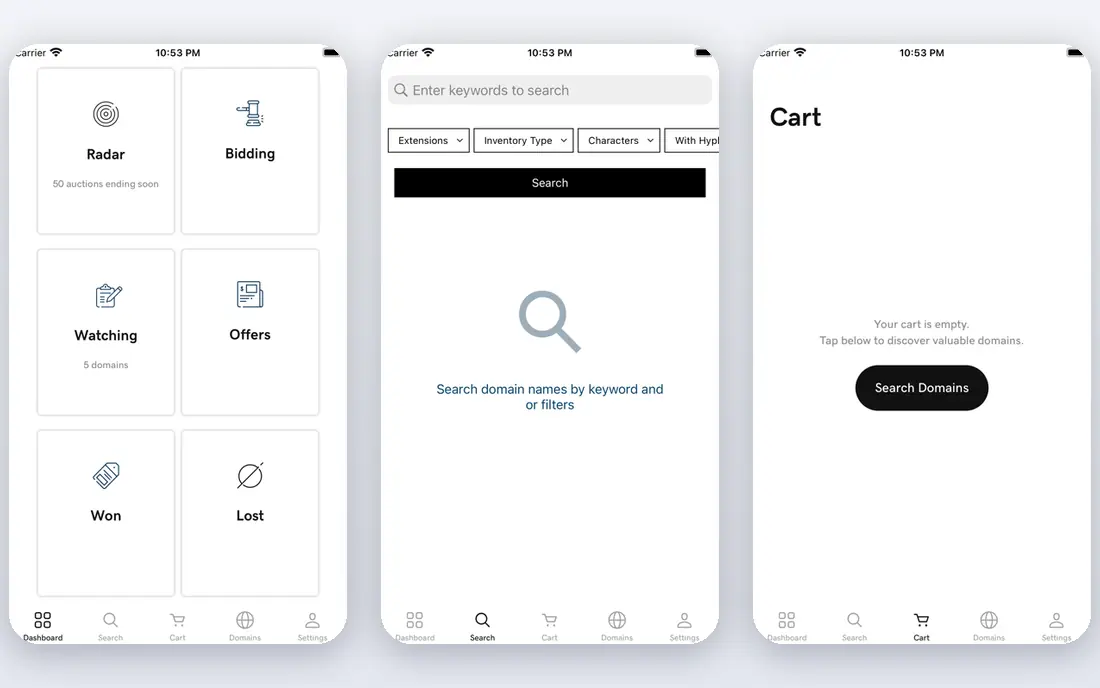
GoDaddy Auctions runs one of the largest expiry auction markets, with thousands of new names each day from domains registered at GoDaddy. Names in expiry auctions are still inside their grace window, so a win can keep the original registration date, which some buyers value. Unsold names move to closeouts at falling fixed prices, which suits bargain hunters who missed the auction.
Bidding needs a paid membership, and the final cost includes the winning bid plus renewal and any applicable fees, so the headline bid is not the full price. Soft closes extend an auction when late bids arrive, which can push a planned purchase higher than expected. For volume buyers who already use GoDaddy, the auction size alone makes it worth a regular check.
- Very large daily auction volume
- Expiry auctions keep original registration date on a win
- Closeouts for unsold names
- Membership and bidding fees apply
- Soft closes can extend auctions
- Winning bids vary widely
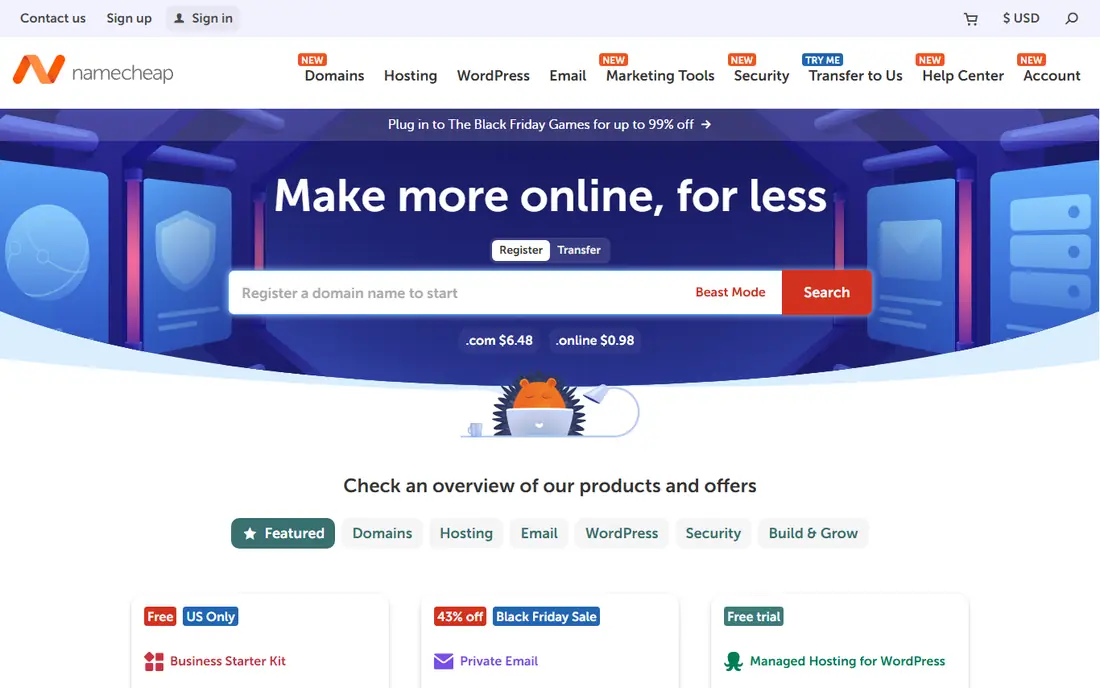
Namecheap Marketplace suits buyers who want to bid, win, and manage a domain in one account without moving it between registrars at once. Auction listings sit alongside standard registration, so a buyer can check availability, place a bid, and renew from the same dashboard. Domain management tools are clear, which helps when a buyer holds several names and needs to track renewal dates.
Auction volume is smaller than the largest expiry markets, so a specific name may never appear here, and popular names still attract high bids. The marketplace is best used as one channel among several, rather than as the only place to hunt. For a Namecheap customer who wants a simple buying path, the marketplace keeps the whole process in one place.
- Marketplace and registration in one account
- Clear domain management tools
- Frequent auction listings
- Auction volume is smaller than GoDaddy
- Premium names can still sell for high prices
Dynadot appeals to buyers who dislike membership fees, since its expiry auctions and closeouts do not charge to browse and bid in the same way as some rivals. Closeout names fall through price steps, which gives patient buyers a chance at a low fixed price after an auction ends without a winner. The auction interface is tidy, and domain management after a win is straightforward.
The trade-off is volume, since Dynadot lists fewer expiry names than the largest auction houses, and the best closeout names are taken fast. A buyer who checks only Dynadot will miss names that appear only on other platforms. Use Dynadot as a low-cost second channel, and set a firm maximum bid before entering any auction.
- No membership fee for auctions
- Closeout prices fall in steps
- Clean auction interface
- Volume is smaller than GoDaddy
- Closeout stock is picked over quickly
DropCatch focuses on the moment a domain is deleted and becomes available again, using a large network to try to register it the instant it drops. A backorder starts at about $59, and if several people backorder the same name, the catch goes to a public auction among them. That model suits buyers chasing a specific name that is about to drop, rather than buyers browsing for ideas.
Success is never guaranteed, even with a strong catcher, since several services race for the same name and only one can win. A contested auction can also push the final price well above the backorder fee, so a buyer should set a ceiling before placing the order. For a high-value target name, DropCatch is one of the first services to consider.
- Large drop-catching network
- Public auctions for contested names
- Pay structure tied to a catch
- Contested names go to auction and can cost far more
- Catch success is not guaranteed
SnapNames has run backorders for many years, and it shares a pool with NameJet for some inventory, which means a buyer should not place the same backorder on both services. The backorder starts at about $69, and if the name is caught and contested, it goes to a private auction among the backorder holders. That structure gives a buyer a clear path for a name they have already researched.
The fee is higher than DropCatch at entry level, and a contested auction can still lift the price well above the starting fee. SnapNames also cannot catch every name, since the drop race depends on registrar and timing. For a buyer who wants a second catcher alongside DropCatch, SnapNames is a logical choice, provided the same name is not ordered twice across the shared pool.
- Long-running backorder service
- Shared pool with NameJet for some names
- Private auctions for contested catches
- Backorder fee is higher than some rivals
- Ordering on both SnapNames and NameJet for the same name is wasteful
NameJet covers two kinds of expired-domain buying: pre-release auctions for names still with partner registrars, and backorders for names about to drop. Pre-release auctions suit buyers who want a name before it reaches open registration, while backorders suit buyers chasing a specific deletion date. The platform also lists premium names, which attract higher bids but sometimes include stronger backlink profiles.
The $69 backorder minimum makes NameJet a poor fit for casual buyers hunting $10 names, since the fee alone can exceed the value of a weak candidate. Premium auctions also need discipline, because bidding against experienced domain investors can push prices fast. Use NameJet when the target name is specific and researched, not for browsing.
- Premium auction inventory
- Backorder service for dropping names
- Pre-release auctions from partner registrars
- Minimum backorder cost is high for casual buyers
- Premium auctions can run to high prices
Sedo is a marketplace rather than a drop catcher, which makes it useful when a domain is already owned and listed for sale. Buyers can use buy-now prices, make offers, or join auctions, and Sedo handles escrow and transfer steps that protect both sides. That structure suits a buyer who has found a specific name through research and wants a safe purchase path.
Many Sedo listings carry investor-level prices, so a buyer looking for a cheap expired name will find less value here than in an expiry auction. Seller commission and transfer time also add friction compared with a straight registration. For a named target with a clear budget, Sedo gives a safer route than an informal private sale.
- Large marketplace of listed domains
- Escrow and transfer help
- Make-offer and buy-now options
- Many listings are priced for investors, not bargain hunters
- Seller fees affect the final deal
SpamZilla is a checking tool rather than a registrar, and it earns its place by cutting the time spent sorting good candidates from spammy ones. It pulls backlink, history, and spam signals into one view, so a buyer can spot a name with toxic links or a penalized past before bidding. Filters help narrow large expired lists to names that pass basic quality checks.
Third-party metrics are estimates, not guarantees, so a clean SpamZilla view does not prove a domain is penalty-free or trademark-safe. A buyer should still check archived content, search results, and trademark databases before building a site. For regular expired-domain buyers, SpamZilla pays for itself in saved research time, while occasional buyers may prefer free checks first.
- Filters expired domains by backlink and spam signals
- Checks history and metrics in one view
- Saves research time
- Metrics are third-party estimates, not proof of safety
- Subscription cost adds up for occasional buyers
How we picked these
We compared official feature pages, pricing pages, auction rules, and public reviews for each service. We kept only services that are active in October 2026 and that clearly fit finding, checking, or registering expired domains. We left out general domain registrars with no expiry auction or backorder service, and we left out tools that only estimate domain value without helping a buyer find or register a name.
What to check before you buy
Check the domain's past before you bid, using archived pages, backlink tools, and a search for the name plus words such as spam, scam, or penalty. A domain that hosted spam, adult content, or a link scheme can carry problems into a new site, even after a fresh registration. Check trademark databases too, since a name that matches a live brand can lead to a dispute even if the domain itself was legally caught.
Set a total budget that includes the bid, renewal, and any backorder fee, and do not chase an auction past that ceiling. Remember that expiry auctions, closeouts, and drop catches are different stages, and a name can appear in more than one channel at different times. Keep notes on each candidate, including why it fits your project, so a cheap name does not become a project you never needed.
Frequently asked questions
How does an expired domain become available?
A domain first enters a grace period after expiry, when the owner can still renew, then a redemption period, then a short pending-delete stage. After deletion, it becomes available for anyone to register, though drop catchers race to register valuable names at that moment. Many good names are sold in expiry auctions before they ever reach open registration.
What is the difference between an auction and a backorder?
An auction sells a name to the highest bidder during a set window, often while the name is still in expiry. A backorder asks a catcher to try to register the name the instant it deletes, and a contested catch usually goes to a private auction among backorder holders. Use auctions for names already listed, and backorders for a specific name with a known drop date.
Can an expired domain hurt a new site?
Yes, if the domain hosted spam, carried a search penalty, or built toxic backlinks, those problems can follow the name. Check archived content, backlink quality, and search visibility before buying, and avoid names with a history that does not match your project. A clean, relevant history is worth more than a high metric score alone.
Do I need more than one backorder service?
For a valuable target, placing backorders with more than one independent catcher can raise the chance of a catch, since different services win different drops. Avoid ordering the same name on services that share a pool, such as SnapNames and NameJet for some inventory, since that wastes a fee. For low-value names, one backorder is usually enough.
How much should I pay for an expired domain?
Price depends on backlink quality, name length, extension, traffic history, and competition, so there is no single fair price. Closeout names can cost a few dollars, while contested auctions can reach four or five figures. Set a ceiling based on what the name is worth to your project, not on what other bidders are willing to pay.
Is buying an expired domain legal?
Buying an expired domain through an auction or backorder is legal in itself, but using it to impersonate a brand, infringe a trademark, or mislead visitors is not. Check trademark risk, avoid names that copy a live brand, and use the domain for a legitimate site. When in doubt, get legal advice before building on a disputed name.
Sources
See where you really rank - block by block
ProMapRanker scans Google Maps across a grid of your service area. Simple monthly plans from $19, white-label on every plan.
Start freeKeep reading
 zoho books alternatives
Best Zoho Books Alternatives in 2026
Compare the best zoho books alternatives for small business accounting, from QuickBooks Online and Xero to FreshBooks, Wave, and Sage in 2026, with pricing.
Read → zluri alternatives
Best Zluri Alternatives in 2026
Compare zluri alternatives for 2026, with SaaS management platforms for app discovery, spend tracking, renewals, and automation for IT, finance and procurement.
Read → zerobounce alternatives
Best ZeroBounce Alternatives in 2026
Best zerobounce alternatives for list hygiene: compare 8 email verification tools for bulk cleaning, real-time checks and catch-all handling in 2026 today.
Read →