 ProMapRanker
Best Custom Software Development Services Alternatives in 2026

Key takeaways
- Low-code platforms suit internal tools and simple customer apps, while vetted developer marketplaces suit products that need custom code.
- Bubble and Webflow give non-developers the fastest route to a live product, but usage limits and design constraints appear as apps grow.
- OutSystems and Mendix fit larger companies with compliance and integration needs, and their prices reflect that enterprise focus.
- Toptal and Arc.dev replace a full agency hire with one vetted developer at a time, which keeps scope clearer and spending easier to track.
Quick comparison
| Pick | Great for | Pricing starts at | Free tier | |
|---|---|---|---|---|
 Bubble | Full web apps built without code | Free | Yes | Visit |
 Webflow | Design-led websites with app features | Free | Yes | Visit |
 OutSystems | Enterprise apps with strict governance | See website | Free trial | Visit |
 Mendix | Large teams modernising legacy systems | See website | Free trial | Visit |
 Retool | Internal dashboards and admin tools | Free | Yes | Visit |
 Glide | Business apps from spreadsheets | Free | Yes | Visit |
 Softr | Client portals and membership apps | Free | Yes | Visit |
 Toptal | Vetted senior developers on demand | See website | Free trial | Visit |
 Arc.dev | Freelance developers with published rates | See website | Free trial | Visit |
The best custom software development services alternatives
This list is framed plainly as alternatives to hiring a traditional custom software development agency. Instead of a single agency team, you can build with a low-code platform, use a productised development service, or hire vetted developers through a marketplace. We compared official feature pages, pricing pages, app store listings, and public reviews to build this list.
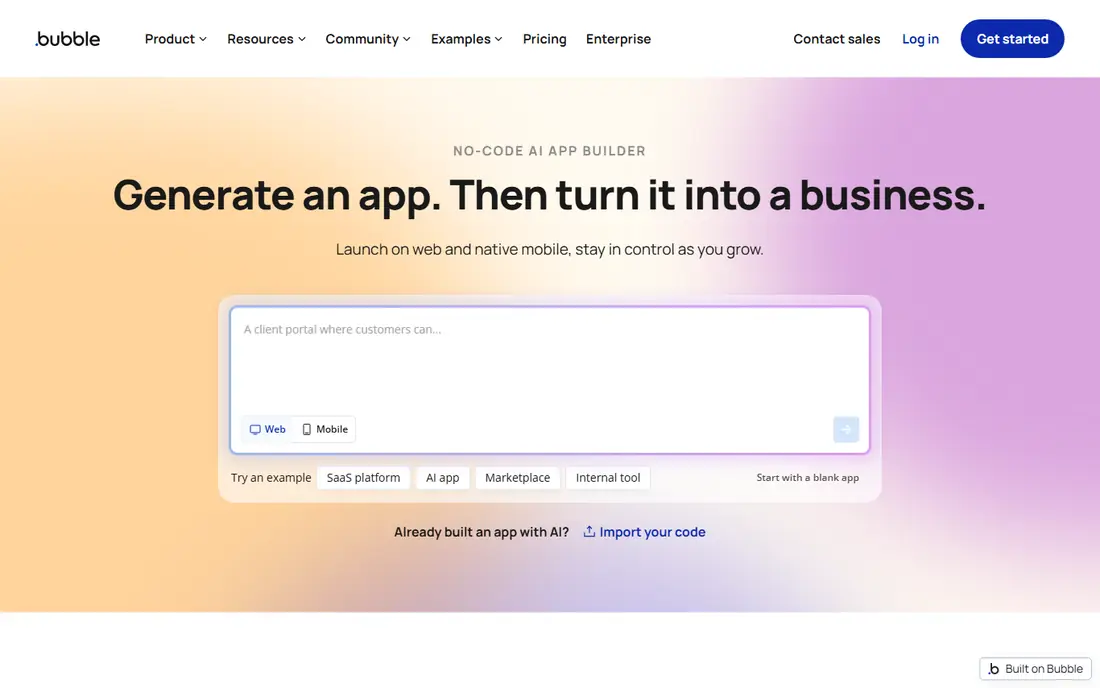
Bubble is the closest low-code option to a custom build for many founders. You design pages visually, define data types, and set workflows that run when a user clicks, signs up, or pays. That combination covers marketplaces, directories, dashboards, and membership sites without a traditional codebase. The free plan lets you build and test before you commit, which matters when you are still checking whether the idea has legs.
The catch is cost control. Bubble meters server work in workload units, and a poorly built workflow can burn through an allowance faster than expected. Paid plans start at $32 per month billed annually for a web app on the Starter tier, based on recent published pricing, so check the current pricing page before you budget. If your app needs heavy background work or very high traffic, compare that metered model against a fixed-price developer engagement before you choose.
- Visual workflows cover databases, logins, and payments
- Large plugin library
- Free plan allows real building before paying
- Workload-unit pricing can rise with usage
- Complex apps still need careful design and testing
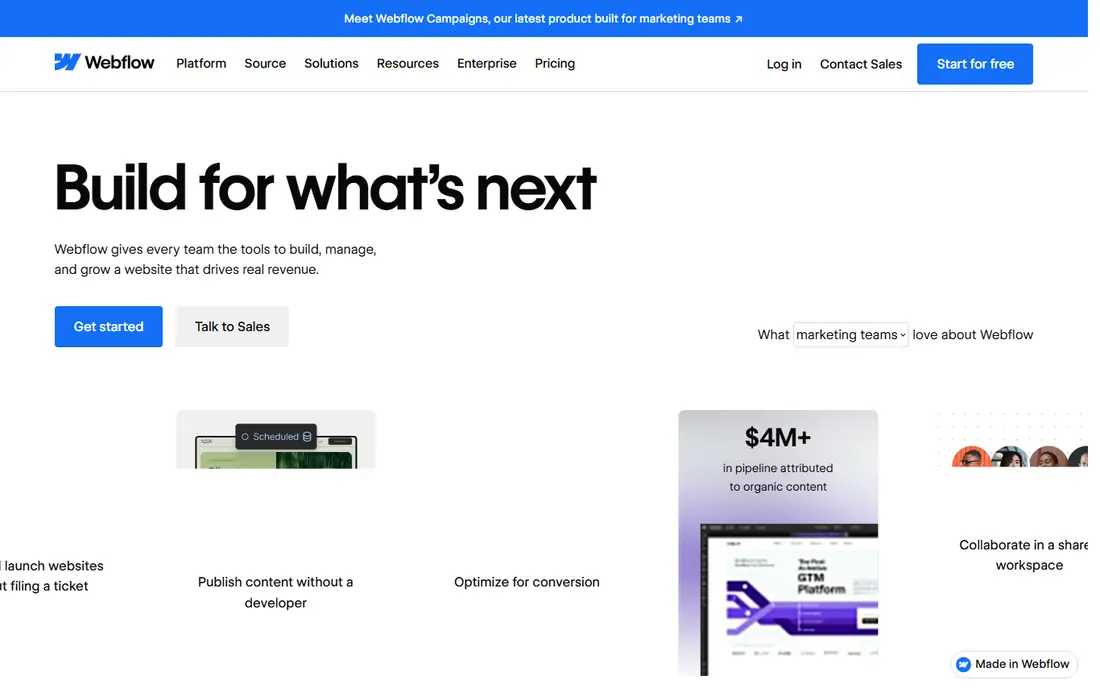
Webflow suits teams that care most about how the finished product looks. Designers can build responsive pages, a content system, and basic forms without handing a mockup to developers for rebuild. For marketing sites, client portals with simple content, and small stores, that speed is hard to beat. Hosting, security updates, and backups are handled for you, which removes a common agency maintenance bill.
Webflow is less convincing as a full replacement for custom software. Complex user roles, advanced workflows, and deep database logic often need outside tools or code. Starter site plans are listed from $14 per month billed annually, with app-style needs pushing you toward higher tiers. Pick Webflow when design and content lead the project, and pick a developer platform when logic leads it.
- Precise visual design control
- Built-in hosting and CMS
- Strong template library
- App logic is thinner than Bubble
- Ecommerce and membership features add cost
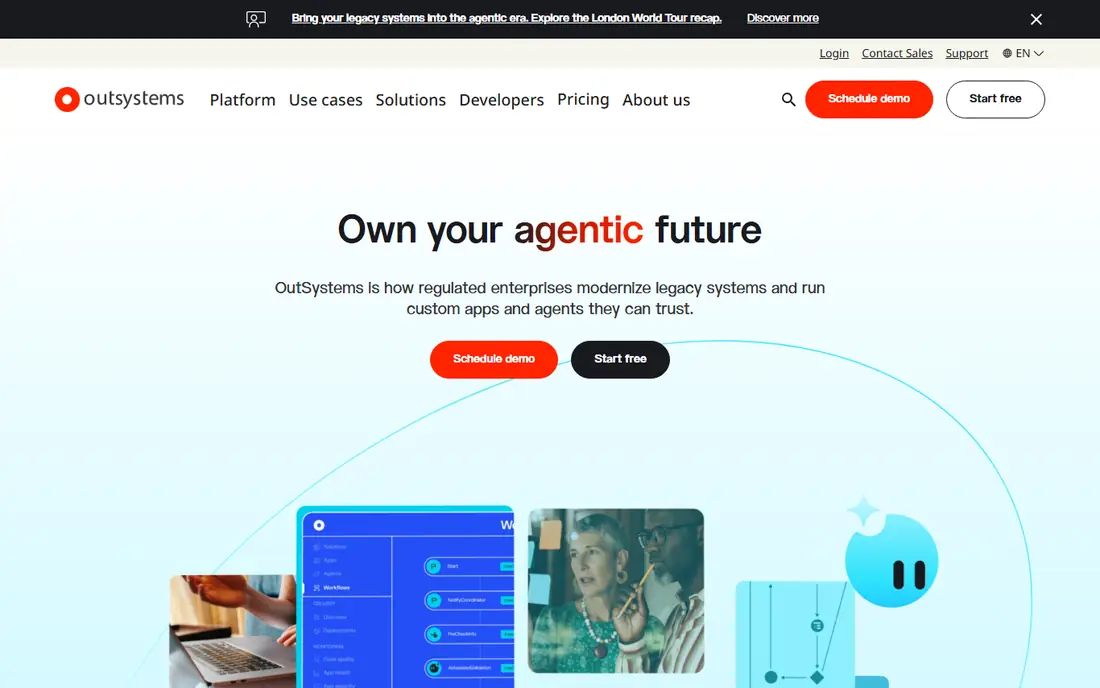
OutSystems is built for companies that would otherwise hire an agency for internal systems and customer portals. Teams build with visual models, reuse components, and publish to development, test, and production environments in one step. Built-in access controls, audit logs, and compliance templates help larger organisations pass internal reviews that simpler tools cannot. That governance is the main reason to pay its premium.
The trade-off is price and complexity. Published third-party summaries put production pricing from around $36,300 per year, and OutSystems itself asks buyers to request a quote, so treat any figure as a starting point for a sales conversation. Small teams will find Bubble, Glide, or Softr faster and far cheaper. Choose OutSystems when the app must connect to existing ERP or CRM systems and survive an enterprise security review.
- Visual development with enterprise security controls
- Strong integration options
- One-click deployment across environments
- Pricing is enterprise level
- Learning curve is steeper than simpler no-code tools
Mendix takes a similar enterprise route to OutSystems, with a focus on replacing older internal systems. Business and technical staff can work on the same visual models, which shortens the feedback loop that usually slows agency projects. Deployment options include cloud, on-premises, and hybrid setups, so regulated teams are not forced into a single hosting model. Collaboration tools, version control, and access controls support larger teams working on the same app.
Pricing is quote-based, so we list it as See website rather than guessing a number. That also means the sales cycle is longer than signing up for a self-serve tool. Mendix fits best when you have an existing system to replace, several departments using the app, and an IT team that wants control over deployment. For a single simple app, a lighter platform will move faster.
- Visual modelling plus AI-assisted building
- Cloud, on-premises, and hybrid deployment
- Governance and collaboration tools
- Quote-based pricing
- Smaller teams may find the platform heavy
Retool answers a specific agency brief very well: build us an internal tool. Admin panels, support dashboards, approval workflows, and reporting screens are its home ground. You connect a database or API, drag components onto a page, and write JavaScript or SQL only where the visual builder runs out of room. That mix lets a small technical team ship in days what an agency might scope over weeks.
Retool is a weaker pick for a public product. Its pricing and design centre on internal users, and customer-facing polish takes extra work. The free plan covers up to five users, and paid team plans are listed from $10 per standard user per month in recent summaries, so confirm the current page. If your brief is an internal tool, Retool should be near the top of the shortlist. If it is a consumer app, look at Bubble or a developer marketplace instead.
- Connects to databases and APIs quickly
- Drag-and-drop interface with real code when needed
- Strong permission controls
- Not designed for public customer apps
- Costs rise with end users on paid plans
Glide is the fastest route on this list from a spreadsheet to a usable app. A team can turn a Google Sheet or Glide Table into an inventory tracker, a field-service app, or a simple client portal in an afternoon. Layouts are mobile friendly by default, and forms, lists, and basic workflows cover many everyday business jobs. For small teams, that speed beats waiting for an agency proposal.
Limits decide whether Glide stays cheap. Published pricing puts the Explorer plan at $19 per month billed annually and Maker at $49, with caps on updates, published apps, and user types. Business users and heavy syncing push costs higher, so map your user count before you commit. Glide fits operational apps with clear data and simple steps. It fits poorly when you need complex branching logic or a fully custom design.
- Turns sheets and tables into working apps fast
- Mobile-friendly layouts
- No code needed for common workflows
- Update and user limits can force upgrades
- Deep custom logic is limited
Softr turns a database into a portal that clients can actually use. Membership directories, client dashboards, resource libraries, and booking front ends are its strengths. Role-based access lets you show different content to staff and clients, which is often the main reason a small business hires an agency in the first place. Connections to Airtable, Google Sheets, Notion, and other sources mean you may not need to move your data at all.
The free plan covers small apps with limited users and records, and paid plans start at $19 per month billed annually for Basic. Higher tiers add users, records, and workflow actions, and branding removal sits on Pro. Design options are more templated than Webflow, so very custom layouts will feel constrained. Pick Softr when the data already exists and the job is giving the right people safe access to it.
- Connects to Airtable, Google Sheets, and other data sources
- Role-based access for clients
- Custom domains on paid plans
- Design flexibility is narrower than Webflow
- Heavy apps need higher tiers
Toptal replaces the agency model with a single vetted developer or a small team, matched after a screening process. That suits a product that genuinely needs custom code but does not justify a full agency retainer. Clients can trial a developer for up to two weeks, which is a useful safety net when the fit is uncertain. Toptal covers developers, designers, and finance experts, so a mixed team is possible without separate hiring rounds.
Pricing is the main frustration. Toptal publishes no hourly rate and quotes each engagement after a call, with recent comparisons noting a $79 per month subscription on top of the engagement rate. Budget accordingly and get the full rate in writing before work starts. Toptal fits best when senior skill matters more than the lowest price, and when you can manage the developer directly.
- Screening process filters for senior talent
- Candidates often arrive within days
- Trial period reduces hiring risk
- Rates are quoted per engagement, not published
- $79 monthly subscription applies in recent listings
Arc.dev offers a more transparent version of the vetted-developer model. Freelance rates are published in ranges, recently listed from $15 to $110 or more per hour, with full-time hires charged at 20 percent of first-year salary. That range lets you estimate a monthly cost before a sales call, which is a real advantage over quote-only rivals. Freelancers can arrive within days, and full-time matches take longer but follow the same screening path.
Read the fee structure carefully. Some summaries note a platform fee on top of the developer rate, plus a refundable deposit on some engagements, so the headline hourly figure is not always the billed figure. Arc.dev fits teams that want flexibility, a clear rate range, and the option to convert a freelancer to a full-time hire. It fits poorly if you want a vendor to own delivery end to end, since you still manage the work.
- Published freelance rate ranges help budgeting
- Freelance and full-time hiring in one place
- Trial and re-match terms
- Platform fees add to developer rates
- Quality still depends on the individual match
How we picked these
We compared official feature pages, pricing pages, app store listings, privacy policies, and public reviews for each product. We kept only services that exist and work in October 2026 and that fit one of three agency alternatives: a low-code platform, a productised build route, or a vetted developer marketplace. We left out general freelance sites with no screening and tools that only build marketing pages, since neither replaces a custom development engagement cleanly.
What to decide before you pick a route
Start with who will own the product after launch. A low-code platform puts maintenance in your hands, which is cheap if someone on your team can learn it and risky if nobody will. A vetted developer puts maintenance on a person you manage, which is flexible but depends on that person staying available. An agency puts maintenance on a vendor, which is the most hands-off option and usually the most expensive over time.
Next, map the hardest feature, not the easiest one. User roles, payments, search, and integrations are where low-code tools hit limits. If your hardest feature is a simple form or a client portal, Glide or Softr may cover it fully. If it is complex logic, real-time data, or a custom algorithm, a developer through Toptal or Arc.dev is the safer route. Write that feature down and test it on a trial before you pay for a year.
Finally, price the second year, not just the first month. Metered platforms rise with usage, per-user tools rise with headcount, and developer rates rise with seniority. Ask each vendor for a written estimate at double your current usage. That one question separates a genuinely cheaper alternative from a low entry price that grows past an agency fee within a year.
Frequently asked questions
Are low-code platforms a real alternative to a development agency?
Yes, for apps with standard features such as logins, forms, lists, payments, and dashboards. They fall short when the product needs unusual logic, very high scale, or deep custom performance work, and that is where a vetted developer is the better alternative.
How much cheaper is this route than hiring an agency?
It depends on scope, but the gap is usually large for simple apps. A low-code paid plan can run from free to a few hundred dollars per month, while a vetted developer is billed hourly or monthly, and an agency project often runs into five figures. Always compare total cost at your expected usage, not the entry price alone.
Can I move off a low-code platform later?
Sometimes, but not always cleanly. Some platforms allow code export or data export, while others lock logic inside their builder. Check export options before you build, and keep your data in a source you control, such as a separate database, where possible.
Do I still need technical help with these tools?
Often, yes, for setup, integrations, and testing. Low-code removes much of the coding, but it does not remove product decisions, data design, or quality checks. Budget time for learning or for a short engagement with a specialist.
Which option suits a non-technical founder best?
Softr and Glide suit non-technical founders with data-led apps, while Bubble suits founders willing to learn a visual builder in depth. Webflow suits design-led sites. If the product needs custom code, hire through Toptal or Arc.dev and manage scope tightly.
What should I check before signing a developer marketplace contract?
Check the full hourly or monthly rate including platform fees, the trial terms, who owns the code, and what happens if the match fails. Get those points in writing, and start with a small, well-defined task before committing to a long engagement.
Sources
See where you really rank - block by block
ProMapRanker scans Google Maps across a grid of your service area. Simple monthly plans from $19, white-label on every plan.
Start freeKeep reading
 zoho books alternatives
Best Zoho Books Alternatives in 2026
Compare the best zoho books alternatives for small business accounting, from QuickBooks Online and Xero to FreshBooks, Wave, and Sage in 2026, with pricing.
Read → zluri alternatives
Best Zluri Alternatives in 2026
Compare zluri alternatives for 2026, with SaaS management platforms for app discovery, spend tracking, renewals, and automation for IT, finance and procurement.
Read → zerobounce alternatives
Best ZeroBounce Alternatives in 2026
Best zerobounce alternatives for list hygiene: compare 8 email verification tools for bulk cleaning, real-time checks and catch-all handling in 2026 today.
Read →