 ProMapRanker
Best Coveron Alternatives in 2026

Key takeaways
- Coveron, formerly NordProtect, is an identity theft and cyber protection service from Nord Security, so its true alternatives are identity protection services, not VPNs alone.
- Aura is our pick for most households because it bundles three-bureau credit monitoring, dark web alerts, a VPN, and antivirus in one plan.
- LifeLock suits buyers who want the highest identity theft insurance limits and a long-established restoration service.
- Identity Guard and Experian IdentityWorks suit buyers who want bureau-linked monitoring without a full security suite.
- Check whether insurance limits, bureau count, and family cover match your household before you pay, since those three factors vary most.
Quick comparison
| Pick | Great for | Pricing starts at | Free tier | |
|---|---|---|---|---|
 Aura | All-in-one family protection | $10 per month | Free trial | Visit |
 LifeLock | Maximum insurance limits | See website | Free trial | Visit |
 Identity Guard | AI-assisted threat alerts | See website | Free trial | Visit |
 McAfee Plus | Security suite plus identity cover | See website | Free trial | Visit |
 IdentityForce | Credit and identity monitoring | See website | Free trial | Visit |
 Experian IdentityWorks | Direct bureau monitoring | See website | Free trial | Visit |
 Bitdefender Identity Protection | Lightweight identity monitoring | See website | Free trial | Visit |
 IDShield | Identity plus legal help | See website | Free trial | Visit |
The best Coveron alternatives
Coveron monitors dark web exposure, credit activity, and security threats, and adds insurance-backed recovery for identity theft, cyber extortion, and online fraud. The services below offer the same core job, with different mixes of monitoring, insurance, and device security. We compared official feature pages, pricing pages, and public reviews in October 2026.
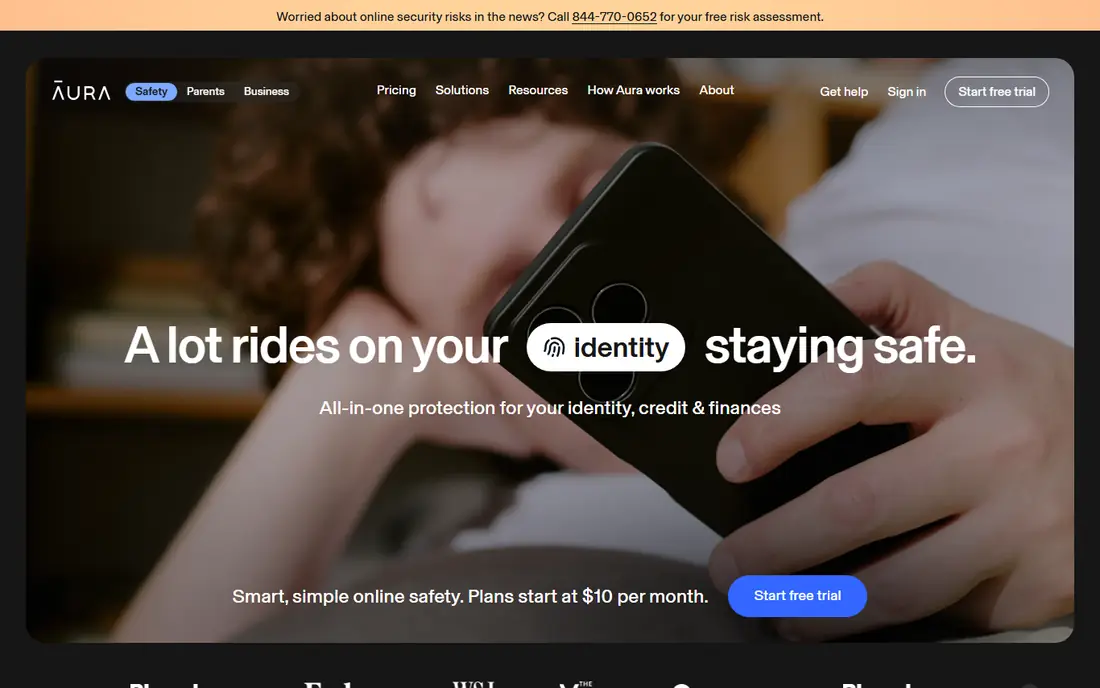
Aura is the closest all-in-one alternative to Coveron, and the easiest recommendation for most households. Every adult plan includes three-bureau credit monitoring, dark web scanning, financial account alerts, and up to $1 million in identity theft insurance per adult, plus a VPN, antivirus, and a password manager. That bundle covers both monitoring and device security in one subscription. The plan structure is simple: you pay by household size, not by feature tier, so an individual, a couple, or a family of up to five adults gets the same core protection. A 14-day free trial and a 60-day money-back guarantee on annual plans give you time to check alert quality before committing for a year. Aura costs more month to month than its annual equivalent, so check the renewal price at checkout. It also lacks some niche features that specialist tools offer. For a household that wants one service for identity, credit, and devices, Aura is our pick.
- Three-bureau credit monitoring on all plans
- Dark web and financial monitoring
- VPN, antivirus, and password manager included
- Monthly billing costs more than annual billing
- Some family features require higher household plans

LifeLock, from Norton, is the veteran in this category, and its strength is depth of restoration support. When identity theft happens, dedicated specialists help restore accounts, dispute fraudulent activity, and handle paperwork, which matters more than any dashboard feature at the moment of crisis. Top tiers raise identity theft insurance well above Aura, up to $3 million on the highest plan in published materials. Monitoring covers credit, dark web, and financial activity, with the breadth depending on tier. Lower tiers monitor fewer bureaus, so buyers who want three-bureau cover should price the higher plans, not the entry plan. Norton device security can also be bundled, which suits households already using Norton antivirus. The tiered structure is the main drawback. Comparing LifeLock to a flat-plan rival takes care, since headline prices often describe the entry tier. If maximum insurance and established restoration support are your priorities, LifeLock is the strongest alternative here.
- Long-established identity restoration service
- High insurance limits on top tiers
- Broad monitoring options
- Tiered plans make comparison harder
- Three-bureau monitoring requires higher tiers
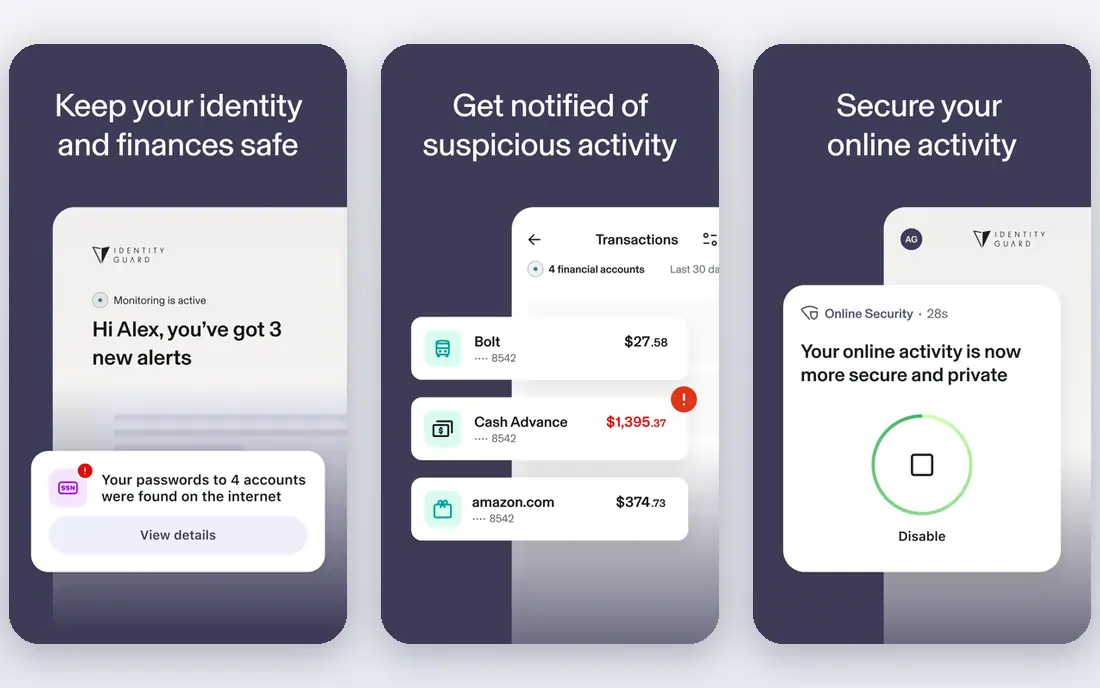
Identity Guard, also from the Norton family, uses artificial intelligence to flag high-risk activity and prioritize alerts. Instead of a long list of low-level notices, it aims to surface the threats most likely to matter, which helps households that ignore alerts when every notice looks the same. Core plans include dark web monitoring, credit monitoring, and $1 million in identity theft insurance, with higher tiers adding three-bureau monitoring and more financial account coverage. That range lets a single user start modestly and step up if their risk profile grows. The entry tier is the catch. Buyers who assume every plan includes three-bureau monitoring will be disappointed, so read the tier details. For a user who wants smarter alerting without a full security suite, Identity Guard is a solid Coveron alternative.
- IBM Watson-powered risk alerts
- Three-bureau monitoring on higher tiers
- $1 million identity theft insurance
- Entry tier monitors fewer bureaus
- Interface and plan tiers take time to learn
McAfee Plus suits households that already trust McAfee for device security and want identity protection added to the same subscription. Higher plans combine antivirus, VPN, and password management with credit monitoring, dark web alerts, and identity theft insurance, in a similar bundle to Aura and Coveron. The value depends on tier. Entry McAfee plans focus on devices, while identity monitoring, credit lock, and higher insurance limits sit on Plus tiers. That means the cheapest McAfee price is not the price of a true Coveron alternative, so compare the Plus plans directly. For a household that wants one vendor for devices and identity, McAfee Plus is practical and widely available. For identity-only cover, a specialist like Aura or Identity Guard may offer cleaner monitoring for similar money.
- Antivirus and device security bundled with identity monitoring
- Credit monitoring and $1 million insurance on higher plans
- Family device cover
- Identity features vary sharply by tier
- Suite can feel heavy for identity-only buyers
IdentityForce, from TransUnion, focuses on the monitoring job itself rather than device security. It watches credit files, dark web sources, and public records for misuse, and offers restoration help when theft is confirmed. That bureau-linked background gives its credit alerts a direct line to the source data. Higher tiers add three-bureau monitoring, social media monitoring, and bank account alerts, which suit users who want broad surveillance without paying for antivirus they already own. The service is straightforward to set up, with alerts delivered by app, email, or text. Buyers who want a VPN, password manager, or antivirus will need a separate tool, since IdentityForce does not bundle them. If identity and credit monitoring are the whole job, and you already have device security covered, IdentityForce is a focused alternative.
- Credit monitoring with alerts
- Dark web and social media monitoring on higher tiers
- Identity restoration support
- No bundled VPN or antivirus on most plans
- Pricing is tiered and quote-influenced for families
Experian IdentityWorks has an obvious advantage: it comes from one of the three credit bureaus itself. Paid plans monitor your Experian file directly, offer an Experian credit lock, and scan the dark web for exposed personal data. That direct connection can make credit alerts faster and more specific than a third-party feed. The free tier offers basic monitoring and a credit report, which is a useful starting point if you only want to watch one bureau. Paid Premium plans add three-bureau monitoring, $1 million in identity theft insurance, and broader financial monitoring, bringing it closer to a full Coveron alternative. The limitation is tiering again. Three-bureau cover and the full insurance package require the top plan, so the entry price understates the comparable cost. For users who already trust Experian and want bureau-direct monitoring, IdentityWorks is a natural fit.
- Direct Experian credit monitoring and lock
- Dark web surveillance
- $1 million insurance on paid plans
- Full three-bureau cover requires the top tier
- Free tier is limited to basic monitoring
Bitdefender Identity Protection, sold as part of Bitdefender security products, focuses on finding exposed personal data before it is misused. It monitors data breaches, dark web sources, and public leaks for your email addresses, phone numbers, and other identifiers, then explains what to do when a leak appears. That focus suits users who already use Bitdefender antivirus and want identity alerts added without a second vendor. The alerts are clear, with practical steps for changing passwords, freezing credit, or contacting institutions, which helps non-technical users act quickly.
- Continuous dark web and data breach monitoring
- Clear alerts with action steps
- Strong security brand background
- No full credit bureau monitoring on basic plans
- Insurance cover is more limited than Aura or LifeLock
IDShield stands out for what happens after an alert. Identity restoration is handled with licensed private investigators, and a separate legal plan can be added for broader legal help, which suits users who worry about the paperwork and disputes that follow identity theft. Insurance limits on some plans reach $3 million, above most rivals. Monitoring covers credit, dark web, and public records, with family plans available for households. The service is sold widely through associations and employers, so check whether a group plan already covers you before buying direct. IDShield does not bundle a VPN or antivirus, so households that want device security too will need another tool. If restoration help and legal access matter more than a security suite, IDShield is a distinctive Coveron alternative.
- Identity monitoring with licensed investigator support
- Legal plan can be added
- $3 million insurance on some plans
- Plan structure and add-ons need careful reading
- Device security is not bundled
How we picked these
We first confirmed what Coveron is: an identity theft and cyber protection service from Nord Security, formerly NordProtect, rebranded in May 2026. That finding set the category, so we compared identity protection services, not VPNs alone. We checked official feature pages, pricing pages, and public reviews for each service, and we favored products with a working official site, clear monitoring scope, and current availability in October 2026. We did not claim hands-on testing. Where pricing varies by tier or billing term, we wrote See website rather than presenting a promotional rate as a stable price.
Choosing between monitoring, insurance, and bundles
Decide which risk worries you most
If stolen credit is the worry, prioritize three-bureau monitoring and a credit lock. If recovery cost is the worry, prioritize insurance limits and restoration support. If device security is also missing, a bundle like Aura or McAfee Plus covers two jobs for one price. Ranking those risks first prevents paying for features you will not use.
Read the insurance and bureau fine print
Insurance limits apply to eligible losses and fees, not to every loss, and they differ by plan and household member. Bureau count matters too, since one-bureau monitoring can miss a fraudulent account opened against another bureau. Check both before you compare prices, since a cheaper plan with one bureau and lower insurance may cost more in a crisis.
Use the trial to test alerts
Sign up for a trial, add the identifiers you actually use, and see how alerts read on your phone. Clear, specific alerts with action steps beat a long list of vague warnings. If alerts are noisy or confusing during the trial, they will be worse when a real threat appears.
Frequently asked questions
What is Coveron?
Coveron is an identity theft and cyber protection service from Nord Security, the company behind NordVPN. It launched as NordProtect and was renamed Coveron in May 2026. It monitors dark web exposure, credit activity, and security threats, and adds insurance-backed recovery for identity theft and related cyber fraud.
What are the best Coveron alternatives?
Aura is our overall pick for households that want monitoring, credit alerts, and device security in one plan. LifeLock suits buyers who want the highest insurance limits, while Identity Guard and Experian IdentityWorks suit bureau-focused monitoring. Choose by bureau count, insurance, and whether you need a security bundle.
Is Aura a good alternative to Coveron?
Yes, Aura is a strong alternative because it covers the same core ground: three-bureau credit monitoring, dark web alerts, financial monitoring, and identity theft insurance, plus a VPN and antivirus. It also offers a free trial and a money-back guarantee on annual plans, which makes it easy to test.
Do identity protection services prevent identity theft?
No service can prevent all identity theft. Monitoring finds misuse faster, insurance covers eligible recovery costs, and restoration help handles paperwork, but no tool blocks every attack. Freezing credit, using unique passwords, and checking statements remain important steps alongside any paid service.
How much do Coveron alternatives cost?
Prices vary by tier and billing term, with Aura starting at $10 per month on its published homepage and most rivals priced by quote or tier. Annual billing usually costs less per month than monthly billing. Check the renewal price, not just the first-year offer, before you commit.
Can I get identity protection for my whole family?
Yes, Aura, LifeLock, McAfee Plus, and IDShield all offer family plans, though adult counts, child cover, and insurance limits differ. Aura covers up to five adults plus children on its family plan. Compare adult counts and per-adult insurance, since family totals can hide per-person limits.
Sources
See where you really rank - block by block
ProMapRanker scans Google Maps across a grid of your service area. Simple monthly plans from $19, white-label on every plan.
Start freeKeep reading
 zeffy payment processor stripe alternatives
Zeffy and Stripe Alternatives for Nonprofits in 2026
Explore zeffy payment processor stripe alternatives for nonprofits. We compare 8 fundraising platforms on fees, donor tools, and nonprofit focus. Check fees.
Read → workday alternatives
Workday Alternatives in 2026
Workday alternatives compared: we review 8 HR and payroll platforms that replace Workday, with pricing, strengths and honest limits for each team size.
Read → what's the best weather app
What's the Best Weather App in 2026
Wondering what's the best weather app? We compare 10 free and paid apps for forecasts, radar, alerts, and Colorado mountain weather for everyday and storm use.
Read →