 ProMapRanker
Best CoderPad Alternatives in 2026


Large scale screening and interviews · Pricing starts at: See website
Key takeaways
- CodeInterview is the closest lightweight swap for live coding interviews, with built-in video, whiteboard, and playback.
- HackerRank, CodeSignal, and Codility suit high-volume screening, while CoderPad-style pads suit final-round conversations.
- Playcode is the cheapest front-end option, but its language range is narrower than full interview platforms.
- Karat fits teams that want interviews run as a service, rather than running every interview in-house.
Quick comparison
| Pick | Great for | Pricing starts at | Free tier | |
|---|---|---|---|---|
| HackerRank | Large scale screening and interviews | See website | No | Visit |
 CodeSignal | Structured skills assessments | $24.99 per month | Free trial | Visit |
 Codility | Algorithm-focused screening | $500 per month | Free trial | Visit |
 HackerEarth | Large question library and hackathons | $100 per month | Free trial | Visit |
 Karat | Interviews run as a service | See website | No | Visit |
 Coderbyte | Small teams needing assessments | $199 per month | Free trial | Visit |
 CodeInterview | Lightweight live interviews | $89 per month | Yes | Visit |
 Playcode | Low-cost front-end interviews | $5 per month | Yes | Visit |
 DevSkiller | Role-specific technical assessments | See website | Free trial | Visit |
The best coderpad alternatives
CoderPad is built around the live interview itself: a shared editor, a run button, and a conversation. The tools below split into live pads, screening platforms, and interview services, so match the tool to the stage of hiring you run most.
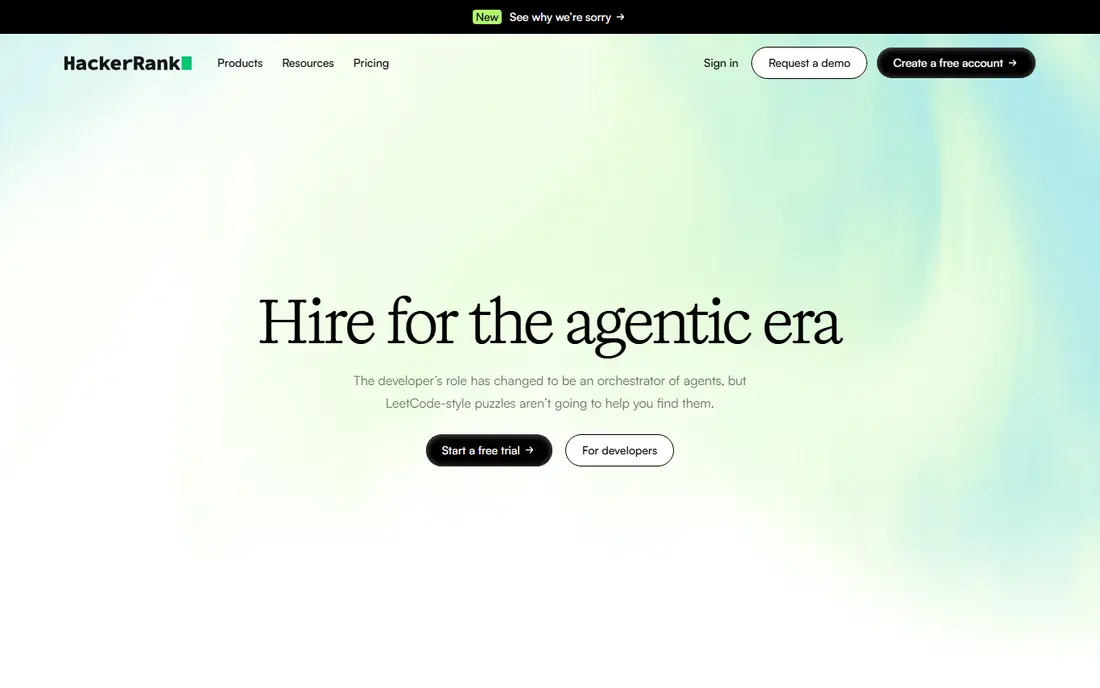
HackerRank covers the full funnel, from screening tests to live interviews, which makes it a strong choice for companies hiring many engineers. Recruiters can use ready-made questions, custom tests, and interview rooms without stitching separate tools together. Integrations with applicant tracking systems help keep candidate data in one place.
The downside for small teams is cost and complexity. HackerRank is built for volume, and its sales-led pricing can be hard to compare with a simple per-month pad. A startup running a few interviews a month may find CodeInterview or Playcode more practical. For larger hiring programs, the breadth and reporting justify the extra setup.
- Large assessment library and interview tools in one platform
- ATS integrations
- Proctoring and plagiarism checks
- Pricing is sales-led for many plans
- Smaller teams may pay for scale they do not need
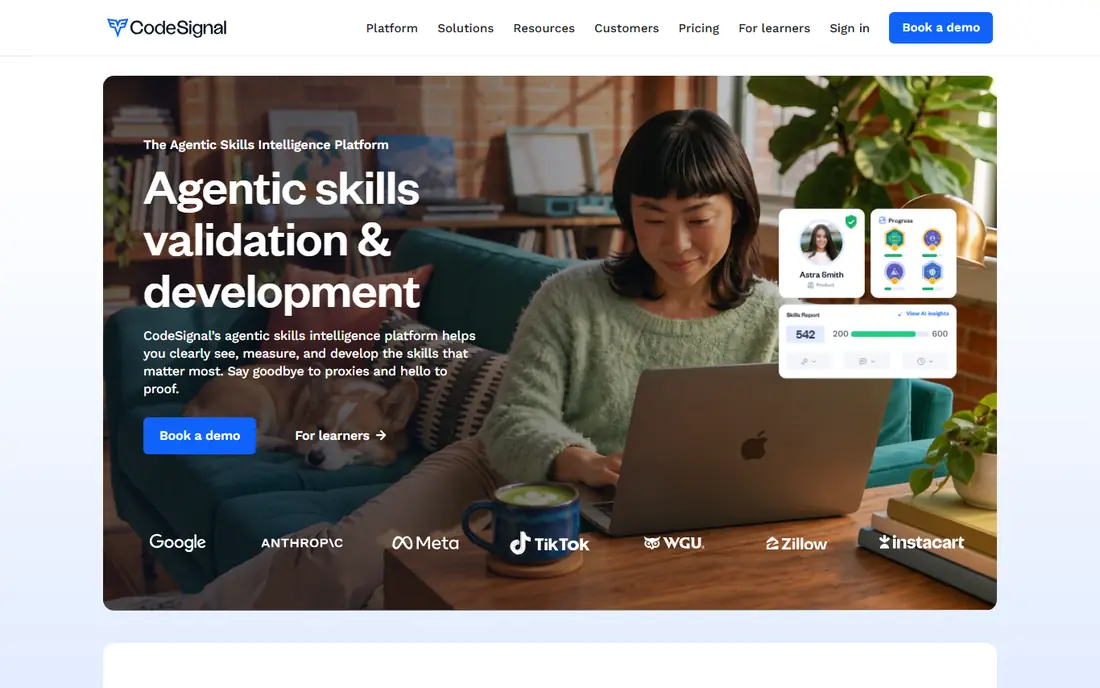
CodeSignal is best when consistency matters more than a freeform chat. Assessments use role-specific frameworks, automated scoring, and proctoring, which helps large teams compare candidates fairly. It also supports learning and development use, so the same platform can serve hiring and upskilling.
Teams that want a relaxed pair-programming session may find CodeSignal more formal than CoderPad. The $24.99 per month figure is a starting point, and larger deployments are quote-based, so treat published pricing as a floor, not a total. For structured screening at scale, CodeSignal is a solid pick.
- Structured assessments with scoring and frameworks
- Realistic coding simulations
- Useful for mid-to-senior screening
- Published entry price does not cover full enterprise pricing
- Live interview feel is more structured than a freeform pad
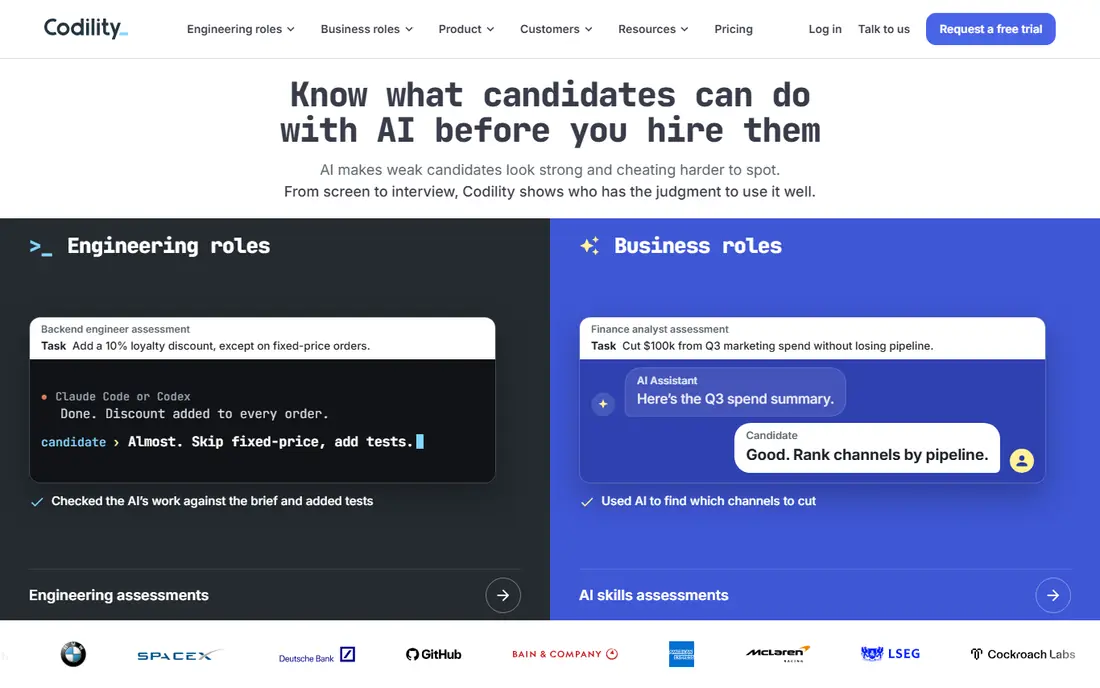
Codility excels at the first screen. Candidates take standardized coding tests, and hiring teams get detailed analytics on how each candidate approached the problem. That repeatability helps when many applicants must be judged against the same bar, especially for algorithm-heavy roles.
The price puts Codility out of reach for many small teams, starting at $500 per month in published comparisons. It also leans toward automated screening rather than live conversation, so final-round interviewers may still want a pad beside it. For high-volume, consistent screening, Codility earns its cost.
- Clean, repeatable screening tests
- Detailed performance analytics
- Strong plagiarism and proctoring tools
- High entry price
- Live interview features are less central than screening
HackerEarth gives recruiters a wide library and tools for both hiring tests and coding events. Teams can run assessments, live interviews on a shared editor, and hackathons from one account, which suits companies that also run developer community events. Automatic evaluation and plagiarism detection reduce manual grading.
Breadth is the trade-off. A team that only runs live interviews may find the platform larger than needed, and curating the right questions takes time. At $100 per month as a published starting point, it is cheaper than Codility while still offering scale. For varied hiring and events, HackerEarth is a flexible choice.
- Very large question library across languages and formats
- Hackathon and challenge support
- Remote proctoring and auto-evaluation
- Interface can feel broad for teams that only need live interviews
- Question quality varies across the library
Karat changes the model entirely. Instead of your engineers running interviews, Karat provides trained interviewers who follow structured rubrics and deliver feedback. That can cut the time senior engineers spend interviewing, which is often the hidden cost of hiring.
Control is the concern. Some teams want their own engineers in every final round, and a service model may feel distant from team culture. Karat also prices by program, not a simple monthly pad fee, so it suits companies with steady hiring volume. When engineering time is scarce, Karat is worth a serious look.
- Trained interviewers run interviews for you
- Consistent rubrics and feedback
- Frees engineering time
- Less control over who interviews each candidate
- Pricing is quote-based and suited to larger programs
Coderbyte sits between a simple pad and an enterprise suite. Small and mid-size teams can create assessments, run interviews, and use a library of challenges without a long implementation. The $199 per month employer plan is easier to budget than quote-based enterprise pricing.
Cheating prevention is a weaker point in public comparisons, so teams hiring remotely should test proctoring settings and question design carefully. Coderbyte also works best for coding roles, rather than broader skills testing. For a small team that needs assessments plus interviews, it is a practical middle ground.
- Coding assessments and interviews in one place
- Simpler setup than enterprise suites
- Useful challenge library
- Anti-cheating tools are thinner than some rivals
- Pricing is per employer plan, not per interview
CodeInterview is the closest feel to CoderPad on this list. Candidates and interviewers share a code editor, talk over built-in video, sketch on a whiteboard, and review playback after the session. A free tier includes two interviews per month, which lets small teams try real interviews before paying.
The limits appear at scale. Rubrics, analytics, and ATS integrations are less deep than HackerRank or CodeSignal, so large hiring programs may outgrow it. The Starter plan at $89 per month covers a modest interview volume, with extra interviews available. For teams whose main need is a good live interview room, CodeInterview is an excellent fit.
- Shared editor with video, audio, whiteboard, and playback
- Free interviews each month
- 30-plus languages
- Scoring rubrics and ATS integrations are thinner than enterprise platforms
- Compiler speed can vary under load
Playcode is the budget pick, and it knows it. Front-end interviewers get a real runtime for JavaScript, TypeScript, and React, with live preview and collaboration, for $5 per month. Candidates join by link without creating an account, which removes friction at the start of an interview.
The narrow focus is the catch. Playcode is not a general interview platform for backend, data, or systems roles, and it lacks rubrics and analytics for structured hiring. Bootcamps, startups, and front-end teams will get the most value. For a general hiring program, pair it with a screening tool rather than relying on it alone.
- Very low price
- Real JavaScript and TypeScript runtime with live preview
- No candidate signup needed
- Focused on front-end stacks, not all languages
- No structured rubrics or hiring analytics
DevSkiller focuses on tasks that look like real work, rather than only short algorithm puzzles. Recruiters can test candidates on role-specific skills, with automated scoring that speeds up screening. That approach helps teams judge whether a candidate can handle the actual stack, not just a test format.
The platform is less of a live pad and more of an assessment system, so final-round interviewers may still want a separate interview room. Pricing requires a sales conversation, which makes budgeting harder for small teams. For role-based screening, DevSkiller is a thoughtful alternative to generic test libraries.
- Real-world coding tasks mapped to roles
- Automated scoring
- Useful for screening beyond algorithm puzzles
- Pricing is quote-based
- Live interview depth is less central than assessment design
How we picked these
We compared official feature pages, pricing pages, and public reviews for live coding interview and technical assessment tools that exist and work in October 2026. We kept tools that support live coding, screening, or interview services, and we wrote See website where pricing is quote-based or not published in a comparable form. We did not claim hands-on testing, and we focused on interview style, language range, and hiring stage fit.
How to pick by hiring stage
Map your funnel before you buy. Screening tools like Codility, CodeSignal, and HackerEarth help when hundreds of applicants need a fair first filter. Live pads like CodeInterview and Playcode help when a shortlist needs a real conversation about code. Karat helps when your engineers cannot cover interview load.
Test with a real role, not a demo script. Run the same interview question on two tools, check how candidates join, how code runs, and how feedback is recorded. Confirm ATS integration, proctoring settings, and data handling before you sign, because those details matter more after the first ten hires than the editor theme does.
Frequently asked questions
What is the closest CoderPad alternative for live interviews?
CodeInterview is the closest lightweight match, with a shared editor, video, whiteboard, and playback. Playcode is closer for front-end-only interviews at a much lower price.
Which alternative is cheapest?
Playcode starts at $5 per month and has a free tier, making it the cheapest option here for front-end interviews. CodeInterview also offers free interviews each month for very low volume hiring.
Do these tools help prevent cheating?
HackerRank, CodeSignal, Codility, and HackerEarth offer proctoring, plagiarism detection, or both, though depth varies by plan. Coderbyte and simple pads offer thinner anti-cheating tools, so question design and live observation matter more.
Can I use a screening tool and a live pad together?
Yes, many teams screen with HackerRank, CodeSignal, or Codility, then run final rounds in CodeInterview or a similar pad. That split gives structure early and conversation late in the process.
Is Karat suitable for small teams?
Karat is usually better for steady hiring volume, since it runs interviews as a service and prices by program. Small teams with only a few hires a year will usually find a pad or screening tool more cost-effective.
Sources
See where you really rank - block by block
ProMapRanker scans Google Maps across a grid of your service area. Simple monthly plans from $19, white-label on every plan.
Start freeKeep reading
 zoho books alternatives
Best Zoho Books Alternatives in 2026
Compare the best zoho books alternatives for small business accounting, from QuickBooks Online and Xero to FreshBooks, Wave, and Sage in 2026, with pricing.
Read → zluri alternatives
Best Zluri Alternatives in 2026
Compare zluri alternatives for 2026, with SaaS management platforms for app discovery, spend tracking, renewals, and automation for IT, finance and procurement.
Read → zerobounce alternatives
Best ZeroBounce Alternatives in 2026
Best zerobounce alternatives for list hygiene: compare 8 email verification tools for bulk cleaning, real-time checks and catch-all handling in 2026 today.
Read →