 ProMapRanker
Best Code Climate Alternatives in 2026


Quality gates plus security in one platform · Pricing starts at: See website
Key takeaways
- SonarQube is the safest default for teams that want quality gates and security checks in one place, with a free self-hosted option.
- Codacy and DeepSource suit smaller teams that want fast setup and automated review comments on pull requests.
- Semgrep and Snyk Code suit teams where security rules and developer feedback matter more than a maintainability grade alone.
- Pricing models differ sharply, so compare per developer, per lines of code, and per contributor costs at your real team and codebase size.
Quick comparison
| Pick | Great for | Pricing starts at | Free tier | |
|---|---|---|---|---|
| SonarQube | Quality gates plus security in one platform | See website | Yes | Visit |
 Codacy | Affordable all in one quality and security | See website | Yes | Visit |
 DeepSource | Automated review with suggested fixes | See website | Free trial | Visit |
 Semgrep | Custom security rules and fast scans | See website | Yes | Visit |
 Snyk Code | Developer friendly security scanning | $25 per developer per month | Yes | Visit |
 Qodana | Teams using JetBrains IDEs | See website | Yes | Visit |
 CodeScene | Behavioural analysis and hotspots | See website | Free trial | Visit |
 Qlty | Maintainability grading with many analyzers | See website | Yes | Visit |
 Codecov | Test coverage tracking and reporting | See website | Yes | Visit |
The best Code Climate alternatives
Code Climate is known for maintainability grades and coverage tracking. These alternatives cover that ground, and several add security scanning, automated fixes, or deeper behavioural analysis.
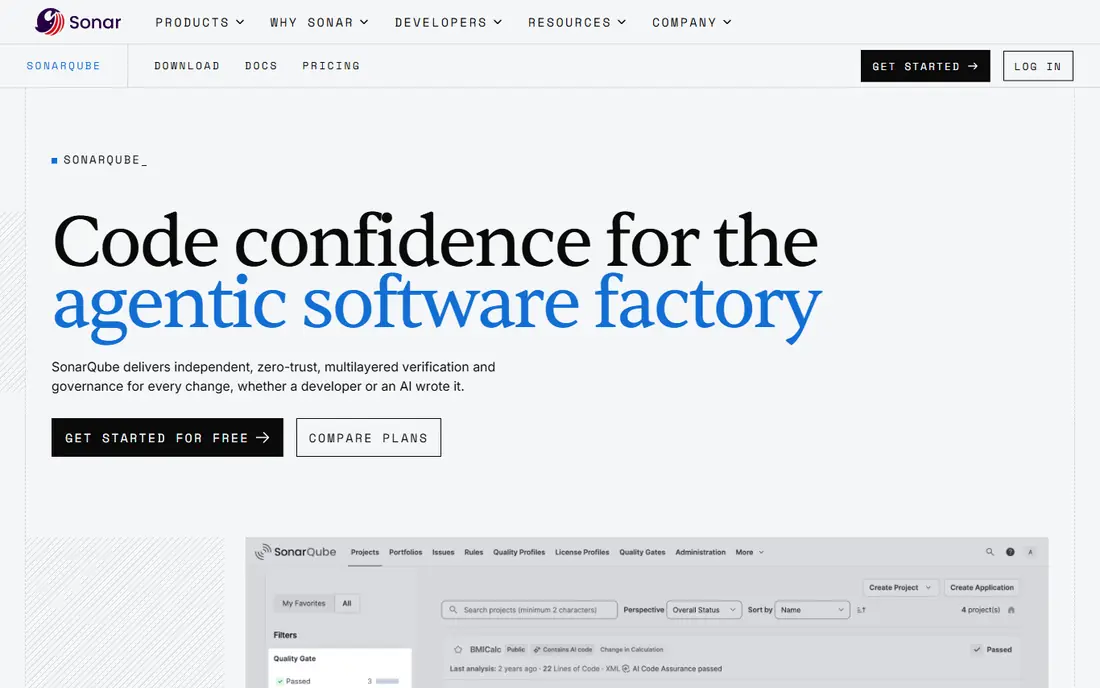
SonarQube is the broadest replacement in this list. It checks code quality, security issues, and coverage, and it can stop a pull request from merging when it fails a quality gate. That gate is the feature teams miss most when they leave a simple grading tool, because it turns review comments into an enforceable standard.
The trade-off is setup and pricing shape. Self-hosting the community build is free, but you own the server, upgrades, and database. The cloud version prices by lines of code, which can suit a large team on a small codebase and sting for a small team on a very large codebase. Price both shapes before you choose.
- Quality gates that can block risky merges
- Wide language support
- Free community build for self-hosting
- Full setup takes planning for large codebases
- Cloud pricing scales with lines of code
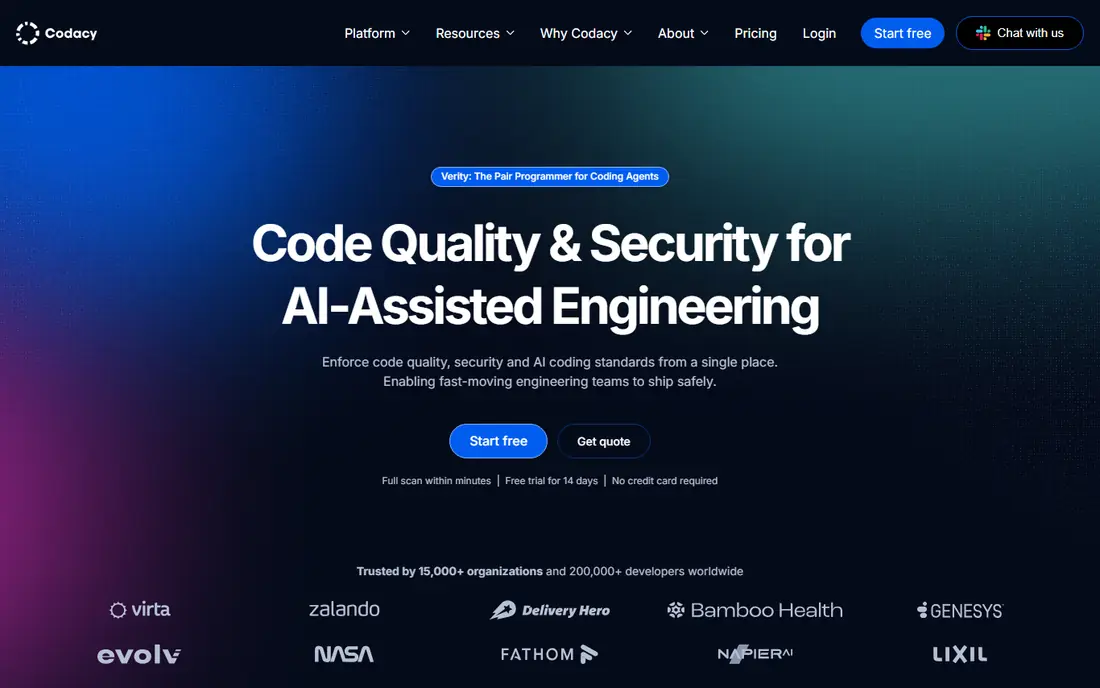
Codacy is the closest like-for-like switch for teams that want Code Climate simplicity with more security coverage. It runs quality checks, security scanning, and coverage tracking, and it leaves comments on pull requests where developers already work. Setup is quick, which helps a team that does not want a long migration project.
The catch is the pricing unit. Codacy prices per developer, so a large team pays more even if its codebase is small. That is the opposite of SonarQube Cloud, so run the numbers for your team size and codebase before you assume one is cheaper.
- Quality, security, and coverage checks in one dashboard
- Fast setup with little pipeline work
- Pull request comments for developers
- Per developer pricing rises with team size
- Deeper enterprise controls sit on higher plans
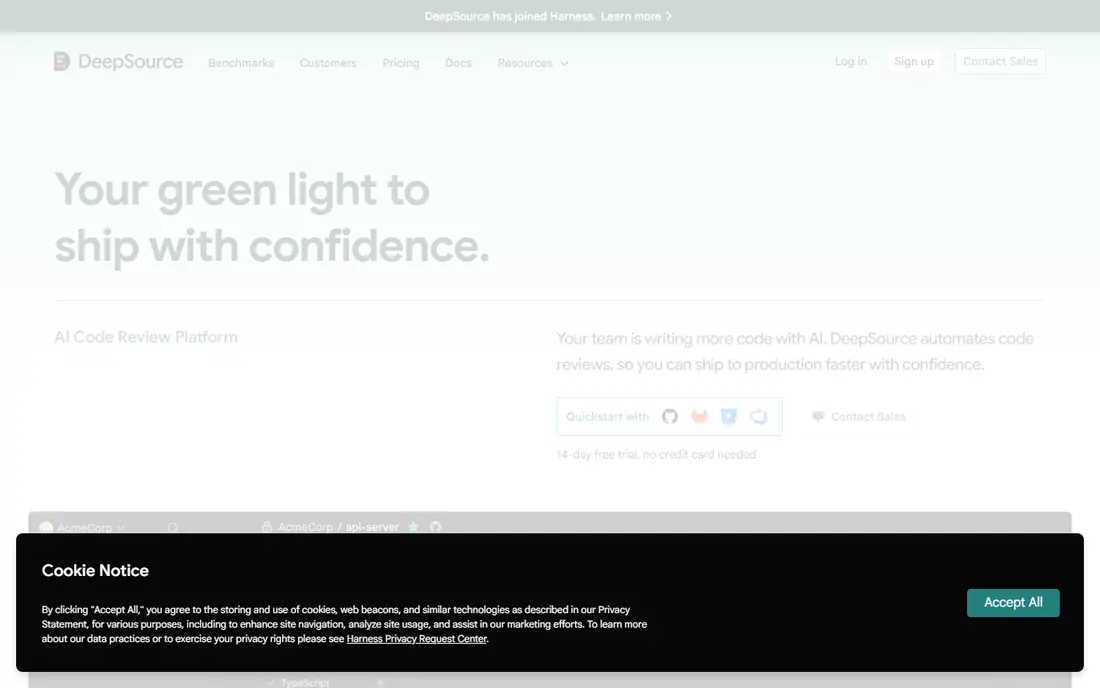
DeepSource stands out for what happens after a finding. Instead of only flagging a problem, it often suggests a fix that a developer can review and apply, which shortens the loop between review and merge. Its reports group issues in a way that helps a team fix the worst problems first rather than chasing every minor style note.
That convenience has a price. Per user pricing means a growing team should budget for every active committer, not just a flat team rate. It is best for teams that will actually use the automated fixes, since that is where the value sits.
- Automated fixes that developers can apply from review
- Clear issue reports with context
- Security and quality checks together
- Paid plans are priced per user, which adds up for large teams
- Self-hosting is limited to higher tiers
Semgrep is the pick when your team wants to write its own rules. Its open source engine and community rules cover common security patterns, and you can add rules for the mistakes your own codebase keeps making. That custom fit is hard to get from a fixed rule set, and scans run fast enough for regular CI use.
The honest catch is tuning. Out of the box rules help, but the best results come from someone owning rule selection, false positive review, and updates. If no one will own that work, a more managed tool may give a better result with less effort.
- Open source engine with a large community rule set
- Custom rules for your own code patterns
- Fast scans in CI
- Getting full value needs rule tuning
- The platform pricing is per contributor
Snyk Code is a security-first alternative. It scans code for vulnerabilities, explains the issue in developer friendly terms, and suggests fixes that fit the code in front of you. Teams already using Snyk for open source dependencies will like having code, dependencies, and containers in one place with one set of policies.
It is less of a direct maintainability grading replacement. If your main need is a Code Climate style grade and coverage trend, pair it with a quality tool or pick a broader platform. If security findings are the gap you need to close, it is a strong fit.
- Clear fix guidance inside developer tools
- Fits teams already using Snyk for dependencies
- Fast feedback on pull requests
- Strongest inside the Snyk ecosystem
- Quality grading is not its main focus
Qodana makes sense for a team already standardised on JetBrains tools. It runs the same inspections developers see in their IDE, so findings in CI match what developers saw while writing the code. That match reduces the usual argument about whether a CI finding is real, since the developer has already seen the same check.
Outside that ecosystem, the advantage shrinks. Teams on other editors can still use it, but they lose the direct link between IDE and CI. Check the community edition limits and the paid plan for your team size before you commit.
- Same inspections developers see in JetBrains IDEs
- Quality gates for CI
- Community edition for basic use
- Best value is tied to the JetBrains ecosystem
- Pricing details need checking on the vendor site
CodeScene takes a different angle from most tools here. Instead of only grading code as it stands, it looks at how code changes over time and flags hotspots: complex files that change often and carry higher defect risk. That view helps managers decide where refactoring will actually reduce risk, rather than tidying code that rarely changes.
The catch is that it asks teams to think in terms of behaviour and risk, not just a letter grade. That is valuable for large codebases, but it can feel abstract for a small team that just wants a quick quality score. Use the trial on your real repository history to see whether the hotspot view matches your experience.
- Finds risky hotspots where complex code changes often
- Links code health to delivery risk
- Useful for large or ageing codebases
- Different mental model from simple grading
- Pricing is quote based for larger use
Qlty is notable because it was built by members of the Code Climate founding team, and it shows in the focus on maintainability grading. It bundles many analyzers, gives a familiar grade style view, and offers a free CLI so developers can check code locally before pushing. For a team migrating from Code Climate, that familiarity shortens the learning curve.
Its ecosystem is still smaller than SonarQube, and cloud pricing is per contributor, so larger teams should check the total. It is a good fit when maintainability grading is the core need and you want a modern, focused tool rather than a full enterprise platform.
- Maintainability grading close to Code Climate
- Many built-in analyzers
- Free CLI for local checks
- Newer platform with a smaller ecosystem than SonarQube
- Cloud pricing is per contributor
Codecov is not a full Code Climate replacement on its own, and we include it for a specific reason: many teams use Code Climate mainly for coverage. If that is your case, Codecov gives clearer pull request coverage reports, flags drops in coverage, and tracks trends without the overhead of a full quality platform. It pairs well with a security scanner for a complete setup.
The limit is scope. Codecov will not grade maintainability or find security flaws, and coverage numbers alone can mislead if tests are weak. Use it as the coverage layer, not as the whole quality story.
- Clear coverage reports on pull requests
- Coverage trends over time
- Free for public repositories
- Coverage only, not a full quality or security scanner
- Needs good tests to be useful
How we picked these
We compared official feature pages, pricing pages, and public reviews for code quality, security, and coverage tools that can replace Code Climate Quality or its coverage tracking. We kept tools that exist and work in October 2026, that integrate with pull requests or CI, and that offer a clear pricing or feature angle. Where vendor pricing varied across sources, we wrote See website rather than repeating a disputed figure.
What to check before you switch
Start with the metric you actually act on. If your team blocks merges on quality gates, you need a tool with gates. If you mainly want review comments and fixes, a tool with automated fixes matters more. If coverage is the main use, a coverage specialist may be enough. Picking the metric first prevents buying a broad platform for a narrow job.
Next, price the tool at your real size. Per developer, per contributor, and per lines of code models give very different totals for the same team, depending on codebase size and headcount. Run your current team count and line count through each vendor pricing page, and include the cost of self-hosting if you choose that route.
Finally, trial on a real repository with real history. Check false positive rates, pull request comment noise, and how developers react to the findings. A tool that developers ignore, however accurate, will not improve code quality.
Frequently asked questions
What is the closest Code Climate alternative?
Qlty is the closest in spirit for maintainability grading, while Codacy is the closest all in one switch with quality, security, and coverage. SonarQube is the broader default when you also need enforceable quality gates.
Is SonarQube free?
SonarQube Community Build is free to self-host, with no licence fee for the software itself, though you pay for hosting and care. SonarQube Cloud has a free tier with limits, and paid tiers price by lines of code.
Do these tools replace manual code review?
No. They catch patterns, security issues, and coverage gaps at scale, but they do not judge design, product fit, or business logic. Treat them as a first pass that frees human reviewers for harder questions.
How do I compare pricing fairly?
Compare at your real team size and codebase size, using the same billing period. A per developer tool can look cheap for a small team and costly for a large one, while a lines of code tool does the opposite.
Can I use Codecov with another scanner?
Yes. Many teams pair Codecov for coverage with Semgrep, Snyk Code, or SonarQube for quality and security. That combination often costs less than a single broad platform and gives clearer reports for each job.
Will switching break our CI pipeline?
It should not, if you plan it. Most tools here offer CI integrations and pull request checks, but you should run the new tool alongside the old one for a short period, tune rules, and only then turn on blocking gates.
Sources
See where you really rank - block by block
ProMapRanker scans Google Maps across a grid of your service area. Simple monthly plans from $19, white-label on every plan.
Start freeKeep reading
 zoho books alternatives
Best Zoho Books Alternatives in 2026
Compare the best zoho books alternatives for small business accounting, from QuickBooks Online and Xero to FreshBooks, Wave, and Sage in 2026, with pricing.
Read → zluri alternatives
Best Zluri Alternatives in 2026
Compare zluri alternatives for 2026, with SaaS management platforms for app discovery, spend tracking, renewals, and automation for IT, finance and procurement.
Read → zerobounce alternatives
Best ZeroBounce Alternatives in 2026
Best zerobounce alternatives for list hygiene: compare 8 email verification tools for bulk cleaning, real-time checks and catch-all handling in 2026 today.
Read →