 ProMapRanker
Birdeye vs Yext: Which Local Platform Wins?

Key takeaways
- Birdeye is a review and messaging suite that charges per location, while Yext is an enterprise listings and knowledge platform that prices by quote.
- Neither vendor publishes a platform price, so both require a sales conversation before you can compare real numbers.
- Birdeye fits teams that want review requests, webchat and surveys in one place, while Yext fits brands that manage hundreds of locations and need deep publisher control.
- Yext now points single-location buyers to Corvo, its free listings tool, with a 40 dollar a month Plus tier for wider coverage.
- Per-location math decides the winner for chains, since Birdeye multiplies its monthly rate by every location you add.
Quick comparison
| Pick | Great for | Pricing starts at | Free tier | |
|---|---|---|---|---|
 Birdeye | Review collection and messaging across locations | quote only | No | Visit |
 Yext | Enterprise listings and knowledge management | quote only | No | Visit |
Birdeye vs Yext head to head
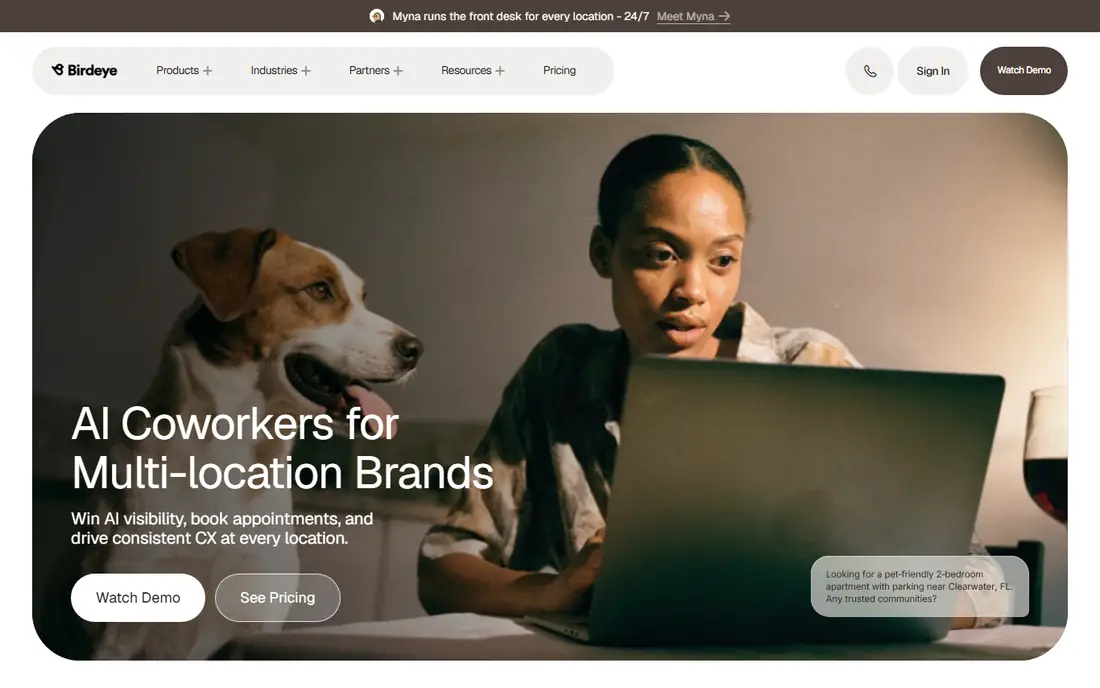
Birdeye is a reputation platform that ties review requests, listings, messaging, surveys and social posting into one dashboard. A business connects its customer list, and Birdeye sends review requests by text or email after each visit or job. Replies from Google, Facebook and other review sites land in one inbox, and staff can answer them without opening each site. The platform also manages business listings, so hours, addresses and phone numbers stay consistent across directories. For a multi-location brand, each site gets its own view while head office keeps a roll-up report, which makes it easier to spot a location that is falling behind on review volume or response time.
The plan structure has three named tiers called Starter, Growth and Dominate, plus a custom Premium plan for businesses with four or more locations. Starter covers the review and listings base, Growth adds social tools and more automation, and Dominate adds the chatbot and the full AI set. Birdeye does not publish prices on its website. Its pricing page is a lead form that asks for an email, a company name and a location count. Third-party pricing trackers in 2026 consistently report Starter at about 299 dollars per location per month on an annual contract, Growth at about 349 dollars and Dominate at about 449 dollars, with month-to-month billing running higher. Treat those figures as reported benchmarks, not as a vendor quote, and confirm the real number with Birdeye sales before you budget.
The cost that surprises buyers is the per-location multiplier. A five-location business on the reported Growth rate would pay about 1,745 dollars a month, or 20,940 dollars a year, before add-ons. Contracts run for 12 months and renew automatically, and buyer reports describe a 90-day written cancellation window before renewal. Add-ons such as extra messaging credits and SMS carrier fees sit on top of the plan price. Birdeye suits a business that earns real revenue from reviews and can staff the inbox, since the value only appears when someone answers reviews, acts on survey feedback and keeps listings current. A single-location shop that only wants review requests will find the entry cost hard to justify against cheaper single-purpose tools.
- Wide review, listings, messaging and survey tools in one login
- AI review replies and chatbot on higher tiers
- No published price, so budgeting needs a sales call
- Per-location pricing grows fast as you add sites
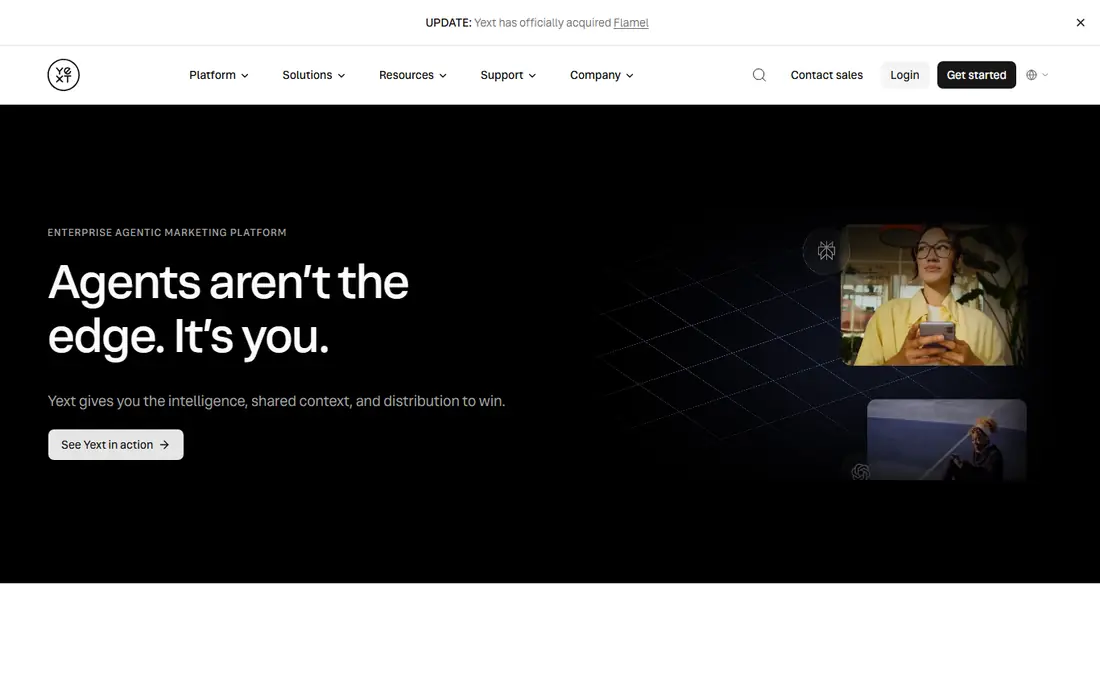
Yext is an enterprise platform for managing business information across the web. Its core product, Listings, pushes name, address, phone, hours and other facts to more than 200 publishers through direct integrations, then watches for changes and conflicts. Around that core sit Reviews, Pages, Search and Knowledge Graph, which turn the same structured data into location pages, on-site search and answers that AI search tools can read. The newest addition is Scout, an AI search product that tracks how a brand appears in AI-generated answers. For a brand with hundreds or thousands of locations, this depth matters, because a single wrong phone number can spread across dozens of directories in days, and Yext gives one team the controls to fix it everywhere at once.
Yext publishes no price for the platform. Its pricing page returns a 404, and every call to action on the site leads to a demo or a sales conversation. Pricing is custom and depends on location count, the products you choose and the contract length, and billing is usually yearly. Third-party guides estimate mid-size deployments at 499 dollars a month and up, with enterprise contracts running far higher. The old yearly PowerListings packages for a single location are gone. The plans page now redirects to Corvo, a listings service built by Yext. Corvo checks and fixes listings on Google, Apple Maps, Bing and Facebook for free, and Corvo Plus costs 40 dollars a month for Yelp, MapQuest and more than 100 extra sites. Corvo covers listings only, with no review monitoring in the free tier, so it is a different product from the Yext platform.
The trade-off with Yext is power against accessibility. A franchise, a hospital group or a retail chain gets publisher-grade control, audit trails and AI search tracking that cheaper tools cannot match. A single-location business gets a sales process, an annual contract and a price it cannot see before the call, which is why Yext steers small buyers to Corvo. Yext also lacks a standard free trial for the platform, so evaluation happens through a demo rather than hands-on use. If your team manages 20 or fewer locations and needs reviews as much as listings, a review-led platform is likely a better fit. If your team manages hundreds of locations and data accuracy is a compliance or brand risk, Yext is built for that job.
- Direct integrations with more than 200 publishers
- Strong structured data and AI search tools for large brands
- No published platform price and no self-serve trial
- Single-location buyers are steered to a separate product
How we chose
We compared the vendor pricing pages, product pages and documentation for Birdeye and Yext, and we checked third-party pricing trackers that read those pages in October and November 2026. We looked at what each platform covers, how it charges, whether a buyer can try it without a sales call, and how the cost changes as location count grows. We did not test either product hands-on, and we did not claim any ranking or review lift for either one. Prices that the vendors do not publish are shown as quote only, with reported third-party figures labelled as reported, not as vendor prices.
What to check before you buy
Ask both vendors for a written quote that covers your exact location count, and ask whether the price is per location or flat for the whole business. Confirm the contract length, the renewal date and the cancellation notice period in writing, since both vendors sell annual terms that renew automatically. Check which features sit on the tier you are quoted, because AI replies, chatbot, social posting and review monitoring may sit on higher tiers. Ask about onboarding fees, SMS and carrier fees, and any per-message charges, since those lines move the monthly bill well above the headline rate. Confirm who on your team will answer reviews and update listings each week, because neither platform produces results without that work. Finally, test the reporting views in the demo with your own location list, so you can see whether head office gets the roll-up it needs.
| Team size and budget | Best pick | Why | | 1 location, under 100 dollars a month | Neither, use Corvo free tier | Both platforms start above this budget, while Corvo fixes the four main listings free | | 1 to 5 locations, review-led growth | Birdeye | Review requests, messaging and surveys in one place, with per-location pricing you can model | | 5 to 50 locations, listings accuracy matters | Birdeye or Yext, get both quotes | Birdeye is cheaper to start, Yext gives deeper publisher control, so the quote decides | | 50 or more locations, enterprise controls | Yext | Direct publisher integrations, audit trails and AI search tracking suit large location counts | | Agency managing many clients | Birdeye | Per-location pricing and a single review inbox map cleanly to client billing |
Frequently asked questions
Which is cheaper, Birdeye or Yext?
Neither vendor publishes a platform price, so there is no public number to compare. Third-party trackers report Birdeye Starter at about 299 dollars per location per month on an annual contract, while Yext is estimated at 499 dollars a month and up for mid-size deployments. The only honest comparison is two written quotes for the same location count and feature set, since both prices move with volume, contract length and add-ons.
Does Birdeye publish its pricing?
No, Birdeye does not publish prices on its website. Its pricing page is a lead form that asks for your email, company name and location count, then routes you to sales. The plan names are public, Starter, Growth and Dominate, plus a custom Premium plan for four or more locations. Third-party trackers report 299, 349 and 449 dollars per location per month for the three named tiers, but those are reported figures, not vendor prices.
Does Yext have a free plan?
The Yext platform has no free tier and no standard free trial, and evaluation happens through a demo. Yext does offer Corvo, a separate listings product built by Yext, which checks and fixes listings on Google, Apple Maps, Bing and Facebook for free. Corvo Plus costs 40 dollars a month and adds Yelp, MapQuest and more than 100 extra sites. Corvo covers listings only and does not include review monitoring.
Is Birdeye good for a single location?
Birdeye can work for a single location, but the cost is hard to justify for most small shops. Reported Starter pricing is about 299 dollars per location per month on an annual contract, which buys review requests, listings and messaging that cheaper single-purpose tools cover for less. A single-location business should compare Birdeye against a review-only tool and against Corvo for listings, then decide whether the combined inbox and survey tools are worth the premium.
Is Yext good for small businesses?
Yext is built for enterprise brands with many locations, and small businesses usually find the sales process and annual contract a poor fit. Yext itself steers single-location buyers to Corvo, which handles the four main listings free. A small business that needs reviews, messaging and listings together will usually get more value from a review-led platform such as Birdeye, while a business with hundreds of locations is the customer Yext is designed for.
Sources
See where you really rank - block by block
ProMapRanker scans Google Maps across a grid of your service area. Simple monthly plans from $19, white-label on every plan.
Start freeKeep reading
 Chatmeter vs Birdeye
Chatmeter vs Birdeye compared on price, review monitoring, listings and local search, so you can pick the platform that fits your locations and budget.
Read → Chatmeter alternatives
10 Best Chatmeter Alternatives in 2026
Chatmeter alternatives for multi-location brands: review, listings and local search tools with real prices, honest limits and the best fit for your team.
Read → callfire alternatives
CallFire Alternatives: 8 Tools Compared
Compare callfire alternatives for SMS and voice campaigns, with entry prices, credit rules and honest limits, so your team can pick the right texting platform.
Read →