 ProMapRanker
Best Virtual Event Platforms in 2026


Large virtual-first conferences · Pricing starts at: See website
Key takeaways
- Zoom Events is the safest pick for multi-session conferences on Zoom, while RingCentral Events suits large virtual-first events with stages, booths and networking.
- vFairs leads for virtual expos and trade shows that need immersive halls and exhibitor booths, and Whova leads for hybrid conferences with a strong attendee app.
- Airmeet and Remo suit networking-led events, with Airmeet offering broader conference features and Remo offering simple table-based networking.
- BigMarker and Accelevents suit webinar-heavy and marketing-led programs, but both need a quote or a larger budget for full event programs.
Quick comparison
| Pick | Great for | Pricing starts at | Free tier | |
|---|---|---|---|---|
| RingCentral Events | Large virtual-first conferences | See website | No | Visit |
 Zoom Events | Multi-session conferences on Zoom | $149 per month | No | Visit |
 vFairs | Virtual expos and trade shows | See website | No | Visit |
 Airmeet | Interactive conferences and networking | $199 per month | Yes | Visit |
 Whova | Hybrid conferences and attendee app | See website | No | Visit |
 BigMarker | Webinars and virtual summits | See website | Free trial | Visit |
 Accelevents | Hybrid events with strong analytics | See website | No | Visit |
 Remo | Small networking events at tables | $270 per month | No | Visit |
The best virtual event platforms
A virtual event platform must do more than stream video. It needs registration, multi-session agendas, networking, sponsor visibility and reporting in one system. We compared official pricing pages, product documentation and recent comparisons, keeping platforms that host full virtual or hybrid events, not just single webinars.

RingCentral Events, formerly Hopin, is built for virtual-first conferences. Attendees move between a main stage, breakout sessions, an expo area and networking spaces, which gives a large online event a sense of place that a single webinar link cannot match. Production tools, registration and analytics sit in the same platform.
The buying model is the main friction. Current pricing is quote-based in the pages we checked, so a small organiser cannot budget from a price list alone. For a large virtual conference, though, the combined venue, booths and networking justify a demo and a quote.
- Stages, sessions, expo booths and networking in one venue
- Strong production tools
- Scales to large audiences
- Pricing is quote-based for current plans
- In-person features are thinner than hybrid-first rivals
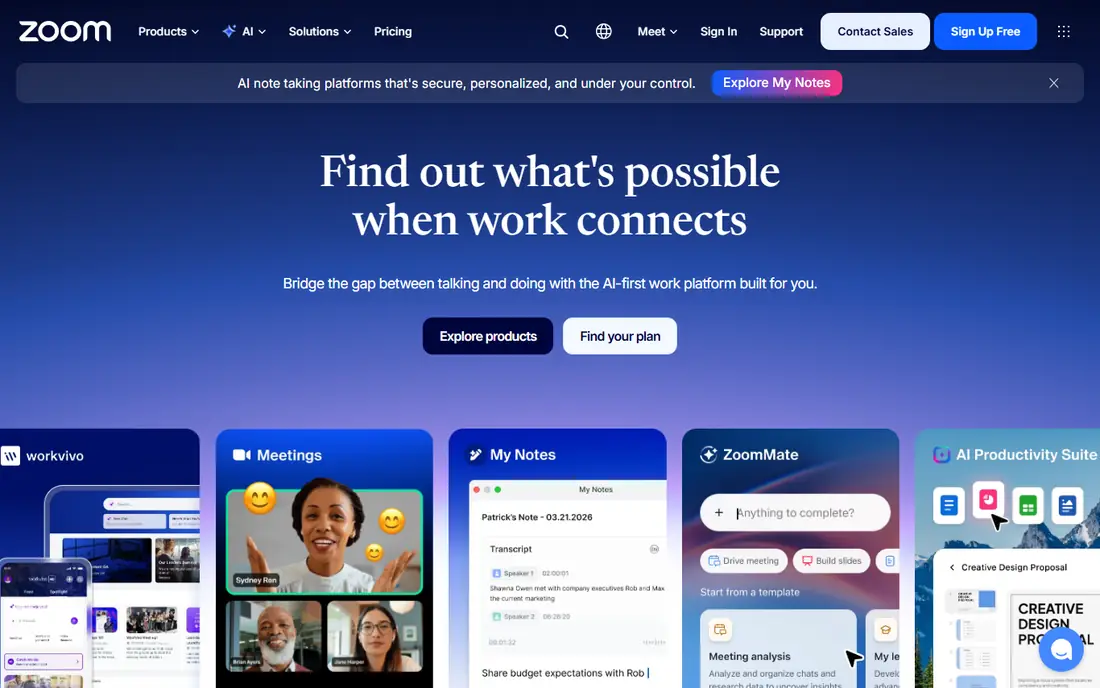
Zoom Events suits organisers whose audience already knows Zoom. Multi-day conferences can run parallel sessions, ticketing and registration, while attendees join from a familiar interface without learning a new venue. That familiarity reduces support questions on event day, which matters for professional conferences.
The cost structure needs care. The Events price sits beside a Zoom Workplace plan, and attendee limits vary by tier, so the total bill is higher than the headline figure. For a Zoom-first organisation, the trade is worth it, while a networking-led event may prefer Airmeet or Remo.
- Familiar Zoom meeting quality
- Multi-session agendas and ticketing
- Large attendee capacity on higher tiers
- Needs a Zoom Workplace plan beside the Events licence
- Networking features are lighter than dedicated venues
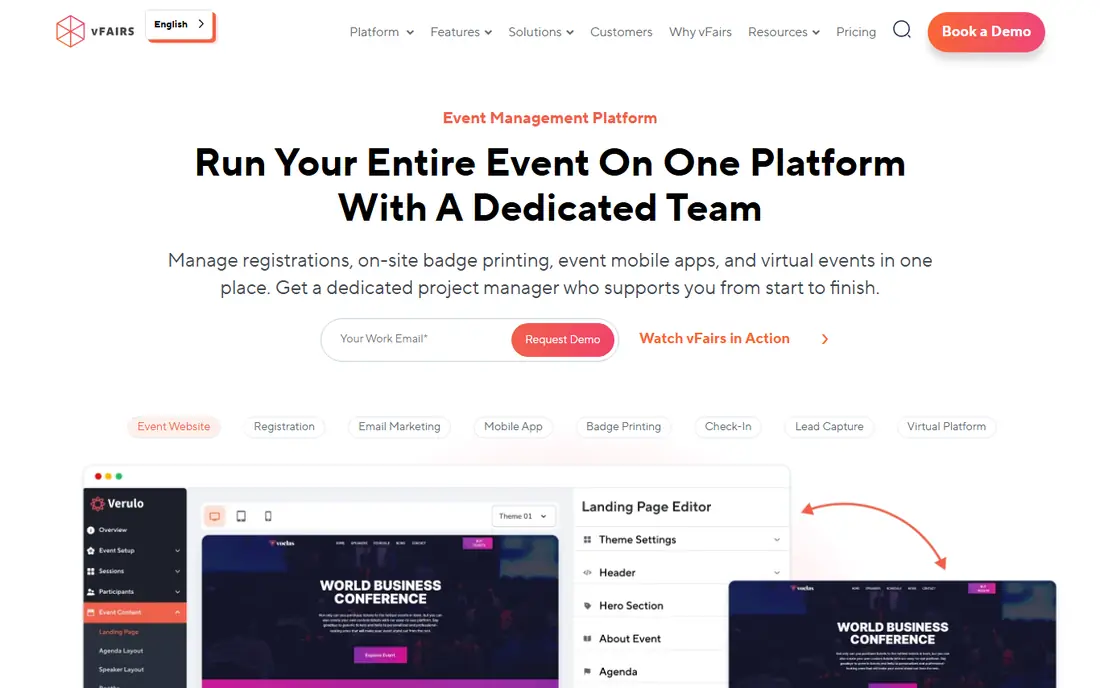
vFairs is the expo pick. Virtual halls, branded booths, live chat and video meetings at booths, and resume or lead capture tools make it a strong fit for trade shows, career fairs and large sponsored events. Exhibitors get a visible presence, and attendees can browse much as they would at a physical show.
Setup is heavier than a webinar tool, and pricing is quoted per event or program, so small organisers should budget for a project, not just a subscription. For a flagship expo, the immersive venue and sponsor tools are the reason to choose vFairs.
- Immersive 3D halls and exhibitor booths
- Strong for career fairs and trade shows
- Live chat and video at booths
- Quote-only pricing
- Heavier setup than a simple webinar platform
Airmeet balances conference structure with real networking. Multi-track sessions, exhibitor booths and a mobile app cover the formal program, while social lounges and speed networking give attendees a reason to stay after sessions end. A limited free tier lets a small organiser test the format before paying.
Pricing tiers can confuse first-time buyers, since webinar and event plans differ and larger programs are quoted. Check attendee limits and session counts for the exact tier, and run a small event first to test networking adoption before a flagship conference.
- Social lounges and speed networking
- Multi-track sessions
- Free tier for small events
- Paid webinar plans start higher than the headline event price suggests
- Large programs need a quote
Whova is the hybrid conference pick. Its attendee app handles agendas, session details, networking, exhibitor listings and announcements for both in-person and virtual attendees, which keeps one audience instead of two separate experiences. Academic conferences, associations and professional events use Whova widely for that reason.
Pricing is quoted, so budgeting needs a conversation and an attendee estimate. A purely virtual event may find a virtual-first platform cheaper, but a hybrid event that needs one strong app for both audiences will find Whova hard to beat.
- Strong attendee app for hybrid events
- Agendas, networking and exhibitor tools in one app
- In-person support
- Quote-only pricing
- Virtual-only organisers may pay for in-person features they do not use
BigMarker suits teams that run webinars weekly and summits quarterly. Attendees join from a browser, the same platform handles live and on-demand content, and integrations feed leads into CRMs and marketing tools. For a marketing team, the webinar workflow is the core strength.
The platform is less of a virtual venue than vFairs or RingCentral Events, so a multi-stage expo with booths will feel constrained. Pricing is custom in current listings, so request a quote based on attendee volume and frequency before comparing it with a subscription tool.
- Browser-based attendance with no downloads
- Live, on-demand and evergreen webinars
- CRM integrations
- Custom pricing for current plans
- Highly produced multi-stage events may need workarounds
Accelevents covers the full event cycle, from registration pages and ticketing to a mobile app, live sessions and post-event analytics. On-site tools such as badge scanning and lead retrieval help hybrid events, while analytics show session attendance, networking activity and registration sources in one report.
Cost is the barrier for small organisers. Entry packages are priced per event at a level that suits professional conferences more than community meetups. For a marketing-led hybrid program that must prove return on investment, the analytics and flat-fee structure can justify the price.
- Registration, mobile app and analytics in one platform
- Badge scanning and lead capture
- Flat subscription options
- Entry packages are event-priced and costly for small organisers
- Learning curve for full setup
Remo is the simplest networking pick in this list. Attendees sit at virtual tables, join conversations by moving between tables, and return to a main stage for presentations. That table model works well for meetups, workshops and community events where conversation matters more than a formal expo.
Scale is the limit. Remo is not the tool for a large multi-track conference with hundreds of exhibitors, and sponsor features are thinner than in vFairs or Whova. For a small networking event, the low learning curve and natural table format are genuine advantages.
- Table-based networking feels natural
- Simple setup for small events
- Presentations and Q and A built in
- Less suited to large multi-track conferences
- Fewer expo and sponsor features than vFairs
How we picked these
We compared official pricing pages, product documentation and recent independent comparisons, and we kept platforms that host multi-session virtual or hybrid events with registration, networking and reporting. Single-webinar tools and meeting apps without event features were left out. We did not test these tools hands-on, and we did not invent prices or features. Where a vendor does not publish a price, we wrote See website.
How to choose a virtual event platform
Start with the event format, not the feature list. A trade show needs booths and sponsor tools, a conference needs parallel sessions and ticketing, and a networking meetup needs tables or lounges. A platform built for one format will frustrate an organiser who buys it for another.
Next, model the real cost per event. Check attendee limits, session counts, organiser seats and any per-event fees, since a low monthly price can hide a high per-event charge. Also confirm whether a base meeting plan, such as Zoom Workplace, is required beside the event licence.
Finally, rehearse the attendee journey. Register, join a session, move to networking, visit a booth and ask a question, all from a phone and a laptop. If any step feels confusing in rehearsal, it will feel worse on event day with hundreds of attendees.
Frequently asked questions
What is the best virtual event platform?
Zoom Events is the safest all-round pick for multi-session conferences, while vFairs leads for expos and Whova leads for hybrid conferences. Airmeet suits networking-led conferences, and Remo suits small networking meetups. Choose by event format first, then compare attendee limits and total cost.
What is the best online events platform for hybrid events?
Whova and Accelevents are the strongest hybrid picks in this list, since both combine in-person tools such as badge scanning with virtual sessions and a mobile app. vFairs also supports hybrid expos with virtual booths beside a physical show. Confirm which in-person features are included in the quoted tier before signing.
What is the best event platform for virtual conferences?
RingCentral Events and Zoom Events suit large virtual conferences, with RingCentral offering a fuller virtual venue and Zoom offering familiar meeting quality. Airmeet is a strong middle option when networking matters as much as sessions. Run a small test event on the shortlisted platform before a flagship conference.
What is the best platform for virtual events on a small budget?
Airmeet offers a limited free tier for small events, and BigMarker offers a free trial for webinar-led programs. Zoom Events and Remo start at published monthly prices, but attendee limits apply. For a one-off small meetup, a free tier or a simple meeting tool may be enough, and a full event platform only earns its price when networking, ticketing or sponsor features matter.
Do virtual event platforms include ticketing?
Most platforms in this list include registration and ticketing, or integrate with a ticketing provider, but fees and limits vary. Check whether ticket revenue carries a platform fee, whether payment processing is included, and whether refunds and promo codes are supported. Those details matter more than a small difference in subscription price for a paid event.
Sources
See where you really rank - block by block
ProMapRanker scans Google Maps across a grid of your service area. Simple monthly plans from $19, white-label on every plan.
Start freeKeep reading
 zeffy payment processor stripe alternatives
Zeffy and Stripe Alternatives for Nonprofits in 2026
Explore zeffy payment processor stripe alternatives for nonprofits. We compare 8 fundraising platforms on fees, donor tools, and nonprofit focus. Check fees.
Read → workday alternatives
Workday Alternatives in 2026
Workday alternatives compared: we review 8 HR and payroll platforms that replace Workday, with pricing, strengths and honest limits for each team size.
Read → what's the best weather app
What's the Best Weather App in 2026
Wondering what's the best weather app? We compare 10 free and paid apps for forecasts, radar, alerts, and Colorado mountain weather for everyday and storm use.
Read →