 ProMapRanker
Best Tai Chi App in 2026: 8 Apps Compared


Structured beginner program · Pricing starts at: See website
Key takeaways
- Reverse Health Tai Chi is our pick for beginners who want a structured daily program rather than a loose video library.
- YMAA apps are best for traditional Yang style form work, with clear front and rear views and detailed instruction.
- Seniors should favor slow, seated friendly options and short sessions, and check with a clinician before starting a new exercise routine.
- Free apps can teach the basics, but a paid program usually buys progression, better camera angles, and a clearer practice plan.
Quick comparison
| Pick | Great for | Pricing starts at | Free tier | |
|---|---|---|---|---|
| Reverse Health Tai Chi | Structured beginner program | See website | No | Visit |
 Yang Tai Chi for Beginners | Traditional Yang form | See website | Yes | Visit |
 Tai Chi Fit Over 50 | Older beginners | See website | Yes | Visit |
 Tai Chi Beginners Seniors | Gentle first steps | See website | Yes | Visit |
 Tai Chi for Health Institute | Health focused forms | See website | No | Visit |
 Tai Chi Foundation Online | Live and recorded classes | See website | No | Visit |
 MadMuscles | Personalized fitness plans | See website | No | Visit |
 7 Minute Chi | Short daily sessions | See website | Yes | Visit |
The best tai chi apps
We looked for tai chi apps and programs with qualified instruction, clear progression, and sessions that fit real living rooms. The picks below range from traditional form teaching to short daily routines for busy schedules.

Reverse Health Tai Chi suits beginners who want to be told what to do each day. Instead of browsing a pile of videos, you follow a program that builds session by session, which helps if you have tried free videos before and drifted away after a week. Sessions are short enough for a morning routine, and the structure keeps the habit going.
The trade off is that this is a general wellness program more than a deep study of one traditional form. If your goal is to learn a full Yang long form with martial context, YMAA will serve you better. If your goal is steady daily movement, better balance, and less stiffness, Reverse Health is the easier place to start.
- Structured daily program
- Instructor led sessions
- Progress tracking and community features
- Subscription pricing
- Less traditional form depth than YMAA
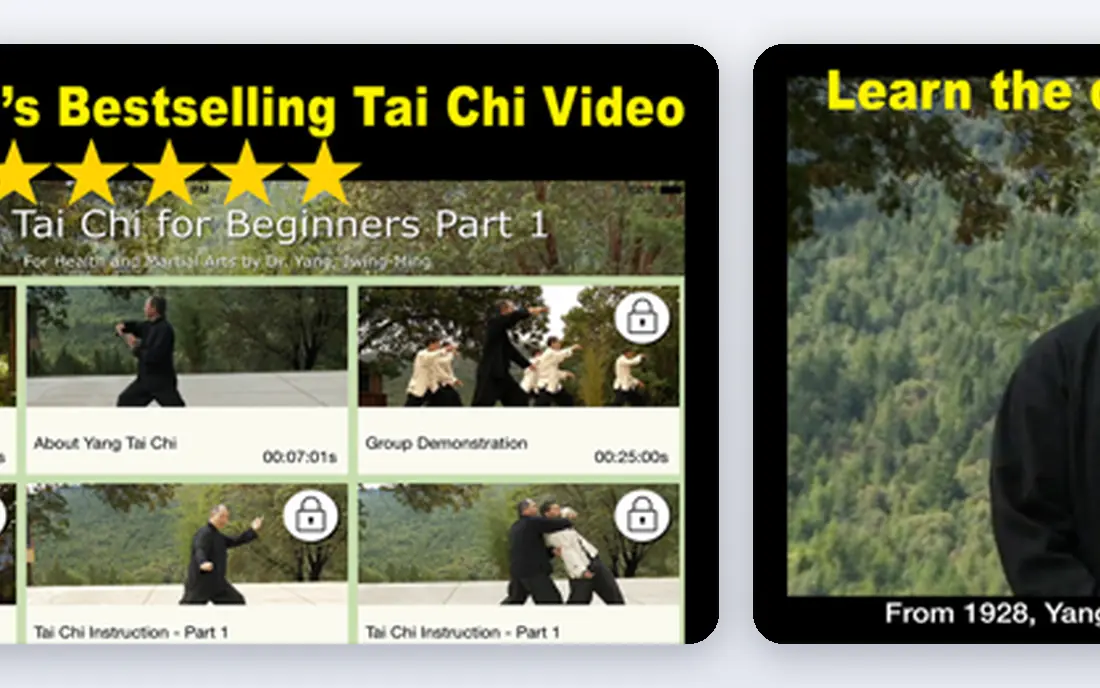
This YMAA app teaches the first part of the Yang style long form with a level of detail that generic fitness apps skip. You get explanations of posture, weight shifting, and breathing, plus front and rear camera views so you can check your own position. For learners who care about doing the form correctly, that detail is the whole point.
It is not a lively social app, and it will not adapt a plan to your fitness level the way MadMuscles does. You follow the lessons at your own pace, which suits patient learners. If you want authentic instruction and you are happy to practice slowly, this is the strongest traditional pick here.
- Teaching from a recognized Yang style lineage
- Front and rear views
- Detailed movement breakdowns
- Video led rather than interactive
- Full content requires purchase
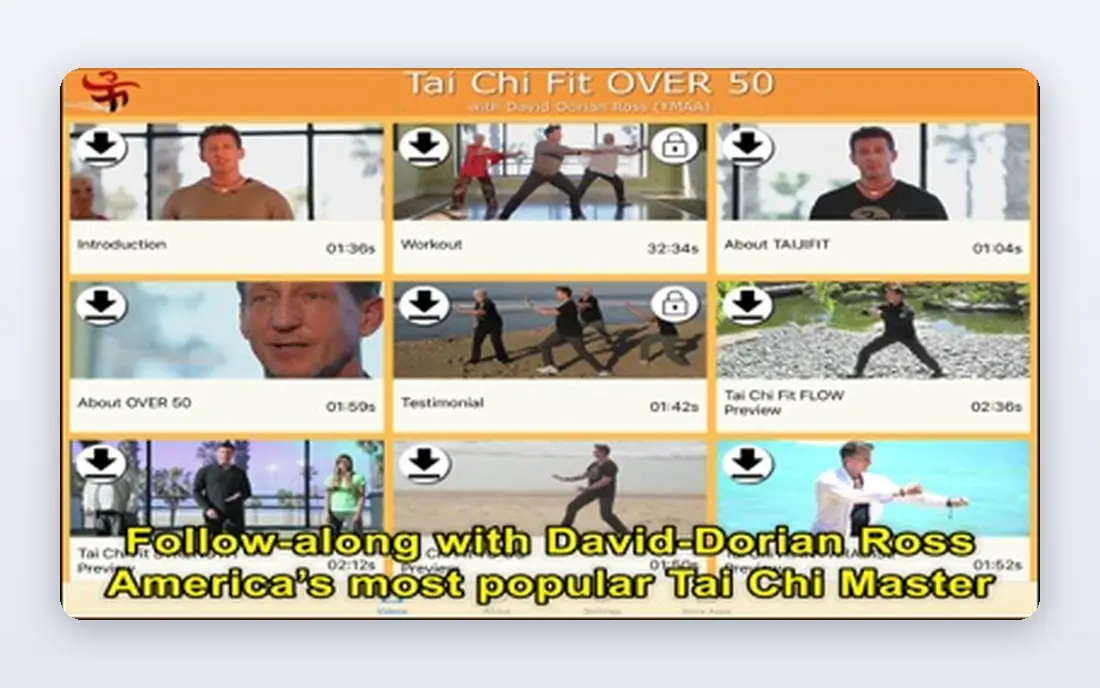
Tai Chi Fit Over 50 is aimed at people returning to movement later in life, and its pacing shows it. Movements are broken down slowly, sessions stay manageable, and there is no pressure to keep up with a fast class. That calm approach makes it a good first app for older beginners who feel unsure about balance or flexibility.
The scope is narrower than Reverse Health, and you will not get a personalized fitness plan or community challenges. What you get instead is focused, unhurried teaching. Pair it with a short daily walk and a consistent practice time, and it can become a habit that sticks.
- Pacing suited to older adults
- Clear instruction
- Gentle progression
- Narrower scope than a full program
- Limited social or tracking features
This companion YMAA app focuses on the Yang 24 form and the ideas behind it, including how tai chi connects with qigong breathing and relaxation. It is a gentle entry point for seniors and for anyone who wants to understand what they are doing, not just copy movements. The free start makes it easy to test whether the style suits you.
Design feels older than newer fitness apps, and progression beyond the basics is limited. Treat it as a foundation course: learn the 24 form here, then move to a deeper YMAA course or a live class when you want more. For a low cost first step, it is hard to beat.
- Covers the Yang 24 form basics
- Explains tai chi and qigong links
- Free to start
- Older app design
- Limited progression beyond the basics
The Tai Chi for Health Institute, founded around Dr Paul Lam's work, offers forms designed with health outcomes in mind, including programs linked to arthritis and falls prevention. That health focus sets it apart from apps that treat tai chi as just another workout. Instructors are trained in these specific forms, which adds consistency.
The experience is more program than app: you may work through online lessons or find a local instructor through the institute. That is a strength if you value trained teaching, and a drawback if you want one app with tracking and reminders. Check the program that matches your health goal, and talk to your clinician if you have a condition that affects balance or joints.
- Programs designed for health and balance
- Instructor training background
- Forms for arthritis and falls prevention
- Web program structure rather than a single slick app
- Pricing varies by program
Tai Chi Foundation Online brings live teaching to people who cannot reach a local class. You join real teachers in scheduled sessions, ask questions, and practice with a group, which helps with motivation and correction. Recorded options let you review material between classes.
Live classes are the draw and the limit: you need to fit their timetable, and time zones can matter. If you prefer to practice at any hour, a video led app will be more flexible. If you learn better with a teacher watching and guiding you, this is the closest online option to a studio class.
- Live online classes with teachers
- Structured courses
- Community of practitioners
- Class times may not suit every schedule
- Less app style tracking
MadMuscles is not a pure tai chi app, and we include it for a specific reader: someone who wants tai chi inside a wider fitness plan. After a short quiz, it builds a personalized program that can include chair tai chi, walking, and bodyweight work, and it adapts as you progress. That breadth suits people who want one app for general fitness.
The catch is depth. Its tai chi content will not match YMAA for form detail or the Tai Chi for Health Institute for health specific programs. If tai chi is your main practice, pick a specialist above. If tai chi is one part of getting moving again, MadMuscles gives you a plan that covers the rest too.
- Personalized plans from a short quiz
- Covers tai chi plus other workouts
- Adaptive progression
- Tai chi is one part of a broader fitness app
- Subscription required
7 Minute Chi is built for people who say they have no time. Sessions last only a few minutes, so you can practice before work, during a break, or in the evening without changing clothes or clearing a large space. That low barrier is genuinely useful for building a daily habit.
Short sessions cannot teach a full form in depth, and progression is lighter than in Reverse Health or YMAA. Think of it as a daily movement snack: good for calm, mobility, and consistency, and best paired with a longer weekly session when you want to learn more. For busy beginners, it is a friendly front door to tai chi.
- Very short sessions
- Easy to fit into a busy day
- Calm and simple format
- Short format limits form depth
- Less progression than full programs
How we picked these
We compared official program pages, app store listings, instructor backgrounds, and public reviews, and we favored teaching with clear progression over random video collections. We kept only programs and apps that are live in October 2026 and that teach tai chi as a real practice, not just a few generic movements inside a fitness app. Where we could not verify a current price from the vendor, we wrote See website rather than repeating a third party figure.
How to choose a tai chi app for your level
Beginners should start with structure. A program that tells you what to practice each day beats a library that leaves you guessing, and short sessions beat long ones you skip. Look for front and rear views, clear spoken instruction, and a pace that lets you finish a session without rushing. If you feel lost after two weeks, the app is too advanced, not you.
Seniors and people with balance concerns should favor gentle, seated friendly options and check session length before paying. Tai chi is low impact, but any new exercise deserves a quick check with your clinician, especially if you have joint problems, dizziness, or a history of falls. A good app will state its target level plainly and will not promise medical outcomes.
More experienced learners should weigh form depth against convenience. Traditional apps teach one style in detail, while broader fitness apps offer variety at the cost of depth. Ask yourself whether you want to learn a form properly or simply move gently each day. Both goals are valid, but they point to different apps on this list.
Finally, test before you pay for a year. Use free tiers, watch a full session, and notice whether the teacher's voice and pace suit you. Tai chi rewards patience, so pick the teacher you actually want to hear every morning.
Frequently asked questions
Which tai chi app is best for beginners?
Reverse Health Tai Chi is our pick for most beginners, because its structured daily program removes guesswork. Yang Tai Chi for Beginners is better if you want traditional form teaching, and Tai Chi Beginners Seniors is a gentle free start. Try a free tier first and see which teacher you enjoy.
What is the best free tai chi app?
Yang Tai Chi for Beginners, Tai Chi Fit Over 50, Tai Chi Beginners Seniors, and 7 Minute Chi all offer free entry points. Free tiers usually cover introductory lessons, with full programs behind a purchase or subscription. Start free, then pay only for the program you actually practice.
Is tai chi good for seniors?
Tai chi is often recommended for older adults because it is slow, low impact, and trains balance and gentle strength. Programs for seniors use shorter sessions and simpler movements. Check with your clinician first if you have health concerns, and stop if any movement causes pain.
How long should a tai chi session last?
Beginners do well with 10 to 20 minute sessions, and short 7 minute sessions can build the habit on busy days. Longer form practice can run 30 minutes or more once you know the movements. Consistency matters more than length, so pick a duration you can repeat most days.
Do I need equipment for a tai chi app?
No. You need a small clear space, flat shoes or bare feet, and a screen you can see while standing. A chair nearby helps for balance support or seated versions. No weights or special gear are required for the apps on this list.
Sources
See where you really rank - block by block
ProMapRanker scans Google Maps across a grid of your service area. Simple monthly plans from $19, white-label on every plan.
Start freeKeep reading
 zeffy payment processor stripe alternatives
Zeffy and Stripe Alternatives for Nonprofits in 2026
Explore zeffy payment processor stripe alternatives for nonprofits. We compare 8 fundraising platforms on fees, donor tools, and nonprofit focus. Check fees.
Read → workday alternatives
Workday Alternatives in 2026
Workday alternatives compared: we review 8 HR and payroll platforms that replace Workday, with pricing, strengths and honest limits for each team size.
Read → what's the best weather app
What's the Best Weather App in 2026
Wondering what's the best weather app? We compare 10 free and paid apps for forecasts, radar, alerts, and Colorado mountain weather for everyday and storm use.
Read →