 ProMapRanker
Best SERP Tracker Tool in 2026

Key takeaways
- SE Ranking offers strong value for daily tracking at scale, while AccuRanker suits agencies that need fast on-demand updates.
- Semrush and Ahrefs make sense when rank tracking sits inside a wider SEO suite, not as a standalone purchase.
- Wincher and SerpRobot suit smaller budgets, but keyword limits and update frequency differ a lot between them.
- Always compare price per keyword at your real volume, because a low headline price can be costly once locations and devices are counted.
- Google Search Console is a useful free baseline, but it does not replace daily position snapshots or competitor tracking.
Quick comparison
| Pick | Great for | Pricing starts at | Free tier | |
|---|---|---|---|---|
 SE Ranking | Best overall value | $129 per month | Free trial | Visit |
 AccuRanker | Large agencies | $224 per month | No | Visit |
 Semrush | Full SEO suite users | $139 per month | Free trial | Visit |
 Ahrefs | Backlink-led SEO teams | $129 per month | No | Visit |
 Wincher | Simple small-team tracking | $49 per month | Free trial | Visit |
 Nightwatch | Local and AI tracking | See website | Free trial | Visit |
 Mangools SERPWatcher | Beginners on a budget | $49 per month | No | Visit |
 Serpstat | Budget all-in-one suite | See website | No | Visit |
 ProRankTracker | Agency reporting | $99 per month | Yes | Visit |
 SerpRobot | Cheapest daily tracking | $4.99 per month | Free trial | Visit |
The best SERP tracker tools
A SERP tracker answers one question: where does a page rank for a keyword, on a given day, in a given location and on a given device. Tools differ in how often they check, how many keywords they allow, and how much extra SEO work they bundle. Pick by keyword count and update frequency first, then by reporting and extra features.
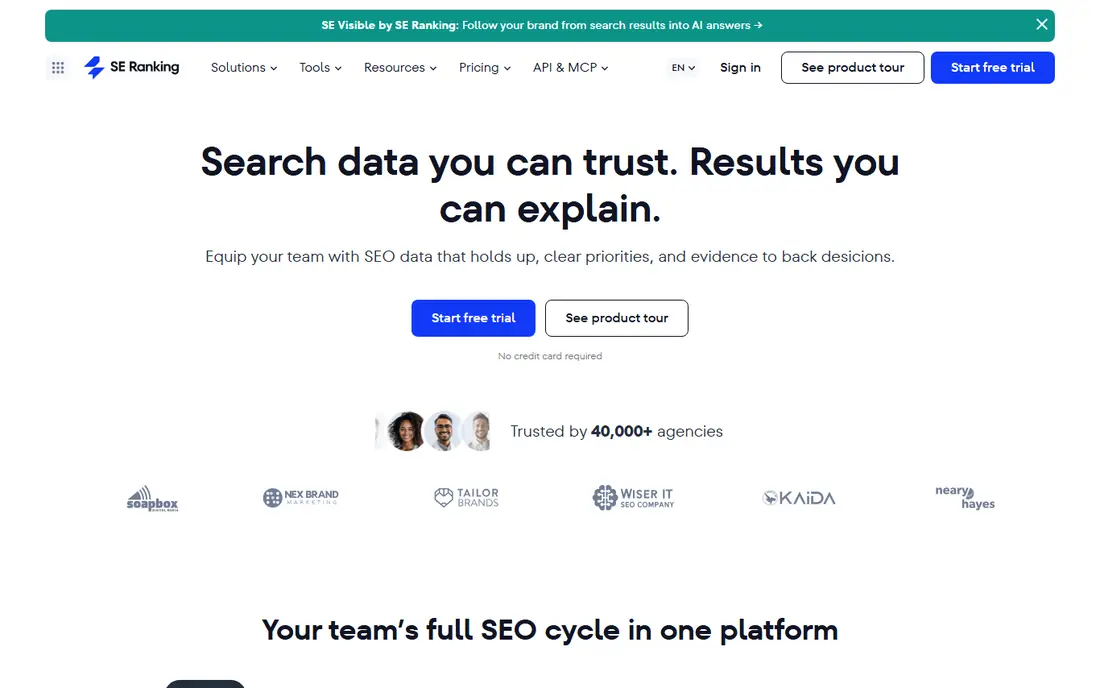
SE Ranking earns the top spot for most teams because it pairs daily tracking with a useful set of extra tools at a price that scales sensibly. The Core plan covers 2,000 keywords with daily updates, which is enough for many agencies and in-house teams. Local tracking, competitor checks and site audits sit in the same plan, so you do not need a second tool for basic SEO work.
The main drawback is that a single small site may not need 2,000 keywords, and the monthly price reflects that larger allowance. If you track only a handful of terms, a cheaper dedicated tracker may be better value. For teams tracking hundreds or thousands of keywords, SE Ranking is hard to beat on price per keyword.
- Daily tracking for 2,000 keywords on Core
- Local tracking and audits in the same plan
- Clear pricing by keyword volume
- Entry price is high for a single small site
- Full suite features may go unused by pure trackers
- Higher tiers are needed for larger teams
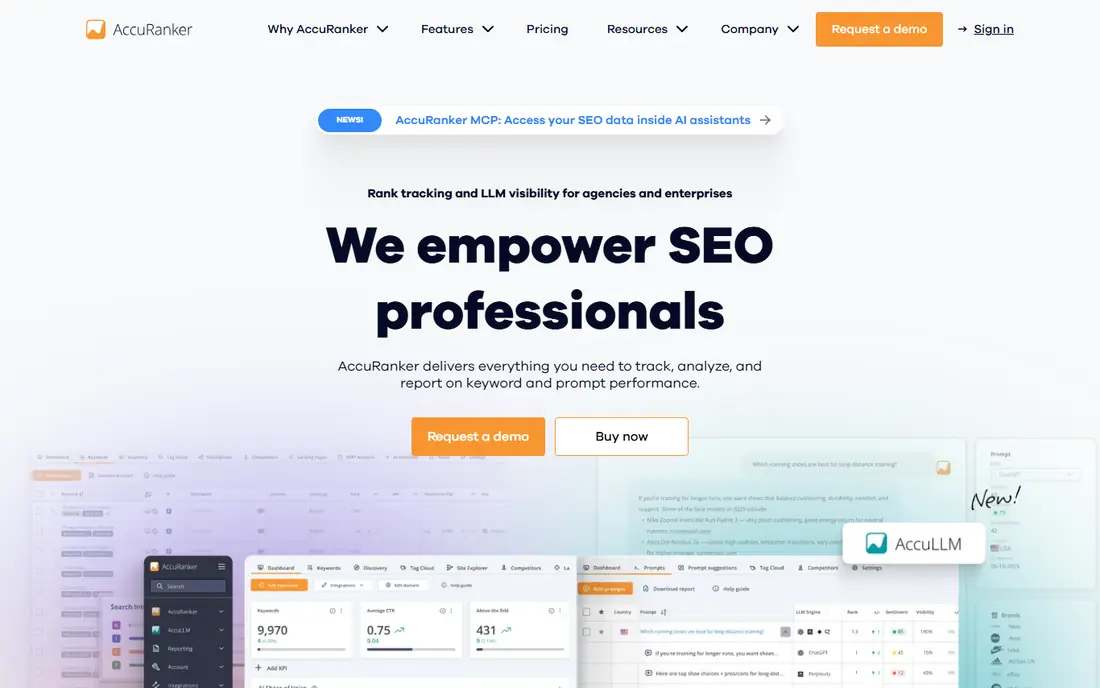
AccuRanker is a dedicated rank tracker built for speed and scale. Its on-demand refresh lets you check a keyword right now rather than waiting for the next scheduled update, which helps after a site change or a ranking drop. Tagging by intent, location or SERP feature helps agencies slice large keyword sets into useful reports.
That focus comes at a price. The Professional plan starts at $224 per month, and Looker Studio and other advanced integrations sit on higher tiers. For a small site, that cost is hard to justify. For an agency managing thousands of keywords across clients and locations, the speed and reporting depth justify the spend.
- Fast on-demand rank refresh
- Strong tagging and reporting for large keyword sets
- API access for custom reporting
- High entry price
- Advanced integrations sit on higher tiers
- Overkill for a single small website
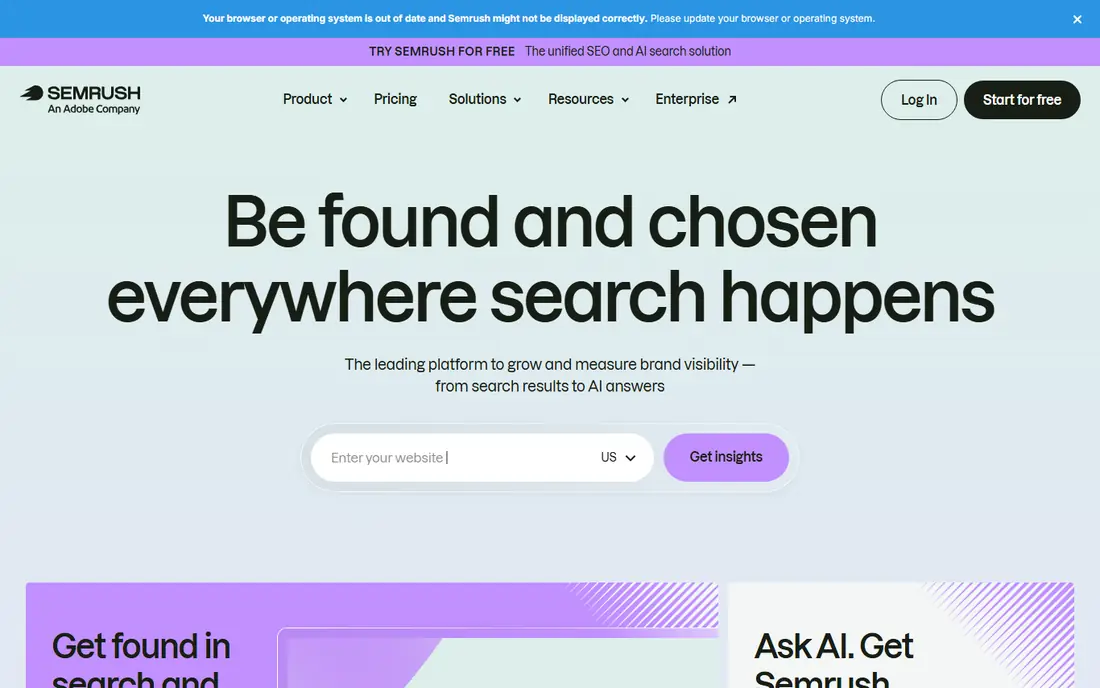
Semrush is best judged as a suite, not as a tracker alone. Its Position Tracking tool sits alongside keyword research, site audits, backlink checks and content tools, so teams already using Semrush get tracking without a second subscription. Daily updates and competitor tracking cover the core needs for most in-house SEO teams.
If you only need rank tracking, Semrush is costly per keyword compared with SE Ranking or Wincher. The entry plan covers 500 keywords for position tracking, which is far less than dedicated trackers at a similar price. Choose Semrush when you will use the wider suite, not when tracking is the only job.
- Position tracking inside a wide SEO suite
- Competitor and keyword research in the same subscription
- Daily updates on the SEO plan
- Rank tracking alone does not justify the price
- Keyword allowance is smaller than dedicated trackers at the same price
- Learning curve is steep
Ahrefs is a favorite among SEO teams that care about links as much as rankings. Its Rank Tracker sits inside a platform known for backlink data, keyword research and site audits, so ranking changes can be checked against link and content changes in one place. The interface is clean, and the data depth is high.
The rank tracking itself has a limit worth noting. On standard plans, updates are weekly rather than daily, which matters if you need to spot a drop quickly. The Lite plan covers 750 keywords, which is useful but not generous at this price. Pick Ahrefs when backlink context matters, and pick a dedicated tracker when daily updates are the priority.
- Strong backlink database alongside rank tracking
- Clean interface
- Useful competitor and content research
- Standard plans update weekly rather than daily for rank tracking
- Keyword allowance is smaller than some rivals
- No free trial on standard plans
Wincher keeps rank tracking simple, which is its main appeal. You add websites and keywords, get daily updates, and see positions without wading through a large suite. Unlimited websites on many plans help small teams and freelancers who manage several small sites. The entry price is far lower than Semrush or Ahrefs.
Simplicity has a ceiling. Wincher does not offer the same depth of keyword research, audits or content tools as a suite, and its reporting is more basic than AccuRanker or ProRankTracker. For pure tracking on a modest budget, that trade is often worth it. For teams that need a full SEO workflow, a suite will fit better.
- Simple daily tracking
- Unlimited websites on many plans
- Lower entry price than suite tools
- Fewer extra SEO tools than suites
- Keyword limits rise in cost at scale
- Reporting is simpler than agency-focused tools
Nightwatch suits teams that need precise local tracking and want to watch AI search surfaces alongside classic rankings. Its daily updates, local granularity and unlimited seats make it practical for agencies that share access across a team without paying per seat. AI tracking features reflect how search results are changing in 2026.
Pricing is less straightforward than some rivals, because plans and currency vary, so we list it as See website and advise checking the current pricing page for your region. Keyword allowances also need care at scale. For local SEO teams and agencies that value seat flexibility, Nightwatch is a strong contender.
- Daily tracking with local precision
- Unlimited seats on plans
- AI search tracking for newer search surfaces
- Pricing varies by plan and currency
- Smaller brand than Semrush or Ahrefs
- Keyword limits need careful checking
SERPWatcher, part of the Mangools suite, is one of the friendliest rank trackers for beginners. The interface is clean, setup is quick, and the bundled Mangools tools cover keyword research and link checks for small teams. For a blogger or small business owner learning SEO, that simplicity matters more than advanced reporting.
The limit is update frequency and allowance. Basic plans update weekly and cover fewer keywords than rivals at a similar price, with daily tracking reserved for higher tiers. That makes SERPWatcher a poor fit for agencies that need daily data at scale. For a small site with modest tracking needs, it is an easy and affordable start.
- Very easy interface for beginners
- Bundled with other Mangools tools
- Low learning curve
- Weekly updates on the Basic plan, with daily only on higher tiers
- Keyword allowance is small at entry level
- Less suited to large agencies
Serpstat bundles rank tracking with keyword research, competitor checks, backlink analysis and site audits, which gives small and mid-size teams a suite at a lower price than Semrush or Ahrefs. Keyword clustering helps turn tracked terms into content plans, and its regional database coverage suits teams working outside the United States.
The suite approach brings complexity. Pricing varies by plan and billing term, so we list it as See website, and tracking is managed through credits and limits that need monitoring. The interface can feel busy next to Wincher or SERPWatcher. For teams that want a budget suite rather than a pure tracker, Serpstat is worth a trial.
- Wide suite covering research, audits and rank tracking
- Keyword clustering for content planning
- Many regional databases
- Pricing varies by plan and billing term
- Interface can feel busy
- Rank tracking credits need careful management
ProRankTracker is built around reporting. Agencies that deliver ranking reports to clients get white-label options, scheduled reports and separate desktop, mobile and local tracking. The free tier, with a small number of terms, lets tiny sites test the tool without paying, which is rare in this category.
Term-based pricing is the catch. Every location and device variant counts as a term, so a list that looks small on paper can grow quickly in practice. Do the term math before comparing prices. For agencies whose deliverable is the ranking report itself, the reporting depth justifies the quirks. For solo site owners, a simpler keyword-based tool may be clearer.
- Free tier for very small tracking needs
- Detailed white-label reporting
- Desktop, mobile and local tracking separately
- Term-based pricing can grow quickly with locations and devices
- Interface feels dated
- Starter pricing varies with term count
SerpRobot is the cheapest way to get daily rank tracking on this list. Each bot costs $4.99 per month and tracks a set of keywords daily, and you can add bots as your list grows. It checks results beyond the first few pages, which helps sites climbing from lower positions. A free spot-check tool and a trial let you test it before paying.
The tool does one job only. There are no backlink, audit or content tools, and the interface is basic next to suite tools. That narrow focus is fine if tracking is all you need, and it is a poor fit if you want a full SEO platform. For a tight budget and a clear tracking job, SerpRobot is hard to beat on price.
- Very low entry price per bot
- Daily updates
- Checks beyond the first few pages of results
- Focused only on rank tracking, with no backlink or audit tools
- Each bot covers a limited keyword set
- Interface is basic
How we picked these
We compared official pricing pages, keyword allowances, update frequencies and feature pages, plus public information about local tracking and reporting. We favored tools that are active in October 2026, that state their keyword limits clearly, and that cover the main use cases: solo sites, small teams, agencies and suite buyers. We did not claim hands-on testing, and we listed prices as See website where sources conflicted on currency or billing term.
How to choose a SERP tracker
Count your real keywords first, including every location and device variant you need. A tool that looks cheap for 100 keywords can become costly for 100 keywords in three cities on desktop and mobile. Then decide how often you need updates: daily tracking suits active SEO work, while weekly tracking may be enough for a stable site that changes rarely.
Next, check what else you need. If you already use a suite for research and audits, a dedicated tracker such as AccuRanker, Wincher or SerpRobot may be cheaper. If you need research, audits and tracking in one subscription, a suite such as SE Ranking, Semrush or Serpstat may save a second subscription. Use a trial to spot-check a handful of keywords against Google Search Console before you commit.
Frequently asked questions
What is the best SERP tracking tool?
SE Ranking is the best value for most teams, because it offers daily tracking for 2,000 keywords plus audits and research in the same plan. AccuRanker suits agencies that need fast on-demand updates, while Wincher and SerpRobot suit smaller budgets. The best tool depends on keyword count, update frequency and if you need a full suite.
What is the best free SERP tracker?
Google Search Console is the best free baseline, because it uses Google own data and costs nothing. It reports average positions over a date range rather than daily snapshots, and it does not show competitor positions. ProRankTracker offers a small free tier for very small tracking needs, which can supplement Search Console.
How often should a SERP tracker update?
Daily updates suit active SEO work, site changes and competitive niches where positions move quickly. Weekly updates may be enough for stable sites with little competition or infrequent content changes. Daily data costs more, so match the frequency to how quickly you can act on a ranking change.
Does a SERP tracker replace Google Search Console?
No, Search Console remains the best source for impressions, clicks and average positions from Google itself. A paid tracker adds daily snapshots, competitor positions, local precision and alerts that Search Console does not provide. Use both together: Search Console for traffic truth, and a tracker for daily position history.
Why do rank trackers disagree on the same keyword?
Rankings vary by location, device, personalization and the time of day, and trackers check at different times and from different locations. Two tools can both be correct for their own settings and still show different positions. Compare tools on the same location and device settings, and look at trends rather than a single day.
How many keywords do I really need to track?
Track the keywords that drive traffic, conversions or business value, plus a small set of competitor terms, rather than every phrase you can think of. Include location and device variants only where they change decisions. A focused list of 100 to 500 terms often gives clearer insight than a bloated list of thousands.
Sources
See where you really rank - block by block
ProMapRanker scans Google Maps across a grid of your service area. Simple monthly plans from $19, white-label on every plan.
Start freeKeep reading
 zeffy payment processor stripe alternatives
Zeffy and Stripe Alternatives for Nonprofits in 2026
Explore zeffy payment processor stripe alternatives for nonprofits. We compare 8 fundraising platforms on fees, donor tools, and nonprofit focus. Check fees.
Read → workday alternatives
Workday Alternatives in 2026
Workday alternatives compared: we review 8 HR and payroll platforms that replace Workday, with pricing, strengths and honest limits for each team size.
Read → what's the best weather app
What's the Best Weather App in 2026
Wondering what's the best weather app? We compare 10 free and paid apps for forecasts, radar, alerts, and Colorado mountain weather for everyday and storm use.
Read →