 ProMapRanker
Best Pricing Optimization Software in 2026

Key takeaways
- B2B pricing tools focus on governed price lists, deal guidance, and approvals, while retail tools focus on assortment, demand, and competitor prices.
- Most enterprise pricing platforms are quote based, so budget from a written proposal rather than a headline price.
- A tool that only recommends prices is less useful than one that publishes approved prices into quoting, ERP, and store systems.
- Start with clean cost, transaction, and competitor data, since weak inputs produce weak recommendations.
- Pilot on one product group or segment before rolling a new price model across the whole business.
Quick comparison
| Pick | Great for | Pricing starts at | Free tier | |
|---|---|---|---|---|
 Pricefx | Broad B2B pricing and quoting | See website | No | Visit |
 Vendavo | Enterprise manufacturers and distributors | See website | No | Visit |
 PROS | AI pricing for complex sales | See website | No | Visit |
 Zilliant | Governed B2B price management | See website | No | Visit |
 Competera | Large retail assortment pricing | See website | No | Visit |
 Quicklizard | Automated retail dynamic pricing | See website | No | Visit |
 BlackCurve | Mid market retail pricing rules | From £199 per month | Free trial | Visit |
 Prisync | Competitor tracking and repricing | From $99 per month | Free trial | Visit |
 Omnia Retail | Retail price and promotion pricing | See website | No | Visit |
The best pricing optimization software
We compared official feature pages, pricing pages, and public product descriptions for tools that set, test, and publish prices in B2B and retail settings.
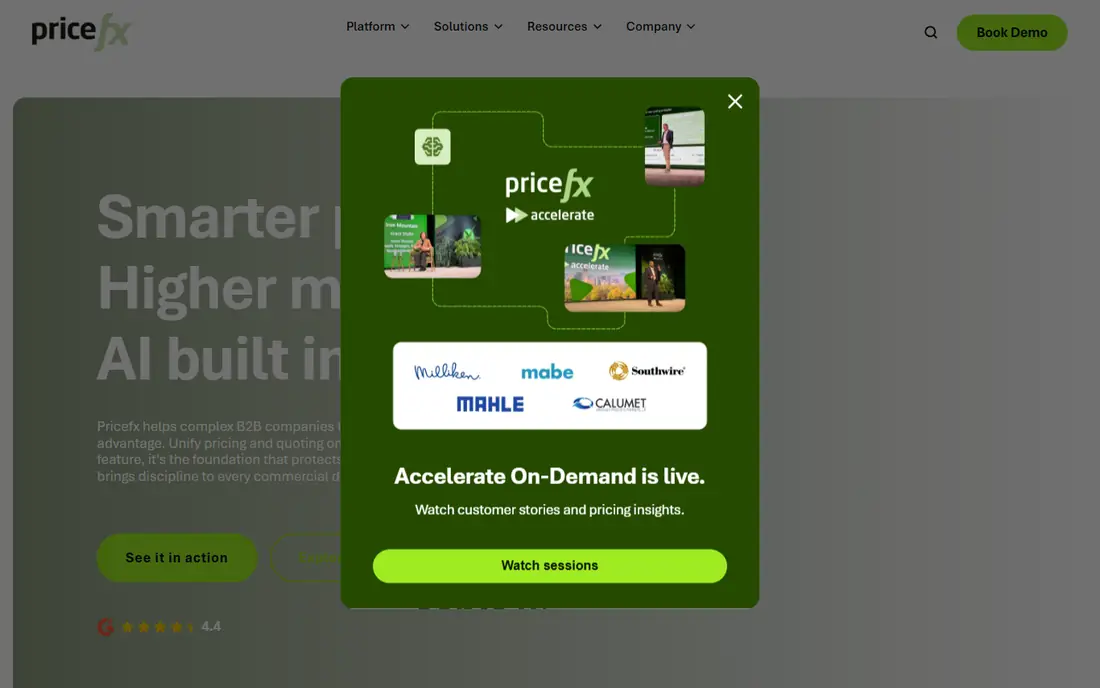
Pricefx suits B2B firms that want one governed system for prices, quotes, agreements, and rebates. Its optimization work sits next to the tools that actually publish prices, so a recommendation is less likely to stay stuck in a spreadsheet. Teams can also add modules as their pricing process matures, rather than buying every part on day one.
The trade is effort. A broad platform needs clean master data, clear approval rules, and time to configure. Companies that only need a simple price list will not use its depth. For firms with many customers, products, and discount rules, that depth is the reason to choose it.
- Covers price management, optimization, quoting, and rebates
- Modular setup lets teams add parts over time
- Strong ERP and CRM connections
- Quote based pricing
- Implementation takes planning
- Smaller firms may find the full suite more than they need
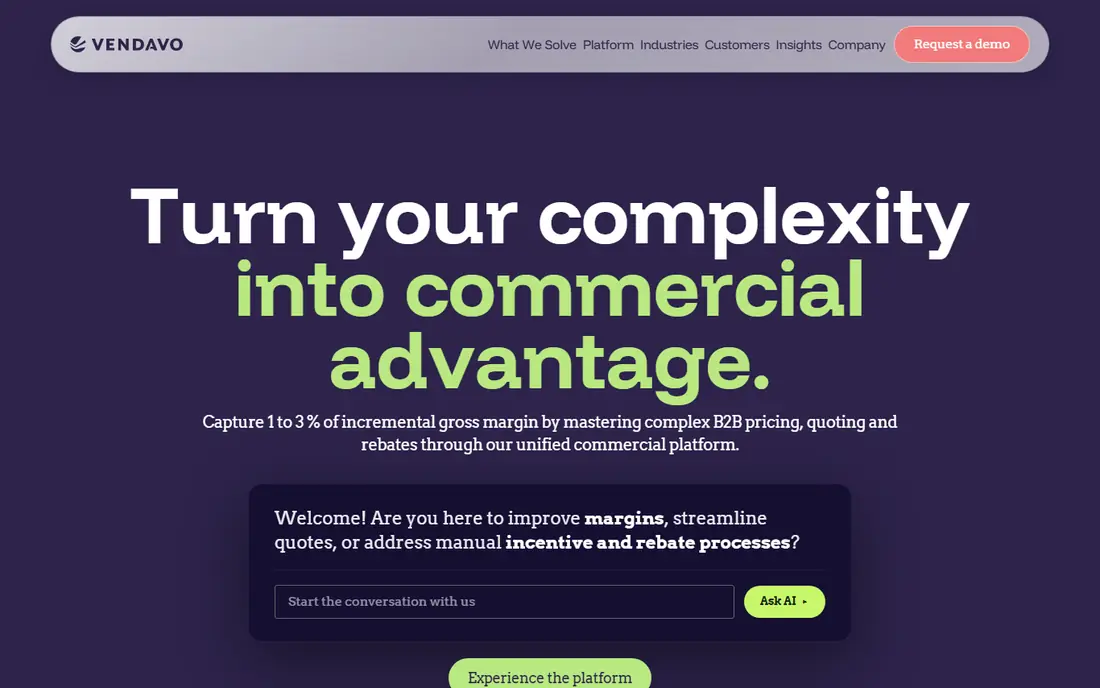
Vendavo is aimed at manufacturers and distributors with complex list prices, customer agreements, and negotiated deals. It helps pricing teams set guardrails, guide sales reps on deal prices, and track where margin leaks through discounts and rebates. That control matters when thousands of SKUs and customer specific prices are in play.
It is not a quick install for a small team. Success depends on naming owners for price data and approvals, and on integrating with ERP and CRM systems. Firms that already have that discipline will get more from Vendavo than firms still setting prices in ad hoc spreadsheets.
- Strong price management and deal guidance
- Useful rebate and agreement handling
- Built for large, complex commercial teams
- Quote based pricing
- Long implementation for large rollouts
- Requires disciplined data and process ownership
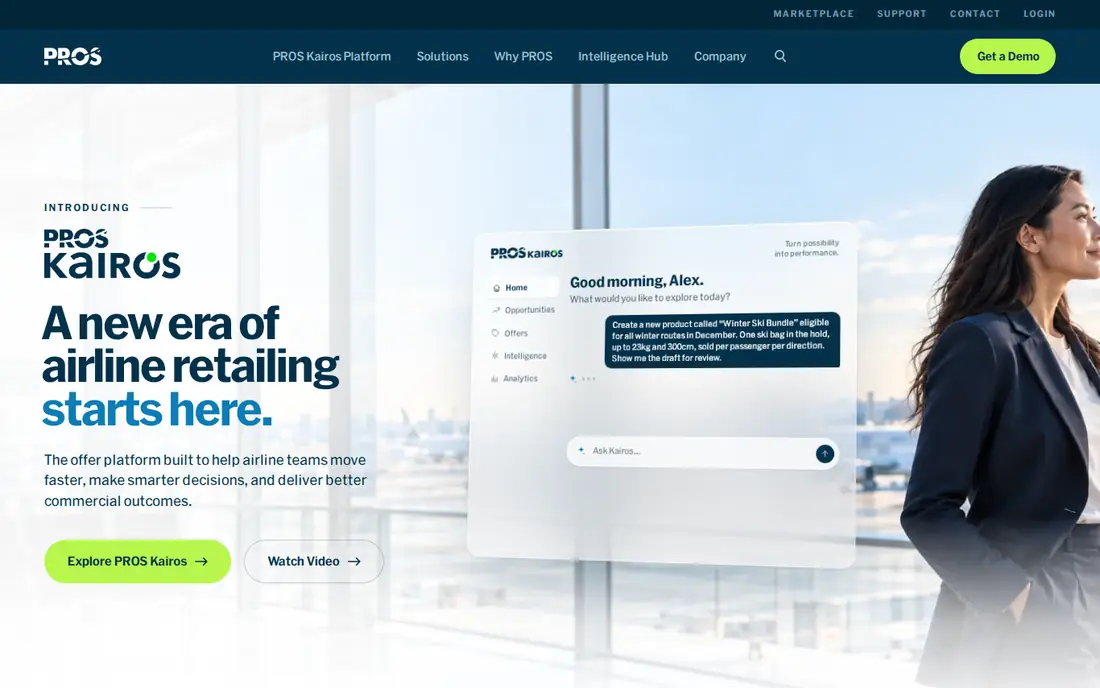
PROS focuses on using transaction history, costs, and market signals to recommend prices that balance margin and win rate. Its tools help teams test scenarios before publishing a price, and give sales reps guidance at the quote stage rather than after a deal is lost. That deal level focus sets it apart from tools that only manage static lists.
The model is only as good as the history behind it. Firms with thin or messy transaction data will need to clean that data first. PROS also fits larger teams better than a small retailer, since its strength shows up at scale.
- AI price recommendations for deals and lists
- Strong science and simulation tools
- Useful for airlines, manufacturing, and distribution
- Quote based pricing
- Needs quality transaction history
- Can be complex to configure well
Zilliant helps B2B teams move from scattered spreadsheets to a governed price book. It segments customers, models price changes, and supports quotes and agreements, so a price decision can be traced from analysis to approval to sale. That traceability helps finance and sales agree on why a price changed.
Buyers should ask which modules sit in the base quote and which are add ons. The platform rewards firms that define segments and approval rules up front. Teams that want a fast, simple repricing tool for a web store will find it heavier than needed.
- Clear price management and optimization in one place
- Customer segmentation for tailored prices
- Useful quoting and agreement tools
- Quote based pricing
- Implementation needs process design
- Some advanced features sit in higher tiers
Competera is designed for retailers that manage tens of thousands of products across channels. It uses demand patterns, competitor prices, and business rules to recommend prices, then lets teams test scenarios before they go live. That scale is hard to manage in spreadsheets, especially when prices change often.
Smaller stores may not need this level of modeling, and the quote based model reflects its enterprise focus. Larger retailers, by contrast, benefit from the ability to set rules by category, protect margin on key items, and react to market moves without repricing by hand.
- Built for large retail assortments
- Demand and competitor signals in pricing models
- Scenario testing before price changes
- Quote based pricing
- Best for larger retailers
- Needs regular competitor and sales data feeds
Quicklizard helps retailers automate price changes instead of updating lists by hand. Teams set rules and targets, review recommendations, and let the system apply approved changes. That speed matters for categories where competitor prices and demand shift daily, and where manual updates always lag the market.
Automation still needs oversight. A bad rule or a faulty competitor feed can move prices in the wrong direction, so teams should set limits, review exceptions, and test on a subset first. With those guardrails, Quicklizard saves time and keeps prices closer to the market.
- Automated price updates from rules and AI models
- Useful for fashion, grocery, and general retail
- Dashboard for monitoring price moves
- Quote based pricing
- Needs clean product and competitor data
- Automation needs guardrails to avoid unwanted moves
BlackCurve is a practical middle step for retailers that have outgrown spreadsheets but do not need an enterprise suite. It lets teams set pricing rules, watch competitor moves, and manage prices across channels from one place. The published starting price also makes early budgeting easier than a quote only tool.
The limit is scale and depth. Very large assortments or complex B2B deal pricing will stretch it, and teams should check how price changes with product count and channels. For mid market retail teams, it offers a clear path from manual pricing to governed, rule based pricing.
- Published starting price for budgeting
- Pricing rules across channels
- Competitor monitoring included in the approach
- Monthly price rises with scale and channels
- Less depth than enterprise suites
- Some features depend on plan level
Prisync starts with a simple question: what are competitors charging right now. It tracks those prices, alerts teams to changes, and can apply repricing rules based on position and margin targets. For ecommerce sellers, that visibility alone can stop slow leaks where a store stays overpriced for weeks.
It is not a full demand forecasting suite. Teams that need deep elasticity modeling across a huge assortment may pair it with another tool. For competitor driven pricing and MAP checks, Prisync is direct, affordable, and easy to trial.
- Competitor price monitoring and alerts
- Dynamic repricing rules
- MAP monitoring for brands and sellers
- Focus is monitoring more than deep demand modeling
- Data quality depends on tracked sites
- Higher plans needed for larger catalogs
Omnia Retail serves retailers that need to price products and promotions together, not in isolation. It combines competitor data, internal costs, and promotion plans so teams can see how a discount affects margin and sales. That joined view helps avoid promotions that win sales but lose money.
B2B firms with negotiated deals will find it less relevant, since its design is retail first. Retailers should check coverage for their markets and channels, and confirm how often competitor data refreshes. For retail teams that run frequent promotions, it is a focused choice.
- Retail focused pricing and promotion tools
- Competitor and market data integration
- Useful for European and global retailers
- Quote based pricing
- Less suited to B2B deal pricing
- Implementation depends on data feeds
How we picked these
We compared official feature pages, pricing pages, and public product descriptions, and we favored tools that are still sold and supported in October 2026. We looked for a clear pricing use, such as B2B deal guidance or retail dynamic pricing, rather than a general analytics tool with a pricing label. We did not claim hands on testing that did not happen, and we used See website where a vendor does not publish a list price.
How to choose the right pricing tool
Start by naming the pricing problem. B2B teams need governed lists, customer segments, and deal guardrails. Retail teams need assortment pricing, competitor tracking, and promotion control. A tool built for one side will frustrate the other, even if the marketing sounds similar.
Next, check the path from recommendation to published price. Ask how approvals work, how prices flow into ERP, CRM, quoting, or store systems, and how changes are logged. Then test data readiness. Gather cost, transaction, and competitor data for one category, run a pilot, and compare the recommended prices with recent outcomes. If the pilot cannot be explained to sales and finance, the full rollout will face the same problem.
Frequently asked questions
What is pricing optimization software?
It is software that helps a business set prices using data on costs, demand, competitors, and past sales, rather than habit alone. B2B tools add deal guidance and approvals, while retail tools add dynamic updates and promotion analysis. The goal is a price that protects margin and still wins the sale.
How much does pricing optimization software cost?
Enterprise B2B and large retail platforms are usually quote based and vary by products, users, and modules. Mid market retail tools publish starting prices, such as BlackCurve from £199 per month and Prisync from $99 per month. Always get a written quote for your catalog size and channels.
Does pricing software replace a pricing manager?
No. It gives recommendations, scenarios, and guardrails, but a person still sets strategy, approves exceptions, and owns the outcome. The best results come when the tool handles routine updates and the pricing team focuses on strategy and edge cases.
How long does implementation take?
It depends on scope and data quality. A competitor tracking tool can start in days or weeks, while an enterprise B2B platform can take months to configure, integrate, and roll out. A pilot on one product group helps surface data and process gaps early.
Is dynamic pricing fair to customers?
Dynamic pricing means prices change with demand, costs, or market conditions, and it is common in retail and travel. Businesses should keep prices clear at checkout, avoid misleading list prices, and follow local pricing and consumer protection rules. Clear rules and limits also protect trust.
Sources
See where you really rank - block by block
ProMapRanker scans Google Maps across a grid of your service area. Simple monthly plans from $19, white-label on every plan.
Start freeKeep reading
 zoho books alternatives
Best Zoho Books Alternatives in 2026
Compare the best zoho books alternatives for small business accounting, from QuickBooks Online and Xero to FreshBooks, Wave, and Sage in 2026, with pricing.
Read → zluri alternatives
Best Zluri Alternatives in 2026
Compare zluri alternatives for 2026, with SaaS management platforms for app discovery, spend tracking, renewals, and automation for IT, finance and procurement.
Read → zerobounce alternatives
Best ZeroBounce Alternatives in 2026
Best zerobounce alternatives for list hygiene: compare 8 email verification tools for bulk cleaning, real-time checks and catch-all handling in 2026 today.
Read →