 ProMapRanker
2026 Guide to the Best PIM Software for Shopify Brands

Brands with deep channel syndication needs · Pricing starts at: Quote only
Direct answer
For brands with deep channel syndication needs, inriver is where this list starts. Listed starting prices: Apimio from $199 a month, Plytix from $149 per month and Pimcore from $9,900 a year. Apimio is the stronger choice for mid-sized brands with numerous suppliers, while Plytix suits small Shopify brands starting with PIM. The remaining 3 options are covered below with prices and limits.
If you are comparing PIM software for shopify brands, this page covers 6 tools in one place: what each is best for, what it costs to start, whether it has a free plan, and the main limit to know about.
Key takeaways
- Top of the list is inriver, which targets brands with deep channel syndication needs.
- Only 2 of the 6 tools have a free plan (Plytix, Pimcore), so check the caps.
- For large brands with complicated product data, Akeneo is worth a look.
- What to know about Plytix first: advanced workflow rules need higher levels.
Quick comparison
| Pick | Great for | Pricing starts at | Free tier | |
|---|---|---|---|---|
| inriver | Brands with deep channel syndication needs | Quote only | No | Visit |
 Apimio | Mid-sized brands with numerous suppliers | $199 a month | No | Visit |
 Plytix | Small Shopify brands starting with PIM | $149 per month | Yes | Visit |
 Pimcore | Brands with developers and a large catalog | $9,900 a year | Yes | Visit |
 Salsify | Brands selling across numerous channels | Quote only | No | Visit |
 Akeneo | Large brands with complicated product data | Quote only | No | Visit |
Every option for PIM software for shopify brands explained
Choose inriver for brands with deep channel syndication needs. The system holds a master product record and lets the team build channel-specific views, so Shopify gets one version of a product and a retail partner gets another, each with the right fields and formats. For everyday use, the limit is the same as the other enterprise tools: no published price and a setup project that needs planning.
Drawbacks to consider: No published price.
For a mid-sized Shopify brand, the cost may outweigh the benefit. Pricing is by quote only, and implementation normally involves the vendor or a partner, so a brand should budget for setup time plus the license. More specifically, for a large brand with numerous channels, inriver is a solid choice. inriver sells by quote instead of a published price. inriver has no free plan.
- Solid syndication engine
- A decent match for complicated B2B and B2C catalogs
- Needs implementation support
For mid-sized brands with plenty of suppliers, Apimio is a natural candidate. Apimio is built around the messy middle of product data: supplier spreadsheets, inconsistent attribute names, and catalogs that change every week. Its supplier portal lets vendors upload their own product data in a structured form, which cuts the back-and-forth that eats merchandising time.
In daily use, the entry plan opens at $199 a month. The import tools map supplier columns to the master catalog with saved templates, so a weekly supplier file becomes a repeatable process rather than a manual cleanup job. Also, for supplier-heavy catalogs under 20,000 SKUs, Apimio is a practical mid-market choice. For a Shopify brand that sources from numerous suppliers, that onboarding flow is the feature that matters. Apimio pushes clean product records to Shopify and keeps the channel feed consistent, so the store displays the same titles, images, and specs that the supplier provided. What you pay to start with Apimio: $199 per month. No free plan comes with Apimio.
Downsides: No free plan.
- Capable spreadsheet import and mapping
- Supplier onboarding portal
- Smaller integration library than bigger rivals
Plytix is designed for small Shopify brands starting with PIM. Plytix hands a Shopify brand a single place to hold product descriptions, attributes, images, and files, then push that data to the store through its Shopify app. In practice, the free Standard plan includes small catalogs, which makes it a low-risk way to test whether a PIM changes how quick the team can launch products.
Points against: no on-premise choice.
The Shopify connection matters more than the feature list. On top of that, for a brand with under 5,000 SKUs and a small team, Plytix is the simplest path to clean product data. The free plan means the team can prove the value before spending anything. Worth adding: the Pro plan opens at $149 a month and layers on more users, more products, and digital asset management. So an expanding brand can stay on the same system as the catalog grows. Plytix cost at the entry level: $149 per month. You can start on Plytix without paying.
- Free plan for small catalogs
- Native Shopify app with two-way sync
- Advanced workflow rules need higher levels
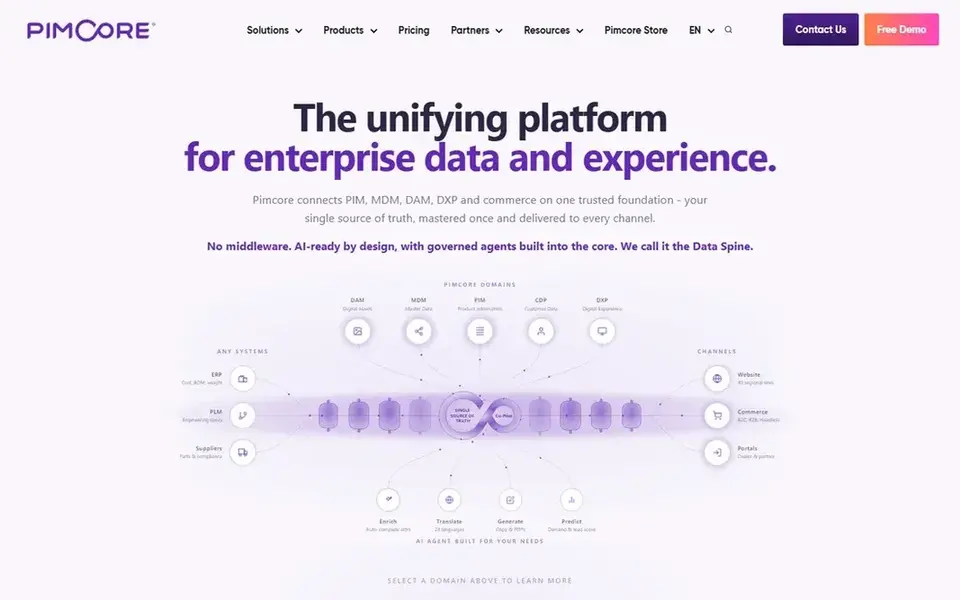
Pimcore makes the most sense for brands with developers and a large catalog. A Shopify brand with developers on staff can run the community edition at no license cost and build exactly the data model its catalog needs, from variant-level attributes to localized spec sheets.
As for the details, Pimcore can model almost any product structure, which helps brands with customizable products, bundles, or deep variant trees that more straightforward tools flatten. On top of that, the Professional plan begins at $9,900 a year and layers on vendor support, security updates, and enterprise features for teams that want a supported deployment. Starting cost for Pimcore: $9,900 per year. A free plan is available with Pimcore.
What to check first: Needs developer time to set up.
- Solid data modeling for complicated catalogs
- Open source community edition
- Support costs additional on the free edition

Salsify serves brands selling across numerous channels. Salsify concentrates on getting product content to every place a customer might see it, from Shopify to Amazon to retail partner portals. Its channel network covers hundreds of retailer and marketplace destinations.
The system tracks which content each channel has received and whether it meets that channel's requirements. More specifically, for a Shopify brand that also sells through Amazon, Walmart, and retail partners, Salsify cuts the work of reformatting product data for each destination. Worth adding: the drawback is the enterprise price and the setup time, which can run into months for a large catalog. Beyond that, a brand that sells only through Shopify will not use most of the channel network. There is no fixed entry price for Salsify; pricing comes through a quote. Salsify has no free tier.
What to check first: designed for bigger teams and budgets.
- Broad channel network
- Solid content syndication for retailers
- No published price
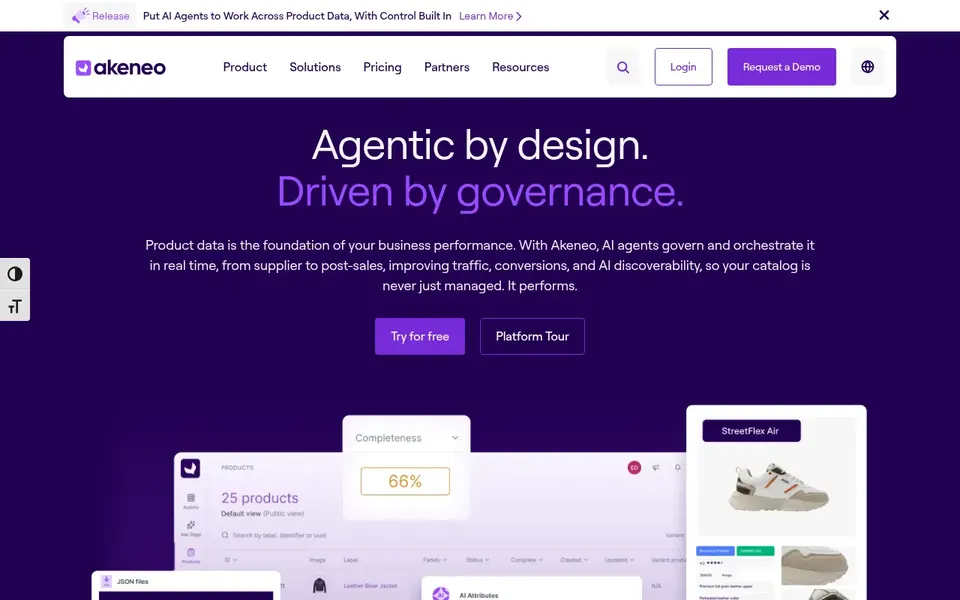
Choose Akeneo for large brands with complicated product data. The cost is the quote-only pricing and the implementation effort, which usually needs a partner. Worth adding: a brand can define rich attribute sets, localised content for plenty of markets, and completeness rules that block a product from publishing until its data meets the standard.
Drawbacks to consider: No published price.
Also, the cloud plans are priced by quote, and the vendor does not publish a starting figure. So a Shopify brand should expect a sales conversation and a quote based on catalog size, users, and channels. A free trial of the Growth plan is available on the vendor site. On top of that, Akeneo is one of the most widely used PIM systems, and its strength is product data modeling at scale. There is no list price for Akeneo, so a quote is the way in. There is no free plan with Akeneo.
- Capable product data modeling
- Large app marketplace and community
- Implementation needs vendor or partner help
A closer look at PIM software for shopify brands
Check the Shopify connector first, since a PIM that cannot sync to Shopify cleanly builds more work than it saves. Also, ask the vendor whether the sync is two-way, how commonly it runs, and whether it deals with metafields, images, and variants. More specifically, count the real cost: the license, the implementation, and the time your team spends cleaning data before import.
Ask how the tool manages supplier data, since a brand with 20 suppliers needs onboarding tools that a brand with two suppliers does not. Also, Finally, test with a real slice of your catalog, including your hardest products, before you sign a yearly contract.
How we chose
Selection started from tools commonly considered for PIM software for shopify brands, then narrowed to 6 that have clear pricing information or a clear quote process. Prices and plan limits come from vendor pages and can change, so confirm them on the vendor site before you buy. Position on the page reflects fit for a typical buyer first, with price clarity and free access breaking ties. Treat it as a guide, not a ruling.
A buyer's checklist
- Get a written quote from inriver, Salsify and Akeneo; the list shows no starting price for them.
- Check what the free option really includes: Plytix and Pimcore offer a free plan, and usage caps differ.
- Before choosing inriver, weigh its main limit: no published price.
- Confirm the exact Plytix plan that includes your must-have features.
- Involve the people who will use Pimcore daily; a short pilot beats a long feature checklist.
Frequently asked questions
What is the cheapest option for PIM software for shopify brands in this list?
On published monthly entry prices, Plytix is the lowest here at $149 per month. Entry price is only part of the cost, because seats, add-ons and billing terms can change the total. Prices, free plan details and limits for all 6 tools in this PIM software for shopify brands roundup sit on the individual cards above.
Is inriver the right pick for everyone comparing PIM software for shopify brands?
No single tool suits every team. inriver comes first because it fits brands with deep channel syndication needs, while Apimio suits mid-size brands with many suppliers and Plytix suits small Shopify brands starting with PIM. Match the tool to your own size, budget and workflow before deciding.
How are the tools for PIM software for shopify brands ordered?
inriver sits first and Akeneo last because the order follows typical fit for PIM software for shopify brands, then price clarity and free access. It is a judgement call, so read each profile for fit and limits.
Do these tools publish their prices?
Not all of them. inriver, Salsify and Akeneo publish no starting price, so expect a quote request for those. The rest, Apimio included, show a starting price, though seats and billing terms still change the final cost.
Does a Shopify brand need a PIM?
A Shopify brand needs a PIM when the catalog grows past the point where the admin can hold clean data, normally around 500 to 1,000 SKUs or when the brand sells on more than one channel. Below that size, Shopify plus spreadsheets is commonly enough, and a PIM layers on process without clear benefit.
Sources
See where you really rank - block by block
ProMapRanker scans Google Maps across a grid of your service area. Simple monthly plans from $19, white-label on every plan.
Start freeBrowse all guides
← 6 Best Law Firm Marketing Automation Software for 20266 Best Platform for Comprehensive Brand Mentions in 2026 →
 best landing page builder software for nonprofits
7 Best Landing Page Builder Software for Nonprofits in 2026
Best landing page builder software for nonprofits: 7 contenders ranked by fit, with entry costs and free tiers. Each listing flags where it falls short.
Read → best blog software for ecommerce stores
7 Best Blog Software for Ecommerce Stores in 2026
Best blog software for ecommerce stores, compared. 7 tools with published prices, free plans and limits. Short, factual notes on every option. Straight answers.
Read → best blog apps for shopify stores
2026 Guide to the Best Blog Apps for Shopify Stores
Shortlisting the best blog apps for shopify stores? 6 products compared on cost, free access and ideal buyer. Each tool gets a one-line verdict. No hype.
Read → best marketing company private equity
Best Marketing Company Private Equity in 2026
Compare the best marketing company private equity options for portfolio growth, with SEO, paid media, multi-location marketing, and revenue reporting.
Read → best brand asset management software
Best Brand Asset Management Software in 2026
6 options for the best brand asset management software, with entry costs, free tiers and the buyer each one serves. Strengths and gaps are listed per tool.
Read → best tools for working on guns
Best Tools for Working on Guns in 2026
Best tools for working on guns guide compares 8 gunsmithing tool brands and kits for maintenance, scope mounting, assembly and bench work for owners today.
Read →More in Marketing Software · All guides A to Z by date · Latest guides