 ProMapRanker
Best Local SEO Tools for Carpet Stores (2026)
Direct answer
Uberall is my top pick for carpet stores because it keeps store hours, service-area details, floor-type categories and photos consistent across Google Business Profile and the other directories people check before they call a flooring shop. Pricing is quote-based, so check its pricing page. For review requests after an install, look at Grade.us, and for local rank tracking around your showroom, SE Ranking is a solid second option.
I compared these tools from vendor documentation and public sources rather than running hands-on tests. I looked at how each one handles the things a carpet store actually deals with: showroom hours, service areas, measuring appointments, installation reviews and suburb-level searches. The list below reflects fit for that workflow, not a lab benchmark.
Key takeaways
- Carpet stores win local searches when their Google Business Profile shows accurate hours, service areas, floor types and recent photos, so listing management comes first.
- Review tools matter because homeowners often pick a carpet shop based on how recent reviews describe installation and measuring.
- Rank tracking should cover a radius around your showroom, not just your city name, since most carpet buyers search from a nearby suburb.
- Call tracking helps you see which map and directory listings actually produce phone calls about measuring appointments.
- No single tool covers listings, reviews, calls and rankings well, so most carpet stores end up with two or three tools.
Quick comparison
| Pick | Great for | Pricing starts at | Free tier | |
|---|---|---|---|---|
 Uberall | Multi-directory listing management | See website | Not stated | Visit |
 Grade.us | Review requests after installs | See website | Free trial | Visit |
 SE Ranking | Local rank tracking by grid | See website | Free trial | Visit |
 Synup | GBP and listings for small chains | See website | Not stated | Visit |
 CallTrackingMetrics | Tracking calls from map listings | See website | Free trial | Visit |
 Localo | Simple GBP management | See website | Free trial | Visit |
 Places Scout | Grid rank tracking for one shop | See website | Free trial | Visit |
The best local SEO tools for carpet stores compared
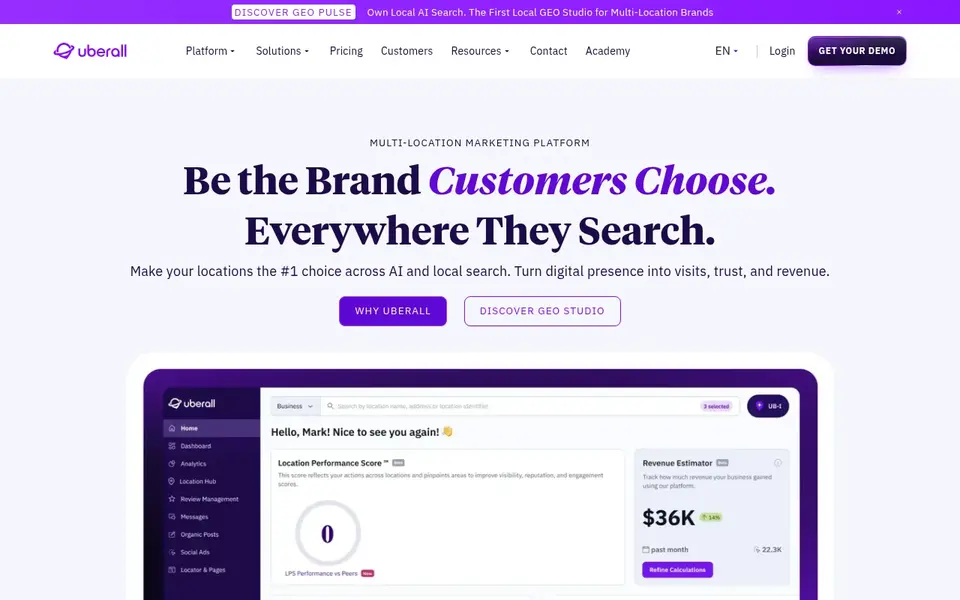
Uberall is a listing management platform built for businesses with one or more physical locations. For a carpet store, that means your showroom address, phone number, opening hours and holiday closures stay the same on Google, Apple Maps, Bing and the smaller directories that still feed local search results. It fits stores that also sell online or run more than one showroom.
The useful part for carpet stores is the structured data. You can keep floor-type categories, service-area descriptions and photo sets consistent, which matters when someone searches "carpet shop near me" and compares three listings side by side. Changes you make in Uberall push out to connected directories, so you are not editing each one by hand after a holiday closure.
The limit is scale. A single-showroom carpet store with no plans to expand will find the setup work heavier than the payoff. If you only need Google Business Profile management, a lighter tool is enough.
- Manages many directories from one dashboard
- supports location pages and store data
- review monitoring included
- Quote-based pricing
- overkill for a single small showroom
Grade.us is a review management tool focused on getting customers to leave reviews and then helping you respond. Carpet stores have a natural review moment: after the install crew finishes and the customer has walked on the new floor. That is when a short, well-timed request works best.
In practice, you add the customer to a campaign when the job is marked complete, and the tool sends the request by email or text. You can route happy customers toward Google and keep the request wording plain, which stays within Google's review guidelines. Responses are written by you, not auto-generated, which is the right approach for a business where trust matters.
The limit is that it depends on your customer records being accurate. If your install schedule lives in a notebook, fix that first. Stores that already use job management software will get more from it.
- Automated review request campaigns
- supports multiple review sites
- simple dashboard for staff
- Needs a clean customer list to work well
- review response is manual
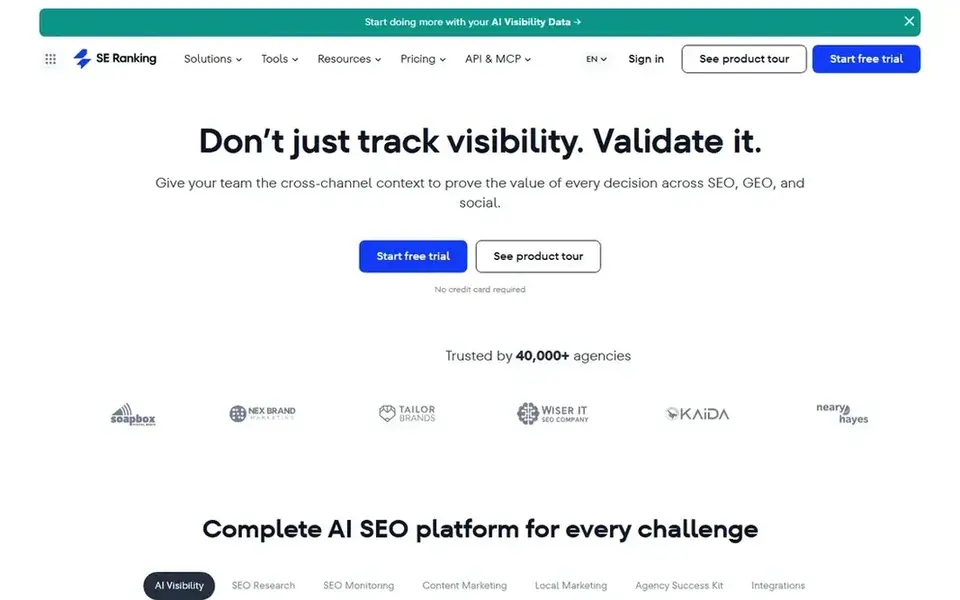
SE Ranking is an SEO platform with a local rank tracking module that shows where your carpet store ranks across a grid of points around your showroom. That matters because a homeowner three suburbs away sees a different map result than someone standing outside your door.
For a carpet store, the grid view tells you which nearby towns you actually appear in for terms like "carpet installation" or "carpet store." You can compare that against competitors and check whether listing changes moved anything. Reports are easy to share if you work with an agency.
The limits are cost layering and noise. Local tracking is an add-on, and grid results in dense metro areas move around from day to day, so read trends rather than single readings.
- Local rank tracking with map grids
- competitor tracking
- reporting for clients or internal use
- Local features are add-ons
- grid tracking can be noisy in dense areas
Synup combines listing management, Google Business Profile control and review monitoring. It suits a carpet store that has grown to two or three showrooms and wants one place to manage hours, photos and categories across them.
The workflow is straightforward: you connect each location, correct the core data once, and push it to directories. For carpet stores, the value shows up when a new showroom opens or when seasonal hours change and you do not want stale listings sending people to a closed door.
The limit is that pricing is quote-based and the plan tiers differ a lot. A single-location store should compare it against simpler GBP tools before committing.
- Listings plus review and GBP management in one place
- location pages
- works for multi-location flooring groups
- Quote-based pricing
- feature depth varies by plan
CallTrackingMetrics is a call tracking platform that assigns different phone numbers to different sources so you can see which ones produce calls. For a carpet store, that answers a question most owners cannot: did the measuring appointment come from Google Maps, the directory listing or the van wrap?
You can route calls to the right person, record them where allowed, and see which listings actually generate inquiries about carpet versus hard flooring. That helps you decide where to spend listing effort.
The limit is setup. Number provisioning, routing rules and consent for recording all need thought, and costs rise with call volume.
- Tracks calls from listings and ads
- call routing and recording
- ties calls to source
- Setup takes planning
- pricing scales with usage
Localo is a Google Business Profile management tool with a narrow focus. It is a good fit for a single-showroom carpet store that wants to keep posts, photos, hours and review responses in one place without a heavy platform.
For carpet stores, the practical use is posting new install photos and seasonal offers, and watching how the listing ranks for local terms. It keeps the work small enough that a store manager can do it between customers.
The limit is reach. If you need consistent data across many directories, Localo will not cover that, and you will need a listing tool alongside it.
- Focused on Google Business Profile
- simple interface
- rank tracking included
- Limited directory coverage beyond Google
- fewer integrations
Places Scout is a local rank tracking tool built around grid scans and competitor comparisons. It suits a carpet store owner or an agency working for one who wants to see exactly where the showroom appears across a map area.
The grid reports are useful when you are deciding whether to target nearby towns with service-area pages or listing updates. You can track competitors and watch how changes affect visibility over time.
The limit is usability. It is a desktop tool with more settings than a casual user needs, so a store owner who wants a quick weekly check may prefer something simpler.
- Detailed local grid tracking
- competitor analysis
- reporting options
- Desktop-focused
- steeper learning curve
How I chose
I built this list from vendor documentation and public sources, not from hands-on tests. I read each vendor's feature pages, help docs and public descriptions, then matched them against how carpet stores actually get customers: a local search, a map result, a phone call, a measuring appointment, an install, and often a review afterward. Tools that only fit e-commerce or national SEO were left out.
I also weighed limits. A single-showroom store does not need enterprise listing software, and a three-location flooring group does not need a free GBP checker. Where pricing is quote-based, I say so rather than guess. Where a tool is strong in one area and thin in another, I note it. The goal is a shortlist you can evaluate against your own workflow, not a ranking of raw feature counts.
What to check before you buy
- Confirm the tool can manage Google Business Profile categories and attributes that fit flooring, including carpet, hardwood and installation services.
- Check whether it supports service-area businesses if you install across a region without a walk-in showroom.
- Ask how it handles holiday hours and temporary closures, since stale hours send customers to a locked door.
- Confirm review request features follow Google's guidelines and do not filter or gate customers.
- Check whether local rank tracking covers a radius around your showroom, not just your city name.
- Ask whether call tracking numbers can be swapped without breaking existing listings and ads.
Frequently asked questions
Do carpet stores really need local SEO tools?
They help, but they are not mandatory. A carpet store's main local asset is its Google Business Profile, and free tools can keep that accurate. Paid tools earn their place when you have multiple locations, want review requests automated, or need to track rankings across nearby towns. Start with the free basics, then add a tool when a specific task becomes a time drain.
Which tool is best for getting more reviews after carpet installation?
Grade.us is built around that exact moment. You add the customer when the job closes and the tool sends a timed request. The key is keeping the message plain and letting every customer decide for themselves, which is what Google's guidelines expect. Do not offer incentives for reviews or filter out unhappy customers.
Can I track local rankings for a carpet store without paying?
Yes, to a point. Free checks show your position for a term from one location. Paid local rank tracking shows a grid across your area, which is closer to what real customers see. If you only want a rough weekly check, a free tool is fine. If you are deciding whether to target a nearby suburb, the grid view is worth paying for.
How many tools does a single-showroom carpet store need?
Usually two. One for Google Business Profile and listings, and one for reviews or rank tracking depending on where you are weakest. Adding call tracking makes three. More than that tends to create duplicate work, because each tool wants the same business data entered again. Pick tools that connect to each other where possible.
Does call tracking hurt local rankings?
It can if done carelessly. The safe approach is to keep your main business number as the primary number on your Google Business Profile and use tracking numbers on your website, ads and secondary listings. That way the number customers and Google expect stays consistent. Ask any call tracking vendor how they handle this before you sign up.
Sources
See where you really rank - block by block
ProMapRanker scans Google Maps across a grid of your service area. Simple monthly plans from $19, white-label on every plan.
Start freeBrowse all guides
← Best Local SEO Tools for Awning Companies in 2026Best Local SEO Tools for Commercial Cleaning Companies in 2026 →
 best local seo software for window tinting shops
Best Local SEO Software for Window Tinting Shops in 2026
A practical guide to the best local SEO software for window tinting shops in 2026, covering listings, reviews, rank tracking and GBP management.
Read → best local seo software for sunroom builders
Best Local SEO Software for Sunroom Builders in 2026
A practical guide to the best local SEO software for sunroom builders in 2026, covering GBP management, listings, reviews, rank tracking and call tracking.
Read → best local seo software for paint stores
Best Local SEO Software for Paint Stores in 2026
A practical guide to the best local SEO software for paint stores in 2026, covering listings, reviews, rank tracking and Google Business Profile tools.
Read → best llm rank tracker software
Best LLM Rank Tracker Software in 2026
Best llm rank tracker software compared on model coverage, prompt limits and price, including free options, so teams can track AI search visibility clearly.
Read → local seo for financial advisors
Local SEO for Financial Advisors
A local SEO guide for financial advisors: Google Business Profile setup, reviews, and compliance-safe local SEO for advisors.
Read → local falcon vs yext
Local Falcon vs Yext: Which Is Right for Local SEO
Local Falcon and Yext solve different local SEO problems. Here is how they compare and which one you need.
Read →More in Local SEO & Google Maps · All guides A to Z by date · Latest guides