 ProMapRanker
Best Local SEO Software for RV Repair Shops in 2026
Direct answer
Partoo is my first pick for most RV repair shops because it keeps your name, address, phone number and service hours consistent across map and directory listings, which matters when customers search for help while travelling. Pricing is quote-based, so check its pricing page. Localo suits shops that want a simpler Google Business Profile workflow, and SE Ranking fits owners who mainly want to watch local map positions over time.
I compared these tools from vendor documentation and public sources, not from hands-on testing. I looked at what each product actually does, how it fits the way an RV repair shop gets customers, and where the limits sit. Prices change, so I have not listed figures. Use this as a shortlist to research, then check each vendor's own pages before you commit.
Key takeaways
- RV repair shops get found through map and directory listings, so listing accuracy matters more than blog content for most shops.
- A Google Business Profile that shows service hours, service area and photos of completed work does more for calls than keyword tricks.
- Review requests sent by text after a repair is finished are the simplest reputation habit to keep.
- Local rank tracking helps you see whether you appear when someone searches from a nearby town or campground.
- No tool replaces answering the phone and updating your hours, especially around holiday weekends.
Quick comparison
| Pick | Great for | Pricing starts at | Free tier | |
|---|---|---|---|---|
 Partoo | Listing consistency for repair shops | See website | Not stated | Visit |
 Localo | Simple Google Business Profile work | See website | Free trial | Visit |
 SE Ranking | Local rank tracking by location | See website | Free trial | Visit |
 Rio SEO | Multi-location local marketing | See website | Not stated | Visit |
 Signpost | Review requests after each job | See website | Not stated | Visit |
 Trustpilot | A public review profile | See website | Free plan | Visit |
 Nimbata | Call tracking for phone enquiries | See website | Free trial | Visit |
The best local SEO software for RV repair shops compared
Partoo is a listing management platform. You enter your shop details once and it pushes them to maps, directories and review sites. For an RV repair shop, the value is in the boring details: the address of your bay entrance, the phone number that actually rings at the front desk, and the seasonal hours you keep during peak travel months.
RV repair customers often search from the road, so a wrong phone number or an old address sends them to a competitor. Partoo helps you fix those entries in one place instead of editing each directory by hand. It also helps when you run a second location near a popular RV route and need both profiles to stay accurate.
The limit is that Partoo is a listing tool, not a full website builder or a review strategy. If your Google Business Profile is already accurate and you only have one location, the setup effort may outweigh the benefit. Ask for a demo and check whether it covers the directories your customers actually use.
- Central listing management
- Google Business Profile sync
- Works for several shop locations
- Quote-based pricing
- Setup takes an initial push
Localo is built around Google Business Profile management. It gives you a checklist of profile tasks, tracks local positions and helps you plan posts and photos. For a single-location RV repair shop, that focus is useful because it keeps you inside the platform where most of your customers actually find you.
The workflow fits a shop owner who does not want a complicated dashboard. You add your services, such as chassis repair, slide-out fixes, roof resealing and appliance service, then work through the profile items. Local rank checks let you see whether you show up for searches made in nearby towns.
Skip it if you run several shops across a region and need central control over many listings. Localo is strongest for the owner-operator who wants a clear to-do list rather than an enterprise listing system.
- Clear GBP task list
- Local rank checks
- Straightforward for one shop
- Less depth for large groups
- Not a full listing network
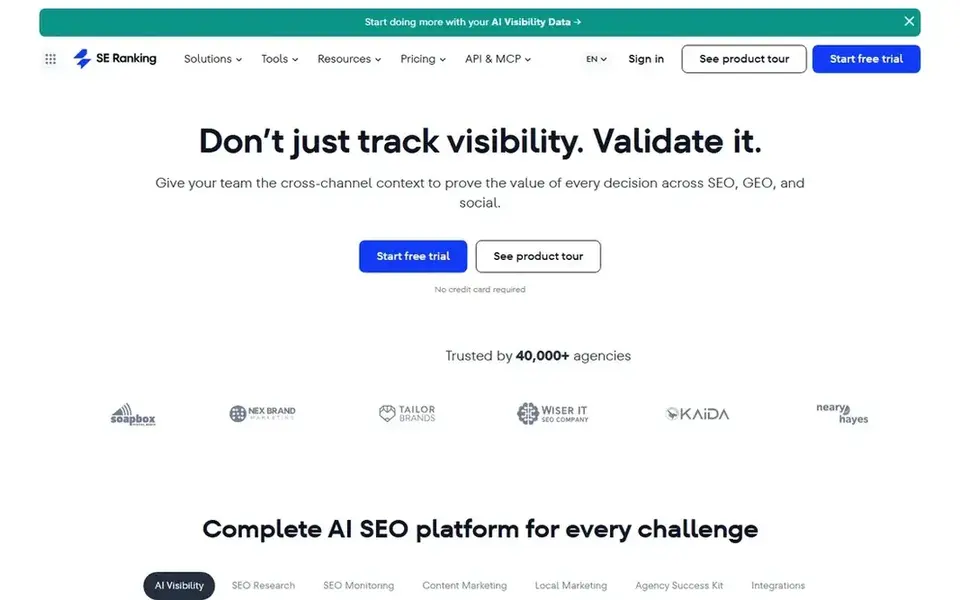
SE Ranking is an SEO platform with strong rank tracking. You can check positions from specific locations, which matters for an RV repair shop because a search made from a campground twenty miles away can return different results than one made at your front counter.
Use it to watch the towns and highway corridors you serve. If you notice you rank for "RV repair" in your own town but not in the next one over, that tells you where to focus your Google Business Profile service area and where to ask for reviews from travelling customers. The reports also help you compare against nearby shops.
The limits are practical. Rank tracking shows you a position, not the reason behind it, and it will not fix a wrong address on a directory. Pair it with a listing tool rather than expecting it to do both jobs.
- Location-based rank checks
- Competitor tracking
- Reporting options
- Rank data needs interpretation
- Not a listing fixer
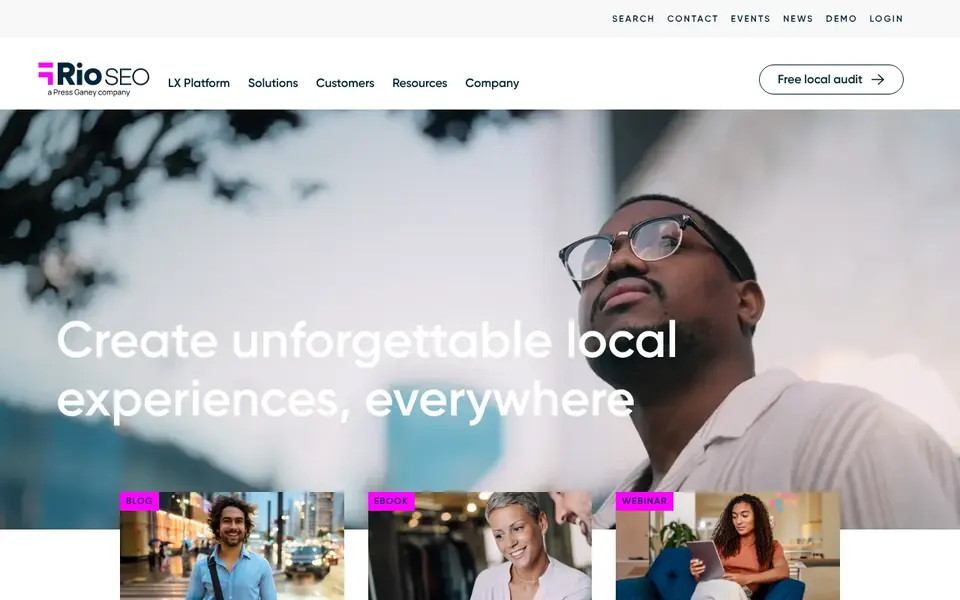
Rio SEO is a local marketing platform for businesses with multiple locations. It handles listing data, local pages and reporting across a group. If you own several RV service centres along a travel route, or you are part of a dealer group with service bays, that structure is the point.
For a small independent shop, Rio SEO is likely more platform than you need. It fits when someone at head office needs a single view of hours, phone numbers and service offerings across branches. The local page tools also help when each location needs its own page with its own services.
Check the onboarding requirements before you shortlist it. Multi-location platforms often expect clean location data and a contact who can manage the account, and that is a real commitment for a busy service manager.
- Built for many locations
- Local page management
- Listing distribution
- Aimed at larger organisations
- Quote-based pricing
Signpost focuses on customer communication and review requests. You feed it your customer list and it sends follow-up messages asking for feedback or a review. For an RV repair shop, the natural moment is after the customer picks up the rig and the repair has held up on the drive home.
Reviews carry weight for repair businesses because they answer the question every owner asks: did this shop fix it properly and charge fairly? A steady flow of honest requests, sent to every customer rather than only the happy ones, keeps your profile active without tricks.
The tool depends on your front desk capturing names and numbers accurately. If your customer records live on paper, fix that first. Also keep the request simple and never offer incentives for reviews, since that breaks Google's rules.
- Automated review requests
- Customer follow-up
- Works from a customer list
- Needs clean customer data
- Less useful without volume
Trustpilot gives you a public review page you can link from your website and use in follow-up emails. Some RV owners check review sites before they commit to a repair, especially for bigger jobs like chassis work or water damage.
The practical use is to invite every customer after the job closes, then reply to the reviews you receive. Replies show that you read feedback and that you handle problems openly. Keep the invites tied to real transactions and never filter out unhappy customers.
Trustpilot will not manage your Google Business Profile or your directory listings, so treat it as one part of the picture. If your customers mostly find you on Google Maps, the review profile there matters just as much.
- Widely recognised review site
- Simple invite flow
- Public profile page
- Not a maps listing tool
- Needs consistent invites
Nimbata is a call tracking platform. It assigns phone numbers to different sources so you can see which pages or campaigns generate calls. RV repair is a phone-heavy business, and many customers call rather than fill in a form, so call data fills a gap that web analytics miss.
A common setup is a tracking number on a seasonal landing page, such as a winterising or roof repair offer, while the main number stays on your Google Business Profile. That way you learn whether the page earns calls without confusing regular customers who dial the number they know.
Call tracking adds moving parts. You need to keep numbers consistent in your listings and make sure the right number shows to the right visitor. If your call volume is small, a simple "how did you hear about us" question at the front desk may be enough.
- Tracks calls by source
- Helps attribute enquiries
- Useful for campaign pages
- Adds numbers to manage
- Not a listing tool
How I chose
I built this list from vendor documentation and public sources. I read what each product says it does, checked which categories it genuinely covers, and matched that against how an RV repair shop gets found: map listings, a Google Business Profile, phone calls and reviews. I did not run hands-on tests, and I have not used these tools inside a repair shop, so treat the notes as a research starting point rather than a trial report.
The second filter was fit and limits. A platform built for a dealer group with dozens of locations is a poor match for a two-bay independent shop, and a single-profile tool is a poor match for a regional chain. I also left out anything where the main benefit depends on practices Google discourages, such as review gating or keyword-stuffed business names. Where pricing is quote-based, I say so rather than guessing.
What to check before you buy
- Confirm the tool can update your Google Business Profile and the directories your customers actually use, not just a long list of minor sites.
- Ask how it handles seasonal hours, since RV repair demand shifts around holiday weekends and winter storage season.
- Check whether it supports more than one location if you plan to open a second shop or service bay.
- Make sure review requests go to every customer, with no filtering and no incentives, so you stay inside Google's review policies.
- Ask whether rank tracking can check positions from specific towns or campground areas you serve.
- Confirm how call tracking numbers interact with the number on your Google Business Profile, so customers are not confused.
Frequently asked questions
Do RV repair shops need local SEO software at all?
Not always. If you have one shop, an accurate Google Business Profile and a habit of asking every customer for a review may be enough. Software helps when your listings are inconsistent across directories, when you run more than one location, or when you want to track local positions and calls in one place.
What should I fix first on my Google Business Profile?
Start with the basics: exact business name, address, phone number, service hours and the services you offer. Add photos of your bays and completed work, and reply to reviews. Those items affect whether a travelling customer trusts you enough to call, and they are free to fix before you buy any tool.
Can I ask customers for reviews?
Yes, as long as you ask everyone and do not offer money or discounts in exchange. Do not filter out unhappy customers or write reviews yourself. A simple text after pickup, asking for honest feedback, is fine. Replying to both positive and negative reviews shows you pay attention.
How does local rank tracking help a repair shop?
It shows whether you appear in map results for searches made in specific places. An RV owner searching from a campground twenty miles away may see different results than someone in town. Tracking those locations tells you where your profile is strong and where you need more reviews or better service area settings.
Is call tracking worth it for a phone-heavy business?
It can be, if you run seasonal offers or paid campaigns and need to know which ones produce calls. For a small shop with steady word-of-mouth, a short question at the front desk about how the customer found you costs nothing and gives you most of the same answer.
Sources
See where you really rank - block by block
ProMapRanker scans Google Maps across a grid of your service area. Simple monthly plans from $19, white-label on every plan.
Start freeBrowse all guides
← Best Local SEO Software for Robotics Classes in 2026Best Local SEO Tools for AC Repair Companies (2026) →
 best local seo software for luggage stores
Best Local SEO Software for Luggage Stores in 2026
A practical guide to the best local SEO software for luggage stores in 2026, covering listings, reviews, rank tracking and Google Business Profile tools.
Read → best local seo software for hydroseeding companies
Best Local SEO Software for Hydroseeding Companies (2026)
A guide to the best local SEO software for hydroseeding companies in 2026, covering listings, reviews, rank tracking and GBP tools.
Read → best local seo software for home remodelers
Best Local SEO Software for Home Remodelers (2026)
A practical guide to the best local SEO software for home remodelers in 2026, covering GBP management, reviews, rank tracking and call tracking.
Read → google business profile service area
Google Business Profile Service Area Setup: A Complete Guide
How to correctly set up a service-area business on Google Business Profile without a storefront address.
Read → local seo for veterinarians
Local SEO for Veterinarians: Bringing More Pet Owners In
A veterinary clinic local SEO guide: GBP, reviews, and geo-grid tracking to attract more pet owners.
Read → local seo report
Local SEO Report: A Complete Guide
Everything you need to know about local seo report: what it is, why it matters for local SEO, and exactly how to act on it.
Read →More in Local SEO & Google Maps · All guides A to Z by date · Latest guides