 ProMapRanker
Best Learning Apps for Kids Free in 2026


Full early curriculum, free · Pricing starts at: Free
Key takeaways
- Khan Academy Kids, PBS Kids Games, and Duolingo ABC are fully free starting points with no subscription needed for core content.
- ABCmouse, Starfall, ABCya, Prodigy, and SplashLearn use free tiers or trials, but full content usually needs a paid plan, so check what the free tier actually includes.
- Match the app to age and subject: early reading apps suit ages 2 to 7, while Prodigy and SplashLearn suit elementary math and reading practice.
- Check age ratings, privacy policies, ads, and in-app purchases before handing an app to a child, and keep an adult nearby for younger kids.
- Free does not always mean ad-free, so read the app store listing and the privacy policy before you install.
Quick comparison
| Pick | Great for | Pricing starts at | Free tier | |
|---|---|---|---|---|
| Khan Academy Kids | Full early curriculum, free | Free | Yes | Visit |
 PBS Kids Games | Familiar characters, many subjects | Free | Yes | Visit |
 Duolingo ABC | Beginning reading and phonics | Free | Yes | Visit |
 ABCmouse | Large early learning library | See website | Free trial | Visit |
 Starfall | Early reading and phonics | Free | Yes | Visit |
 ABCya | Classroom-style games by grade | Free | Yes | Visit |
 Prodigy | Gamified math practice | Free | Yes | Visit |
 SplashLearn | Math and reading practice | Free | Yes | Visit |
The best learning apps for kids free
We compared official app pages and app store listings for apps that offer real free content for children, not just a short demo. We favored apps with clear age ranges, reading and math coverage, and honest notes on where paid plans begin. Parents should still check each app's current terms, since free tiers vary and change over time.
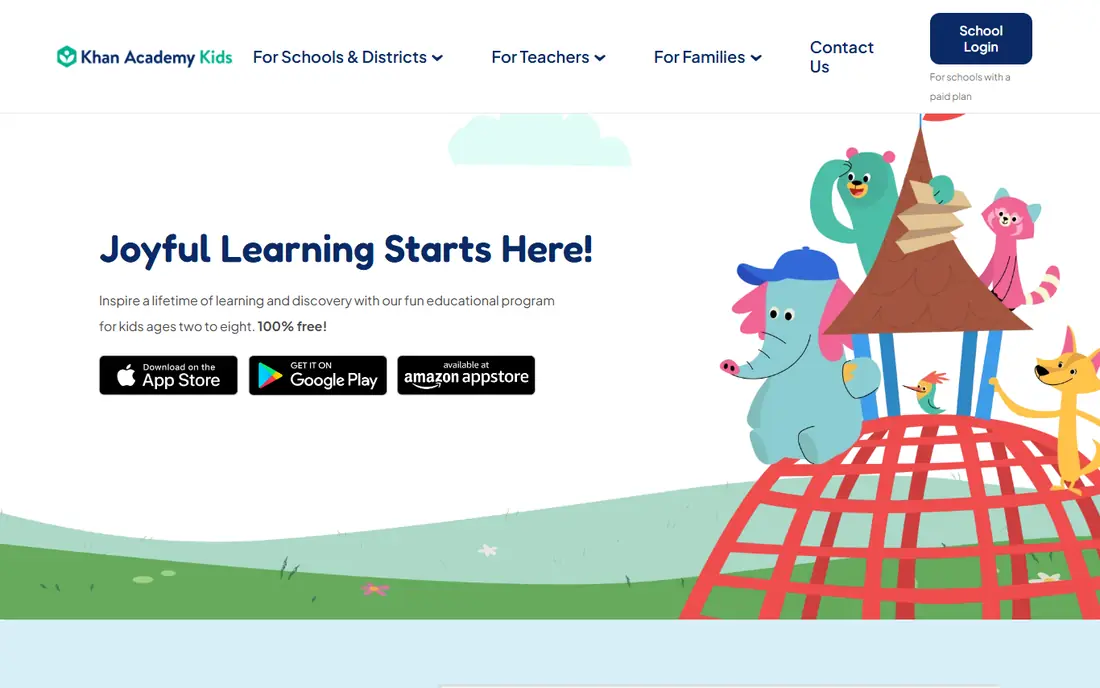
Khan Academy Kids is the strongest free starting point here. It offers thousands of activities, books, and games for children ages 2 to 8, covering early reading, math, logic, creativity, and social-emotional skills. The app is made by nonprofit Khan Academy, and its free model means no ads, no subscriptions, and no in-app purchases pushing children toward paid content.
Parents get progress views and can set up profiles for more than one child. The main limit is age range: older elementary children will outgrow it and need apps such as Prodigy or SplashLearn. For preschool and kindergarten families, start here before paying for anything else.
- Completely free with no ads or subscriptions
- Covers reading, math, logic, and social-emotional learning
- Ages 2 to 8
- Content ends around early elementary level
- Some features need an internet connection
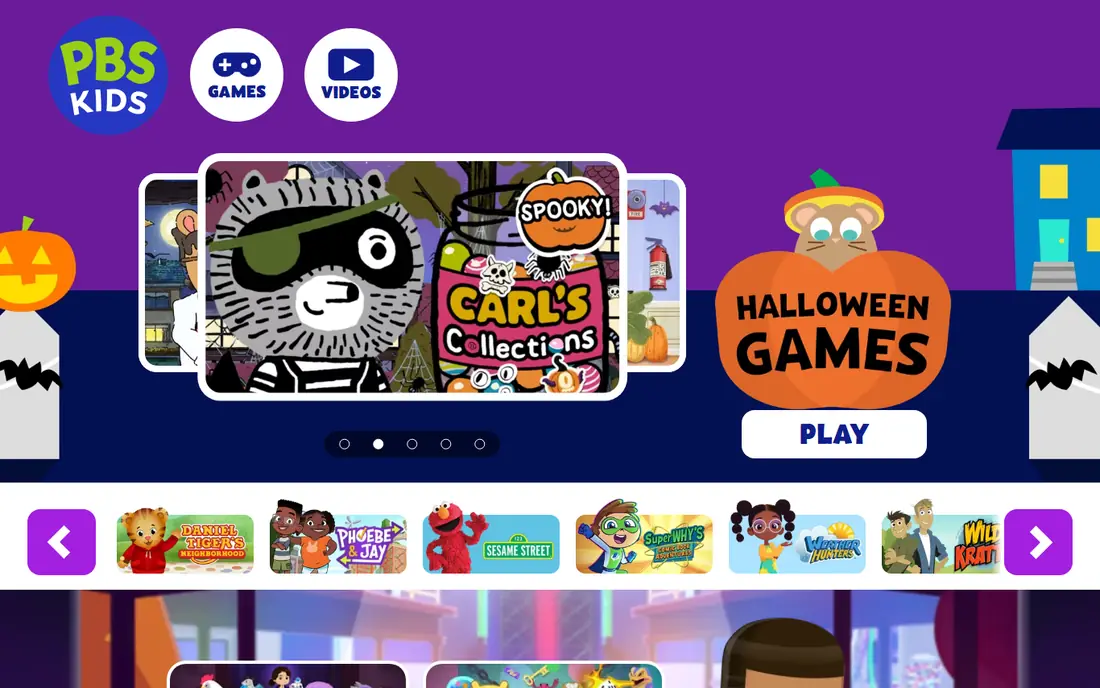
PBS Kids Games collects free games featuring characters children already know from PBS shows, covering reading, math, science, and social skills. The familiar faces help younger children settle in quickly, and the range means a child can switch from a counting game to a science game without leaving the app.
The trade-off is structure. PBS Kids Games is a library of games rather than a step-by-step curriculum, so progress is looser than in Khan Academy Kids or ABCmouse. It works best as a free supplement: let children explore games they enjoy, and use a curriculum app for steady skill progression.
- Fully free games
- Familiar PBS characters
- Covers many subjects and ages 2 to 8
- Games vary in learning depth
- Less structured progression than a curriculum app
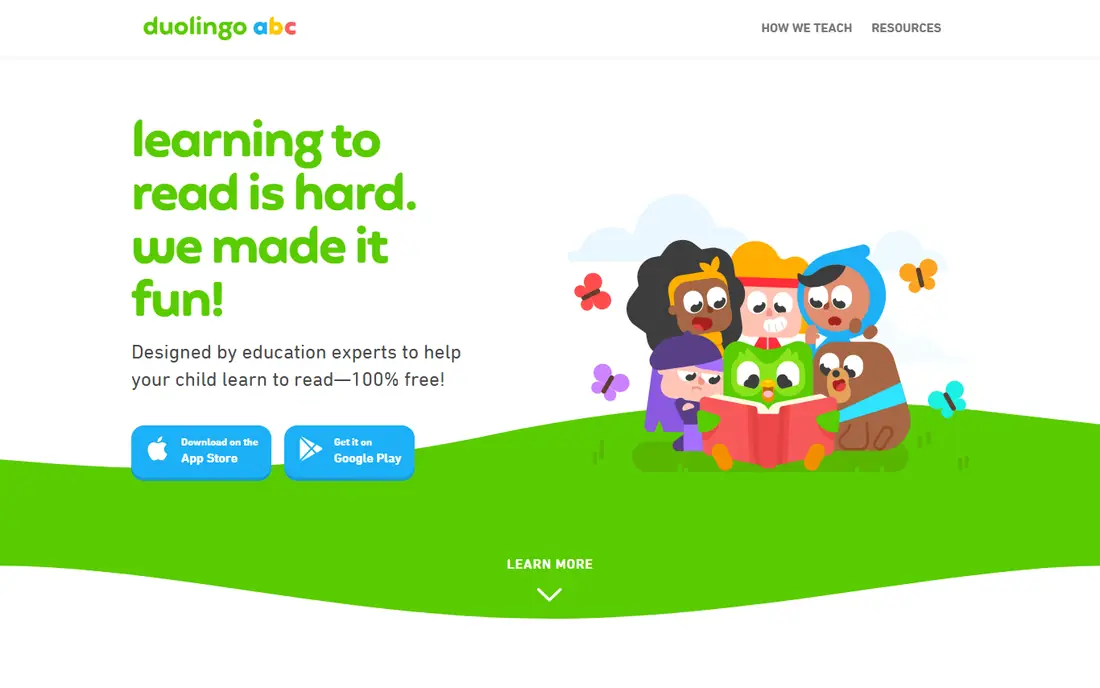
Duolingo ABC teaches early reading through short lessons on letter sounds, phonics, sight words, and simple stories. Sessions are brief and game-like, which suits young children with short attention spans. The app is free, with no subscription needed for its core reading content.
Its focus is also its limit: Duolingo ABC does not cover math, science, or broader school subjects. Use it as a reading companion alongside Khan Academy Kids or PBS Kids Games, especially for children in preschool through first grade who are learning letter sounds and early words.
- Completely free
- Focused phonics and early reading lessons
- Short, playful sessions for ages 3 to 7
- Reading only, with no math or science
- Aimed at younger children
ABCmouse offers one of the largest early learning libraries here, with a guided learning path that moves children through reading, math, science, social studies, and art. Activities include games, books, songs, puzzles, and art projects, and the path structure helps parents see steady progress.
Full access is subscription-based, with a free trial offered on the vendor site, so check trial length, price after trial, and how to cancel before starting. ABCmouse suits families who want maximum variety and a guided path and are willing to pay for it. Families who want a free option should start with Khan Academy Kids first.
- Very large library of activities for ages 2 to 8
- Step-by-step learning path
- Covers reading, math, science, and art
- Full access needs a paid subscription
- Trial terms need careful reading before signing up
Starfall has taught early reading for many years, and its calm, simple design still suits young learners. It focuses on phonics, letter sounds, and early reading, with songs, stories, and interactive activities that move at a gentle pace. Teachers have used it in classrooms for early literacy, which shows in its straightforward structure.
Core content is free, while a membership adds more activities and content, with details on the vendor site. Starfall is the pick for parents who want a focused reading tool without loud game mechanics. Children who want fast, reward-heavy games may prefer ABCya or Prodigy, though those suit older children better.
- Strong phonics and early reading content
- Simple, calm design
- Free core content on web and app
- Full membership adds more content behind a paywall
- Design is plainer than game-heavy rivals
ABCya organizes hundreds of educational games by grade level, from pre-kindergarten through fifth grade, covering math, reading, language arts, and strategy games. That grade structure helps parents and teachers pick games that match what a child is learning at school, rather than guessing at age labels.
Many games are free to play on the web, while a premium subscription removes ads and adds more content. Check the ad experience on your child's device before use, since free web games can show ads that paid plans remove. ABCya suits elementary children who enjoy short games tied to school topics.
- Games organized by grade from pre-K to grade 5
- Covers math, reading, and strategy
- Free games on web
- Free version includes ads on some platforms
- Premium removes ads and adds features
Prodigy turns math practice into a role-playing game where children answer math questions to progress, battle, and earn rewards. The math adapts to each child's level and aligns with school curricula, which is why many teachers use it in class. Children who resist worksheets often practice longer in Prodigy because the game gives practice a purpose.
Core math play is free, while a membership adds extra game features, rewards, and parent tools, with details on the vendor site. Parents should know what membership prompts children see in the game and decide whether to enable them. Prodigy suits elementary children who need math motivation, and it works best when an adult checks progress and keeps game time balanced.
- Engaging game world for math practice
- Adapts to skill level
- Used in many schools
- Extra game features and rewards sit behind a paid membership
- In-game prompts need adult awareness
SplashLearn offers adaptive math and English language arts practice for children ages 3 to 10, with games and activities that adjust to each child's level. Parents and teachers get dashboards showing progress by skill, which helps spot where a child needs more practice. The range from preschool to upper elementary makes it useful for longer than early-only apps.
A free tier covers some content, while full access is subscription-based, with details on the vendor site. SplashLearn suits families who want structured math and reading practice with clear progress reports. Check exactly what the free tier includes for your child's grade before relying on it as a fully free solution.
- Covers math and reading for ages 3 to 10
- Adaptive practice
- Parent and teacher dashboards
- Full content needs a paid plan for many families
- Free tier limits vary by subject and grade
How we picked these
We compared official app pages and app store listings, and we kept only apps that exist and work in October 2026 and offer real free content for children. We favored a mix of fully free apps and freemium apps with usable free tiers, and we covered early reading, math, and general early learning across ages 2 to 10. Where free tier details varied, we said so plainly rather than calling a paid app fully free.
Safety and privacy notes for parents
Check the age rating, privacy policy, and data practices before installing any kids app. Look for whether the app shows ads, offers in-app purchases, collects voice or location data, or lets children chat with others. For younger children, turn off in-app purchases, keep sessions short, and sit nearby when possible, especially in apps with game rewards or membership prompts.
Free tiers vary, honestly, and they change. A free tier that covers one grade or subject today may narrow tomorrow, and a trial that looks free may convert to a paid plan if you do not cancel. Read the trial terms, set a reminder before any trial ends, and review subscriptions monthly. The safest free starting points here are Khan Academy Kids, PBS Kids Games, and Duolingo ABC, since their core content does not need payment.
Choosing by age
Ages 2 to 5 do best with Khan Academy Kids, PBS Kids Games, Duolingo ABC, and Starfall, which focus on early sounds, letters, numbers, and gentle play. Ages 5 to 8 can add ABCmouse and ABCya for broader games and school topics. Ages 6 to 10 suit Prodigy and SplashLearn for math and reading practice tied to school work. Match the app to your child's current skills, not just the age label, and let them try two apps before settling on one.
Frequently asked questions
What are the best free learning apps for kids?
Khan Academy Kids, PBS Kids Games, and Duolingo ABC are the strongest fully free picks, since core content needs no subscription. Starfall, ABCya, Prodigy, and SplashLearn also offer free tiers, though full content often needs payment.
What are the best kids learning apps for ages 5 and under?
Khan Academy Kids, PBS Kids Games, and Duolingo ABC suit ages 2 to 7, with gentle activities for letters, numbers, and early reading. Starfall is another calm option for early phonics.
What are the best educational apps for kindergarten?
Khan Academy Kids and ABCmouse cover a broad kindergarten curriculum, while Duolingo ABC and Starfall focus on early reading. PBS Kids Games adds free games across subjects for variety.
Are free kids apps safe?
Many are, but safety depends on ads, purchases, data collection, and chat features, so check each app's privacy policy and age rating. Turn off in-app purchases, review what data an app collects, and supervise younger children during use.
Is ABCmouse free?
ABCmouse offers a free trial, but full access needs a paid subscription, with terms on the vendor site. Families who want a fully free alternative should try Khan Academy Kids first.
What is the best learning app for kids for math?
Prodigy suits gamified math practice for elementary children, while SplashLearn covers math and reading with adaptive practice and parent dashboards. Khan Academy Kids covers early math for younger children at no cost.
Sources
See where you really rank - block by block
ProMapRanker scans Google Maps across a grid of your service area. Simple monthly plans from $19, white-label on every plan.
Start freeKeep reading
 zeffy payment processor stripe alternatives
Zeffy and Stripe Alternatives for Nonprofits in 2026
Explore zeffy payment processor stripe alternatives for nonprofits. We compare 8 fundraising platforms on fees, donor tools, and nonprofit focus. Check fees.
Read → workday alternatives
Workday Alternatives in 2026
Workday alternatives compared: we review 8 HR and payroll platforms that replace Workday, with pricing, strengths and honest limits for each team size.
Read → what's the best weather app
What's the Best Weather App in 2026
Wondering what's the best weather app? We compare 10 free and paid apps for forecasts, radar, alerts, and Colorado mountain weather for everyday and storm use.
Read →