 ProMapRanker
Best ITSM Software Comparison Guide in 2026

Key takeaways
- ServiceNow leads for large enterprises that need deep ITIL workflows, automation, and integration across departments.
- Jira Service Management is the best pick for teams already using Atlassian tools, with a free tier for up to three agents.
- Freshservice offers the fastest mid-market deployment at a published price, starting at $19 per agent per month.
- ManageEngine ServiceDesk Plus suits budget-conscious teams, including on-premises deployments, from $10 per technician per month.
- AI features now appear in every major ITSM tool, but check whether AI triage, summarization, and virtual agents sit on your tier.
Quick comparison
| Pick | Great for | Pricing starts at | Free tier | |
|---|---|---|---|---|
 ServiceNow | Large enterprise ITSM | See website | No | Visit |
 Jira Service Management | Atlassian and DevOps teams | Free | Yes | Visit |
 Freshservice | Fast mid-market deployment | $19 per agent per month | Free trial | Visit |
 BMC Helix | Enterprise automation and AI | See website | No | Visit |
 ManageEngine ServiceDesk Plus | Budget and on-premises teams | $10 per technician per month | Free trial | Visit |
 SysAid | Small teams with AI agents | See website | Free trial | Visit |
 SolarWinds Service Desk | ITSM with asset context | $39 per technician per month | Free trial | Visit |
 HaloITSM | MSPs and multi-team service | See website | Free trial | Visit |
The best ITSM software
IT service management software handles incidents, service requests, problems, changes, and assets in an organized, ITIL-aligned way. We compared official feature pages, pricing pages, and public reviews for tools that cover those workflows in October 2026, with attention to AI features, deployment options, and total cost.
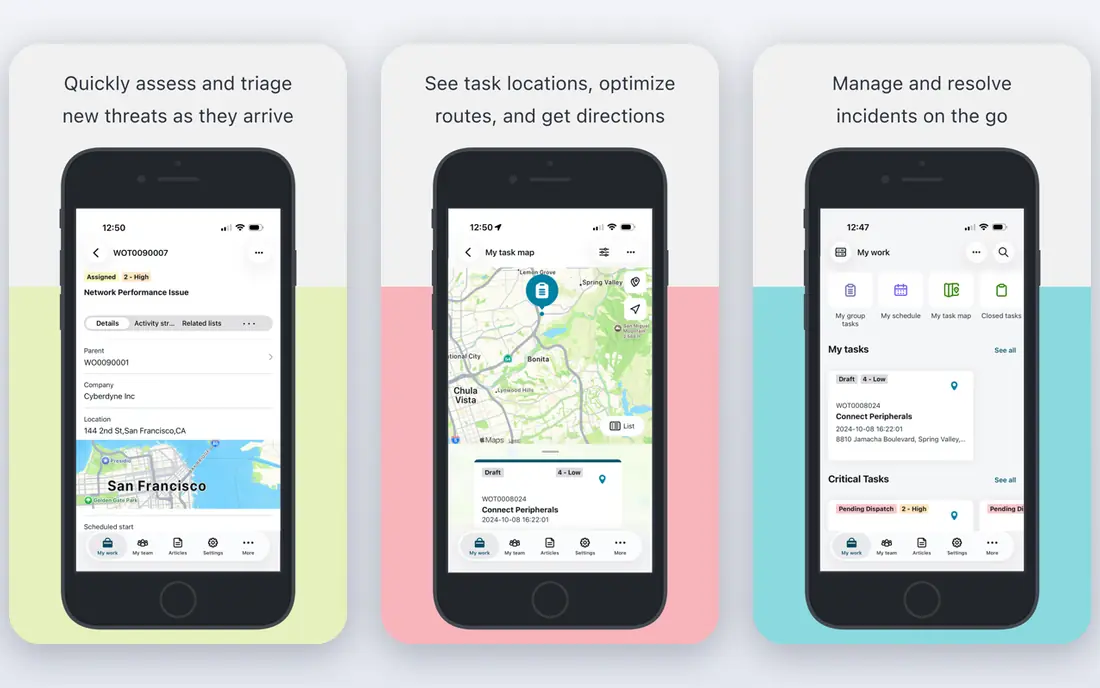
ServiceNow is the benchmark for enterprise ITSM, and its breadth explains why. Incidents, problems, changes, service requests, assets, and knowledge all run on one platform, with workflows that can span IT, HR, customer service, and facilities. For a large organization, that shared platform replaces many point tools at once. AI is now central to the product. Now Assist adds generative AI summaries, suggested resolutions, and agent assistance across tickets, while newer AI agent features aim to handle routine requests end to end. Those tools help most at enterprise scale, where ticket volume makes manual triage expensive. The cost is the barrier. Pricing is quote-only and sits at the enterprise end of the market, and implementation is a project that needs experienced consultants. Smaller teams will find ServiceNow heavy and expensive. For a large, regulated, or multi-department organization, it remains the leading ITSM platform.
- Deepest ITIL workflow and automation coverage
- Broad enterprise integrations
- Now Assist AI across workflows
- Quote-only pricing
- Implementation needs specialist skills and significant time
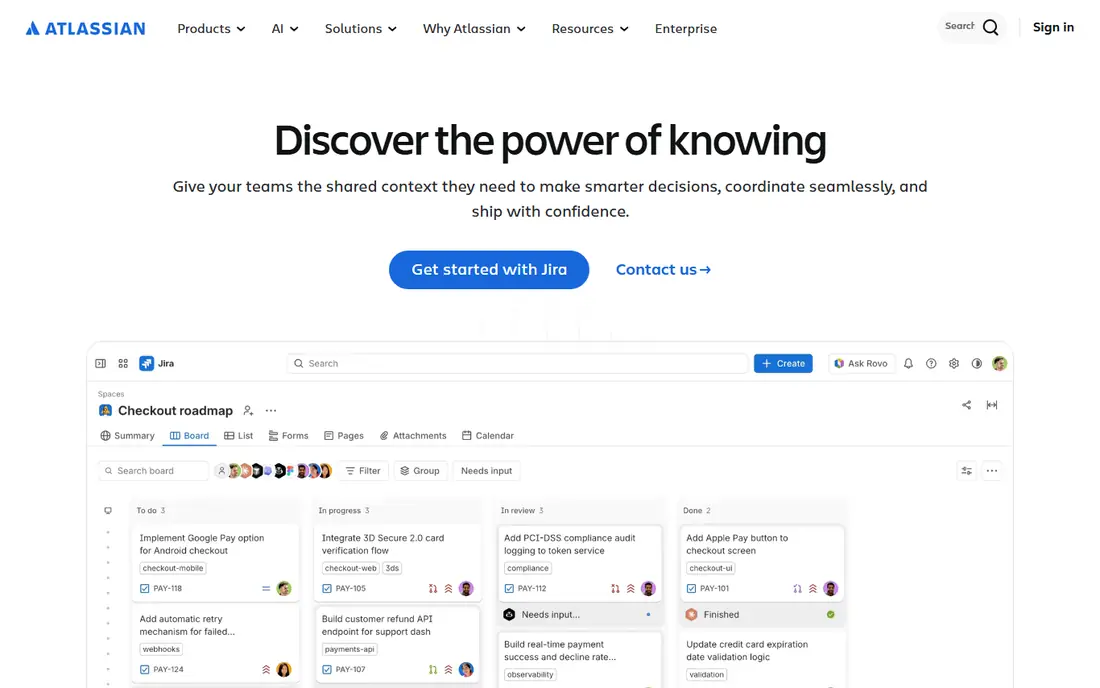
Jira Service Management is the natural ITSM pick for teams already living in Atlassian tools. Service requests, incidents, problems, and changes sit alongside Jira Software projects, so developers and support agents share one system, with Confluence knowledge articles close at hand. That connection is a real daily advantage for software-led organizations. Pricing is transparent. A free tier covers up to three agents, with paid plans starting around $20 per agent per month and rising for Premium and Enterprise features. Atlassian Intelligence adds AI triage, summarization, and virtual agent features, with depth varying by tier. Jira is less of a pure enterprise ITSM suite than ServiceNow or BMC Helix, and some advanced controls require higher tiers. For a DevOps, software, or Atlassian-native team that wants ITSM without an enterprise project, Jira Service Management is the best fit here.
- Free for up to three agents
- Native Jira and Confluence connection
- Strong DevOps and developer workflows
- Per-agent pricing climbs on higher tiers
- Some enterprise ITSM depth requires Premium or Enterprise plans
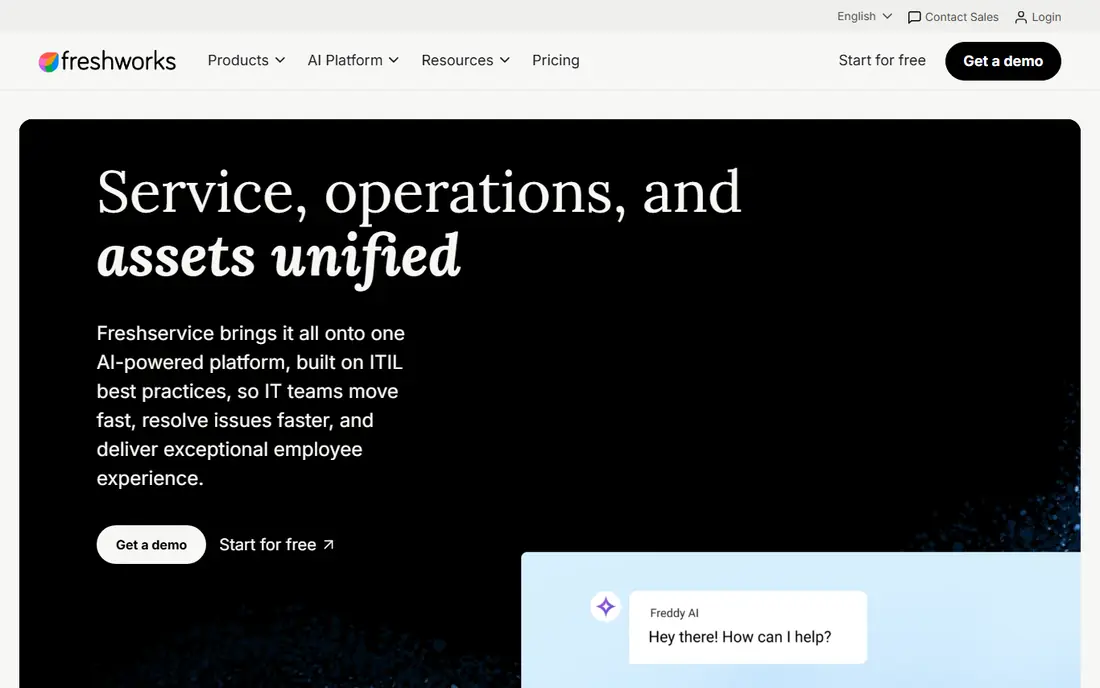
Freshservice, from Freshworks, is built for speed. A mid-sized team can set up incidents, service catalogs, approvals, and asset tracking in days rather than months, with a clean interface that needs little training. Published pricing starts at $19 per agent per month billed annually, which makes budgeting straightforward. Freddy AI adds auto-triage, suggested solutions, and incident summaries, helping agents resolve tickets faster without a large AI project. Asset management, change management, and a service catalog cover the core ITIL processes most mid-market teams actually use. Freshservice will not match ServiceNow for complex enterprise workflows, multi-entity governance, or deep customization. For a growing team that needs solid ITSM quickly, at a known price, Freshservice is our mid-market pick.
- Fast setup with published pricing
- Freddy AI for triage and summaries
- Asset management included
- Enterprise workflow depth is thinner than ServiceNow
- AI features vary by tier
BMC Helix ITSM is a long-standing enterprise platform, rebuilt for cloud and AI-led operations. It covers incident, problem, change, release, asset, and service request management, with AIOps features that aim to predict incidents, cluster related alerts, and automate routine resolutions before users notice a problem. Automation depth is the selling point. Helix can correlate events across infrastructure and applications, suggest root causes, and trigger remediation workflows, which suits large IT estates with complex dependencies. Multi-cloud deployment and strong compliance options add to the enterprise case. Pricing is quote-only, and Helix needs skilled implementation and ongoing tuning to deliver its AI value. Smaller teams will find it too heavy. For a large enterprise that wants ServiceNow-level depth with a strong automation and AIOps focus, BMC Helix is a top alternative.
- Strong enterprise ITSM with AIOps
- Cognitive automation and predictive features
- Multi-cloud support
- Quote-only pricing
- Implementation and tuning take enterprise effort
ManageEngine ServiceDesk Plus is the budget-conscious ITSM choice that still covers ITIL properly. Incident, problem, change, service catalog, asset, and knowledge management all sit in one product, with both cloud and on-premises deployment for teams with hosting rules. Cloud pricing starts at $10 per technician per month in published materials, with a free tier for up to five technicians on some editions. That combination of low price and on-premises choice is rare in this list. Teams that cannot use cloud-only tools, or that want to keep data in their own data center, can run ServiceDesk Plus without giving up core ITSM processes. Integration with other ManageEngine tools adds asset and endpoint context. The interface is more functional than modern, and AI features, including Zia agents on cloud editions, are still maturing compared with ServiceNow or Freshservice. If budget and deployment flexibility matter most, ServiceDesk Plus is a strong, proven pick.
- Low entry price
- Cloud and on-premises options
- Solid ITIL processes including incident, problem, and change
- Interface feels dated next to newer tools
- AI features are newer and tier-dependent
SysAid positions itself around autonomous IT, with more than 100 prebuilt AI agents for tasks like password resets, ticket routing, and asset updates. For a small IT team, those agents can absorb routine work that would otherwise fill the day, leaving agents free for complex incidents. The core product covers incidents, service requests, problems, changes, and assets, with discovery and remote control to help technicians act on tickets. Cloud and on-premises options suit teams with hosting preferences, and setup is faster than an enterprise suite. Pricing is quote-based, which makes comparison harder, and SysAid lacks the enterprise workflow depth of ServiceNow or BMC Helix. For a small team that wants AI help without a large platform project, SysAid is a distinctive and practical option.
- Prebuilt AI agents for common IT tasks
- Service desk and asset data together
- Fast setup for small teams
- Pricing is quote-based
- Enterprise depth is thinner than ServiceNow or BMC Helix
SolarWinds Service Desk links service work to asset records, so an incident ticket shows the device, software, and warranty behind the problem. That context helps technicians diagnose faster and keeps asset data current through service activity, rather than as a separate register that goes stale. Pricing starts at $39 per technician per month, with higher tiers adding automation, AI features, and deeper asset management. A 30-day trial lets a team test the portal, catalog, and reporting before committing. For teams already using SolarWinds monitoring, the shared ecosystem is a plus. SolarWinds is an ITSM-led product for mid-market teams, not a full enterprise suite. Complex multi-entity workflows and deep customization are thinner here than at ServiceNow or BMC Helix. If service delivery with asset context is the priority, it is a solid pick.
- Incident and asset data linked
- Published per-technician pricing
- Employee service portal
- AI and automation depth varies by tier
- Enterprise ITSM breadth is narrower than ServiceNow
HaloITSM is built for managed service providers and internal teams that serve several clients or business units from one platform. Multi-tenancy lets each client or team keep separate data, branding, and workflows, while agents work from a single console. That structure is hard to replicate in a single-tenant ITSM tool. ITIL coverage includes incidents, problems, changes, service requests, assets, and knowledge, with configuration options that suit both MSPs and enterprise service teams. Pricing starts around £30 per agent per month in published materials, with volume discounts for MSPs, though final pricing is quote-based. HaloITSM has a smaller community and marketplace than ServiceNow or Jira, so integrations may need more manual work. For an MSP or a multi-team service organization, its multi-tenancy and flexibility make it the best specialist pick here.
- Multi-tenancy for MSPs and multi-team use
- Strong ITIL coverage
- Flexible configuration
- Pricing is quote-based and varies by currency
- Smaller community than ServiceNow or Jira
How we picked these
We compared official feature pages, pricing pages, and public reviews for ITSM platforms that cover incident, problem, change, and service request management in October 2026. We did not claim hands-on testing. Instead, we checked ITIL coverage, AI features, deployment options, pricing transparency, and suitability for small, mid-market, enterprise, and MSP teams. Where pricing was quote-only, we wrote See website rather than repeating a third-party estimate as fact.
Comparing ITSM tools on total cost and fit
Count agents, not just users
Most ITSM tools price per agent or per technician, not per end user, so count the staff who will work tickets, not everyone who submits them. A tool that looks expensive per agent can be cheap per employee served, and a free tier for three agents is generous for a tiny team and irrelevant for a team of fifty.
Test ITIL processes, not just tickets
Run a real incident, a change request, and a service catalog order through any trial. Check approvals, SLAs, knowledge suggestions, and asset links, since those processes separate true ITSM tools from simple help desks. A tool that handles tickets well but fumbles changes will create manual work later.
Check AI tier by tier
AI triage, summarization, and virtual agents are now common, but they often sit on higher tiers or require add-ons. Confirm which AI features your plan includes, what data they use, and whether they work in your language and time zone. A demo of AI on an enterprise tier does not guarantee the same features on the entry plan.
Frequently asked questions
What is the best ITSM software?
ServiceNow leads for large enterprises, Jira Service Management leads for Atlassian and DevOps teams, and Freshservice leads for fast mid-market deployment. The best ITSM software depends on team size, existing tools, and whether you need enterprise depth or speed. Compare total agent cost and ITIL coverage, not just headline features.
What is the best service management software for small teams?
Freshservice and ManageEngine ServiceDesk Plus suit small teams, with published low entry prices and fast setup. Jira Service Management free tier covers up to three agents. SysAid also suits small teams that want AI agents for routine tasks. Start with agent count and trial the full ticket workflow.
What is the best ITIL software for enterprises?
ServiceNow and BMC Helix lead for enterprises, with deep ITIL workflows, automation, and compliance features. Both are quote-only and need specialist implementation. HaloITSM suits MSPs and multi-team service, while Jira Service Management Premium and Enterprise add ITIL depth for Atlassian shops.
How much does ITSM software cost?
Entry prices range from free for up to three Jira agents, through $10 per technician per month at ManageEngine and $19 per agent per month at Freshservice, to $39 per technician per month at SolarWinds and quote-only enterprise pricing at ServiceNow, BMC Helix, SysAid, and HaloITSM. Agent count and tier drive the total.
Is Jira Service Management a good ITSM tool?
Yes, especially for teams already using Jira Software and Confluence. It covers incidents, problems, changes, and service requests, with AI features on higher tiers and a free tier for small teams. It is less deep than ServiceNow for complex enterprise workflows, but it is a strong, well-priced ITSM choice for most software-led teams.
Do ITSM tools include asset management?
Many do, including Freshservice, ServiceNow, BMC Helix, SysAid, and SolarWinds, though depth varies. Some bundle assets, others price asset units separately. Check whether asset discovery, license tracking, and ticket-to-asset links sit on your tier, since those features change the total price and the daily value.
Sources
See where you really rank - block by block
ProMapRanker scans Google Maps across a grid of your service area. Simple monthly plans from $19, white-label on every plan.
Start freeKeep reading
 zeffy payment processor stripe alternatives
Zeffy and Stripe Alternatives for Nonprofits in 2026
Explore zeffy payment processor stripe alternatives for nonprofits. We compare 8 fundraising platforms on fees, donor tools, and nonprofit focus. Check fees.
Read → workday alternatives
Workday Alternatives in 2026
Workday alternatives compared: we review 8 HR and payroll platforms that replace Workday, with pricing, strengths and honest limits for each team size.
Read → what's the best weather app
What's the Best Weather App in 2026
Wondering what's the best weather app? We compare 10 free and paid apps for forecasts, radar, alerts, and Colorado mountain weather for everyday and storm use.
Read →