 ProMapRanker
Best HCM Software in 2026


Enterprise HR and finance together · Pricing starts at: See website
Key takeaways
- Workday, Oracle and SAP SuccessFactors remain the enterprise defaults, but they need a longer implementation and a quote-based budget.
- Rippling and BambooHR are the easiest mid-market starting points, with published entry pricing and faster setup for smaller teams.
- ADP Workforce Now and Paylocity suit mid-market companies that put payroll accuracy and compliance first.
- UKG Pro and Dayforce are strong for large hourly and shift-based workforces where scheduling and time data drive payroll.
- HiBob fits fast-growing, people-focused companies that want strong engagement and analytics without a full enterprise suite.
Quick comparison
| Pick | Great for | Pricing starts at | Free tier | |
|---|---|---|---|---|
| Workday HCM | Enterprise HR and finance together | See website | No | Visit |
 Oracle Fusion Cloud HCM | Global Oracle enterprises | See website | No | Visit |
 SAP SuccessFactors | Global SAP enterprises | See website | No | Visit |
 ADP Workforce Now | Mid-market payroll and compliance | See website | No | Visit |
 Paylocity | Mid-market HCM with engagement | See website | No | Visit |
 UKG Pro | Large hourly workforces | See website | No | Visit |
 Dayforce | Continuous payroll and time | See website | No | Visit |
 Rippling | HR, payroll and IT in one place | $40 per month plus $8 per employee | Free trial | Visit |
 BambooHR | Simple HR for small and mid-size teams | $10 per employee per month | Free trial | Visit |
The best HCM software
Human capital management software covers core HR, payroll, time, talent and benefits, and the right choice depends heavily on headcount and complexity. We compared official product and pricing pages and current October 2026 summaries, and we grouped the platforms by company size and workforce type. Enterprise buyers should expect a sales-led process, while smaller teams can often start with a trial.
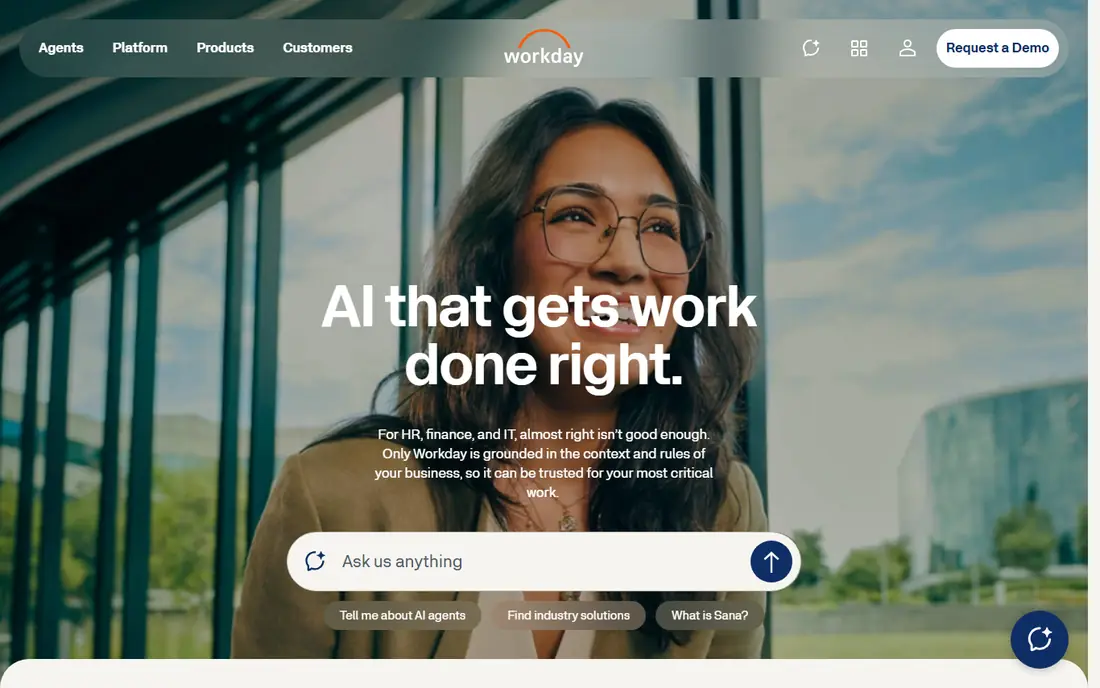
Workday HCM is the default shortlist pick for large companies that want HR and finance on one governed platform. Core HR, payroll partners, talent, time and reporting share the same data model, which reduces reconciliation work and makes workforce reporting more reliable. Its skills and analytics tools also help large employers plan hiring and internal moves with real data.
The cost is not just the subscription. Implementation takes time, internal ownership matters, and smaller companies will find it more platform than they need. If you run a global enterprise with complex reporting and finance integration needs, Workday is worth the effort. If you have under 500 staff, a mid-market tool will usually deliver faster value.
- Single system for HR and finance
- Strong global compliance and reporting
- Mature talent and skills tools
- Quote-based pricing
- Long implementation for large companies
- Needs dedicated internal owners to get full value
Oracle Fusion Cloud HCM fits global enterprises already running Oracle ERP or finance systems. Core HR, talent, workforce management and payroll connect to the wider Oracle suite, which helps when finance, procurement and HR must share consistent data. Global payroll and localization coverage are strong, which matters for companies with staff in many countries.
Outside the Oracle stack, the case weakens. Configuration is complex, consultants are often needed, and a company with no Oracle footprint may get similar HR depth with less effort elsewhere. Shortlist Oracle first if your finance system is Oracle, and test payroll and reporting for your largest countries during the evaluation.
- Deep Oracle ERP and finance integration
- Broad global payroll options
- Complete suite from core HR to talent
- Quote-based pricing
- Complex configuration
- Best value inside the Oracle stack
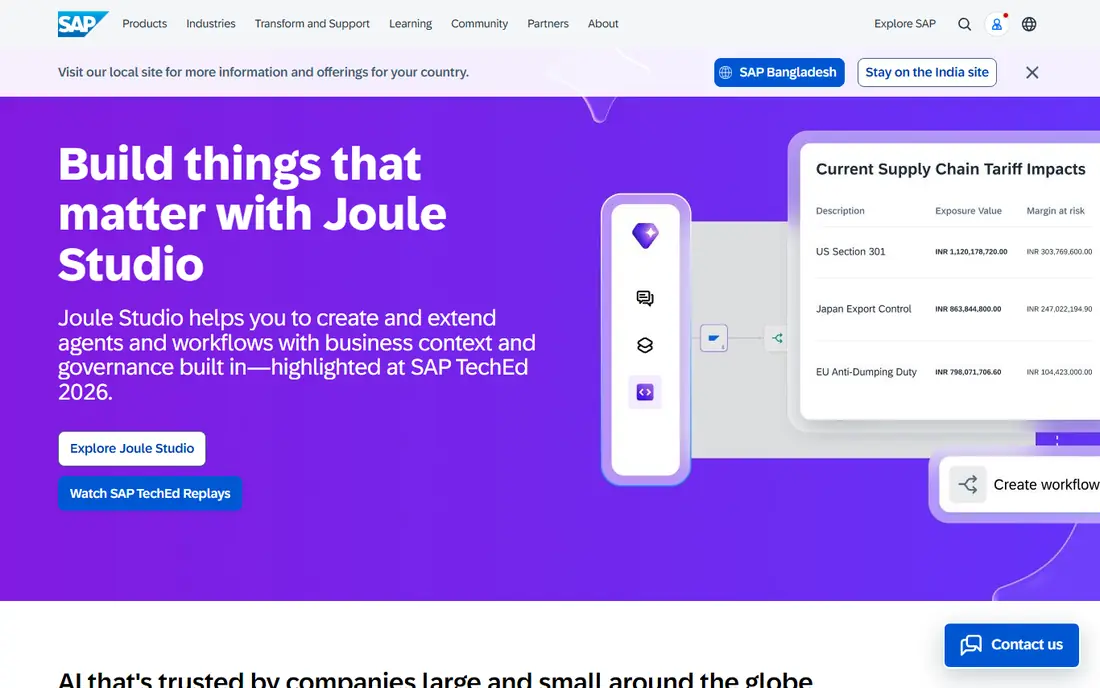
SAP SuccessFactors suits large SAP enterprises that need a complete, modular HR suite across many countries. Core HR, recruiting, learning, performance and compensation can be adopted in stages, and SAP integration keeps HR data close to finance and operations. For a company already standardized on SAP, that fit is a strong reason to shortlist it.
Modularity is also a buying risk. You need to be clear which modules you are buying, what payroll approach you will use, and how long rollout will take in each region. Get a phased plan and a total cost estimate, including implementation, before you compare SuccessFactors with Workday or Oracle on price alone.
- Modular global HR suite
- Strong localization and compliance
- Deep SAP ERP integration
- Quote-based pricing
- Long implementation
- Module choices can confuse buyers
ADP Workforce Now is a safe mid-market pick when payroll accuracy and tax compliance are the top concern. ADP has decades of payroll experience, strong US tax handling, and a marketplace of integrations for time, benefits and talent tools. For a growing US company that cannot afford payroll errors, that reliability often matters more than a modern interface.
The trade-off is polish and transparency. Pricing is usually quote based, and some HR workflows feel less modern than rivals such as Rippling or BambooHR. If your team values payroll certainty above all else, ADP earns its place. If you want a fast, self-serve setup, test a mid-market rival first.
- Deep US payroll and tax compliance
- Large partner marketplace
- Scales from mid-market toward enterprise
- Pricing is quote based for most buyers
- Interface feels dated in places
- HR features can feel thinner than payroll depth
Paylocity fits mid-market companies that want payroll depth plus a modern employee experience. Core HR, payroll, time and labor management sit alongside talent tools, communication features and analytics, so managers can see labor cost, engagement and retention signals in one place. That blend suits companies moving beyond a payroll-only tool but not ready for an enterprise suite.
Global complexity is the limit. Paylocity is strongest for US-focused mid-market employers, and companies with large multi-country payroll needs should test that coverage carefully. Ask for a clear quote, a module list and references from companies at your headcount before you commit.
- Modern interface for mid-market teams
- Payroll plus time, talent and engagement tools
- Strong analytics and reporting
- Pricing is quote based
- Enterprise global depth is thinner than Workday or SAP
- Implementation effort varies by module
UKG Pro, formerly Ultimate Software, is a strong pick for large organizations with hourly, shift-based or frontline workforces. Scheduling, time, attendance and labor forecasting connect to core HR and payroll, which helps managers control labor cost and stay compliant with complex shift rules. That workforce management depth is the main reason to choose UKG over a simpler HR tool.
Smaller or office-only teams may not need that depth, and setup can be complex at enterprise scale. If your pain is scheduling, overtime and labor cost for hourly staff, UKG Pro deserves a trial with your real shift patterns. If your workforce is mainly salaried, a mid-market HCM tool may be simpler and cheaper.
- Strong workforce management and scheduling
- Good fit for hourly and shift-based teams
- Broad HCM and payroll coverage
- Quote-based pricing
- Complex setup for large employers
- Smaller teams may find it heavier than needed
Dayforce, from Ceridian, stands out for continuous payroll: time, pay and compliance data are calculated in one system as work happens, rather than reconciled at the end of a pay period. That single-database design helps shift-based employers catch errors early and gives staff clearer pay visibility. It also includes wallet-style pay access features in some plans, which some employers use as a retention benefit.
Implementation is the catch. Moving HR, time and payroll onto one platform needs clean data and a phased rollout, and the project can run long for large employers. If payroll accuracy for hourly staff is your main pain, Dayforce is a strong candidate. Budget for implementation time, not just the subscription.
- Continuous payroll calculation
- Single database for HR, time and payroll
- Strong compliance for shift-based employers
- Quote-based pricing
- Implementation can be long
- Needs careful data migration planning
Rippling is our pick for growing tech-forward companies that want HR, payroll and IT to move together. When a new hire joins, Rippling can trigger payroll setup, benefits enrollment, app access and device provisioning from the same employee record, and reverse those steps at exit. That automation saves real time for small HR and IT teams.
Module pricing is the watch point. The entry price covers a base, and payroll, benefits and global features add cost, so your total depends on the package you build. Use the trial to map your must-have modules, check payroll coverage for every country where you hire, and compare the full package price with BambooHR or Gusto before deciding.
- HR, payroll and IT automation in one system
- Published entry pricing
- Fast onboarding and offboarding workflows
- Costs rise as you add modules
- Global payroll coverage varies by country
- Some features need higher tiers
BambooHR is the best starting point for small and mid-size companies that want HR simplicity first. Core employee records, time off, onboarding, applicant tracking and reporting are easy to learn, and setup is faster than an enterprise suite. For a team moving off spreadsheets, that ease of use is the main benefit, and the published Core pricing makes budgeting straightforward.
Payroll is the limit to check. In many plans payroll is an add-on rather than the core product, and very large or global employers will outgrow BambooHR sooner than Workday or ADP. If you have under 500 staff and want clean core HR with optional payroll, BambooHR is a sensible, low-friction choice.
- Clean, easy interface
- Fast setup for core HR
- Applicant tracking and onboarding included in many plans
- Payroll is an add-on in many plans
- Less suited to very large or global enterprises
- Advanced analytics need higher tiers
How we picked these
We compared official product and pricing pages and current October 2026 summaries for HCM suites, and we kept only platforms that operate now and cover core HR plus payroll or talent in a meaningful way. We mixed enterprise suites with mid-market tools so buyers at different sizes can shortlist realistically. Where pricing is quote based, we wrote See website rather than repeating an estimate as a fact.
What to check before you buy
Start with headcount, countries and workforce type, since those three factors narrow the list fast. Then list your must-have modules: core HR, payroll, time, benefits, recruiting, learning and performance, and check whether each is native, an add-on or a partner product. Ask for implementation time, data migration help, payroll coverage by country and total cost for your exact module set.
Run a trial or guided demo with your real scenarios, such as hiring in two countries, approving time off, running a pay cycle and reporting headcount by department. Also check integrations with your finance system, time clocks and benefits providers, and ask how support works during payroll week. The cheapest subscription is poor value if payroll runs late.
Frequently asked questions
What is the best HCM software?
Workday HCM is the strongest enterprise choice, while Rippling and BambooHR lead for growing mid-market teams. ADP Workforce Now and Paylocity sit between those groups, with deeper payroll strength for mid-market US employers.
What are the best HCM platforms for global companies?
Workday, Oracle Fusion Cloud HCM and SAP SuccessFactors offer the broadest global payroll and localization coverage. Rippling also supports global hiring in many countries, but you should verify payroll coverage country by country before you rely on it.
What is the top 10 HCM software shortlist?
A practical top 10 shortlist includes Workday, Oracle, SAP SuccessFactors, ADP Workforce Now, Paylocity, UKG Pro, Dayforce, Rippling, BambooHR and HiBob. Narrow it by headcount, countries and whether hourly scheduling or finance integration matters most.
Is BambooHR or Rippling better for a small company?
BambooHR is simpler and faster for core HR, while Rippling is stronger when you also want IT automation and payroll in the same system. Choose BambooHR for HR simplicity, and Rippling when onboarding, app access and device setup are part of the same workflow.
How much does HCM software cost?
Entry pricing for mid-market tools can start around $10 per employee per month, plus a base fee in some cases, while enterprise suites are quote based. Always ask for the total price for your modules, headcount and countries, plus implementation cost.
Sources
See where you really rank - block by block
ProMapRanker scans Google Maps across a grid of your service area. Simple monthly plans from $19, white-label on every plan.
Start freeKeep reading
 steamunlocked alternatives
Best SteamUnlocked Alternatives in 2026
Looking for steamunlocked alternatives? These 8 legal game stores and subscriptions offer licensed PC games, sales, and cloud play without piracy risks.
Read → mangools alternatives
Best Mangools Alternatives in 2026
Looking for mangools alternatives? We compare 8 SEO tools for keyword research, rank tracking, and site audits, from Semrush and Ahrefs to Keysearch today.
Read → lemlist alternatives
Best Lemlist Alternatives in 2026
Looking for lemlist alternatives? We compare 9 cold email and outreach tools for 2026, covering pricing, deliverability, inboxes, and multichannel steps.
Read →