 ProMapRanker
Best Game Art Outsourcing Companies in 2026


Flexible 2D and 3D production · Pricing starts at: See website
Key takeaways
- The best game art outsourcing company depends on scale, since a large studio suits AAA pipelines and a mid-size studio suits a defined asset list.
- Ask for recent work in your exact style and engine, not a general showreel, before you sign a production deal.
- A studio that adapts to your pipeline, review rhythm, and file standards will save more time than a slightly cheaper studio that does not.
- Pricing is almost always by custom quote, so a clear asset list and revision policy matter more than any published rate.
Quick comparison
| Pick | Great for | Pricing starts at | Free tier | |
|---|---|---|---|---|
| Kevuru Games | Flexible 2D and 3D production | See website | No | Visit |
 Room 8 Studio | Large AAA art pipelines | See website | No | Visit |
 RocketBrush Studio | Long-term art production support | See website | No | Visit |
 Virtuos | Global co-development at scale | See website | No | Visit |
 Keywords Studios | Multi-service publisher projects | See website | No | Visit |
 Lakshya Digital | High-volume 3D production | See website | No | Visit |
 Pingle Studio | Live-service and co-development | See website | No | Visit |
 Lemon Sky Studios | Cinematic and narrative art | See website | No | Visit |
 Starloop Studios | Mid-size art and porting support | See website | No | Visit |
 Nuare Studio | Technical and real-time 3D art | See website | No | Visit |
The best game art outsourcing companies
Game art outsourcing works when the studio can match your style, hit your technical specs, and keep pace with your milestones. The studios below cover concept art, 2D and 3D production, animation, and visual effects, and we compared their official service pages, portfolios, client descriptions, and public reviews.
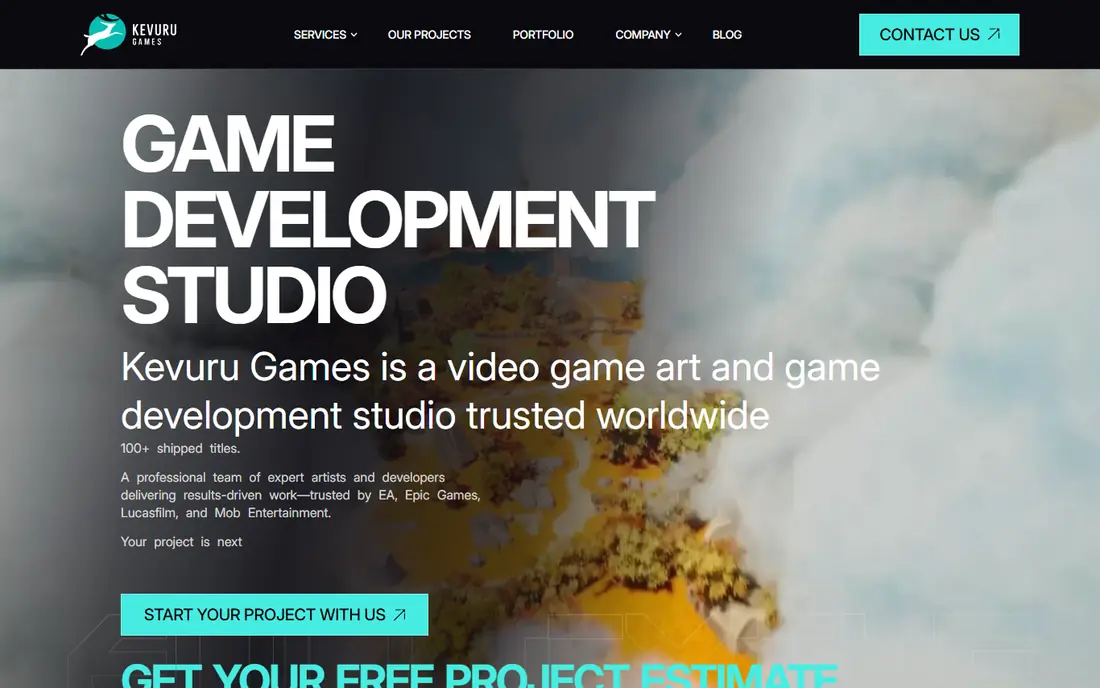
Kevuru Games is a practical first call for teams that need a wide range of art without managing several vendors. Its teams cover concept art, characters, environments, props, and animation, and its public material stresses fast onboarding and adaptation to a client pipeline. That flexibility helps indie and mid-size studios that have a clear asset list but not a full internal art team.
The honest limit is focus. A studio this broad will not be the single best choice for every narrow specialty, such as high-end cinematics or a very specific stylized look. Ask for work in your style, confirm who leads art direction on your project, and book early if your milestones are fixed.
- Broad 2D, 3D, and animation coverage
- Works across casual, mid-core, and realistic styles
- Also offers development support when a project needs it
- Large project demand means early scheduling matters
- Broad coverage can mean a less narrow specialty than a boutique studio
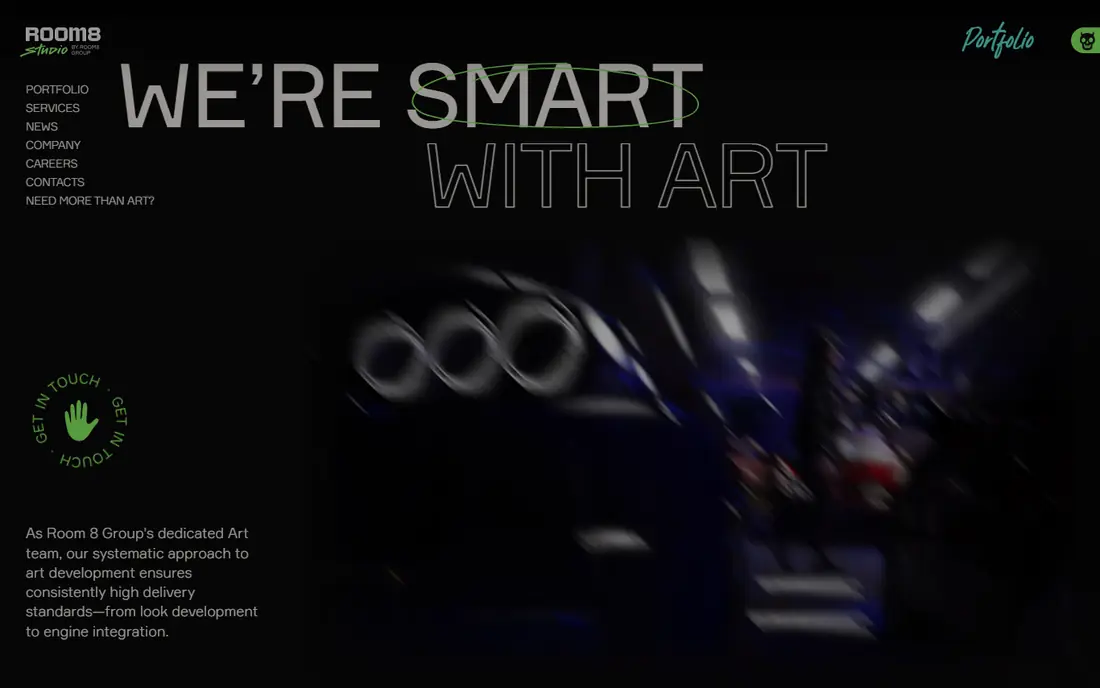
Room 8 Studio is built for productions where volume and visual fidelity both matter. Its service pages cover concept art, 2D and 3D art, animation, VFX, UI, and cinematics, and its work is often described in connection with AAA titles. For a team that needs a reliable pipeline across many asset types, that breadth at scale is the main reason to shortlist it.
The trade-off is fit for small teams. A large studio brings process, reviews, and management layers that can feel heavy for a short project with a handful of assets. Smaller studios should ask about minimum engagement size, and larger teams should ask how Room 8 staffs a project across disciplines.
- Large-scale production across art, animation, and VFX
- Strong fit for photorealistic and cinematic work
- Established pipeline for complex projects
- Scale and process suit larger budgets
- Small one-off asset jobs may not be the best use of the studio
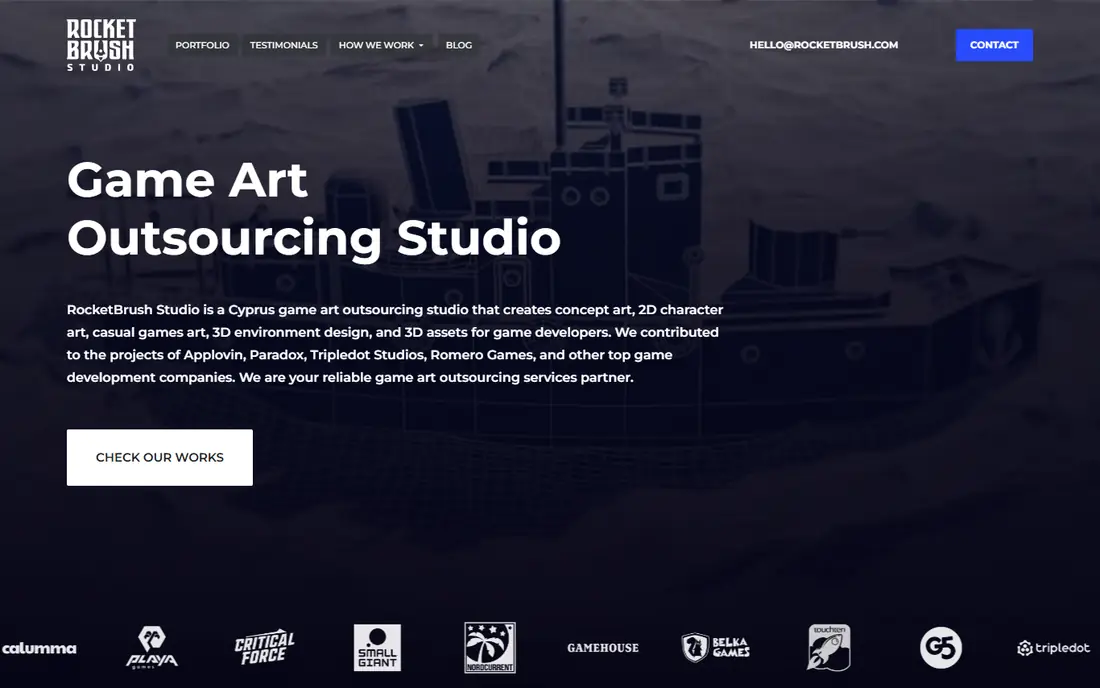
RocketBrush Studio presents itself as a long-term art partner rather than a one-off vendor, and its public comparisons stress close reviews and style adaptation. That matters for live games and multi-year projects, where the same studio must keep a style consistent across updates. Its coverage of concept art, 2D and 3D assets, animation, UI, and promotional art also helps teams that need marketing visuals alongside in-game art.
The limit is scope. RocketBrush is art-first, so teams that also need engineering or full co-development may need a second partner. For art-only production, though, its returning-client record and mid-size team size make it a balanced pick between boutique studios and giant vendors.
- Long-term production focus with returning clients
- Concept, 2D and 3D, animation, and UI coverage
- Clear strength in mobile and casual styles
- Less full-development coverage than Kevuru or Virtuos
- Style fit still needs a portfolio check
Virtuos is one of the largest names in game co-development, with studios across several regions and services that run from art production to full development support. For publishers and large studios, that network means a project can scale up artists, add engineering help, or shift work across time zones without changing vendors. Its Unreal Engine and Unity experience also helps teams working on multi-platform titles.
The drawback is access for smaller projects. A studio of this size is set up for substantial engagements, and a small indie team may find the process and minimum scope a poor match. Mid-size teams should be clear about budget and timeline in the first conversation, and ask which studio location would actually staff their work.
- Global studio network for very large productions
- Deep 3D art, animation, and engineering support
- Long AAA track record
- Enterprise scale and process may overwhelm small teams
- Pricing and staffing require early, detailed scoping
Keywords Studios is less a single art studio and more a network of studios under one group, which is useful when a publisher needs art plus testing, audio, or localization. Its art studios cover 2D and 3D production, concept work, and animation, and the group structure lets a client add services without finding new vendors. For franchise work with many moving parts, that central management is the appeal.
The honest risk is consistency. With many studios, the team you get matters more than the group brand, so portfolio checks must focus on the specific studio and leads assigned to you. Ask who the art director is, see their recent shipped work, and agree on review cadence before production starts.
- Global coverage across art, audio, testing, and localization
- Single-vendor option for publishers with complex needs
- Large talent pool
- Art quality can vary by studio location and team
- Coordination across services needs strong client-side management
Lakshya Digital is a frequent pick for teams that need a lot of 3D assets delivered to a steady standard. Its public material stresses scalable production for characters, environments, and technical art, which suits asset-dense games where the bottleneck is output rather than invention. Publishers with a long asset backlog often value that capacity above boutique creativity.
The limit is early-stage work. If your game still needs its visual identity defined, a concept-led studio may serve you better than a volume producer. Lakshya fits best once the style guide exists and the job is to produce, polish, and deliver assets to spec on schedule.
- Very large 3D production capacity
- Strength in characters, environments, and technical art
- Good fit for asset-heavy AAA titles
- Volume focus may suit asset batches better than early concept exploration
- Time zone and communication planning matter
Pingle Studio suits teams that need art plus ongoing support, not just a single asset drop. Its services cover 2D and 3D art, environments, props, and co-development, and its live-service experience helps games that ship regular content updates. That mix is useful for studios that want one partner to stay on after launch.
The drawback is visibility. Pingle is less well known than Virtuos or Keywords, so buyers should do a fuller portfolio and reference check. Ask for live-service examples, confirm how the team handles update cadence, and agree on how urgent fixes are prioritized.
- Combines art production with co-development and live-service support
- Environment and prop strength
- Ongoing content experience
- Smaller public profile than the largest vendors
- Live-service fit depends on the team assigned
Lemon Sky Studios brings a film and CGI background to game art, which shows in cinematic trailers, key art, and narrative visuals. Teams that need a trailer, a cinematic sequence, or high-polish promotional art alongside in-game assets often look here first. Its work suits story-led games where the visual tone must carry emotion, not just fill a level.
The trade-off is price and fit. Cinematic polish takes time and senior artists, so a team that mainly needs many routine props may find better value elsewhere. Use Lemon Sky where the visual moment matters most, and pair it with a volume studio for bulk assets if needed.
- Film-level CGI and cinematic experience
- Narrative-driven art strength
- High polish for trailers and key visuals
- Cinematic focus may cost more than game-only asset work
- Availability for smaller game projects can be limited
Starloop Studios, based in Spain, offers a flexible mix of art production, porting, and live-ops support. That combination helps mid-size teams that need art for a new platform version or ongoing content, not just a fresh game. Its localization experience also helps teams shipping across regions, since art, text, and layout often change together.
The limit is scale. Starloop is not the pick for a huge AAA asset pipeline, and its broad service list means buyers should check the specific art team and recent work. For a defined mid-size project with a clear asset list, though, its flexibility is a real advantage.
- Flexible 2D and 3D art with porting and live-ops experience
- Localization knowledge
- Good fit for mid-size teams
- Smaller scale than AAA vendors
- Broad services mean a narrower art specialty than a dedicated art house
Nuare Studio stands out for projects where art and engineering meet, such as real-time rendering, VFX, and engine integration. Its public material pairs 3D production and animation with technical art and engine support, which helps teams whose assets must hit strict performance targets. That is a different strength from pure concept art, and it matters for games with complex shaders, lighting, or real-time effects.
The drawback is fit for simpler work. A small casual game that needs only 2D characters may not need technical art support, and Nuare may cost more than a simpler studio. Teams with performance budgets, custom tools, or engine integration needs should put it high on the shortlist.
- Strong technical art and engine support alongside 3D production
- VFX and animation coverage
- Good fit for technically complex real-time projects
- Technical focus may be more than a simple 2D project needs
- Team size and pricing require a direct quote
How we picked these
We compared official service pages, portfolios, studio descriptions, and public reviews for studios that offer game art as a core service in October 2026. We kept studios with a visible portfolio and a clear art production offer, and we favored a mix of large, mid-size, and specialist studios rather than only the biggest names. We did not claim hands-on testing, since art outsourcing is judged by shipped work, pipeline fit, and client references, not by a trial account.
How to brief a game art studio well
A good brief saves more money than a good negotiation, since most disputes come from unclear scope, not from hourly rates.
Build a tight asset list first
List every asset, its style reference, its poly or texture budget, its engine, and its delivery format. Add the revision count and the approval steps, since open-ended revisions are where budgets slip. A studio can quote fairly only when the list is concrete.
Check style, tech, and process together
Ask for recent work in your style, a test asset in your pipeline, and a clear review rhythm. Confirm file naming, source files, and who owns the work on delivery, since those details cause friction late in production. A paid test batch is often cheaper than a full project with the wrong partner.
Agree on communication before production
Confirm time zones, the main contact, the review tool, and how urgent changes are handled. Daily or twice-weekly reviews suit fast production, while weekly reviews suit concept work. Put the schedule, the milestones, and the payment terms in writing before the first asset is made.
Frequently asked questions
What is the best game art outsourcing company for indie studios?
Indie studios often do best with a mid-size studio such as Kevuru Games, RocketBrush Studio, or Pingle Studio, since those teams handle defined asset lists without enterprise process. Ask for a test batch, confirm the art lead, and keep the first engagement small. A large AAA vendor may be too costly and too process-heavy for a first project.
What is the best game art outsourcing company for AAA games?
For AAA scale, Room 8 Studio, Virtuos, Keywords Studios, and Lakshya Digital are the usual shortlist, since they can staff large pipelines and sustain output over long productions. The right pick depends on if you need concept leadership, volume 3D, cinematics, or a mix. Always check the specific studio team, not just the group brand.
How much does game art outsourcing cost?
Almost every studio quotes by project, based on asset count, complexity, style, and timeline, so there is no reliable published rate to compare. A concept piece, a hero character, and a bulk prop batch sit in very different price bands. Get at least two quotes against the same asset list, and confirm what revisions and source files are included.
Should I outsource concept art or 3D production first?
Outsource concept art first if your visual identity is still open, since early art decisions shape everything that follows. Outsource 3D production first if your style guide is set and your bottleneck is asset volume. Many teams split the work, using a concept-led studio early and a volume studio later.
Who owns the art after delivery?
Ownership should be set in the contract before production starts, and most client-funded work transfers to the client on payment. Confirm that source files, textures, and rigs are included, and whether the studio may show the work in its portfolio. Do not assume portfolio rights or source delivery, since both vary by studio.
Sources
See where you really rank - block by block
ProMapRanker scans Google Maps across a grid of your service area. Simple monthly plans from $19, white-label on every plan.
Start freeKeep reading
 zoho books alternatives
Best Zoho Books Alternatives in 2026
Compare the best zoho books alternatives for small business accounting, from QuickBooks Online and Xero to FreshBooks, Wave, and Sage in 2026, with pricing.
Read → zluri alternatives
Best Zluri Alternatives in 2026
Compare zluri alternatives for 2026, with SaaS management platforms for app discovery, spend tracking, renewals, and automation for IT, finance and procurement.
Read → zerobounce alternatives
Best ZeroBounce Alternatives in 2026
Best zerobounce alternatives for list hygiene: compare 8 email verification tools for bulk cleaning, real-time checks and catch-all handling in 2026 today.
Read →