 ProMapRanker
Best Fuel Card for Trucking Companies in 2026

Key takeaways
- The deepest diesel discount usually comes from a truck-stop network card, while the widest acceptance comes from a universal fleet card.
- Per-transaction and monthly fees can wipe out a small per-gallon saving, so model total cost on your real volume.
- Driver controls, purchase limits and IFTA reporting matter as much as the discount for fleets with several trucks.
- Discounts vary by location and are rarely guaranteed at every stop, so check the network on your actual lanes.
Quick comparison
| Pick | Great for | Pricing starts at | Free tier | |
|---|---|---|---|---|
 RTS Fuel Card | Owner-operators on major chains | See website | No | Visit |
 WEX Fleet Card | Wide acceptance fleets | See website | No | Visit |
 Comdata Fuel Card | Large fleets and factoring tie-ins | See website | No | Visit |
 Fuelman Fleet Card | Mixed fleets and IFTA reporting | See website | No | Visit |
 TCS Fuel Card | Deep discounts at partner stops | See website | No | Visit |
 Mudflap | Discounts without a new card | Free | Yes | Visit |
 AtoB Fuel Card | Universal Visa acceptance | See website | No | Visit |
 Coast Fuel Card | Small-team spend control | See website | No | Visit |
 Love's Express | Fleets running Love's lanes | See website | No | Visit |
The best fuel cards for trucking companies
A fuel card is really two products in one: a discount at the pump and a control system for driver spending. We compared official card pages, network claims, fee structures and reporting tools for cards serving trucking fleets and owner-operators in 2026.
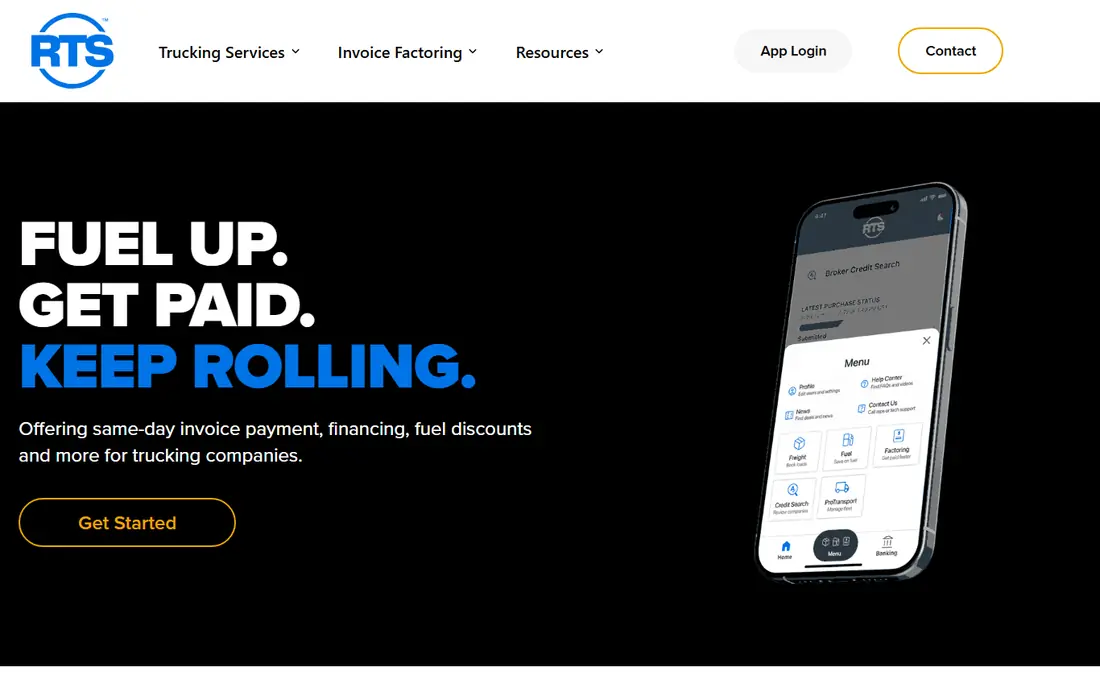
RTS is a long-standing pick for independent owner-operators who run heavy interstate miles. Its discount network centers on Pilot Flying J and regional partners, and its app includes fuel planning tools that help drivers pick stops by net cost along a route. Self-funded options give operators a route in without a traditional credit line.
The catch is lane fit. If your regular stops are Love's or TA Petro instead, RTS discounts shrink, and the best credit terms tend to go to carriers who factor through RTS. Map your last month of fuel stops against the RTS network before signing, and confirm fees and credit terms in writing.
- Strong discounts at Pilot Flying J and partner stops
- Fuel optimizer tools
- Self-funded options
- Best discounts depend on running partner lanes
- Top credit terms favor factoring customers
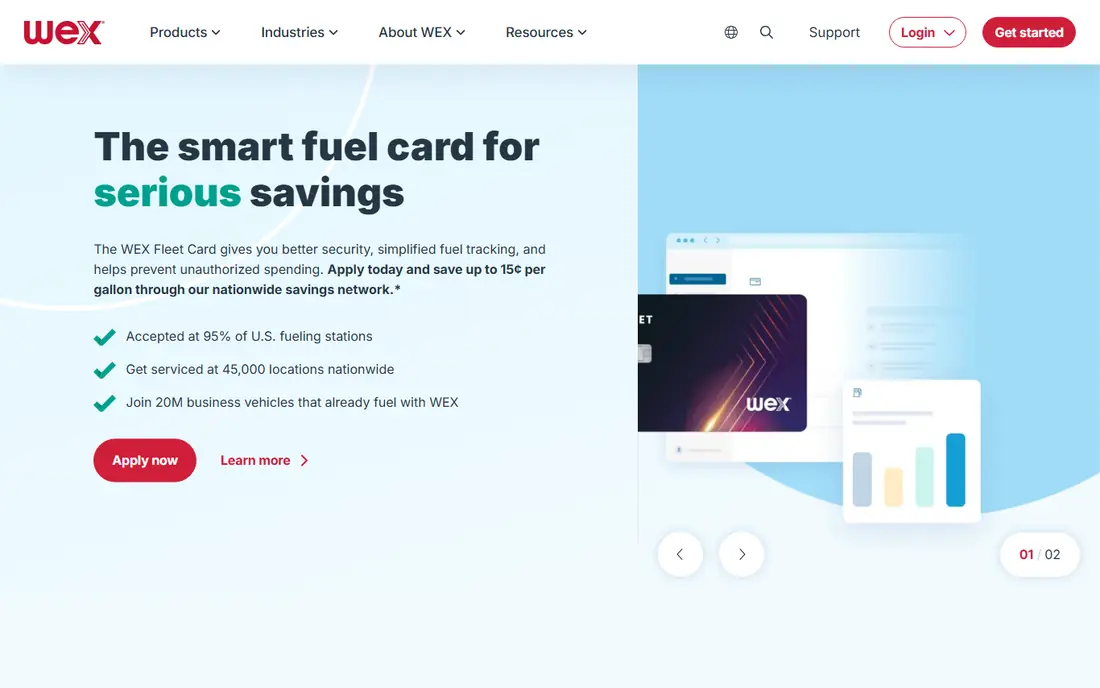
WEX is the safe all-round choice for mixed fleets that fuel anywhere, not just at truck stops. Its cards are accepted at a very high share of US fuel stations, and its controls let managers set purchase limits by driver, vehicle and product type. Reporting and expense tools help finance teams reconcile fuel spend without chasing paper receipts.
WEX rarely wins on headline diesel discount alone. Truck-stop specialist cards can beat it per gallon on their own networks, so fleets that run fixed interstate lanes should compare both. For local, regional and mixed fleets that need one card everywhere, WEX is hard to beat for simplicity.
- Near-universal acceptance across the United States
- Strong driver controls
- Detailed reporting
- Per-gallon savings are modest compared with truck-stop specialists
- Fees vary by product
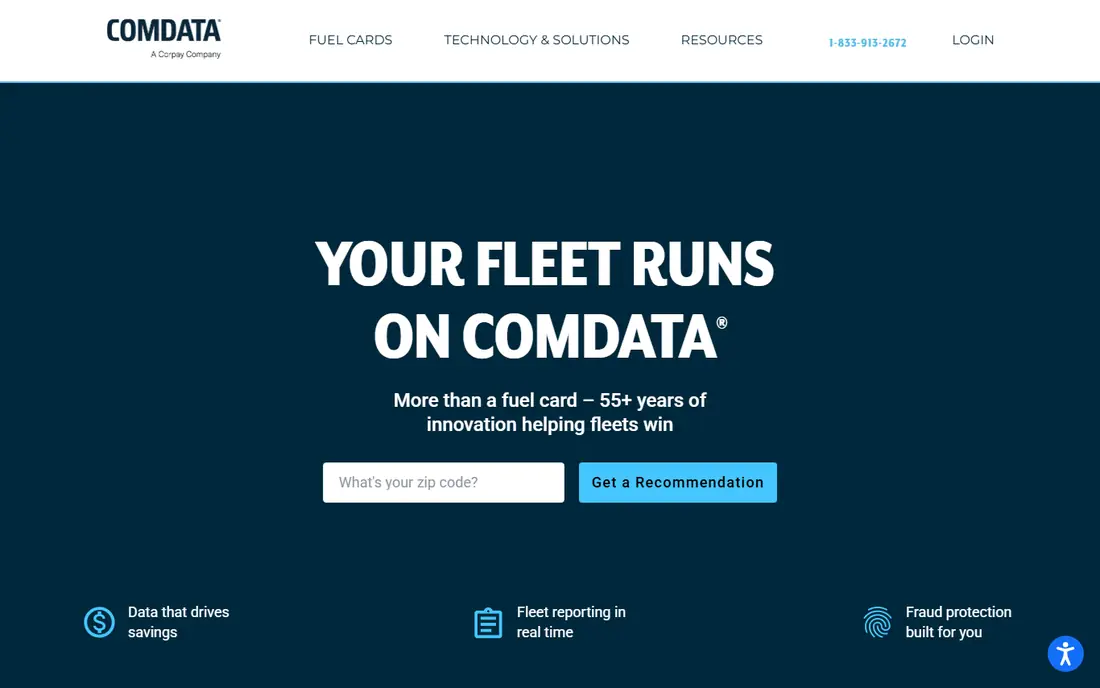
Comdata serves larger trucking fleets with a broad network and add-ons that go past fuel, including Comchek payment options, CAT Scale tie-ins and tire programs. Its products are segmented by fleet size, so a 50-truck fleet gets a different conversation than a two-truck operation. Factoring integration is another draw for carriers already using Comdata services.
Smaller operators may find the quote-based pricing opaque, and the full value shows up best at scale. Ask for a written fee schedule, including transaction fees, before comparing Comdata against a simpler card. For fleets past roughly 20 trucks, the network and add-ons can justify the complexity.
- Large truck-stop network
- Comchek and scale tie-ins
- Fleet-size segmented products
- Fee and discount details are quote-based
- Best suited to larger fleets
Fuelman fits fleets that run pickups and vans alongside trucks, since its network covers tens of thousands of locations rather than truck stops alone. Automated IFTA reporting with state-by-state breakdowns saves real admin time at quarter end, and its controls work across vehicle types. That breadth makes it a practical single card for mixed operations.
Discounts are the weakness. Fuelman per-gallon savings tend to run below truck-stop specialists, so high-mileage diesel fleets should run the numbers carefully. If IFTA admin is your main pain and your fleet fuels widely, Fuelman still earns its place.
- Very wide station network
- Automated IFTA reporting
- Controls for mixed vehicle types
- Per-gallon discounts are modest
- Monthly fees apply on base tiers
TCS, short for TransConnect Services, targets drivers who can route to its partner stops, including TA, Petro and other truck-stop partners. Discounts there can run well above universal cards, and in-network transaction fees are low or zero on some plans. Prepaid and factoring-linked funding gives smaller carriers flexible ways to pay.
The network is the limit. Outside partner stops, the advantage fades, so TCS suits operators with regular lanes through its stops rather than fleets that fuel anywhere. Check the current partner list for your lanes and confirm the portal or account fee before you commit.
- Deep discounts at TA, Petro and partner stops
- No transaction fee at in-network stops on some plans
- Prepaid options
- Discounts depend on partner lanes
- Network is smaller than universal cards
Mudflap takes a different route. Instead of issuing a traditional fleet card, its app gives discount codes at thousands of truck stops, mainly independents, and drivers pay with their own card or the Mudflap Fuel Card. There is no monthly fee, which makes it easy to try alongside another card. For owner-operators who already have a card they like, Mudflap adds savings without replacing anything.
Discounts vary by location and the network leans on independent stops, so major-chain loyalists may find fewer deals on their lanes. Treat Mudflap as a supplement first: use it where it beats your main card, and keep the main card for stops it does not cover.
- App discounts at independent truck stops
- No monthly fee
- Works with your existing payment card
- Discounts vary by stop
- Network leans on independents rather than major chains
AtoB issues cards on the Visa network, which removes the classic fleet-card problem of a station that does not take your card. Drivers can buy diesel, DEF, reefer fuel and related services at a wide range of merchants, and the app gives managers modern spend controls. Discounts at partner truck stops can be strong, and phone-based fraud checks add a layer of protection.
The cost structure needs a close look. Some plans charge per truck per month, so small fleets should compare that fee against expected savings. Discounts at smaller rural stops can also be modest compared with truck-stop specialists. For regional and mixed fleets that value universal acceptance, AtoB is a modern alternative to legacy cards.
- Works anywhere Visa is accepted
- Modern app controls
- Discounts at partner truck stops
- Monthly per-truck fees on some plans
- Smaller-stop discounts can be modest
Coast targets small teams that want clean controls without legacy fleet-card complexity. Cards run on Visa rails, managers can set limits and lock cards in real time, and reporting is built for small finance teams rather than large fleet departments. Some plans position themselves around low or no fees, which helps fleets that fuel less volume.
Discount size is not Coast's headline strength. High-mileage diesel operators chasing the deepest per-gallon saving will likely do better with RTS or TCS on partner lanes. For small fleets that value control, simplicity and wide acceptance, Coast is a practical pick.
- Visa acceptance with real-time controls
- No-fee positioning on some plans
- Simple app and reporting
- Per-gallon discounts are modest
- Newer brand than legacy fleet cards
Love's Express is a billing program built for fleets whose lanes already run through Love's Travel Stops. It offers discounts across the Love's network, RFID-based automated fueling through QuikQ on equipped lanes, and cards and tags without application or transaction fees on the program. For a fleet that already stops at Love's daily, that simplicity has real value.
The limit is obvious: off Love's lanes, the program offers little. Fleets with mixed or changing routes should pair it with a universal card or pick a network card that matches their actual stops. Check the current discount schedule for your lanes, since Love's discounts vary by location and volume.
- Discounts across the Love's network
- RFID automated fueling options
- No application or transaction fees on the billing program
- Value drops sharply off Love's lanes
- Discount size is modest compared with deep-discount cards
How we picked these
We compared official card pages, published discount claims, network descriptions, fee structures and reporting tools for fuel cards serving trucking fleets in 2026. We favored cards with a clear network, stated controls and IFTA or reporting support, and we included both truck-stop specialists and universal cards so different lane patterns are covered. Discount figures are issuer-stated averages or ranges, not guarantees at any single stop.
How to pick the right fuel card for your fleet
Start with your lanes, not the headline discount. Pull three months of fuel receipts and map them to each card's network, then estimate savings at the stops you actually use. Subtract every fee, including monthly, per-transaction and card fees, and compare the net result rather than the per-gallon figure alone. A card that saves 20 cents a gallon but charges 75 cents per transaction can lose to a no-fee card for a driver who fuels daily.
Next, weigh controls and admin. Purchase limits, product restrictions, driver PINs and real-time alerts cut fraud and misuse, while IFTA reporting saves hours each quarter. Check credit terms too: some cards need a credit review or deposit, while self-funded and prepaid options suit newer carriers. Finally, read the contract for minimums, term length and cancellation fees before signing, and trial a card on one truck before rolling it out to the whole fleet.
Frequently asked questions
What is the best fuel card for trucking companies?
It depends on your lanes. RTS and TCS suit interstate operators who can route to partner truck stops, while WEX suits fleets that fuel anywhere. Map your actual stops first, then compare net savings after fees.
Do fuel cards really save money on diesel?
They can, mainly through per-gallon discounts at partner stops and through controls that cut misuse. Savings vary by location, volume and card, and no card guarantees the same discount at every stop. Model your own volume before committing.
What fees should I watch for on a fuel card?
Watch monthly account fees, per-transaction fees, card replacement fees and any portal or minimum-use fees. Ask for the full written fee schedule, since some cards advertise a discount while charging fees that eat into it.
Do fuel cards help with IFTA reporting?
Many do. Fuelman, WEX, Comdata and similar fleet cards offer IFTA reporting with state-by-state fuel purchase records. Confirm that the report format matches your filing process before choosing a card for that reason alone.
Can an owner-operator get a fuel card without a credit check?
Some options help. RTS offers self-funded tiers, TCS offers prepaid funding, and Mudflap works with your existing payment method. Credit-based cards usually offer higher limits, but they need a review and may ask for a deposit from newer carriers.
Sources
- https://www.rtsinc.com
- https://www.wexinc.com
- https://www.comdata.com
- https://www.fuelman.com
- https://www.tcsfuel.com
- https://www.mudflapinc.com
- https://www.atob.com
- https://www.coastpay.com
- https://www.loves.com
- https://logitydispatch.com/blog/best-10-trucking-fuel-cards/
- https://www.expertmarket.com/fleet-cards/best-fuel-card-companies
See where you really rank - block by block
ProMapRanker scans Google Maps across a grid of your service area. Simple monthly plans from $19, white-label on every plan.
Start freeKeep reading
 zoho books alternatives
Best Zoho Books Alternatives in 2026
Compare the best zoho books alternatives for small business accounting, from QuickBooks Online and Xero to FreshBooks, Wave, and Sage in 2026, with pricing.
Read → zluri alternatives
Best Zluri Alternatives in 2026
Compare zluri alternatives for 2026, with SaaS management platforms for app discovery, spend tracking, renewals, and automation for IT, finance and procurement.
Read → zerobounce alternatives
Best ZeroBounce Alternatives in 2026
Best zerobounce alternatives for list hygiene: compare 8 email verification tools for bulk cleaning, real-time checks and catch-all handling in 2026 today.
Read →