 ProMapRanker
Best Flight App in 2026: 9 Apps Compared

Key takeaways
- Google Flights and Skyscanner are the strongest free starting points for most travelers, with broad coverage and flexible date tools.
- Hopper and Kayak add price predictions, but predictions are guidance, not guarantees, and fares can still move.
- Going suits travelers who want curated deal alerts, while Kiwi.com suits unusual multi airline routes with clear risks.
- For most trips, search in two or three apps, then book direct with the airline once you find a good fare.
Quick comparison
| Pick | Great for | Pricing starts at | Free tier | |
|---|---|---|---|---|
 Google Flights | Flexible search and tracking | Free | Yes | Visit |
 Skyscanner | Flexible dates and budget airlines | Free | Yes | Visit |
 Kayak | All in one trip management | Free | Yes | Visit |
 Hopper | Price predictions and alerts | Free | Yes | Visit |
 Momondo | Lowest fare hunting | Free | Yes | Visit |
 Kiwi.com | Unusual multi airline routes | Free | Yes | Visit |
 Expedia | Flight plus hotel bundles | Free | Yes | Visit |
 Going | Curated deal alerts | Free | Yes | Visit |
 Trip.com | Asia focused routes and deals | Free | Yes | Visit |
The best flight apps
Flight apps differ in what they search, how they predict prices, and if they book for you or send you to the airline. Use the right tool for each stage of a trip.
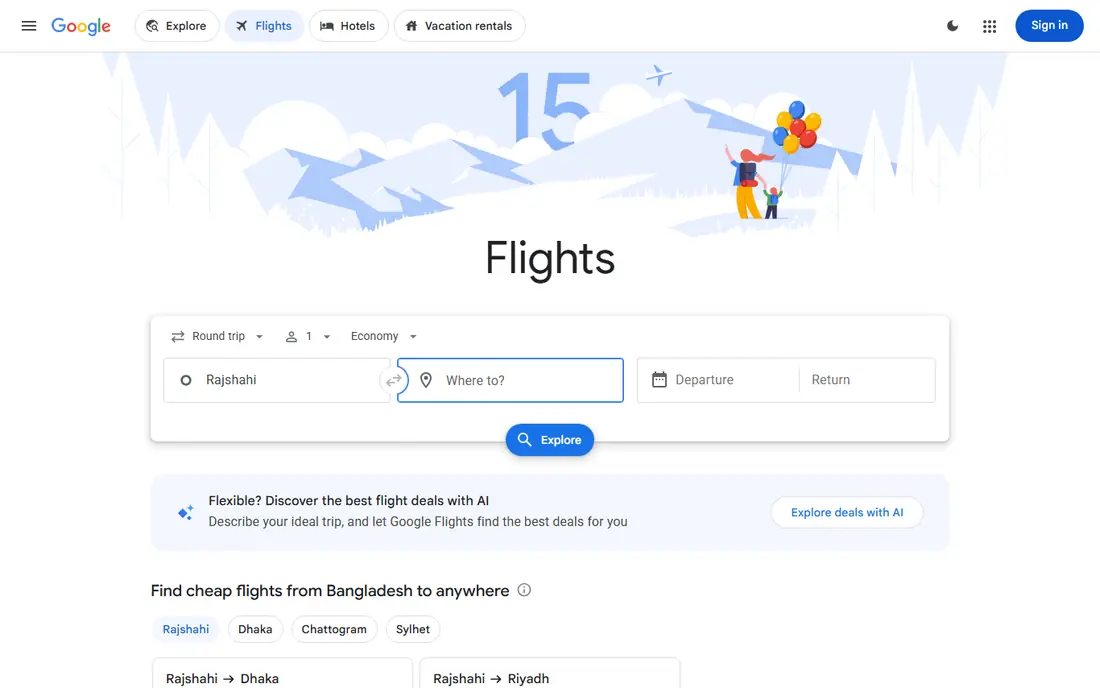
Google Flights is our pick for starting a search. The date grid shows how fares change across nearby dates, and the Explore map helps when you know a budget but not a destination. Price tracking sends email alerts when a tracked route changes, which saves daily manual checks.
The main limit is form. Google Flights works in a browser, not as a standalone app, so travelers who want push alerts in an app may prefer Hopper or Kayak for that job. For research, though, its speed and coverage are hard to beat.
- Flexible date grid and Explore map
- Price tracking with email alerts
- Broad airline coverage
- No standalone mobile app
- Alerts are email based, not push alerts in an app
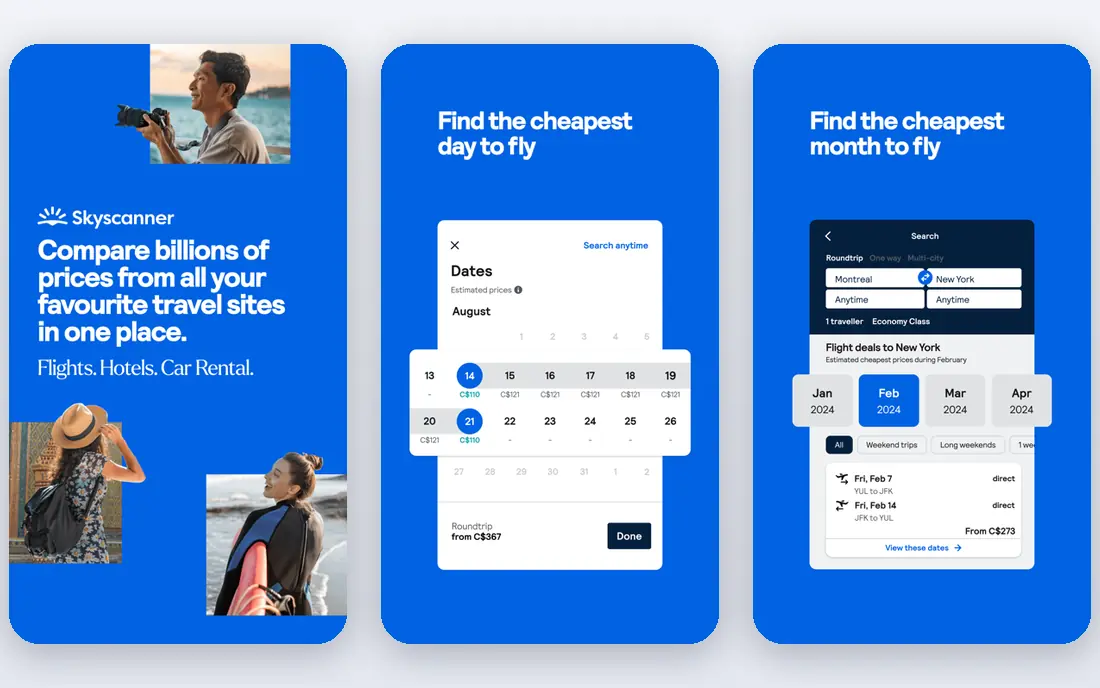
Skyscanner shines when dates or destinations are flexible. Search a whole month, or search Everywhere from your home airport, and it surfaces cheap options you might not have considered. It also covers many budget airlines that other tools miss.
Booking needs care. Many results link to online travel agencies rather than the airline, and fees, baggage rules and change policies can differ. Use Skyscanner to find the fare, then check the airline site before you pay.
- Everywhere search for flexible travelers
- Strong budget airline coverage
- Price alerts by email and app
- Booking often goes through third party sellers
- Final prices can differ from search results
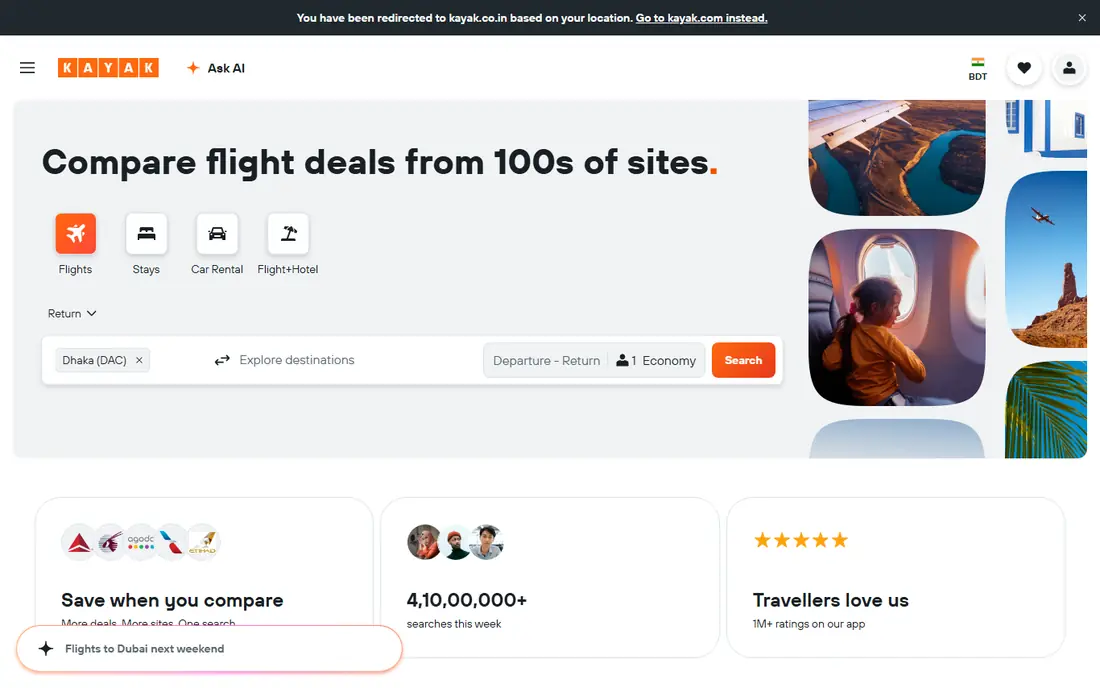
Kayak is the most complete travel app here. It covers flights, hotels and cars, offers a price forecast that suggests booking or waiting, and lets you manage trips with alerts and offline access. Travelers who want one app for a whole trip will like that breadth.
As with other aggregators, check who you are actually buying from. A cheap result through a third party seller can mean weaker support if a flight changes. Compare the airline direct price before you finish booking.
- Price forecast and alerts
- Trip syncing and offline access
- Hotel and car search in the same app
- Some results link to third party sellers
- Forecast is an estimate, not a promise
Hopper is built for the question every traveler asks: book now or wait. Its calendar uses color coding to show predicted price direction, and push alerts flag drops on routes you watch. Fare freeze on some bookings lets you hold a price while you decide.
Predictions are still estimates. Fuel prices, schedule changes and demand shifts can break a forecast, and booking through Hopper means the airline is not your direct seller. Use Hopper for timing guidance, then book direct when the price is right.
- Color coded buy or wait guidance
- Push alerts for fare drops
- Fare freeze on some bookings
- Predictions are probabilistic
- Booking through Hopper adds a middleman
Momondo often finds the lowest fare because it searches hundreds of smaller online travel agencies alongside major sites. For international trips, where small sellers can undercut larger sites, that breadth can save real money. Price graphs help you pick cheaper days.
The trade is seller risk. A very low fare through an unknown seller can mean slow support if plans change. Check the seller, read the fare rules, and compare the airline direct price before you buy.
- Searches many smaller booking sites
- Strong price graphs
- Good for international routes
- Many results are third party sellers
- Support quality depends on the seller
Kiwi.com builds routes that other search tools will not show, by combining separate tickets from airlines that do not partner. For complex trips with unusual city pairs, that creativity can open cheaper or faster options. It also offers tools to manage self transfer connections.
Self transfer risk is real. If your first flight is late, the second airline may treat you as a no show, since the tickets are separate. Read the connection guarantees, leave long gaps, and avoid self transfer routes for tight or critical trips.
- Combines airlines that do not normally partner
- Creative routes for complex trips
- Virtual interlining options
- Self transfer routes carry missed connection risk
- Support and refund rules need close reading
Expedia earns its place for bundles, not for flight only searches. Pairing a flight with a hotel can cut the total trip cost, and managing both bookings in one account is convenient. It also covers cars and activities for a full trip.
For a flight alone, Google Flights, Skyscanner or Kayak will usually find a lower or clearer fare. Use Expedia when you need a package, and compare the bundle total against booking flight and hotel separately.
- Bundling can save on flight plus hotel trips
- Wide hotel and car choice
- Trip management in one account
- Flight only fares are rarely the lowest
- Change rules vary by fare and seller
Going, formerly Scott's Cheap Flights, sends curated flight deal alerts rather than asking you to search every day. That suits travelers with flexible plans who will jump on a good fare when it appears. Alerts include guidance on dates and booking, which helps less experienced travelers act fast.
Free alerts cover a subset of deals, while paid plans add more routes and premium cabin fares. Going is also mainly useful for departures from the United States, so travelers elsewhere should lean on Skyscanner and Google Flights.
- Hand picked deal alerts
- Mistake fares and premium cabin deals
- Clear guidance on how to book
- Paid plans add more deals
- Mainly useful for US departures
Trip.com is a strong choice for Asia focused travel, with broad coverage of regional airlines and routes that US centered tools sometimes miss. Target price alerts let you set a price and wait, and the app also covers hotels and trains for a full trip.
As with other large sellers, read fare rules before paying. Baggage allowances, change fees and refund terms vary by fare, and a low headline price can rise once bags are added. Compare the airline direct fare for the same flight.
- Strong Asia route coverage
- Target price alerts
- Hotel and train options in the same app
- Some fares are third party or partner fares
- Check baggage and change rules closely
How we picked these
We compared official app pages, app store listings, pricing pages and public reviews for flight apps available in October 2026. We kept apps that search or track real fares across airlines, that offer a free tier, and that work for US travelers as well as international routes where noted. We left out apps that had closed, that only covered one airline, or that charged for basic search without a free option.
How to get a good fare without getting caught out
The cheapest result is not always the best booking. A few checks protect your money and your trip.
Search in more than one app
No single app sees every fare. Run the same route and dates in Google Flights and Skyscanner, then check Hopper or Kayak for timing guidance. If two apps show very different prices, check the airline site, since it may match or beat both.
Check what the fare includes
Baggage, seat choice, changes and refunds vary widely, even on the same flight. A basic fare with no bag and no changes can cost more than a standard fare once you add a bag. Read the fare rules before you pay, especially on third party results.
Book direct when the price is close
When the airline direct price is close to an aggregator price, book direct. Direct bookings usually mean faster help during delays, cancellations and schedule changes, and fewer disputes over refunds. Use aggregators to find the fare, and the airline to buy it.
Frequently asked questions
What is the best flight app for cheap flights?
Google Flights and Skyscanner are the best free starting points for cheap flights, since both offer broad coverage and flexible date tools. Momondo can find lower fares through smaller sellers, but check seller terms before booking. For timing advice, add Hopper.
What are the best travel booking apps for international travel?
Skyscanner, Google Flights and Kayak work well for international travel, with broad airline coverage and flexible searches. Trip.com adds strength for Asia routes, while Kiwi.com helps with unusual multi airline trips. Going suits US travelers who want curated deal alerts.
What is the best app for travel deals?
Going is the best pick for curated travel deal alerts, since it sends hand picked fares rather than requiring daily searches. Hopper and Kayak also offer price drop alerts for routes you track. Pair deal alerts with Google Flights to verify the fare before booking.
Is Google Flights a flight app?
Google Flights works in a web browser and does not offer a standalone mobile app, but it is still one of the best flight search tools. It offers price tracking, flexible date grids and an Explore map. Travelers who want push alerts in an app can pair it with Hopper or Kayak.
Should I book through a flight app or direct with the airline?
Book direct with the airline when the price is close to the aggregator price, since direct bookings usually bring faster help during disruption. Use flight apps to find and track fares, then check the airline site before you pay through a third party seller.
What is the best vacation app for planning a trip?
Kayak and Expedia cover flights, hotels and cars in one place, which suits full vacation planning. Google Flights and Skyscanner are better for flight research alone. For deal hunting, add Going for alerts and Hopper for price timing.
Sources
See where you really rank - block by block
ProMapRanker scans Google Maps across a grid of your service area. Simple monthly plans from $19, white-label on every plan.
Start freeKeep reading
 zeffy payment processor stripe alternatives
Zeffy and Stripe Alternatives for Nonprofits in 2026
Explore zeffy payment processor stripe alternatives for nonprofits. We compare 8 fundraising platforms on fees, donor tools, and nonprofit focus. Check fees.
Read → workday alternatives
Workday Alternatives in 2026
Workday alternatives compared: we review 8 HR and payroll platforms that replace Workday, with pricing, strengths and honest limits for each team size.
Read → what's the best weather app
What's the Best Weather App in 2026
Wondering what's the best weather app? We compare 10 free and paid apps for forecasts, radar, alerts, and Colorado mountain weather for everyday and storm use.
Read →