 ProMapRanker
Best Fitness Club Management Software in 2026


Multi-service studios and marketplace discovery · Pricing starts at: $99 per location per month
Key takeaways
- The best fitness club management software covers memberships, billing, class booking, check-ins and member communication in one system, so front desk staff are not juggling spreadsheets.
- Mindbody suits multi-service studios that value marketplace discovery, while ABC Fitness suits large, multi-location clubs with heavy billing needs.
- Pricing is often per location or per member tier, and payment processing fees sit on top of subscription fees, so compare total monthly cost, not only the headline price.
- Check door access, branded app and contract terms before you buy, since those three items cause the most switching pain later.
Quick comparison
| Pick | Great for | Pricing starts at | Free tier | |
|---|---|---|---|---|
| Mindbody | Multi-service studios and marketplace discovery | $99 per location per month | Free trial | Visit |
 ABC Fitness | Large multi-location clubs | See website | No | Visit |
 ABC Glofox | Boutique and class-based studios | See website | No | Visit |
 PushPress | CrossFit and functional fitness gyms | Free | Yes | Visit |
 Zen Planner | Member-based pricing for gyms | See website | No | Visit |
 TeamUp | Group-class studios | See website | Free trial | Visit |
 Wodify | CrossFit and performance gyms | See website | No | Visit |
 Virtuagym | Clubs adding coaching and nutrition | See website | Free trial | Visit |
 Gymdesk | Small gyms and martial arts schools | $75 per month | Yes | Visit |
 WellnessLiving | Studios needing loyalty and marketing tools | $69 per month | Free trial | Visit |
The best fitness club management software
We compared official product pages, pricing pages and recent pricing summaries for software that manages fitness clubs and health clubs, including memberships, scheduling, payments and check-ins. If you search for best health club software, this same shortlist applies, since most tools here serve both gyms and larger health clubs.
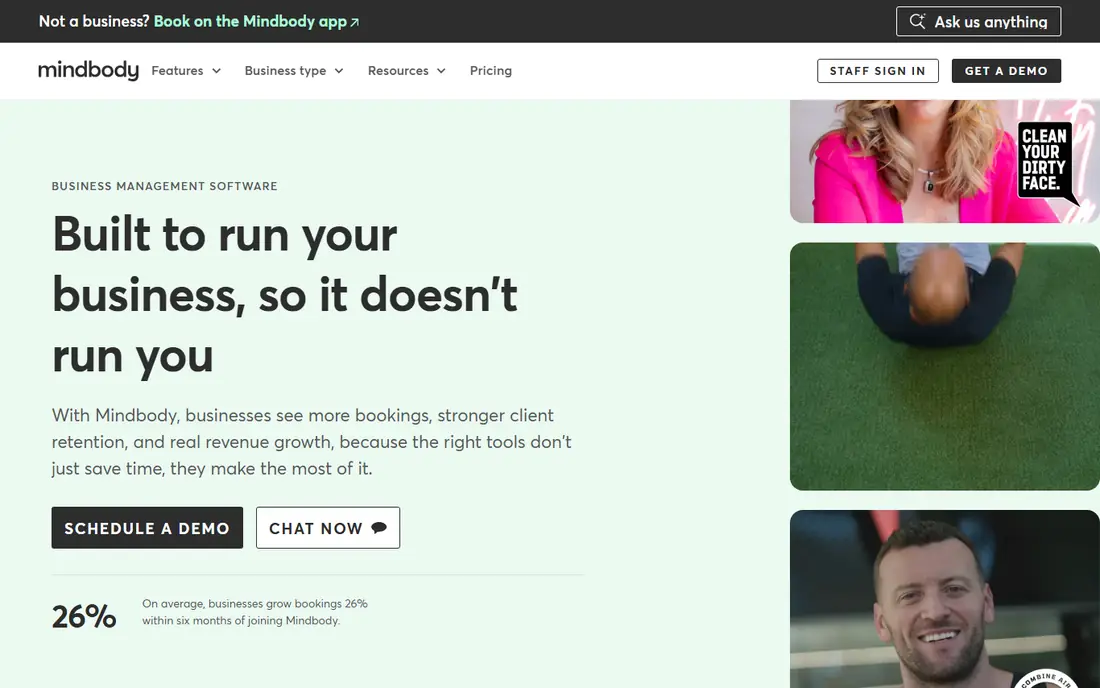
Mindbody is the best-known name in fitness studio software, and its breadth is the reason. It covers class scheduling, appointments, memberships, payments, staff management and reporting, plus a consumer app where members can discover and book classes. For a studio that offers several services, that all-in-one scope reduces the number of tools staff must learn.
The cost is the main catch. Pricing is per location, with Starter plans summarized at $99 per location per month in recent pricing guides, and branded app and advanced marketing features sit on higher tiers or as add-ons. Studios that value marketplace discovery will find that trade-off worthwhile. Smaller single-site studios should compare PushPress and Gymdesk first.
- Broad scheduling, membership and payment tools
- Consumer marketplace for discovery
- Branded app options
- Per-location pricing adds up for multi-site clubs
- Higher tiers needed for advanced marketing and app features
ABC Fitness, which owns Mindbody, ABC Glofox and ABC Trainerize, is built for large health clubs and multi-location operators. Its billing operation, including full-service collections, is one of the most developed in this list, and its platform covers memberships, scheduling, payments and reporting across many sites. That scale suits clubs with a real back office.
Small gyms will find ABC Fitness oversized and quote-based pricing hard to compare. For a growing club group that needs consistent billing, collections and multi-site reporting, it is a serious enterprise option. Ask for a written quote based on locations, members and billing volume.
- Enterprise billing and collections
- Multi-location management
- Broad club operations coverage
- Pricing is by quote
- Implementation suits larger operators more than small gyms
ABC Glofox, part of ABC Fitness, targets boutique fitness studios and franchises that want a branded member experience. It offers class scheduling, memberships, payments, a branded app and reporting, with tools for multi-location brands. That focus makes it a good fit for class-led studios that care about how members book and pay.
Pricing is often by quote, so budgeting needs a direct conversation with sales. Studios should also test support responsiveness during a trial, since post-acquisition support quality has been a point of comment in public reviews. For a boutique brand that wants a polished app, Glofox remains a strong contender.
- Branded member app
- Class booking and membership tools
- Franchise and multi-location support
- Pricing is by quote in many cases
- Support experience has varied since acquisition
PushPress was built by gym owners for functional fitness gyms, and that origin shows in its workout tracking, class management and member tools. Its free tier covers core gym management, while Pro plans add more features, with Pro summarized at $159 per month in recent pricing guides. That low entry cost makes it easy for a new gym to start without a large software bill.
The trade-off is that the full lead, CRM and marketing stack is an add-on cost, so total price rises if you need those tools. For a CrossFit or functional fitness gym that mainly needs memberships, classes, workouts and payments, PushPress offers excellent value and a gym-first design.
- Free tier for core gym management
- Workout tracking for functional fitness
- Member app and payments
- Full CRM and marketing stack costs more
- Payments are tied to its processing setup
Zen Planner prices by active member count, which suits gyms that want costs to grow with their member base rather than paying a flat enterprise fee. It covers memberships, class scheduling, payments, attendance and reporting, with workflows for martial arts schools and general gyms. Automation helps staff follow up with leads and lapsed members.
The mobile app and marketing add-ons are the main checks. Some users find the app less modern than rivals, and marketing automation may sit in a separate Engage module. For a gym that wants predictable, member-based pricing and solid core operations, Zen Planner is still a practical choice.
- Pricing tied to active members
- Martial arts and gym workflows
- Automation and reporting
- Mobile app experience has drawn criticism
- Marketing tools are a separate module in some cases
TeamUp suits group-class studios that want pricing linked to active customers. It handles class schedules, memberships, class packs, payments and attendance, with a member app for booking. That usage-based model helps seasonal studios, since costs track active customers rather than a fixed high fee.
Larger health clubs with 24-hour access control, complex billing or many locations may need a broader platform such as ABC Fitness. For a class-led studio, TeamUp's clarity and booking focus are strengths. Check the current pricing tiers, since they are set by active customer bands.
- Usage-based pricing by active customers
- Class packs and memberships
- Member app and reporting
- Pricing rises with customer count
- Less suited to large health clubs with complex access control
Wodify is built for CrossFit, HYROX and performance gyms that want workout tracking alongside gym management. Members can log workouts, follow programming and see leaderboards, while staff manage memberships, classes, payments and attendance. That performance focus sets it apart from generic club software.
General health club needs, such as complex multi-location billing or spa-style services, are less central here. For a performance gym, that focus is a benefit, not a gap. Buyers should confirm current pricing tiers, since Wodify pricing has varied between promotional and list rates in recent guides.
- Workout tracking and leaderboards
- Class and membership management
- Performance-focused member app
- Pricing is by quote or tiered by members
- General health club features are thinner than Mindbody
Virtuagym combines club management with coaching and nutrition tools, which suits clubs that sell personal training, nutrition plans or hybrid coaching alongside memberships. It covers memberships, scheduling, payments, check-ins and a member app, plus workout and nutrition tracking that members can use between visits.
Pricing is by quote, so a direct quote is needed for budgeting. Larger clubs should also allow time for setup and staff training, since the coaching features add scope beyond basic check-ins. For a club that wants fitness and coaching in one system, Virtuagym is a distinctive option.
- Coaching, nutrition and workout tools alongside club management
- Member app
- Access control options
- Pricing is by quote
- Setup can take time for larger clubs
Gymdesk suits small gyms and martial arts schools that want an all-in-one system without enterprise pricing. Its starting plan is summarized at $75 per month for up to 50 members in recent pricing guides, with a free tier for up to 15 active members. It covers memberships, billing, class scheduling, attendance and a member app, with belt and rank tracking for martial arts schools.
The limits are modest. SMS messaging is a paid add-on, and phone support is not 24-hour. For a small club, those trade-offs are easy to accept given the price and simplicity. Gymdesk is our value pick for small operators in this list.
- Low starting price with a free tier
- Memberships, scheduling and payments in one place
- Martial arts workflows
- SMS is a paid add-on
- Phone support is weekday-based rather than round the clock
WellnessLiving suits studios that want loyalty and marketing built into club management. It offers class and appointment scheduling, memberships, payments, rewards programs and marketing tools, with a branded app on higher plans. That loyalty focus helps studios that rely on repeat visits and referrals.
The starting price, summarized at $69 per month in recent guides, covers core tools, while branded app and advanced marketing features cost more. Studios should compare total cost with Mindbody and Glofox, since the headline price is only part of the bill. For a studio that values rewards and retention tools, WellnessLiving is a strong fit.
- Loyalty, rewards and marketing tools
- Scheduling and memberships
- Branded app on higher plans
- Branded app and advanced features need higher tiers
- Total cost rises with add-ons
How we picked these
We compared official product pages, pricing pages and recent pricing summaries for software that manages fitness clubs and health clubs, including memberships, booking, payments and check-ins. We included large club platforms, boutique studio tools and value options for small gyms, and we noted where pricing was per location, per member or by quote. Where pricing was not published on the vendor page we checked, we wrote See website.
What to check before you buy
Start with your member journey. Walk through joining, booking, checking in, paying and cancelling, and check that each step works smoothly for members and staff. A system that looks good in a sales demo can still frustrate members at the front desk.
Next, check total cost. Add subscription fees, per-location charges, payment processing fees, branded app fees and SMS costs together. Ask for a written estimate based on your locations, members and expected payment volume, and ask about contract length and exit terms.
Finally, test door access and migration. If you use 24-hour access, confirm which hardware is supported. Ask how member, membership and payment data will migrate, and how long staff training takes. Those practical details decide whether a switch is smooth or painful.
Frequently asked questions
What is fitness club management software?
It is software that runs a gym, fitness studio or health club, covering memberships, class and appointment booking, payments, check-ins, staff schedules and member communication. Some tools also add coaching, nutrition, loyalty or marketplace features.
Is it different from health club software?
The terms overlap. Health club software is often used for larger clubs with pools, courts or spa services, while fitness club software covers gyms and studios more broadly. Most tools in this list serve both, so check features for your facility type rather than the label alone.
How much does fitness club software cost?
Prices range from free tiers for small gyms to several hundred dollars per location per month for larger studios, plus payment processing fees. Per-location, per-member and quote-based models all exist, so compare total monthly cost for your size.
Do I need a branded member app?
Not always. A branded app helps with booking, retention and brand visibility, but it often costs extra. Small gyms can start with a standard member app or web booking, then add a branded app once member numbers justify it.
Can I switch from Mindbody to another tool?
Yes, but migration takes planning. Export member, membership, payment and class data, check contract end dates, and allow time for staff training. Most rivals offer migration help, but the quality of that help varies, so ask for a written migration plan.
What about payment processing fees?
Processing fees are usually charged on top of subscription fees, often as a percentage plus a per-transaction amount. Ask each vendor for its processing rates, marketplace commissions and any payout or chargeback fees before you compare headline subscription prices.
Sources
- https://www.mindbodyonline.com
- https://www.abcfitness.com
- https://www.abcfitness.com/glofox
- https://www.pushpress.com
- https://www.zenplanner.com
- https://www.teamup.com
- https://www.wodify.com
- https://www.virtuagym.com
- https://www.gymdesk.com
- https://www.wellnessliving.com
- https://1club.ai/blog/best-gym-management-software-2026
See where you really rank - block by block
ProMapRanker scans Google Maps across a grid of your service area. Simple monthly plans from $19, white-label on every plan.
Start freeKeep reading
 zoho books alternatives
Best Zoho Books Alternatives in 2026
Compare the best zoho books alternatives for small business accounting, from QuickBooks Online and Xero to FreshBooks, Wave, and Sage in 2026, with pricing.
Read → zluri alternatives
Best Zluri Alternatives in 2026
Compare zluri alternatives for 2026, with SaaS management platforms for app discovery, spend tracking, renewals, and automation for IT, finance and procurement.
Read → zerobounce alternatives
Best ZeroBounce Alternatives in 2026
Best zerobounce alternatives for list hygiene: compare 8 email verification tools for bulk cleaning, real-time checks and catch-all handling in 2026 today.
Read →