 ProMapRanker
Best Fertility Apps in 2026: 8 Apps Compared

Key takeaways
- Flo is our pick for most people, thanks to broad cycle tracking, pregnancy modes and a large library of health content.
- Clue suits users who want science-led tracking with a strong privacy stance, while Ovia suits people trying to conceive who want a daily fertility score.
- Premom and Fertility Friend suit detailed charting, with ovulation test scanning and deep temperature charting respectively.
- Fertility apps are tracking tools, not a substitute for medical advice, and privacy policies deserve a read before you log sensitive health data.
Quick comparison
| Pick | Great for | Pricing starts at | Free tier | |
|---|---|---|---|---|
 Flo | All-round cycle and fertility tracking | See website | Yes | Visit |
 Clue | Science-led tracking and privacy | $39.99 per year | Yes | Visit |
 Ovia Fertility | Daily fertility score for TTC | Free | Yes | Visit |
 Natural Cycles | Temperature-based tracking | $149.99 per year | No | Visit |
 Premom | Ovulation test scanning | See website | Yes | Visit |
 Glow | TTC community and partner sharing | $59.99 per year | Yes | Visit |
 Fertility Friend | Deep temperature charting | $9.99 per month | Yes | Visit |
 Kindara | Fertility awareness charting | $4.99 per month | Yes | Visit |
The best fertility apps
Fertility apps help you record cycles, spot fertile windows and understand patterns over time. Some focus on trying to conceive, some on cycle health, and some on fertility awareness charting. The eight apps below cover those needs, with an honest note on privacy, since this data is sensitive.
A short note before the list: these apps are not a substitute for medical advice. Predictions are estimates based on the data you enter, and they can be wrong, especially with irregular cycles. If you have concerns about fertility, irregular cycles or a medical condition, talk with a clinician. Also read each app's privacy policy, since data handling varies widely in this category.
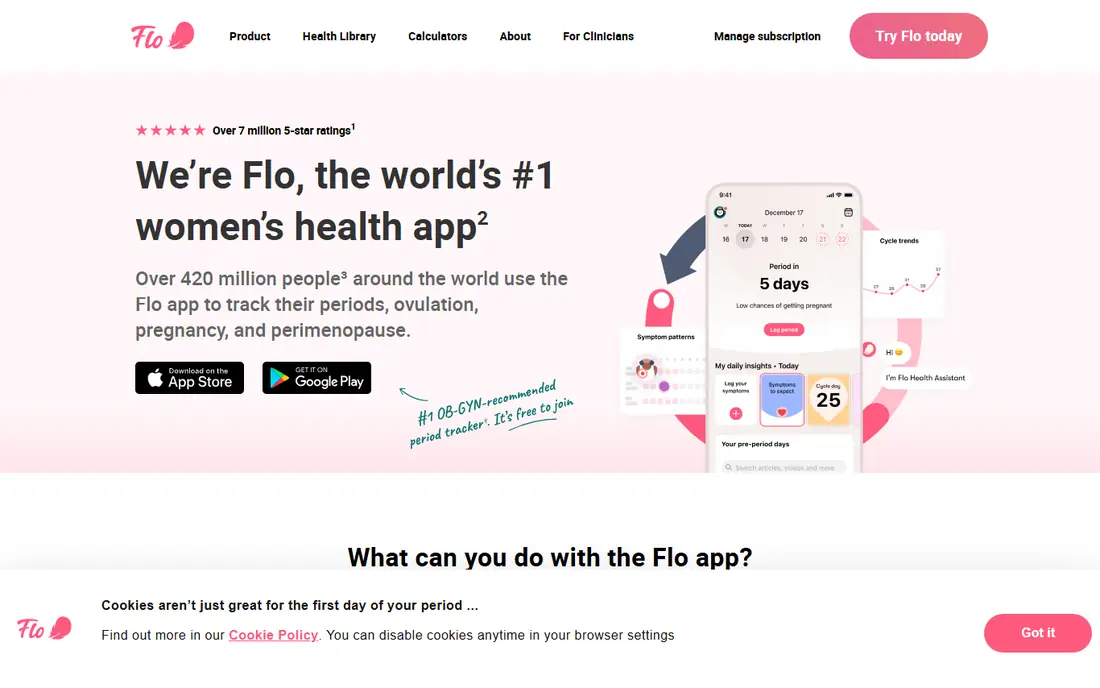
Flo is the most complete all-rounder in this list, covering period tracking, ovulation predictions, pregnancy modes and perimenopause support in one app. Daily tips and health content help users learn fertility signals, and the interface stays friendly for beginners. For most people starting with a fertility tracker app, Flo is the easiest first download.
The honest caveats matter. Premium adds the deeper tools, and Flo's past data practices drew a regulatory order, so privacy-minded users should read the current policy and settings before logging sensitive data. If privacy is your top concern, Clue below may fit better. For breadth and ease, Flo still leads.
- Broad cycle, ovulation and pregnancy tracking
- Large library of expert-reviewed content
- Partner sharing mode
- Deeper features sit behind Premium
- Free tier carries upsells
- Privacy record has drawn regulatory attention in the past
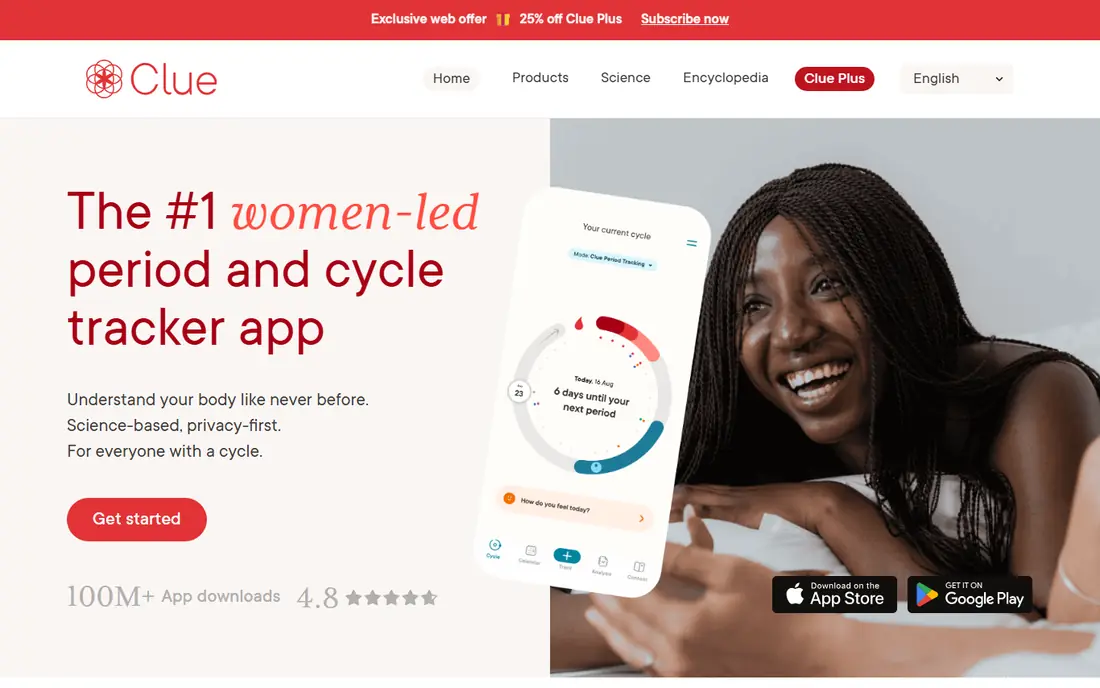
Clue, built in Berlin, takes a science-first approach to cycle tracking, with a wide range of symptoms and cycle phases to log. Its privacy stance is a real selling point in this category: Clue states it does not sell user data, which matters when the data is this personal. The interface stays calm and readable, even for long-term tracking.
Clue Plus, at about $39.99 per year, adds deeper analysis and advanced predictions, while the free tier covers basic tracking well. Users trying to conceive may miss the TTC community features of Premom or Glow. For the best fertility tracker app that pairs solid predictions with a careful privacy approach, Clue is our pick.
- Science-led design with a large symptom set
- Strong privacy stance with no data selling
- Clean and calm interface
- Advanced predictions need Clue Plus
- No dedicated TTC community like some rivals
- Wearable integrations sit behind paid tiers in some cases
Ovia Fertility approaches trying to conceive like a guided program, with a daily fertility score, personalized tips and content reviewed by clinicians. It tracks basal body temperature, cervical fluid, medications and more, and it folds in sleep, activity and nutrition data for a fuller picture. For individuals, the app is free, which is rare at this depth.
The business model deserves attention: Ovia Health, a Labcorp company, works with employers and health plans, so users should read the privacy policy and understand what data is shared and how. If that model concerns you, a paid app with a simpler model may fit better. For free, guided TTC tracking, Ovia is strong.
- Free for individual users
- Daily fertility score and TTC tips
- Tracks temperature, cervical fluid and medications
- Business model rests on employer and health-plan partnerships
- Interface assumes a US context in places
- Privacy policy deserves a careful read
Natural Cycles stands apart because it is cleared by regulators as a contraceptive method when used as directed, based on basal body temperature data. That clearance reflects a specific algorithm and strict usage rules, not a general promise, and typical-use effectiveness is lower than perfect use. Users trying to conceive can also use it to spot fertile days from temperature shifts.
The price is the highest in this list, at about $149.99 per year, with no free tier. It also demands consistent morning temperature readings, which does not suit everyone. For users who want a temperature-based method with regulatory clearance, Natural Cycles is the only app here in that category, and it should be used exactly as directed.
- Temperature-based algorithm with FDA clearance for contraception
- Clear daily fertility status
- Works with thermometers and wearables
- Subscription only, at a high yearly price
- Temperature-only focus suits some users less
- Not suitable for all users, so read the guidance
Premom is the best app to get pregnant for users who rely on ovulation predictor kits. Its standout feature scans test strips with the phone camera and reads the result, removing guesswork from faint lines. Combined with temperature and symptom logging, it gives a clear picture of the fertile window for people actively trying to conceive.
The community forums add support during what can be a stressful process, though forum advice should never replace medical guidance. Premium pricing varies across app store listings, so check the current price before paying, and remember that test strips cost extra. For strip-based tracking, no other app here matches Premom.
- Scans ovulation test strips with the phone camera
- TTC-focused community
- Logs tests, temperature and symptoms together
- Premium pricing varies across listings, so check the store page
- Test strips are an extra cost
- Interface focuses narrowly on TTC
Glow organizes itself around trying to conceive, with community forums, partner sharing and detailed logging of ovulation signals. Users can track LH tests, basal body temperature and cervical mucus in one chart, and companion apps cover pregnancy and baby stages. That full journey support suits couples planning over months.
The free tier includes ads and upsells, and Glow's privacy history includes a past regulatory settlement, so read the current policy before logging sensitive data. Community content is user-generated, so treat medical claims there with care. For community support plus detailed TTC tracking, Glow remains a popular choice.
- Strong TTC community and partner mode
- Logs LH, temperature and cervical mucus
- Companion apps for pregnancy and baby
- Free tier carries ads and upsells
- Past privacy settlement deserves a read
- Interface can feel busy
Fertility Friend is the veteran of this category, online since 1998, and its charting depth shows that history. Temperature interpretation, chart overlays and community chart galleries help serious charters compare patterns across cycles. For users who chart basal body temperature, cervical fluid and ovulation tests together, no app here interprets that data with more experience.
Newcomers may bounce off the dense interface, and the design looks old beside modern rivals. The free tier is genuinely useful, with VIP membership adding advanced analysis at about $9.99 per month. If you want the best fertility tracking app for serious charting rather than a pretty dashboard, Fertility Friend leads.
- Deepest charting tools in this list
- Ovulation detection from temperature data refined over many years
- Chart overlays and galleries
- Interface looks dated next to Flo and Clue
- Learning curve for new charters
- VIP needed for advanced analysis
Kindara serves users who practice fertility awareness methods and want full control over their charts. It supports customizable data types, including temperature, cervical fluid, moods and custom fields, and its community connects charters learning the same methods. That flexibility suits users who know what they want to track and why.
Beginners may find less guidance than in Flo or Ovia, and the smaller community means fewer shared resources. Premium costs about $4.99 per month, with a free tier for basic charting. For fertility awareness charting with deep customization, Kindara is the best ovulation tracking app of its kind in this list.
- Built for fertility awareness methods
- Customizable charting with many data types
- Community features for charters
- Smaller user base than Flo or Clue
- Premium features need a subscription
- Less hand-holding for beginners
How we picked these
We compared official feature pages, app store listings and current pricing for fertility apps available in October 2026. We kept apps that genuinely track cycles, ovulation or fertility signals, and we weighed tracking depth, TTC support, pregnancy modes, privacy practices and price. Apps that only track periods with no fertility features, or that had stopped working, did not make the list.
We did not claim hands-on testing, and we did not make medical claims. Where pricing varied across listings, we used the figure most often listed or wrote "See website" rather than guessing. Privacy notes reflect public regulatory records and vendor policies as reported in October 2026, and users should check the current policy before downloading.
How to choose a fertility app
Start with your goal. Trying to conceive, tracking cycle health, charting fertility awareness and avoiding pregnancy are different jobs, and they point to different apps. Also decide how much data you will log each day, since a detailed app only helps if you use it consistently.
Match the method to your routine
Calendar-only predictions suit regular cycles but miss shifts in ovulation timing. Temperature charting confirms ovulation after it happens, while ovulation tests predict it a day or two ahead. Combining two signals, such as LH tests plus temperature, gives a fuller picture than either alone.
Read the privacy policy first
Fertility data is among the most sensitive data a phone holds. Check whether the app sells data, shares data with employers or advertisers, offers anonymous modes, and lets you delete your data. A free app funded by data partnerships deserves more scrutiny than a paid app with a plain subscription model.
Know when to seek care
Apps estimate fertile windows; they do not diagnose. If cycles are very irregular, periods stop, or conception has not happened after a year of trying (or six months if you are over 35, per common clinical guidance), talk with a clinician. Bring your charts, since a clear record helps a clinician far more than a vague memory.
Frequently asked questions
What is the best fertility app for trying to conceive?
Flo and Ovia Fertility suit most people trying to conceive, thanks to broad tracking and daily guidance, while Premom leads for ovulation test users and Fertility Friend leads for temperature charters. The best app to get pregnant is the one whose tracking method you will use daily, since consistent data beats any single feature.
What is the best fertility tracking app for ovulation?
Premom is best for ovulation test tracking, Fertility Friend is best for temperature-based ovulation detection, and Clue offers a strong all-round ovulation estimate with a careful privacy stance. Combining an LH test with temperature charting gives a fuller picture than a calendar estimate alone.
Are fertility apps accurate?
Fertility apps estimate fertile windows from the data you enter, and accuracy varies with cycle regularity and how consistently you log. Calendar estimates alone are the least reliable, while combined signals such as LH tests and temperature shifts improve the picture. No app guarantees conception or contraception unless it is specifically cleared for that use and used as directed.
What is the best TTC app with a community?
Premom and Glow offer the strongest TTC-focused communities in this list, with forums for people trying to conceive. Flo offers anonymous community chats behind Premium. Community support can help emotionally, but treat medical claims in forums with care and check important questions with a clinician.
How do fertility apps handle my private data?
Practices vary widely: some apps state they do not sell data, while others fund free tiers through employer partnerships or advertising. Read the privacy policy, check data deletion options, and review app permissions before logging sensitive health data. If privacy is your top concern, Clue and Fertility Friend state stronger privacy positions than ad-supported rivals.
Sources
See where you really rank - block by block
ProMapRanker scans Google Maps across a grid of your service area. Simple monthly plans from $19, white-label on every plan.
Start freeKeep reading
 zeffy payment processor stripe alternatives
Zeffy and Stripe Alternatives for Nonprofits in 2026
Explore zeffy payment processor stripe alternatives for nonprofits. We compare 8 fundraising platforms on fees, donor tools, and nonprofit focus. Check fees.
Read → workday alternatives
Workday Alternatives in 2026
Workday alternatives compared: we review 8 HR and payroll platforms that replace Workday, with pricing, strengths and honest limits for each team size.
Read → what's the best weather app
What's the Best Weather App in 2026
Wondering what's the best weather app? We compare 10 free and paid apps for forecasts, radar, alerts, and Colorado mountain weather for everyday and storm use.
Read →