 ProMapRanker
Best Diversity Recruiting Software


Outreach and pipeline for small teams · Pricing starts at: $130 per month (billed annually)
Key takeaways
- Gem is the cheapest way in for a small company, with 6 months free under 30 employees and a $130 a month startup rate.
- SeekOut is the best value for sourcing diverse talent at scale, with a self-serve plan at $149 a month billed annually.
- HireEZ publishes one solo seat at $494 a month, and its team plans stay behind a sales call.
- Eightfold AI, Greenhouse, Pinpoint and Diversio publish no prices, so budget time for a sales cycle and a custom quote.
- Applied is the only tool here built around anonymized screening, with pricing from $200 a month based on hiring volume.
Quick comparison
| Pick | Great for | Pricing starts at | Free tier | |
|---|---|---|---|---|
| Gem | Outreach and pipeline for small teams | $130 per month (billed annually) | Free trial (6 months) | Visit |
 SeekOut | Sourcing diverse talent at scale | $149 per month (billed annually) | Free trial (14 days) | Visit |
 HireEZ | AI sourcing for solo recruiters | $494 per month | Free trial (7 days) | Visit |
 Eightfold AI | Talent intelligence for large employers | quote only | No | Visit |
 Applied | Anonymized, bias-free screening | $200 per month (usage based) | Free trial | Visit |
 Pinpoint | Structured hiring with AI matching | quote only | No | Visit |
 Greenhouse | Structured hiring at mid-market scale | quote only | No | Visit |
 Diversio | DEI analytics and benchmarking | quote only | No | Visit |
The best diversity recruiting software
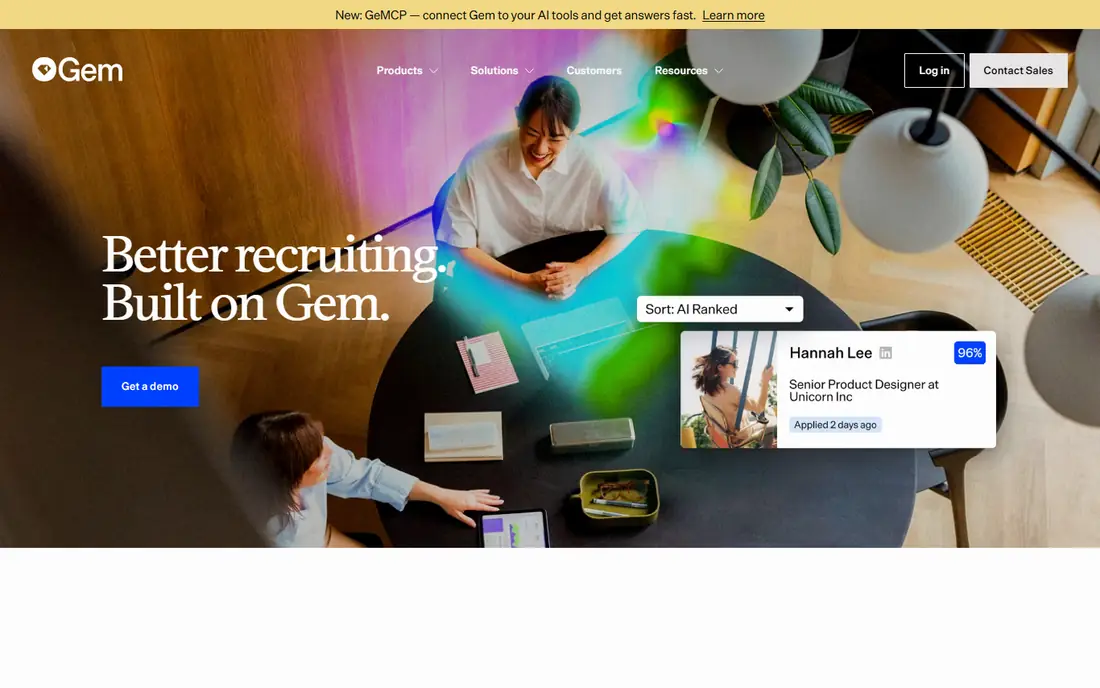
Gem grew out of a recruiting CRM, and that heritage shows in how it handles diversity. It finds candidates across more than 20 sourcing sites, builds talent pools that refresh over time, and runs multi-channel outreach sequences with pipeline analytics, so a team can widen the top of the funnel and keep diverse candidates warm for later roles. Its AI-Powered seat adds AI sourcing across 800 million profiles plus AI ranking across the pipeline.
Pricing is the most transparent part of the story for small companies. The Startup Program lists $130 a month on yearly billing for companies with 1 to 10 employees, and companies under 30 employees get Gem All-in-One free for six months, then 50 percent off the first year. Staffing plans list Essentials at $99 per user a month and Professional at $149 on annual billing. Above 10 employees, in-house pricing is quoted on total headcount, and the median real contract runs about $25,700 a year. The headcount model is the main surprise: a company that grows pays more even if its recruiting team stays the same size.
- Free 6-month start for companies under 30 employees
- Strong outreach sequencing and analytics
- In-house pricing above 10 employees is quoted on headcount, not seats
- AI features need a higher seat class
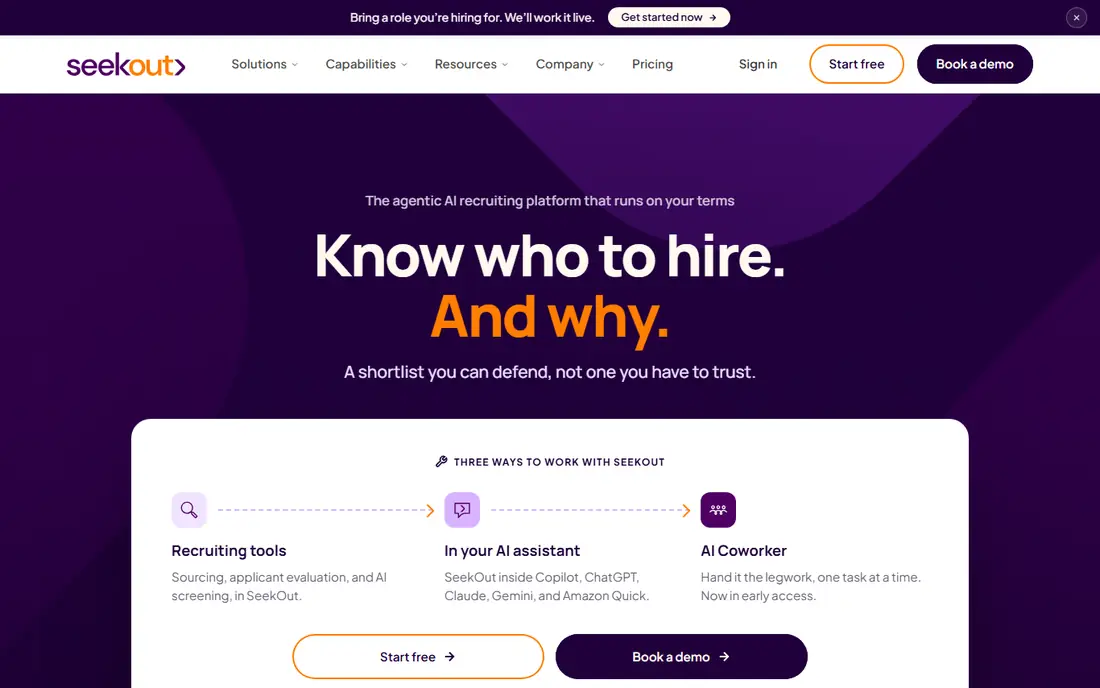
SeekOut is an AI talent intelligence platform that searches more than 1 billion candidate profiles from GitHub, patents, academic publications and the open web. Its diversity filters, including inferred gender and ethnicity insights and security clearance filters, are the reason it leads this list for sourcing: a recruiter can build a slate that reflects the talent pool instead of the usual network. ATS rediscovery finds past applicants who fit a new role, and AI campaigns handle outreach to the shortlist.
SeekOut finally publishes a price. Recruit Core costs $149 a month billed annually, or $179 month to month, and includes 3 seats sharing 500 contact credits and 1,000 exports a month, with a 14-day free trial and no card required. The three tiers above it are custom, and the median buyer pays about $20,000 a year across 64 tracked purchases. The gap between the $149 entry and the custom tiers is the real shape of SeekOut pricing: one seat you can buy, then a negotiated contract for a team.
- 1B+ profile index with diversity filters
- Self-serve plan you can buy with a card
- Diversity insights sit on custom tiers
- Median contract is about $20,000 a year
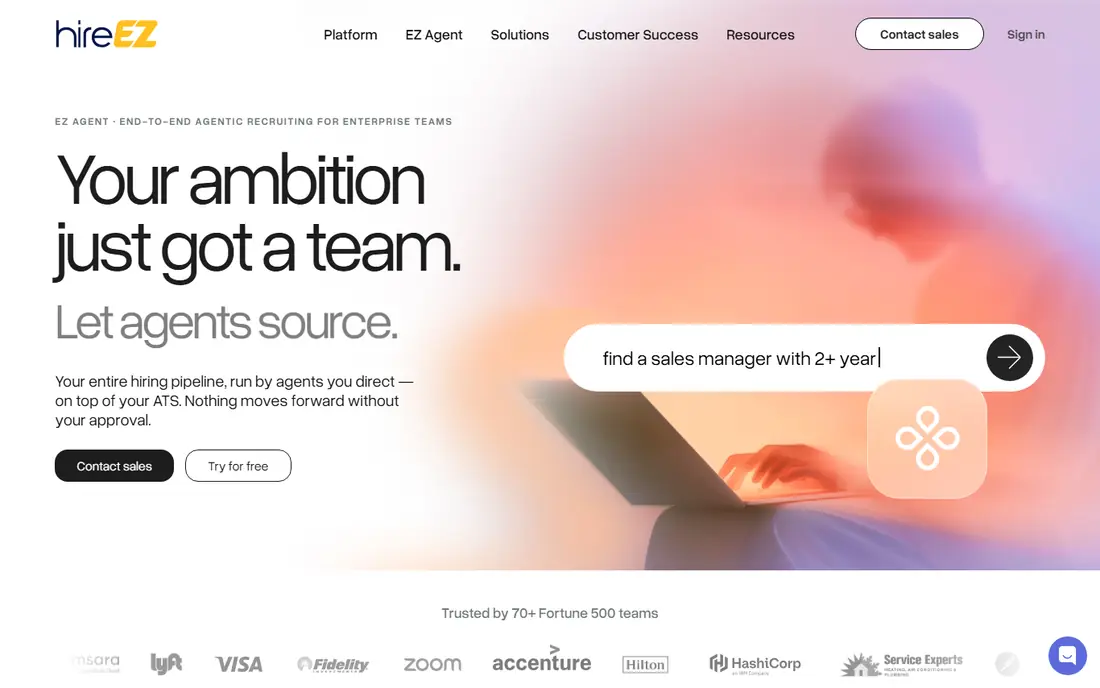
HireEZ, formerly Hiretual, is an AI sourcing platform that aggregates more than 1 billion candidate profiles from 45-plus sources, including LinkedIn, GitHub and Stack Overflow. It adds AI matching, contact reveal, email automation and outreach sequencing, plus a candidate CRM and interview scheduling, so a solo recruiter can run the whole outbound workflow in one place. Its diversity filters sit in the enterprise tier, which is where the DEI features live.
Pricing went partly public in 2026 after years of quote-only sales. The Solo plan lists at $494 a month for one recruiter, with a seven-day free trial before the first charge. Team and enterprise plans carry no published number, and the median real contract runs about $13,000 a year. Third-party roundups still list older tiers at about $169 to $199 a seat, but no HireEZ page carries those names or numbers now. The $494 solo seat is five times the entry price of several rivals here, so a small team should weigh the index size against the cost.
- 1B+ profile index with AI matching
- Outreach and sequencing built in
- Only one published price, and it is high for a solo seat
- Team pricing is quote only
Eightfold AI is an enterprise talent intelligence platform that uses deep learning to map skills across candidates, employees, contractors and alumni. It matches people to roles by skills rather than job titles, which helps surface candidates a keyword search would miss, and it adds workforce planning, internal mobility and bias mitigation tools. The company positions the platform for organizations with 10,000 employees and up, and it holds FedRAMP Moderate authorization for public sector work.
Eightfold publishes no pricing at all. It licenses per employee per month, quoted per company, and analyst estimates put it around $7 to $10 per employee a month, with reported enterprise contracts of $150,000 to $500,000 a year plus a $5,000 to $50,000 onboarding fee. There is no free trial and no self-serve signup, and reported implementations run 3 to 6 months. For a large employer that wants talent intelligence across hiring and internal mobility, it is the most complete platform here, but it is priced and scoped far above a small team.
- Skills-based matching across 1B+ profiles
- Bias mitigation and internal mobility in one platform
- No published pricing and no trial
- Implementations run 3 to 6 months
Applied is the only tool on this list built around anonymized screening instead of sourcing. Candidates answer work-sample questions and structured assessments, and reviewers see the answers without names, photos, education history or employment gaps. The design follows behavioural science: by hiding the signals that trigger unconscious bias, it widens the shortlist to candidates who can actually do the job. It works as a full applicant tracking system, with interview scheduling and scoring built in.
Pricing starts at $200 a month on a usage basis, with the exact figure set by hiring volume, and a free trial is available. The vendor is based in London and serves public sector, charity and corporate teams in the UK, Australia, Canada and other markets. The usage model is the main thing to check: a team that hires in bursts will see the bill move with volume, so ask for a written quote at your expected application count before you commit. For teams that want to fix bias at the screening stage, it is the most direct pick here.
- Applications are anonymized before review
- Work-sample tests replace CV screening
- Pricing is usage based, so costs rise with hiring volume
- Smaller vendor than the ATS giants
Pinpoint is an all-in-one applicant tracking system that bakes structured hiring into every step, from vacancy planning to onboarding. Its AI features score each applicant out of 10 with a verdict, strengths, concerns and interview topics, and AI candidate filters let recruiters write prompts that score candidates against the job description. The criteria checklist shows how many of a role requirements each applicant meets, which keeps screening consistent across hiring managers.
Pinpoint publishes no rate card. Its pricing page routes buyers to a demo request, and every quote is custom, based on company size and hiring volume. Third-party sources estimate the Growth plan at about $345 a month on annual billing and Enterprise at $1,200 a month or more, with annual contracts only. There is no free tier or trial, and onboarding is sold as a separate add-on. The flat-rate model, with unlimited users and job postings, suits a growing team that wants predictable hiring costs, but the lack of a trial means the demo has to carry the decision.
- AI match score and criteria checklists on every applicant
- Flat-rate pricing by company size
- No public rate card and no free trial
- Onboarding is a separate add-on
Greenhouse is the most widely used applicant tracking system for mid-market companies that take structured hiring seriously. It covers the full hiring lifecycle: sourcing and CRM, interview kits and scorecards, scheduling, onboarding, reporting and a candidate portal. The Plus plan adds DEI dashboards, sourcing automation, texting and a BI connector, while Pro adds resume anonymization, an audit log and a developer sandbox. With more than 400 integrations, it connects to most HR stacks without custom work.
Greenhouse publishes no prices. Every contract is custom quoted across three tiers, Core, Plus and Pro, with third-party estimates putting the smallest Core deployments at about $6,000 a year and mid-market Plus contracts at $15,000 to $30,000 a year. Pricing runs on company headcount, not on the number of recruiters, and implementation is sold separately. Reviewers report weeks of sales calls before a quote arrives, and there is no free trial or free plan. For a team hiring 25 or more people a year that wants structured interviews, it is the benchmark, but the sales cycle is part of the cost.
- Strongest structured interview tooling here
- DEI dashboards on the Plus plan
- Quote-only pricing with weeks of sales calls reported
- Implementation sold separately
Diversio is different from every other tool on this list: it does not source or screen candidates, it measures diversity. The platform collects workforce data, analyzes representation, pay equity and inclusion, benchmarks the results against peers, and turns the findings into action plans. It also sells expert consulting, from policy reviews to year-long strategic partnerships, and a leadership development program starting at $20,000 for a cohort of up to 20 leaders.
Pricing is customized by company size, user count and service level, and buyers request a personalized quote. There is no free version and no free trial. Diversio integrates with Workday, BambooHR and SAP SuccessFactors, so the data flows from the HR system a team already runs. A team that already has a recruiting tool and needs to know where its diversity gaps actually are should pair Diversio with a sourcing tool from this list, because analytics alone will not fill a pipeline.
- Workforce diversity analytics with benchmarks and action plans
- Expert consulting included
- Analytics only, not a recruiting tool
- No published pricing and no free trial
Which tool fits your team size
| Team size | Pick | Why it fits |
|---|---|---|
| Under 30 employees | Gem | 6 months free, then $130 a month on the startup rate |
| Solo recruiter | SeekOut Core at $149 a month | Self-serve plan with 3 seats and a 14-day trial |
| 30 to 200 employees | Applied or Pinpoint | Anonymized screening, or structured hiring with AI scoring |
| 200 to 1,000 employees | Greenhouse Plus or SeekOut custom | DEI dashboards and sourcing automation at scale |
| 1,000 employees and up | Eightfold AI | Talent intelligence priced per employee per month |
| Any size, analytics first | Diversio | Benchmarks and action plans on top of your current tools |
How we chose
We compared vendor pricing pages, product documentation and plan limits, and we printed the month we checked each price. Prices in this guide come from vendor pricing pages read in October and November 2026, with third-party contract data noted where the vendor publishes no price. We weighed diversity-specific features, such as anonymized screening, diversity filters, structured interviews and DEI analytics, against price transparency, free access and ATS integration. We listed prices as quote only where vendors hide them rather than inventing a figure. No tool was credited with hands-on testing, and no hiring outcome figure beyond a published vendor claim was invented for this guide.
What to check before you buy
- Pricing model: Gem prices on headcount, Greenhouse on headcount, Eightfold per employee per month, and Applied on hiring volume, so the same team can get very different quotes.
- Where the DEI features live: SeekOut diversity insights and HireEZ DEI filters sit on custom tiers, so confirm the tier before you sign.
- Trial terms: Gem gives 6 months free under 30 employees, SeekOut gives 14 days, HireEZ gives 7 days, and the other five tools offer no trial at all.
- ATS integration: Gem, SeekOut and HireEZ connect to Greenhouse, Workday, Lever and other systems, so check your ATS is on the list.
- Implementation: Eightfold reports 3 to 6 months to go live, and Greenhouse and Pinpoint sell implementation separately, so budget the time and the fee.
- Data rules: diversity data is sensitive, so check where the vendor stores it, who can see inferred attributes, and what your local law allows before you switch the features on.
Frequently asked questions
What is diversity recruiting software?
Diversity recruiting software helps employers reach and hire candidates from a wider range of backgrounds. It works in three ways: sourcing tools find candidates outside the usual networks, screening tools hide names and other signals that trigger bias, and analytics tools measure who applies, who gets interviewed and who gets hired. The goal is a fairer process and a stronger shortlist, not a quota.
How does diversity recruiting software reduce bias?
It reduces bias by changing what the hiring team sees and when. Applied hides names, photos and education history until after scoring, so reviewers judge answers, not backgrounds. Greenhouse and Pinpoint use structured scorecards, so every candidate answers the same questions and gets scored the same way. SeekOut and HireEZ widen the top of the funnel with diversity filters, so the shortlist starts from a broader pool.
Which tool is best for a small team?
Gem is the best start for a company under 30 employees, with 6 months free and then $130 a month on the startup rate. SeekOut Core at $149 a month is the best value for a solo recruiter who needs to source diverse candidates, with 3 seats and a 14-day trial. Applied at $200 a month suits a small team that wants to fix screening bias first, because anonymized review works from the first hire.
Do these tools work with my ATS?
Most of them do. Gem connects to Greenhouse, Lever, Workday and other major systems, and SeekOut and HireEZ list more than 40 native ATS connections between them. Greenhouse and Pinpoint are applicant tracking systems themselves, so they replace your ATS rather than connecting to it. Applied works as a standalone ATS too. Check the vendor integration page for your exact system before you buy, because the connection list changes.
Is diversity recruiting software legal to use?
These tools are designed to widen the pipeline and remove bias from screening, and hiring decisions stay with the employer. Features that hide identifying details or structure interviews are widely used and lawful in most markets. Rules differ by country, and some places restrict the collection of demographic data, so check local law with counsel before you switch on diversity filters or analytics that record protected attributes.
Sources
See where you really rank - block by block
ProMapRanker scans Google Maps across a grid of your service area. Simple monthly plans from $19, white-label on every plan.
Start freeKeep reading
 best drywall contractor software
Best Drywall Contractor Software for Bidding
Compare the best drywall contractor software for estimating, scheduling and installs. Real prices, free trials and picks for growing drywall crews in 2026.
Read → best donor management software for nonprofits
Best Donor Management Software for Nonprofits
Compare the best donor management software for nonprofits, with real 2026 prices, retention tools, and free options, so every gift counts for good today.
Read → best donation software for churches
Best Donation Software for Churches
Compare the best donation software for churches, with real 2026 prices and card fees, so your congregation can give online, by text, or in person with ease.
Read →