 ProMapRanker
Best Crypto Wallet App in 2026

Key takeaways
- Software wallets suit daily use and small balances, while hardware wallets suit larger balances you do not need to move often.
- The best wallet depends on the chains you use, since no single app covers every network equally well.
- Self-custody means you control the keys and the recovery, so losing a recovery phrase can mean losing access permanently.
- Buy hardware wallets only from the maker or an authorised retailer, never from a random marketplace listing.
Quick comparison
| Pick | Great for | Pricing starts at | Free tier | |
|---|---|---|---|---|
 MetaMask | Ethereum and DeFi | Free | Yes | Visit |
 Trust Wallet | Mobile multi-chain use | Free | Yes | Visit |
 Coinbase Wallet | Beginners moving off exchanges | Free | Yes | Visit |
 Phantom | Solana and multi-chain use | Free | Yes | Visit |
 Exodus | Easy portfolio tracking | Free | Yes | Visit |
 Ledger | Hardware cold storage | See website | No | Visit |
 Trezor | Open hardware storage | See website | No | Visit |
 Zengo | Seedless recovery | Free | Yes | Visit |
 Rabby | Safer DeFi signing | Free | Yes | Visit |
 Kraken Wallet | Simple multi-chain mobile use | Free | Yes | Visit |
The best crypto wallet app
A crypto wallet app holds your keys, not your coins, and it lets you send, receive, swap, and connect to apps on a blockchain. The list below mixes software wallets for daily use with hardware wallets for long-term storage. This is not financial advice, and crypto carries risk, including price swings, scams, and irreversible transfers. Only keep in a hot wallet what you can afford to lose if a device is compromised.
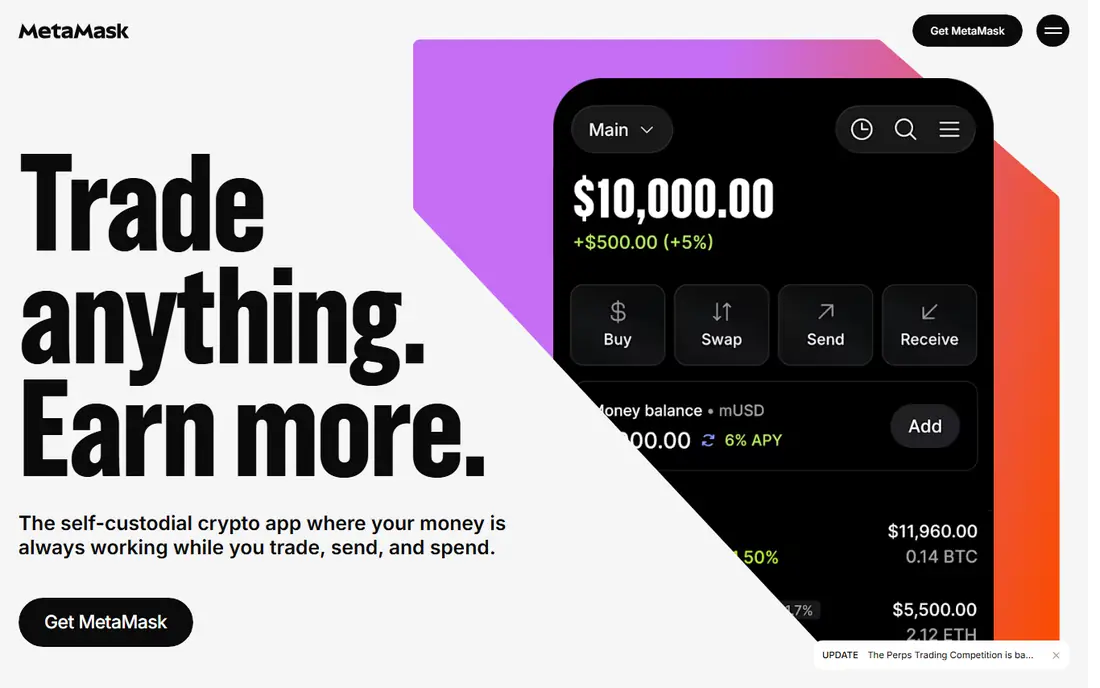
MetaMask remains the default wallet for Ethereum and compatible chains, largely because so many decentralised apps support it first. It works as a browser extension and a mobile app, and it connects to lending, trading, and NFT apps across those networks. For anyone active in Ethereum DeFi, that compatibility is the main reason to choose it.
The trade-off is safety habits. Browser wallets are exposed to phishing sites and malicious approvals, so users need to check every transaction and approval carefully. Beginners should start with small amounts, learn how network fees work, and keep larger holdings elsewhere.
- Widest DeFi app support for Ethereum-compatible chains
- Browser and mobile versions
- Long track record
- Ethereum-focused by default, so other chains need setup
- Browser use raises phishing risk
- Network fees can be confusing for beginners
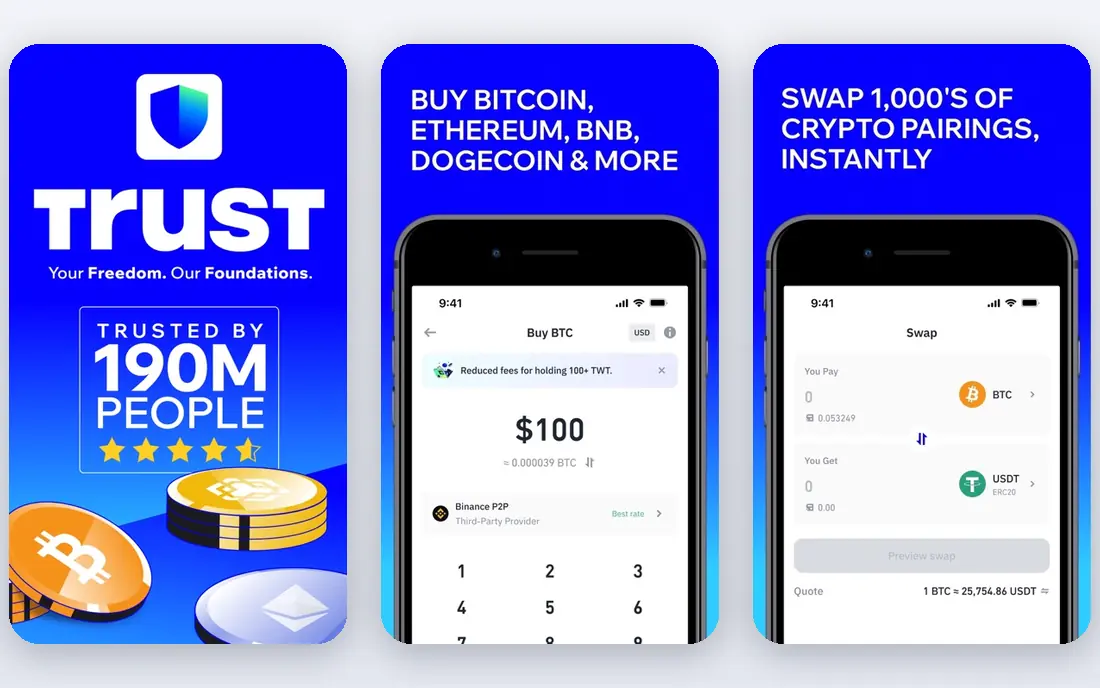
Trust Wallet is the all-in-one mobile option for people who hold assets across many blockchains. It supports Bitcoin, Ethereum, BNB Chain, Solana, and many other networks from a single app, with built-in swapping and staking for supported assets. That breadth means fewer wallet switches for everyday use.
It is still a hot wallet, so it should not hold a life-changing balance on its own. Users should also check swap rates and fees before confirming, since in-app swaps can cost more than a dedicated exchange. For a phone-first user with a varied portfolio, Trust Wallet is a strong starting point.
- Broad multi-chain support in one app
- Built-in swaps and staking
- Simple mobile setup
- Mobile-first, so desktop users need another option
- Swap fees vary
- Support is mainly in-app and online
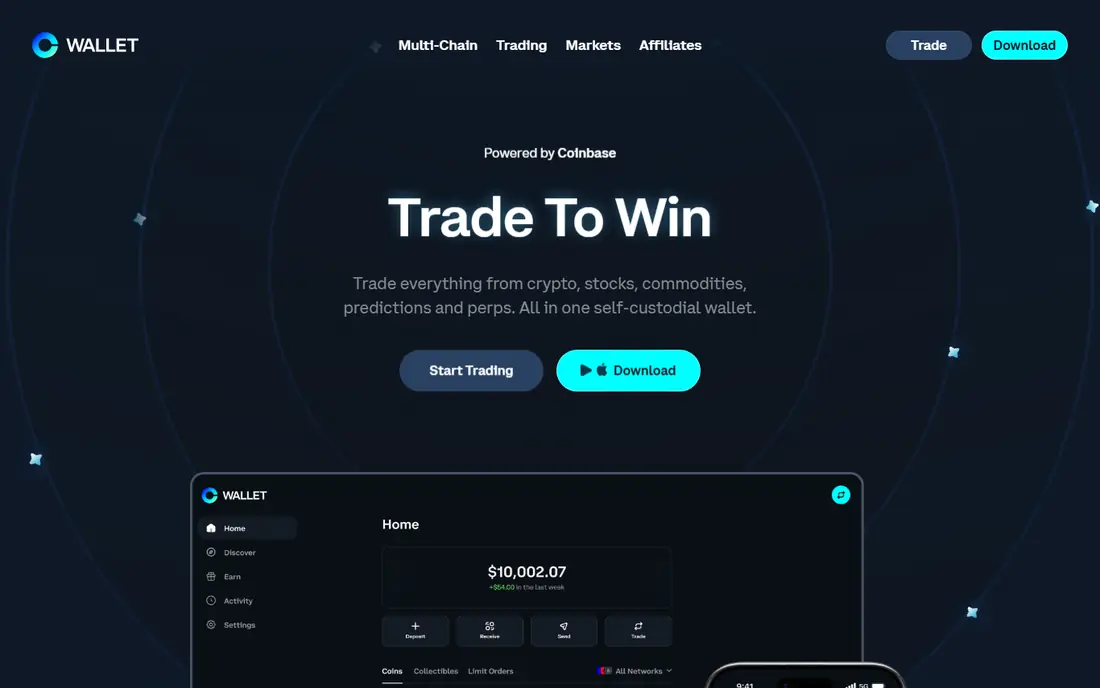
Coinbase Wallet is a self-custody app that is separate from a Coinbase exchange account, even though the same company makes both. It is aimed at beginners who want to move from holding crypto on an exchange to holding their own keys, without a steep learning curve. Setup can use passkeys in some cases, which avoids some seed phrase friction for new users.
It does not cover as many chains as the broadest multi-chain wallets, so check that your assets are supported before moving funds. As with any self-custody wallet, the user is responsible for recovery. For a beginner taking a first step off an exchange, it is one of the gentlest routes.
- Familiar onboarding for Coinbase users
- Self-custody separate from the exchange
- Passkey-based setup option
- Narrower chain coverage than Trust Wallet
- Tied in perception to one exchange brand
- Features vary by platform
Phantom began as a Solana wallet and has grown into a multi-chain app, while keeping a clean interface that many users prefer. It handles Solana transfers, staking, and NFTs well, and it now supports Bitcoin, Ethereum, Base, and other chains. That makes it a good choice if Solana is central to your activity but you also hold a few major assets elsewhere.
Users should still treat it as a hot wallet and keep larger balances offline. NFT and token approvals deserve the same care as in any wallet, since a bad approval can drain assets. For Solana-heavy users, Phantom is the natural first pick.
- Clean Solana experience
- Now supports Bitcoin, Ethereum, and other chains
- Strong NFT handling
- Solana roots mean some features still favour that ecosystem
- Browser and mobile security habits still matter
- New chain support varies
Exodus stands out for design and clarity. Portfolio values, asset breakdowns, and swap options are easy to follow, which helps users who check holdings often but do not want a complex DeFi interface. It runs on desktop and mobile, and it supports a wide range of assets and NFTs.
The built-in exchange is convenient, but convenience can cost more than using a separate trading route, so compare rates for larger swaps. Exodus also pairs with some hardware wallets for added security, which is worth considering for larger balances. For everyday tracking and small swaps, it is one of the most approachable wallets here.
- Polished desktop and mobile design
- Portfolio tracking and built-in swaps
- Supports many assets and NFTs
- Built-in exchange rates can be higher than alternatives
- No hardware device of its own
- Hot wallet risk applies
Ledger is a hardware wallet brand, and its devices keep private keys offline while a companion app manages transactions. That offline design is the core security advantage, since keys are not exposed to a browser or phone in the same way. The range includes entry-level and touchscreen models, so users can choose based on budget and features.
Hardware wallets add friction by design, and that friction protects larger balances. Users must still buy from Ledger or an authorised retailer, verify the device on setup, and store the recovery phrase safely offline. For savings you do not move often, Ledger remains a standard choice.
- Keys stay offline on a secure chip
- Broad coin support through its companion app
- Several device models
- Costs money, unlike software wallets
- Setup takes more time
- Companion app and device updates need care
Trezor is the other major hardware wallet brand, built around an open-source model that lets independent reviewers inspect its code. Its suite app manages holdings, while partner apps extend support to additional coins and features. Newer models add a touchscreen and a secure chip, while entry models cover the core offline signing job.
The same hardware rules apply: buy direct, check the device, and never share or photograph the recovery phrase. Trezor suits users who value open code and a straightforward security story. For long-term storage, it pairs well with a small software wallet for daily spending.
- Open-source security model
- Established brand
- Supports thousands of coins through its suite and partner apps
- Costs money
- Some newer device features are on higher models
- Setup still requires careful recovery storage
Zengo takes a different approach to recovery, using multi-party computation instead of a single seed phrase. That removes one of the most common beginner failure points, which is losing or mishandling a phrase. Setup is designed to feel like a normal app, which lowers the barrier for new self-custody users.
The trade-off is trust in a different model. Recovery does not work exactly like a phrase-based wallet, so users should read how it works before moving a large balance. For beginners who fear losing a phrase more than they need advanced DeFi controls, Zengo is a thoughtful option.
- No traditional seed phrase to lose
- Multi-party recovery model
- Beginner-friendly setup
- Recovery depends on the Zengo model rather than a phrase you hold alone
- Supported assets vary
- Advanced DeFi users may want more controls
Rabby is built for DeFi users who sign many transactions and want clearer warnings before they approve something risky. It previews transactions, flags suspicious contracts, and helps users spot approval mistakes. That focus makes it popular with active Ethereum and compatible-chain traders.
It is not the best general wallet for a user who holds many unrelated chains, and its extra checks take some learning. For DeFi-heavy use, though, those checks are the point. Pairing Rabby for active trading with a hardware wallet for savings is a sensible setup for experienced users.
- Transaction previews and approval checks
- Built for Ethereum-compatible DeFi
- Desktop and browser use
- Ethereum-focused, not a broad multi-chain wallet
- Advanced features can confuse beginners
- Still a hot wallet
Kraken Wallet is a self-custody mobile app separate from a Kraken exchange account. It covers major chains and aims for a simple experience, which suits users who want to hold their own keys without learning a complex DeFi wallet first. Its exchange brand may also reassure beginners, though the wallet itself is non-custodial.
It does not yet match the breadth or DeFi depth of the largest wallets, so check chain and feature support for your holdings. As with any hot wallet, keep daily balances modest and move larger amounts to hardware storage. For a simple, mobile-first self-custody start, it is worth considering.
- Self-custody app from a known exchange brand
- Supports major chains
- Simple mobile interface
- Newer and narrower than the largest wallets
- DeFi depth varies by chain
- Still a hot wallet
How we picked these
We compared official wallet pages, app store listings, and public security descriptions for widely used self-custody wallets in October 2026. We kept wallets that are currently available, support a clear use case, and are non-custodial or hardware-based, rather than exchange accounts. We did not move funds or test recovery in this review, so we describe security models as vendors present them.
How to choose safely
Start with how often you move funds. Daily traders need a hot wallet with good DeFi support, while long-term holders need hardware storage and a safe recovery plan. Many experienced users run both, with a small daily balance in a hot wallet and savings offline.
Next, check chain support before you transfer anything. Send a tiny test amount first, confirm it arrives, and only then move the rest. Never share a recovery phrase, never enter it on a website, and be wary of support messages that ask for it. Those messages are almost always scams.
Finally, review approvals regularly. Old token approvals can remain active long after you stop using an app, and revoking them is a simple safety habit. Keep wallet apps updated, use device locks, and store hardware recovery phrases offline in a safe place.
Frequently asked questions
What is the best crypto wallet app for beginners?
Trust Wallet, Coinbase Wallet, and Phantom are all beginner-friendly, with Trust Wallet best for many chains and Coinbase Wallet best for users coming from an exchange. Start with a small amount, learn how sending and fees work, and only then move a larger balance.
What is the best wallet app crypto users choose for large balances?
A hardware wallet such as Ledger or Trezor is the usual choice for large balances, since keys stay offline. Use a software wallet only for funds you actively trade or spend, and keep the bulk in cold storage.
Are software crypto wallets free?
Most software wallets on this list are free to download, but network fees still apply when you send or swap assets. Hardware wallets cost money to buy, and in-app swaps may add fees on top of network costs.
What happens if I lose my recovery phrase?
In most self-custody wallets, losing the recovery phrase can mean permanent loss of access, since no company can reset it for you. Zengo uses a different recovery model, but you should still read its terms carefully. Store any phrase offline, never photograph it, and never share it.
Is a crypto wallet app safe?
A reputable wallet app can be safe if you follow basic habits, such as downloading from official sources, checking transaction details, and avoiding phishing links. No wallet removes risk entirely, and scams, bad approvals, and device compromise remain real threats.
Can I use more than one crypto wallet?
Yes, and many users do. A common setup is a hardware wallet for savings, plus one hot wallet for daily use. That split limits damage if one device or app is compromised.
Sources
See where you really rank - block by block
ProMapRanker scans Google Maps across a grid of your service area. Simple monthly plans from $19, white-label on every plan.
Start freeKeep reading
 zeffy payment processor stripe alternatives
Zeffy and Stripe Alternatives for Nonprofits in 2026
Explore zeffy payment processor stripe alternatives for nonprofits. We compare 8 fundraising platforms on fees, donor tools, and nonprofit focus. Check fees.
Read → workday alternatives
Workday Alternatives in 2026
Workday alternatives compared: we review 8 HR and payroll platforms that replace Workday, with pricing, strengths and honest limits for each team size.
Read → what's the best weather app
What's the Best Weather App in 2026
Wondering what's the best weather app? We compare 10 free and paid apps for forecasts, radar, alerts, and Colorado mountain weather for everyday and storm use.
Read →