 ProMapRanker
Best Company to Sell Your Business in 2026


Vetted online business sales · Pricing starts at: See website
Key takeaways
- Deal size decides the route: marketplaces suit smaller online businesses, while brokers and advisers suit larger or offline sales.
- Empire Flippers and Acquire.com suit online businesses, while Transworld and Sunbelt suit main street and offline companies.
- Fees vary from listing fees plus a success fee to a single success fee, so compare total cost at your expected sale price.
- Confidentiality, buyer vetting and migration support matter as much as the headline fee.
- Get a valuation and a written fee schedule before signing an engagement, and do not rely on a single broker estimate.
Quick comparison
| Pick | Great for | Pricing starts at | Free tier | |
|---|---|---|---|---|
| Empire Flippers | Vetted online business sales | See website | No | Visit |
 FE International | Brokered online business sales | See website | No | Visit |
 Acquire.com | Self-run online business sales | See website | No | Visit |
 Flippa | High volume small listings | See website | No | Visit |
 Quiet Light | Advised online business sales | See website | No | Visit |
 Transworld Business Advisors | Main street and mid-size sales | See website | No | Visit |
 Sunbelt Business Brokers | Regional broker network sales | See website | No | Visit |
 Viking Mergers and Acquisitions | Mid-size company sales | See website | No | Visit |
 Synergy Business Brokers | Professional services sales | See website | No | Visit |
The best companies to sell your business
Selling a business is a pricing, confidentiality and buyer fit problem, not just a listing problem. The companies below cover online marketplaces, online brokers, general business brokers and M&A advisers, and the right pick depends on business type, size and how much hands-on help you want. This is general information only, not financial advice, and a sale of this size deserves independent legal and tax advice.

Empire Flippers is a strong first look for owners of established online businesses who want a vetted process rather than an open listing board. Buyers are screened, listings carry verified financial detail, and the company supports migration after a sale, which reduces the risk of a handover problem. That structure suits sellers who value a cleaner buyer pool over maximum listing volume.
The trade-off is access and cost. Not every business passes vetting, and the fee schedule, which the site states in tiers, is a real share of the sale price. We would use Empire Flippers when the business has clean records and a clear online model, and we would price the fee at the expected sale value before listing.
- Vetted listings and buyer screening
- Done-for-you migration support
- Focus on online businesses
- Vetting can exclude smaller or messier businesses
- Success fees are material on larger deals

FE International works as a broker for online businesses, with advisers running valuation, marketing, buyer outreach and negotiation. That hands-on model helps owners who do not want to run buyer calls themselves, and it suits SaaS, e-commerce and content businesses with a track record. Confidential marketing also protects staff and customers during the process.
The limit is deal fit. A broker-led process is heavier than a marketplace listing, so very small businesses may find the effort and fee hard to justify. We would shortlist FE International for a mid-size online sale where adviser time can add value, and we would ask for a written fee and timeline before signing.
- Broker-led sale process for online businesses
- Experience across SaaS, e-commerce and content
- Confidential marketing
- Broker process suits larger deals best
- Fees are quoted rather than published in full
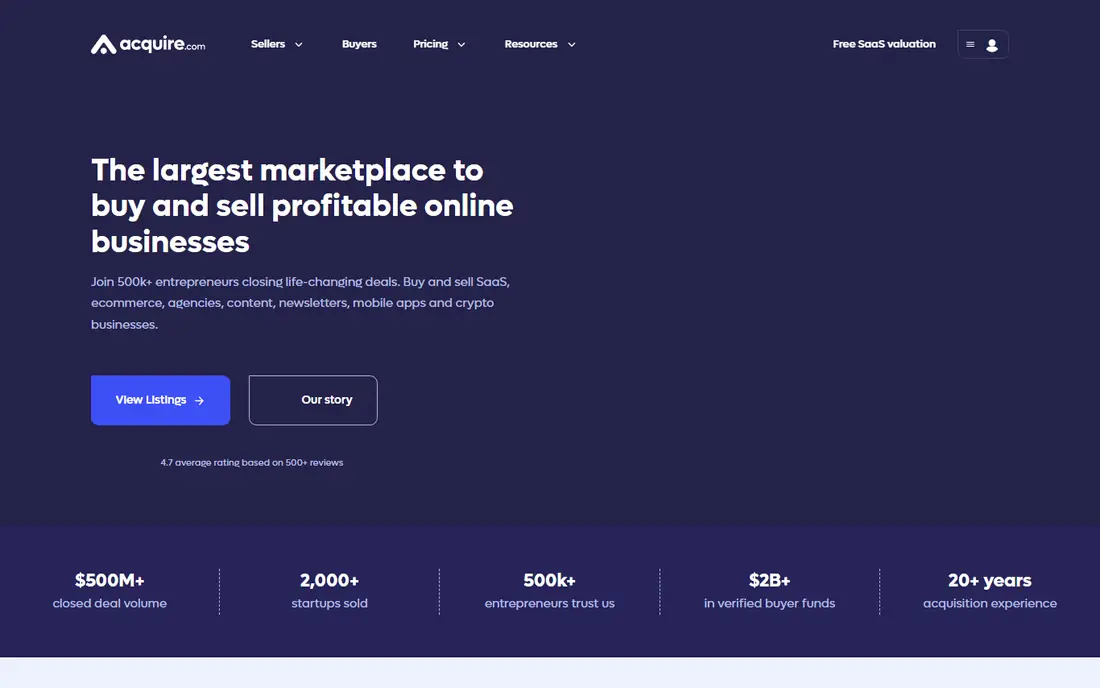
Acquire.com gives sellers more control than a broker, with a large buyer pool and tools for listings, non-disclosure agreements and deal tracking. That model suits an owner who is comfortable answering buyer questions and managing diligence, and who wants broad buyer reach without handing the whole process to an adviser. The platform format also makes it easier to compare buyer interest quickly.
The catch is workload. A self-run sale still needs clean financials, prompt replies and careful buyer screening, and the seller carries that work. We would use Acquire.com when the owner has time and clean records, and we would still take legal advice before signing a purchase agreement.
- Large registered buyer pool
- Seller controls the process
- Tools for listings, NDAs and deal tracking
- Self-run model needs more seller time
- Success fees apply on closing
Flippa is the volume option in this list, and that volume is useful at the small end of the market. Websites, apps and small online businesses can list at a low entry cost and reach a large buyer pool, which helps when the asset is small and a broker fee would eat too much of the price. The range of listing types also makes it a natural first place to test buyer interest.
The weakness is noise. An open marketplace brings more unqualified enquiries, and sellers have to screen buyers and manage diligence themselves. We would use Flippa for smaller assets with clear records, and we would set a firm screening step, such as an NDA before sharing detailed financials, from the start.
- Very large buyer pool
- Low listing cost entry point
- Covers websites, apps and small online businesses
- Open marketplace means more unqualified buyer contact
- Smaller deals get less hands-on support
Quiet Light sits between a marketplace and a large M&A bank, with advisers guiding valuation, marketing and negotiation for online businesses. That middle ground helps owners who want advice but do not need a full investment bank process. The firm works with content, e-commerce and SaaS businesses, and its process keeps the sale confidential while buyer interest is tested.
The limit is scale. Very small businesses may not justify an advised fee, and very large deals may need a bank with a different buyer network. We would shortlist Quiet Light for a mid-size online sale where valuation and negotiation help can move the price, and we would compare its fee with a marketplace route at the same expected value.
- Adviser-led process with valuation guidance
- Focus on online businesses
- Confidential buyer outreach
- Advised model suits mid-size deals best
- Fees are quoted
Transworld is the generalist broker network in this list, and its strength is local reach for offline businesses. Restaurants, services, distribution and other main street companies need local buyers, local valuation knowledge and face-to-face handling, and a franchise network can provide that in many US markets. Sellers who do not run an online business will often find this route more useful than an online marketplace.
The honest catch is variation. A franchise network means the local broker matters as much as the brand, so a seller should interview the actual broker who will run the sale. We would ask for recent comparable sales in the same area and sector, and we would check the fee schedule and marketing plan in writing before signing.
- Large franchise broker network
- Experience with offline and main street businesses
- Local broker support
- Quality can vary by local office
- Fees and process vary by broker
Sunbelt offers a similar network advantage to Transworld, with a structured process covering valuation, confidential marketing, buyer screening and closing support. Its brokers work across construction, manufacturing, distribution and business services, which suits owners of established offline companies. Regional depth is the draw: a local broker network can reach buyers who would never find an online-only listing.
The weakness, again, is local variation and deal ceiling. A very large or complex sale may be better served by a dedicated M&A adviser with a sector buyer list. We would interview the local Sunbelt broker, ask for sector comparables, and compare the fee with an independent adviser quote before committing.
- Large US broker network
- Structured sale process
- Experience across construction, manufacturing and services
- Local broker quality varies
- Larger deals may need an M&A adviser instead
Viking Mergers and Acquisitions targets the mid-size bracket, where a business is too large for a main street broker listing but too small for a large investment bank. Its process covers valuation, confidential marketing, negotiation and closing, and its buyer network includes private equity and strategic buyers. That combination suits owners who want a managed sale with competitive tension among serious buyers.
The limit is entry size. Small businesses will not fit the model, and the adviser-led process takes months rather than weeks. We would shortlist Viking for a company in its stated value range with clean financials, and we would ask for a timeline, fee schedule and recent sector deals before signing.
- Focus on companies valued from about $1 million upward
- Long transaction record
- Private equity and strategic buyer network
- Minimum deal size excludes small businesses
- Process is adviser-led and takes time
Synergy Business Brokers earns a place for sector focus. Selling a consulting or professional services firm is different from selling a product business, because client relationships, staff retention and recurring revenue carry much of the value. Synergy presents that focus openly, with confidential marketing to screened buyers and a fee approach that is tied to a completed sale.
The trade-off is narrow fit. A retail, manufacturing or e-commerce owner will find less that is tailored to their business here. We would use Synergy when the business is a professional services firm, and we would ask how buyer screening protects client relationships during diligence.
- Focus on professional and consulting firms
- Performance-based fee approach stated on site
- Confidential buyer screening
- Sector focus may not suit product or retail businesses
- Capacity is smaller than a large network
How we picked these
We compared official company pages, deal size fit, business type focus, fee models and public transaction material, and we left out firms with no clear official homepage or sale service. We did not test a sale process, and we did not treat a broker claim about price as a guarantee. A company stayed on the list only when its own site described a sale service for the business type it claims to serve.
How to choose the right route for your sale
Start with size and type, then with confidentiality. An online business under a few hundred thousand dollars in value often fits a marketplace, while a mid-size offline company often fits a local broker, and a larger company with sector buyers often fits an M&A adviser. Ask each firm for a valuation range, a marketing plan, a buyer screening method and a written fee schedule, and compare total fees at the same sale price. Check how staff, customers and suppliers are protected during the process, and ask who will actually run your deal day to day.
Prepare before you list. Clean financials for at least two to three years, a clear owner earnings figure, customer concentration notes and a handover plan all raise buyer confidence and can shorten diligence. Get independent legal and tax advice early, especially on asset versus share sale structure, earn-out terms and non-compete clauses. A good adviser will welcome that advice; a firm that pressures you to sign quickly deserves a second look.
Frequently asked questions
What is the best company to sell my business?
The best company depends on your business type and size. Empire Flippers and Acquire.com suit online businesses, Transworld and Sunbelt suit offline and main street companies, and Viking suits mid-size companies. Compare fee, buyer network and the actual adviser who will run your sale, not just the brand name.
What is the best company to sell your business if it is online?
For online businesses, Empire Flippers offers a vetted process with migration support, FE International and Quiet Light offer broker-led help, and Acquire.com and Flippa offer marketplace reach with more seller control. Choose by deal size, record quality and how much hands-on help you want. A business with clean financials will do better on any of these routes.
How much does it cost to sell a business?
Costs vary by route and sale price, and most firms charge a success fee, sometimes plus a listing or retainer fee. Marketplace fees are often lower in percentage terms but need more seller time, while broker and adviser fees are higher but include marketing and negotiation. Ask for a written fee schedule and compare total cost at your expected sale price.
How long does selling a business take?
A small online listing can move in weeks, while a brokered or adviser-led sale often takes several months from valuation to closing. Diligence, buyer financing and legal work all add time, and confidentiality steps can slow early stages. Ask for a realistic timeline with diligence and closing milestones before signing.
Should I use a broker or sell it myself?
A broker or adviser helps with valuation, confidential marketing, buyer screening and negotiation, which can matter for larger or more complex sales. A marketplace route can work for a smaller, well-documented business when the owner has time to manage buyers. Either way, take independent legal advice before signing a purchase agreement.
Do I need a valuation before I list?
Yes, a valuation range helps you set a realistic asking price and judge broker estimates. Different firms may give different ranges, so compare methods and ask what comparable sales support the figure. A valuation is a guide, not a guarantee of the final price, and buyer diligence can move it in either direction.
Sources
- https://empireflippers.com
- https://feinternational.com
- https://acquire.com
- https://flippa.com
- https://quietlight.com
- https://tworld.com
- https://sunbeltnetwork.com
- https://vikingmergers.com
- https://synergybb.com
- https://waveup.com/blog/best-m-and-a-advisors-for-startups/
- https://saltcreekadvisory.com/articles/best-ma-advisors-selling-20-million-company-2026
See where you really rank - block by block
ProMapRanker scans Google Maps across a grid of your service area. Simple monthly plans from $19, white-label on every plan.
Start freeKeep reading
 zoho books alternatives
Best Zoho Books Alternatives in 2026
Compare the best zoho books alternatives for small business accounting, from QuickBooks Online and Xero to FreshBooks, Wave, and Sage in 2026, with pricing.
Read → zluri alternatives
Best Zluri Alternatives in 2026
Compare zluri alternatives for 2026, with SaaS management platforms for app discovery, spend tracking, renewals, and automation for IT, finance and procurement.
Read → zerobounce alternatives
Best ZeroBounce Alternatives in 2026
Best zerobounce alternatives for list hygiene: compare 8 email verification tools for bulk cleaning, real-time checks and catch-all handling in 2026 today.
Read →