 ProMapRanker
Best Companies for Owner Operators to Lease To in 2026

Key takeaways
- Leasing on means running under a carrier's authority, so load choice, pay model, and support matter more than a headline rate.
- Landstar and Mercer suit independent operators who want load choice and no forced dispatch, while Schneider and Prime suit operators who want large networks.
- Percentage pay, mileage pay, and all-in revenue models behave differently, so compare net pay after fuel, fees, and insurance, not gross revenue.
- Read the lease-on agreement in full before signing, including fuel surcharge, cargo insurance, trailer terms, and exit conditions.
Quick comparison
| Pick | Great for | Pricing starts at | Free tier | |
|---|---|---|---|---|
 Landstar | Independent load choice | See website | No | Visit |
 Mercer Transportation | Open-deck and specialized freight | See website | No | Visit |
 Schneider | Large network and program choice | See website | No | Visit |
 Prime Inc. | Lease-purchase path to ownership | See website | No | Visit |
 J.B. Hunt | Dedicated and regional options | See website | No | Visit |
 Maverick Transportation | Flatbed and specialized training | See website | No | Visit |
 Bennett Motor Express | Heavy-haul and specialized loads | See website | No | Visit |
 Dart Transit Company | Midwest and regional owner-operators | See website | No | Visit |
 PGT Trucking | Flatbed flexibility and growth | See website | No | Visit |
The best companies for owner operators to lease to
Leasing on to a carrier is a business decision, not just a driving job, since the carrier's freight, pay model, and support shape your weekly net. The companies below lease on owner-operators in the United States, and we compared their official owner-operator pages, pay program descriptions, and public driver feedback. Pay figures vary by freight, region, and effort, so we avoid presenting third-party averages as promises, and we mark pricing as See website where terms come through an application.
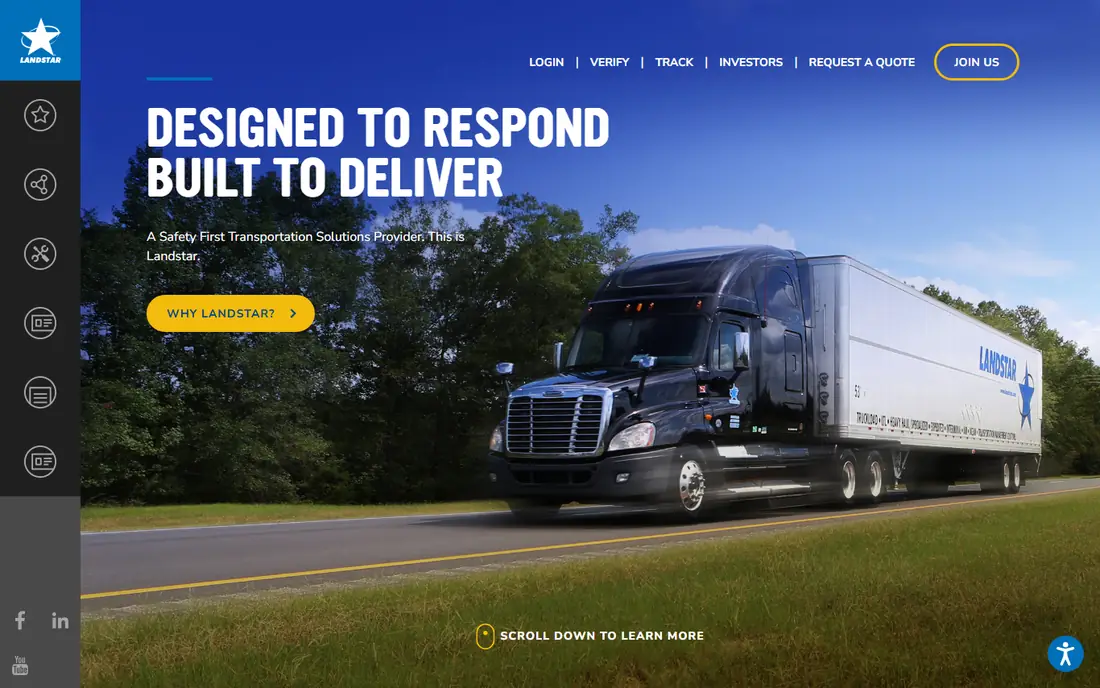
Landstar is the classic pick for owner-operators who want to run their own business under a large carrier's authority. Its business capacity owners, as it calls them, choose loads from its board, set their own schedules, and keep a percentage of load revenue, with no forced dispatch. Discount programs for fuel and tires, plus business development courses, help owners who are strong drivers but newer to running the numbers.
The honest trade-off is responsibility. Freedom to choose loads also means freedom to choose poorly, and income depends on lane selection, negotiation, and time management. Operators who want a dispatcher to plan every week may prefer a more managed carrier, while operators who want control will find Landstar hard to beat.
- Self-dispatch with no forced dispatch
- Large load board and agent network
- Fuel, tire, and business discounts through its programs
- Independence means you manage your own business planning
- Percentage pay varies with the freight you choose
Mercer Transportation runs entirely around owner-operators, which gives it a clear identity among large carriers. Its freight centers on flatbed, step-deck, and specialized loads, and operators can pick freight from its board or work with a personal load coordinator. No forced dispatch, fuel and maintenance discounts, and quick pay options are part of the pitch, and its network suits experienced open-deck operators.
The limit is equipment and experience. A standard dry van operator cannot simply join for flatbed work, and specialized and oversized loads demand skill, securement knowledge, and the right trailer. For an open-deck owner-operator who wants independence with specialized freight, Mercer is one of the strongest fits available.
- Entirely owner-operator model with no forced dispatch
- Flatbed, step-deck, and specialized freight focus
- Load board plus personal coordinators
- Open-deck equipment requirements limit who can join
- Specialized freight needs experience and the right trailer
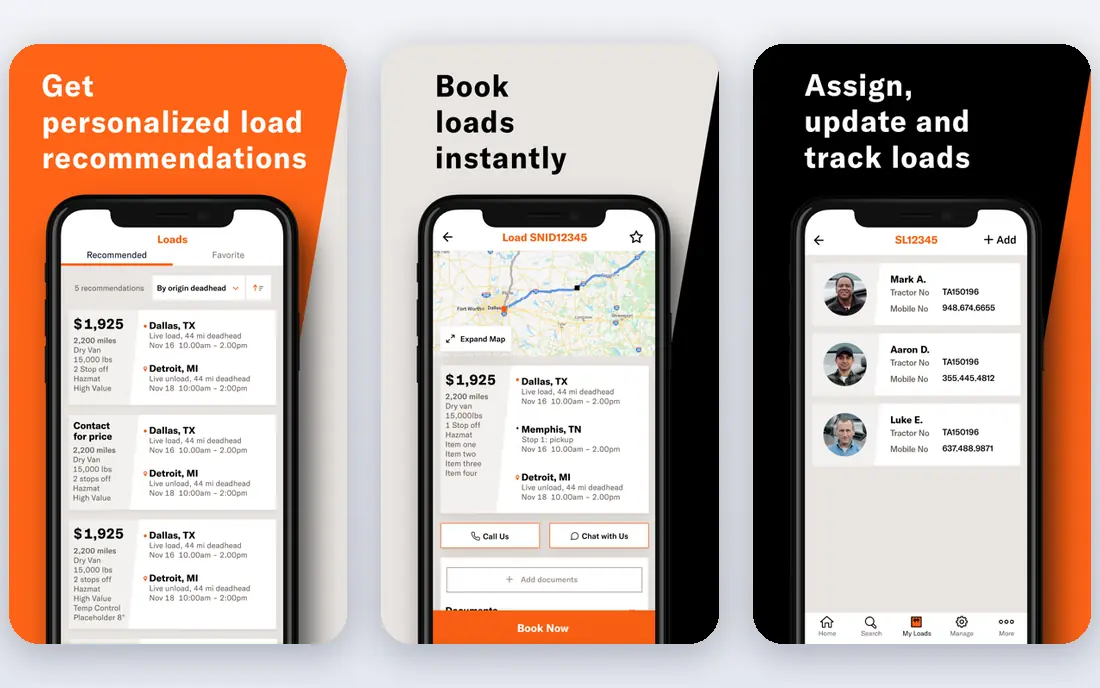
Schneider offers owner-operators a choice of revenue programs, which is rarer than it sounds. Its all-in revenue program bundles fuel surcharge and accessorials into one rate, while its percent-revenue program pays a percentage of linehaul plus fuel surcharge and accessorials. That choice lets an operator pick simplicity or upside, depending on how they like to run. Its freight volume, facilities, and support network also give steady load options across North America.
The drawback is scale. A carrier this large will not feel like a small family fleet, and program details matter enough that two Schneider operators can earn very differently on similar miles. Compare the programs on your actual lanes, ask about trailer, insurance, and fee deductions, and confirm home-time options before choosing.
- Several owner-operator programs, including all-in revenue and percent-revenue options
- Very large freight network
- Truck financing and maintenance discounts
- Large-company process can feel impersonal
- Program terms need careful comparison, since all-in and percent models pay differently
Prime Inc. is often the first name drivers hear for lease-purchase, since it offers a path for company drivers and newer owner-operators to work toward owning a truck. Its divisions cover refrigerated, flatbed, and tanker freight, and its size gives steady freight and support services. For a driver who wants to move from company driving to ownership without buying a truck outright, that structured path is the appeal.
The honest caution applies to every lease-purchase deal, not just Prime. Weekly truck payments, maintenance reserves, insurance, and fuel all come out before net pay, and the contract terms decide what happens if freight slows or the driver wants to leave. Read the full lease, model a slow week, and compare it with leasing on with a truck you already own.
- Lease-purchase program for drivers working toward ownership
- Reefer, flatbed, and tanker divisions
- Training and support for newer operators
- Lease-purchase terms require close reading, since weekly payments and costs shape net pay
- Division and freight type affect earnings
J.B. Hunt suits owner-operators who want steadier home time without giving up carrier scale. Its dedicated, regional, and intermodal divisions offer routes that return home more predictably than long over-the-road runs, and its freight volume gives options across the country. Support programs, including tuition help, add to the appeal for drivers planning a longer career.
The limit is variation by division. An owner-operator program in one division may pay and schedule very differently from another, so the headline brand is not enough to judge the offer. Ask which division, which lanes, and which pay model apply to you, and confirm home-time guarantees in writing before signing.
- Large freight network with intermodal, dedicated, and regional work
- More consistent home-time options than pure over-the-road carriers
- Tuition and support programs
- Owner-operator programs vary by division, so terms differ
- Large-carrier process may suit planners more than free-roaming independents
Maverick Transportation is a well-regarded flatbed carrier that leases on owner-operators for flatbed and specialized work. Its training reputation matters for drivers moving into flatbed, since securement and specialized handling take skill that dry van work does not teach. Its freight mix includes flatbed and glass, with support programs for insurance and business needs.
The trade-off is specialization. A driver who wants to switch between van, reefer, and flatbed will find Maverick narrow, and flatbed work is physical and weather-exposed. For an owner-operator who wants flatbed as a career, though, the training and freight focus make Maverick a strong shortlist pick.
- Strong flatbed and glass-haul training reputation
- Specialized freight focus
- Insurance and support programs for owner-operators
- Flatbed specialization limits freight choice
- Training and equipment standards require commitment
Bennett Motor Express, part of the Bennett International Group, focuses on heavy-haul, specialized, and project freight that standard carriers cannot move. Its owner-operator and agent model suits experienced operators with the right equipment, and its team handles permits, routing, and project planning for complex loads. For an operator who wants challenging, higher-paying specialized work, Bennett offers a distinct path.
The limit is access and regularity. Heavy-haul work is not steady van freight, and it demands experience, permits, and often escorts or special trailers. Newer operators should build open-deck experience first, while experienced heavy-haul operators will find Bennett a credible specialist carrier.
- Heavy-haul, specialized, and government freight experience
- Agent and owner-operator model
- Support for complex permits and routing
- Specialized work needs experience, permits, and equipment
- Freight can be irregular compared with standard van loads
Dart Transit Company is a long-running truckload carrier with owner-operator programs that suit regional and Midwest-based operators. Its size gives steady freight without the scale of the largest national carriers, and its regional density can mean better home time for drivers based near its core lanes. That balance appeals to operators who want carrier support without a fully national, impersonal system.
The drawback is reach. An operator who wants regular coast-to-coast freight may find a larger network such as Landstar or Schneider a better fit. Dart suits operators whose home base and preferred lanes sit in its core regions, so check lane density from your home before applying.
- Regional strength in the Midwest and beyond
- Owner-operator programs with load choice elements
- Long history as a truckload carrier
- Regional focus may limit coast-to-coast options
- Program terms vary and need a direct quote
PGT Trucking is a flatbed carrier that pitches flexibility to owner-operators, with public comparisons noting perks such as deferred payments, free trailer rental for an initial period, and discounts on tires and parts. Its US, Canada, and Mexico coverage gives flatbed operators cross-border options, and its size supports growth for operators who later add trucks.
The honest limit is the same as with any flatbed carrier. Freight type is narrow, work is physical, and the perks in public comparisons must be confirmed in the actual lease-on agreement, since terms change. For a flatbed owner-operator who wants a mid-size carrier with growth room, PGT deserves a direct conversation.
- Flatbed focus with flexible programs
- Deferred payment and trailer rental perks described in public comparisons
- Growth path for expanding owner-operators
- Flatbed-only focus limits freight type
- Perks and terms vary and must be confirmed in the agreement
How we picked these
We compared official owner-operator pages, pay program descriptions, freight types, and public driver feedback for carriers that lease on owner-operators in October 2026. We kept carriers with a live owner-operator or lease-on offer, and we favored a mix of independent-model carriers, large networks, flatbed specialists, and lease-purchase providers. We marked pricing as See website where pay depends on freight, division, and agreement terms, and we avoided presenting third-party pay averages as guaranteed income.
How to compare lease-on offers fairly
Two carriers can quote similar gross revenue and leave very different net pay, so the comparison must go past the headline.
Compare net pay, not gross revenue
List every deduction, including fuel, insurance, cargo coverage, trailer rental, maintenance reserves, dispatch fees, and administrative charges. Ask how fuel surcharge is calculated and paid, whether accessorials are included, and how detention and layover pay work. Model a good week and a slow week, since a program that looks strong at high miles may strain at low miles.
Check load choice, home time, and exit terms
Confirm whether dispatch is forced, how loads are chosen, and how home time is requested and honored. Read the exit terms, including notice period, trailer return, insurance tail, and any remaining payment obligations. A carrier that suits your driving style matters as much as its pay model, since you will live with the schedule every week.
Verify freight, lanes, and support before signing
Ask about freight volume on your preferred lanes, average length of haul, and how often operators sit waiting for loads. Confirm support for permits, safety, compliance, and maintenance, and ask to speak with current owner-operators in your division. A short conversation with a working operator often reveals more than a recruiting page.
Frequently asked questions
What is the best company for owner operators to lease to?
Landstar and Mercer suit independent operators who want load choice and no forced dispatch, while Schneider and J.B. Hunt suit operators who want large networks and steadier routes. Flatbed operators should also shortlist Maverick, Bennett, and PGT. The best pick depends on your equipment, preferred lanes, and how much control you want over your schedule.
What is the best lease owner operator company for new owner-operators?
Newer owner-operators often do best with a carrier that offers training, steady freight, and clear support, such as Prime Inc. for a lease-purchase path or Schneider for program choice. Leasing on with a truck you already own at Landstar or Mercer suits experienced operators who can plan lanes and manage costs. New operators should model slow weeks before signing any lease.
How does owner-operator pay work when leasing on?
Most carriers pay by percentage of load revenue, by mileage, or by an all-in revenue model that bundles surcharge and accessorials. Percentage pay rewards high-value freight, mileage pay rewards miles, and all-in pay simplifies the rate but hides the breakdown. Always compare net pay after deductions, not the gross rate, and confirm fuel surcharge treatment in writing.
Do I need my own authority to lease on?
No, leasing on means you run under the carrier's operating authority, insurance, and safety program, which is the main difference from running fully independent. You still own or lease your truck, and you remain responsible for your business costs and taxes. Operators who want full independence need their own authority, which brings added compliance and insurance work.
What should I check in a lease-on agreement?
Check pay model, fuel surcharge, deductions, trailer terms, insurance, maintenance reserves, dispatch rules, home-time policy, and exit conditions. Confirm who pays for cargo insurance, bobtail insurance, and permits, and what happens if you leave early. Have an experienced driver, accountant, or attorney review the agreement before you sign, since these terms shape your net income.
Sources
See where you really rank - block by block
ProMapRanker scans Google Maps across a grid of your service area. Simple monthly plans from $19, white-label on every plan.
Start freeKeep reading
 zoho books alternatives
Best Zoho Books Alternatives in 2026
Compare the best zoho books alternatives for small business accounting, from QuickBooks Online and Xero to FreshBooks, Wave, and Sage in 2026, with pricing.
Read → zluri alternatives
Best Zluri Alternatives in 2026
Compare zluri alternatives for 2026, with SaaS management platforms for app discovery, spend tracking, renewals, and automation for IT, finance and procurement.
Read → zerobounce alternatives
Best ZeroBounce Alternatives in 2026
Best zerobounce alternatives for list hygiene: compare 8 email verification tools for bulk cleaning, real-time checks and catch-all handling in 2026 today.
Read →