 ProMapRanker
Best Companies for Fleet Dash Cams


All-in-one fleet platform with AI dash cams · Pricing starts at: quote only
Key takeaways
- None of the major dash cam vendors publishes a price; every deal is a quote for hardware plus a per-vehicle subscription.
- Samsara is the all-in-one pick, with GPS, AI dash cams, ELD, and maintenance in one platform, plus a 30 day trial.
- Lytx and Netradyne are the camera-first specialists, built around video, coaching, and driver safety programs.
- Motive fits trucking fleets that need ELD compliance and AI dash cams in one stack.
- Verizon Connect is the only vendor here with a public government rate card, showing $15.95 per vehicle a month for base tracking.
Quick comparison
| Pick | Great for | Pricing starts at | Free tier | |
|---|---|---|---|---|
| Samsara | All-in-one fleet platform with AI dash cams | quote only | Free trial (30 days) | Visit |
 Lytx | Video telematics with analyst-reviewed coaching | quote only | No | Visit |
 Netradyne | AI driver safety with on-camera alerts | quote only | No | Visit |
 Motive | Trucking fleets that need ELD plus video | quote only | No | Visit |
 Verizon Connect | Enterprise fleets with dispatch depth | quote only | No | Visit |
 Geotab | Open platform with camera choice | quote only | No | Visit |
 Azuga | Small and mid-size fleets wanting AI cameras | quote only | No | Visit |
 SureCam | Camera-only video protection for small fleets | quote only | No | Visit |
The best companies for fleet dash cams
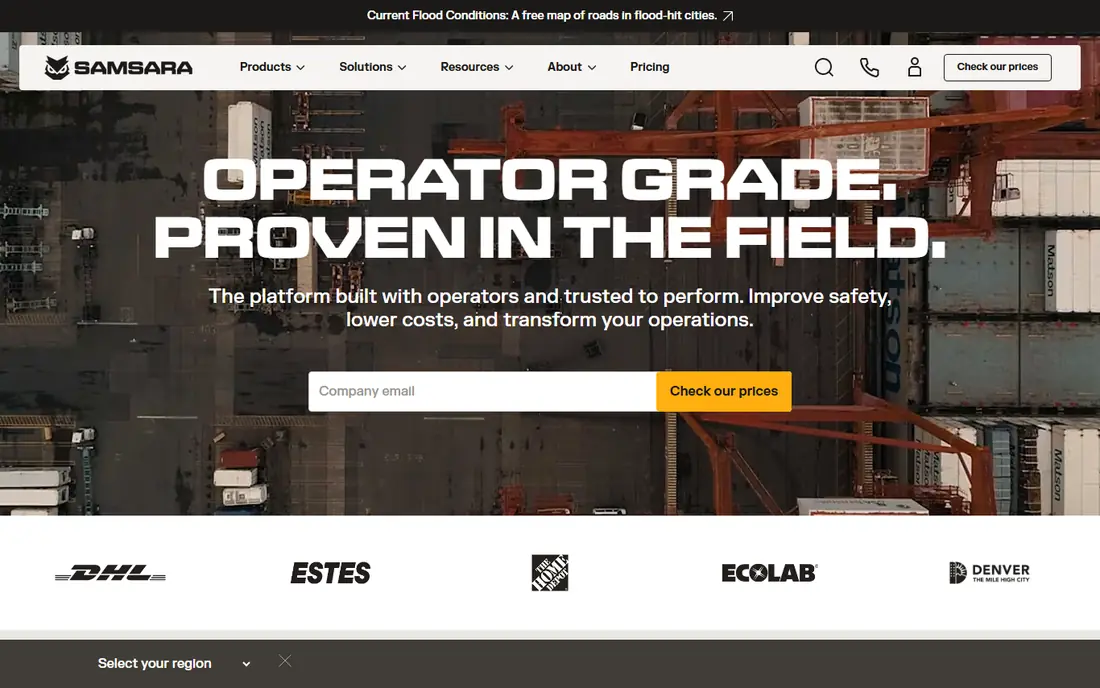
Samsara is the reference point for fleet dash cams. Its AI dash cams sit inside a connected operations platform that also covers GPS tracking, ELD compliance, equipment monitoring, and fuel reporting, so one dashboard shows the vehicle, the driver, and the camera. The CM32 dual-facing camera records 1080p front and cabin video with low light performance, and the AI flags risky events for coaching. A 30 day trial is rare in this market and worth using.
The price of admission is opacity. Samsara publishes no rates, and third party research puts software licenses around $27 to $33 per vehicle per month before hardware, with cameras adding $150 to $350 per unit. Contracts are typically three years, and early termination fees follow the remaining value. Large fleets that already need telematics and cameras get the most from Samsara, while a five-van operation that only needs video will find the cost and contract heavy.
- GPS, AI dash cams, ELD, and maintenance in one dashboard
- CM32 dual-facing camera with 1080p video
- 30 day trial is rare in this market
- No published pricing
- Contracts are typically three years with hardware costs on top
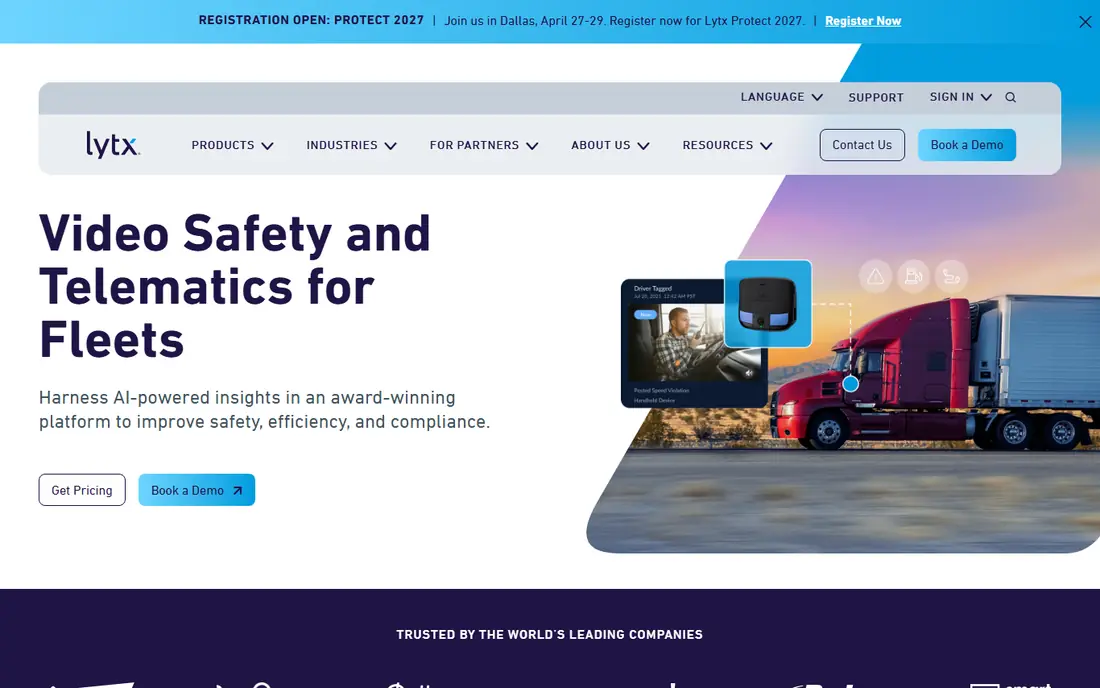
Lytx pioneered video telematics: the idea that cameras change driving. Its DriveCam system captures risky events, and its coaching workflows turn footage into behavior change, with optional analysts who review flagged clips for you. No rival matches that review service, which matters for fleets without a safety manager. The cameras, the event detection, and the coaching tools are built for one job, driver safety, and the platform stays focused on it.
Lytx publishes no pricing, so every deal is a custom quote, and third party reports place it in a wide range. The platform is video-centric, with less operational breadth than Samsara or Motive: there is no maintenance module or equipment tracking of the same depth. Fleets that want a serious safety program built around video, with coaching as the core, should put Lytx first. Fleets that want one vendor for everything should look at the all-in-one tools.
- Pioneered video telematics for driver safety
- Optional analysts review flagged clips
- Coaching workflows turn footage into behavior change
- No published pricing
- Video-centric with less operational breadth than all-in-one platforms
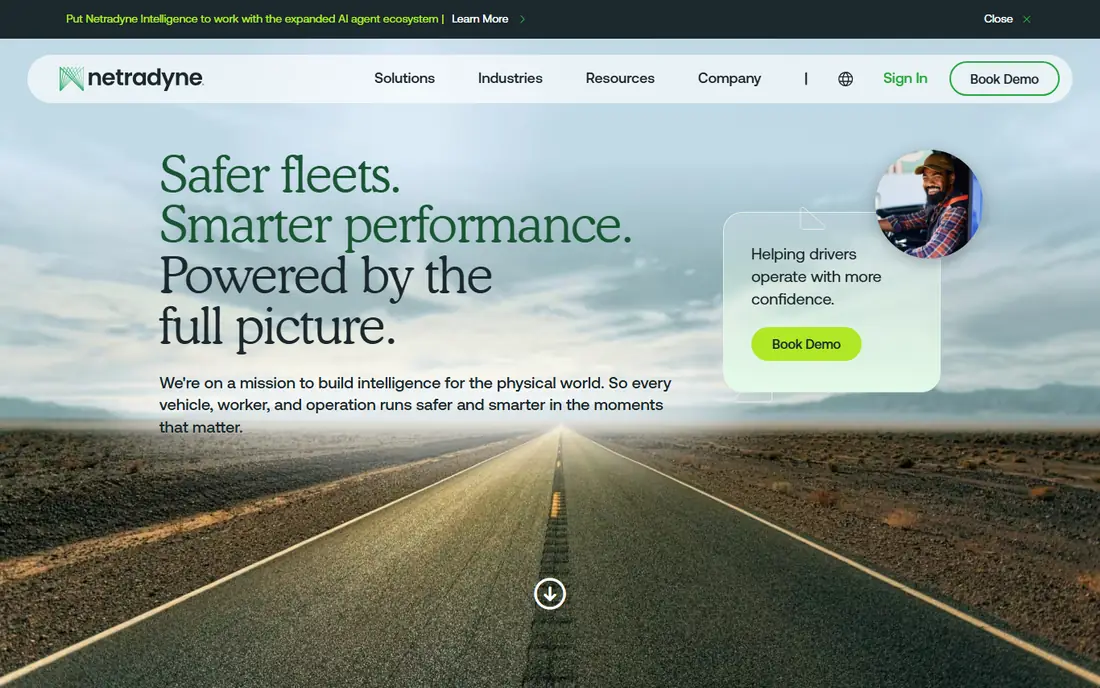
Netradyne takes a different angle from event-only cameras: its Driveri system analyzes the entire drive, not just the seconds around a hard brake, and builds a complete safety profile for each driver. The AI runs on the camera itself, so alerts reach the driver faster than cloud-processed video. Its DriverStars program recognizes good driving as well as risky driving, which helps fleets that want coaching to feel fair rather than punitive.
Netradyne publishes no pricing, and the company is newer than Lytx, with a shorter track record at very large scale. The full value needs a coaching commitment: a fleet that installs cameras and never reviews the footage will see little change. Fleets that already take safety seriously and want a dedicated camera layer that improves driver behavior will find Netradyne the most focused option here.
- Analyzes the entire drive, not just events
- AI runs on the camera for faster alerts
- DriverStars program recognizes good driving
- No published pricing
- Newer than Lytx with a shorter track record at very large scale
Motive, formerly KeepTruckin, grew up in trucking and still fits that world best. Its AI dashcams warn drivers in real time about distractions and unsafe following distance, while the back office gets safety scores, event video, and automated coaching assignments. The camera sits next to a battle-tested ELD workflow, IFTA fuel tax reporting, and dispatch tools, so a carrier gets compliance and safety in one stack.
Motive publishes no pricing, though third party research puts the core service around $25 per vehicle per month, with the dash cam pushing that to roughly $35 to $45. Contracts are flexible, with one year or month to month terms, which is a real advantage over Samsara's three year minimum. Motive fits trucking fleets and regional carriers that need ELD compliance and driver coaching together.
- AI dashcams warn drivers in real time
- ELD workflow is battle-tested for FMCSA rules
- Flexible one year or month to month contracts
- No published pricing
- Camera hardware adds $150 to $250 per unit on top of the gateway
Verizon Connect is the fleet arm of Verizon, and it suits enterprise fleets and service-heavy operations that value dispatch depth and established vendor relationships. Its dashcams add AI event detection to a tracking platform that already covers routing, dispatch, and maintenance. The brand carries weight in procurement, and the platform integrates with the fuel, toll, and telematics systems that large fleets already run.
Verizon Connect is the only vendor here with a public government rate card: base tracking lists at $15.95 per vehicle per month on the GSA schedule, with dashcams at $19.95 to $24.45 on top. Commercial pricing is still quoted, so most buyers will not see those rates. The platform is built for scale, and small fleets may find the sales process and the contract terms heavier than the camera-first vendors here.
- Public GSA rate card shows base tracking at $15.95 per vehicle a month
- Strong dispatch and routing depth
- Large vendor with procurement weight
- Commercial pricing is quoted, not published
- Sales process and contracts suit large fleets better than small ones
Geotab is an open platform play: its GO device and camera integrations collect vehicle data, and a large marketplace of add-ons covers dashcams, maintenance, and compliance. The company sells through resellers, which means local support is often stronger than a direct vendor's, and the open API makes it easy to feed camera events into your own safety or HR systems. Geotab fits fleets that want to choose their camera hardware rather than take one vendor's camera.
The trade off is that Geotab is not a camera company first, so the dashcam experience depends on the camera partner you pick. Pricing is quote only, and the total depends on the device, the camera, and the marketplace add-ons you choose. Fleets that value an open ecosystem and local reseller support should compare Geotab against Samsara. Fleets that want one camera, one app, and one support line may prefer Lytx or Netradyne.
- Open API and large marketplace of add-ons
- Reseller network gives strong local support
- You choose your camera hardware
- Dashcam experience depends on the camera partner you pick
- Total price depends on device, camera, and add-ons
Azuga, now part of Bridgestone, sells GPS tracking and AI dashcams aimed at small and mid-size fleets. Its camera detects distraction, phone use, and close following, and the safety scorecard gives managers a simple view of each driver. The platform also covers maintenance alerts and driver rewards, which suits fleets that want safety and retention in the same tool. Setup is lighter than the enterprise platforms here.
Azuga publishes no pricing, and its brand is smaller than Samsara or Verizon Connect, so procurement teams may ask for more references. The feature set is narrower than the all-in-one platforms, and very large fleets may outgrow it. For a fleet of 10 to 100 vehicles that wants an AI dashcam without a three year enterprise contract, Azuga is a practical middle ground.
- AI camera detects distraction, phone use, and close following
- Driver scorecard is simple to read
- Lighter setup than enterprise platforms
- No published pricing
- Smaller brand than Samsara or Verizon Connect, so fewer public references
SureCam is a camera-first vendor that keeps the product simple: a connected dashcam, cloud video, and a web portal for reviewing events. There is no ELD module, no dispatch suite, and no maintenance platform to learn, which is the point. A fleet that only wants video evidence and driver coaching can be running in days rather than weeks. The cameras cover front and driver-facing views, with GPS and harsh event detection built in.
The simplicity is also the limit. SureCam will not replace a telematics platform, so a fleet that later needs ELD or routing will buy a second system. Pricing is quote only, and the company is smaller than the vendors above, so support coverage varies by region. SureCam fits small fleets and owner-operators who want video protection and coaching without buying a full fleet platform.
- Simple connected dashcam with cloud video and a review portal
- Front and driver-facing views with GPS
- Running in days, not weeks
- No ELD, dispatch, or maintenance modules
- Smaller company with support coverage that varies by region
How we chose
We compared vendor product pages, documentation, and published buyer research in November 2026. We favoured companies whose core product is a fleet dash cam system or an AI video telematics platform, with cameras, event detection, and coaching. We did not claim hands-on testing. None of the major vendors publishes a price, so where a figure appears it is third party reported and labelled as such; the vendor's own position is quote only.
What to check before you buy
Ask for the full quote in writing: the per-vehicle software license, the camera hardware, installation, and the contract length, since vendors split these four lines differently. Ask whether the camera is front-facing only or dual-facing, and whether the cabin view can be turned off, since driver consent rules vary. Ask how long video is stored and who can view it. Ask what happens to your footage if you cancel, and whether the cameras keep working without the subscription.
| Fleet size | First pick | Contract to expect | Watch out | | 1 to 10 vehicles | SureCam | Quote, short term | No ELD or dispatch | | 10 to 50 vehicles | Motive | 1 year or month to month | Camera adds $10 to $20 per vehicle | | 50 to 200 vehicles | Samsara | 3 year minimum | Hardware $99 to $350 per unit | | 200 or more vehicles | Lytx | Custom, multi year | Video-centric, less ops breadth | | Enterprise | Verizon Connect | Custom | Commercial price is quoted |
Frequently asked questions
How much does a fleet dash cam system cost per vehicle?
No major vendor publishes a price, so every figure is third party reported. Motive's core service is reported around $25 per vehicle per month, rising to roughly $35 to $45 with a dash cam. Samsara software is reported at $27 to $33 per vehicle per month before hardware of $99 to $350 per unit. Verizon Connect's public GSA rate card shows $15.95 per vehicle a month for base tracking, with dashcams at $19.95 to $24.45 on top.
Do fleet dash cams record the driver?
Dual-facing cameras record the cabin as well as the road, which is the point for coaching and for resolving disputes. Some vendors let you turn the cabin view off or blur it. Rules on driver recording vary by state and country, and union agreements may add conditions. Tell drivers in writing what is recorded, why, and who can view it, before the first camera goes in.
What is the difference between a dash cam and video telematics?
A dash cam records video. Video telematics adds AI event detection, driver scoring, coaching workflows, and cloud storage on top of the camera. A consumer dash cam gives you a clip after an incident. A video telematics platform flags the risky behavior before the incident, assigns coaching, and tracks whether the behavior changes. Fleets buy video telematics for the coaching loop, not just the recording.
Can I install fleet dash cams myself?
Many cameras plug into the OBD port or a 12 volt socket and take minutes to fit, while hardwired cameras need a professional install. Budget $50 to $100 per vehicle for professional installation if you want a clean fit and a reliable power supply. Check whether the vendor requires certified installation to keep the warranty, and whether the camera needs a gateway device as well as the camera itself.
Do I need driver consent to use dash cams?
Rules vary by state and country, so check local law before you buy. In general, tell drivers what the cameras record, how long footage is kept, and who can view it, and put it in a written policy. Some states require consent for audio recording, and some require notice for video. If your drivers are union members, raise the cameras with the union early, since camera rules are often a bargaining topic.
Sources
See where you really rank - block by block
ProMapRanker scans Google Maps across a grid of your service area. Simple monthly plans from $19, white-label on every plan.
Start freeKeep reading
 best CRM software for salons
Best CRM Software for Salons Compared
Compare the best CRM software for salons with client records, booking, marketing and loyalty in one place. See prices, trials and the right fit for your team.
Read → best CRM software for roofers
Best CRM Software for Roofers
best CRM software for roofers compared on price, pipelines, estimates, and insurance workflows, so a roofing company can pick the system that fits its crews.
Read → best CRM software for med spas
Best CRM Software for Med Spas in 2026
Compare the best CRM software for med spas, with real prices and lead tracking features, so you can pick a CRM that turns more inquiries into booked treatments.
Read →