 ProMapRanker
Best Cloud Database Platform for AI Agents (2026)

Vector search and AI knowledge retrieval · Pricing starts at: $20 per month
Direct answer
For vector search and AI knowledge retrieval, Pinecone is where this list starts. Listed starting prices: Pinecone from $20 per month. Alternatives: Neo4j AuraDB for connected data and graph-based agent reasoning, and Redis Cloud for real-time, low-latency agent experiences. Prices, free plans and limits for all 6 tools follow.
ProMapRanker put together this guide to cloud database platform for AI agents for readers who want a clear shortlist without reading every vendor page. It compares 6 tools on starting price, free plans, who each one suits and where each one falls short.
Key takeaways
- Pinecone sits first on this list: vector search and AI knowledge retrieval.
- Databricks Lakebase is the one to check for unified data and AI analytics workloads.
- The lowest published monthly entry price here is $20 per month, from Pinecone.
- Check the limits for Neo4j AuraDB before you commit: graph model may not suit straightforward key-value or document workloads.
Quick comparison
| Pick | Great for | Pricing starts at | Free tier | |
|---|---|---|---|---|
| Pinecone | Vector search and AI knowledge retrieval | $20 per month | Free trial | Visit |
 Neo4j AuraDB | Connected data and graph-based agent reasoning | See website | Not stated | Visit |
 Redis Cloud | Live, low-latency agent experiences | See website | Not stated | Visit |
 Azure Cosmos DB | Low-latency NoSQL and vector workloads | See website | Not stated | Visit |
 Google Cloud Spanner | Globally consistent relational AI agent backends | See website | Not stated | Visit |
 Databricks Lakebase | Unified data and AI analytics workloads | See website | Not stated | Visit |
Cloud Database Platform for AI Agents profiles
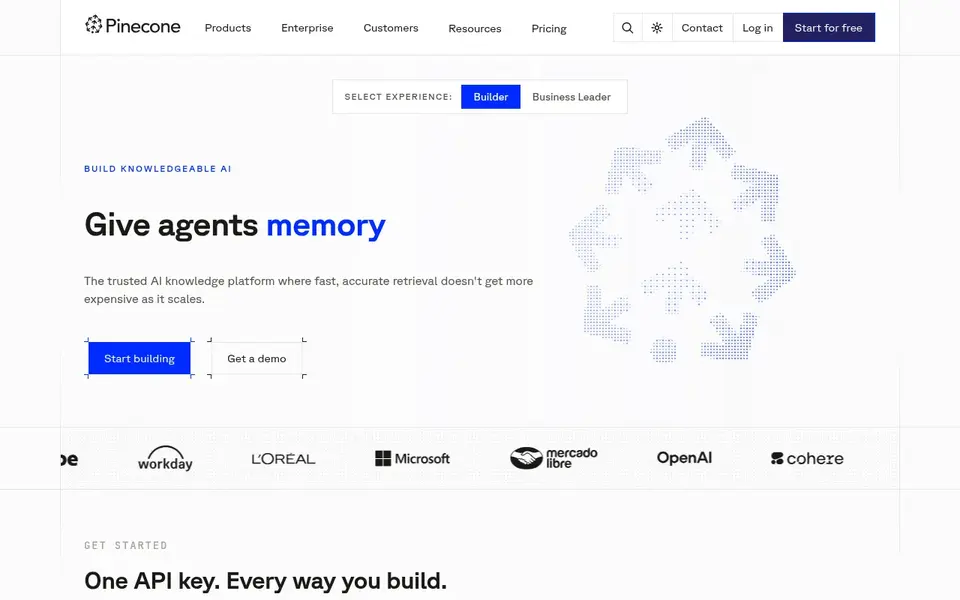
Think of Pinecone for vector search and AI knowledge retrieval. Pinecone is not a general-purpose operational database, so agents that require relational or document storage will need extra systems.
Watch-outs: not a general-purpose database.
It may be less right for workloads that demand complicated transactions or capable consistency across diverse data models. On cost, Pinecone starts like this: $20 per month. Trial and free access: Free trial.
- Dedicated AI knowledge system with vector database
- Quick and accurate AI knowledge retrieval
- Primarily vector-focused
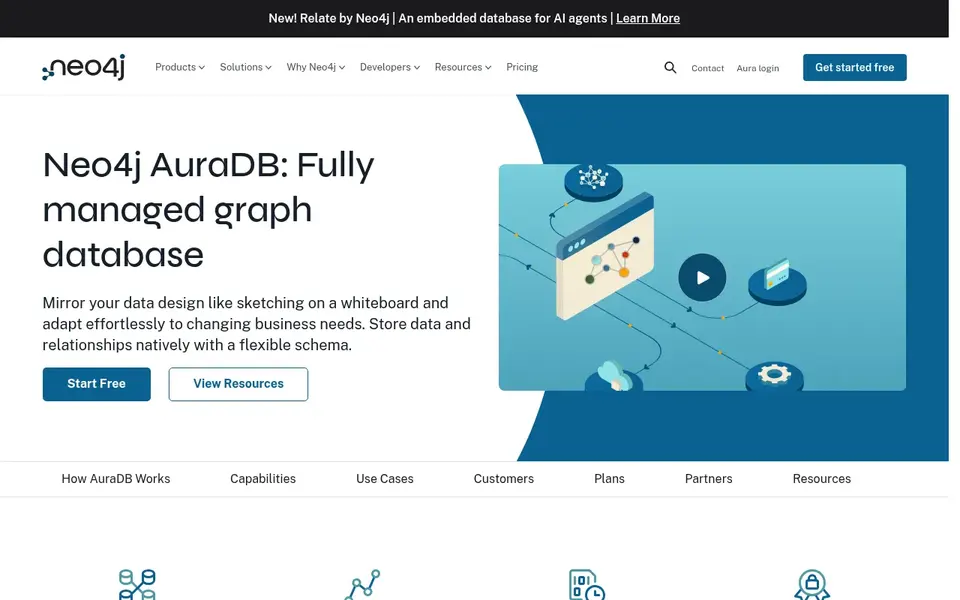
Where Neo4j AuraDB fits: connected data and graph-based agent reasoning. Neo4j AuraDB is a completely managed graph database service in the cloud. It is made for connected data and relationship-heavy workloads, making it a solid choice for AI agents that use knowledge graphs, entity resolution, or graph-based reasoning.
Where it is weaker: Graph model may not suit simple key-value or document workloads.
On top of that, consider other database models if relationships are not central to your agent's data. As for the details, AuraDB deals with the operational aspects of running Neo4j so teams can focus on building agent logic. Pricing for Neo4j AuraDB is not stated here, so ask the vendor for current figures. As for free access: Not stated.
- Optimized for connected data and relationships
- Completely managed graph database service
- May need specialized query skills
Redis Cloud serves real-time, low-latency agent experiences. Redis Cloud is the official Redis-as-a-service offering, designed to help build quick applications and deliver rich live experiences.
It is commonly used as a complement to other databases instead of a standalone system of record. Redis Cloud does not show a starting price in this comparison, so check the vendor site for current pricing. As for free access: Not stated.
Where it falls short: In-memory focus may not suit large persistent datasets.
- Quick performance for live apps
- Official Redis-as-a-service
- Restricted relational or complicated query capabilities
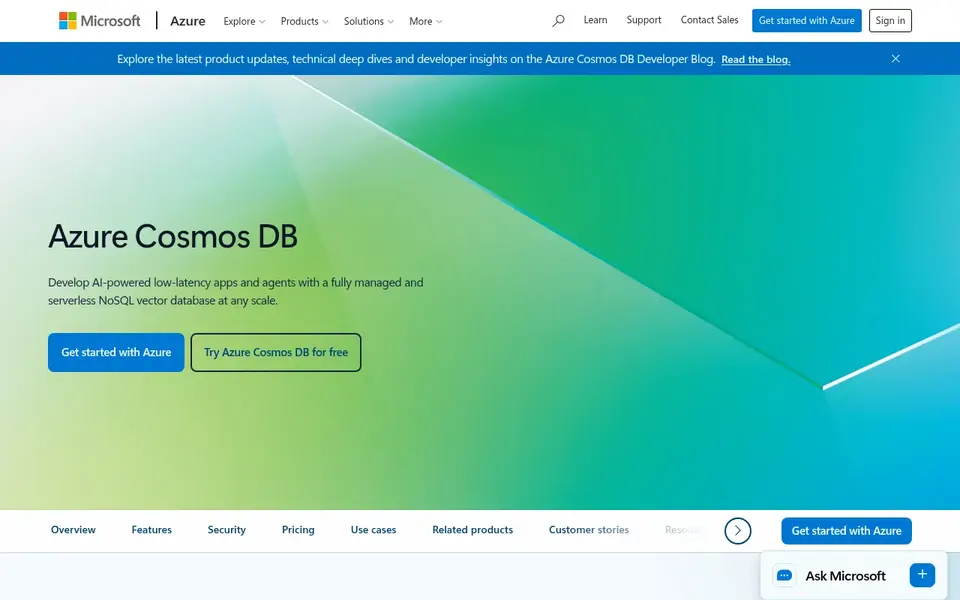
Azure Cosmos DB is a good fit for low-latency NoSQL and vector workloads. Azure Cosmos DB is a completely managed serverless NoSQL database that comes with vector search capabilities. It is made for modern applications that require high availability, scalability, and low latency across distributed environments.
Trade-offs to know: NoSQL model may not suit complicated relational queries.
Evaluate dedicated vector or graph systems if those are primary needs. In practice, AI agents that need quick access to semi-structured data and vector embeddings can benefit from its integrated approach within the Azure ecosystem. Its vector search, whereas handy, may lack the depth of dedicated vector databases for large-scale similarity workloads. Pricing for Azure Cosmos DB is not stated here, so ask the vendor for current figures. Trial and free access: Not stated.
- High availability and low latency
- Scalable for modern app development
- Vector features may be less specialized than dedicated vector databases
Google Cloud Spanner
Great for: Globally consistent relational AI agent backends
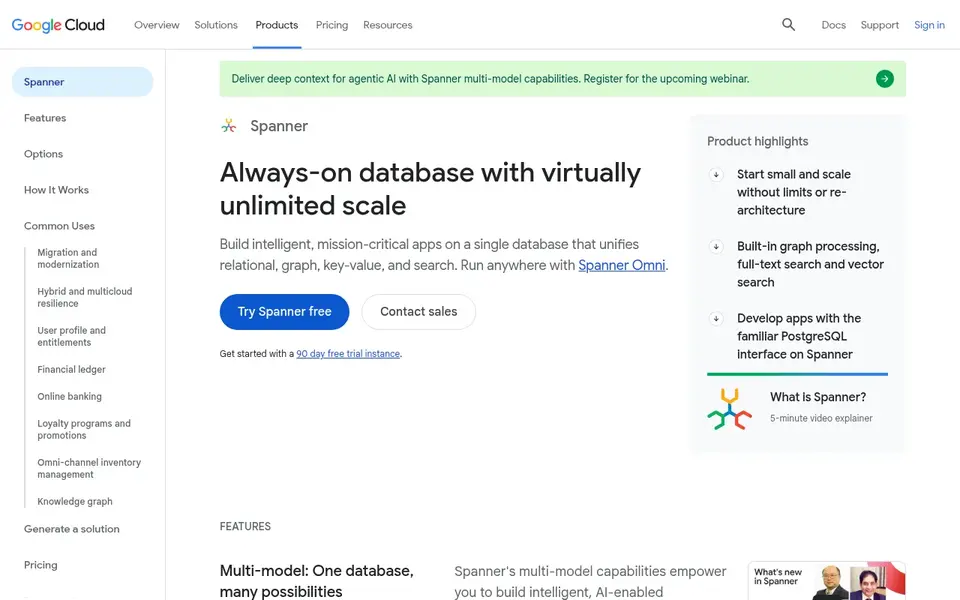
In short, Google Cloud Spanner is for globally consistent relational AI agent backends. It is built for intelligent applications that need capable consistency and virtually unlimited scale without maintenance windows. This makes it a good fit for AI agents that require a dependable, globally distributed backend for transactional and connected data.
Downsides: Relational model may not fit all vector-first workloads.
Spanner may be more than needed for small projects or agents that rely primarily on vector similarity search. Its relational foundation can need more upfront schema design than schemaless alternatives. No starting price is listed for Google Cloud Spanner here; confirm pricing on the vendor site. Trial and free access: Not stated.
- Virtually unlimited scale with always-on availability
- No maintenance windows for uninterrupted apps
- May be complicated to set up for straightforward agent needs
Databricks Lakebase works best for unified data and AI analytics workloads. Databricks Lakebase is part of the Databricks Data + AI Platform, which provides a unified environment for data, analytics, and AI. It supports a data-centric approach to building AI, simplifying ETL, data warehousing, governance, and AI development.
In daily use, consider more specialized databases for those use cases. Also, Lakebase may be overkill for agents that require a light operational database or very low-latency transactional access. Its analytics-oriented design might not suit live agent interactions that need straightforward key-value or document storage. Databricks Lakebase does not show a starting price in this comparison, so check the vendor site for current pricing. Trial and free access: Not stated.
The main drawbacks: May be complicated for straightforward agent database needs.
- Unified system for data, analytics, AI
- Data-centric approach to building AI
- Focus on analytics may not suit low-latency transactional agents
Selection criteria
Each tool was reviewed on what its vendor publishes: price, plan limits, core features and stated drawbacks. We did not run hands-on tests. Figures are shown as the vendors publish them. Billing terms, seat minimums and add-ons can change the real cost. The order reflects how well each tool fits the most common buying scenario for cloud database platform for AI agents, then price clarity, then free plan access. It is a starting point, not a verdict.
What to check before you buy
- Ask Neo4j AuraDB, Redis Cloud, Azure Cosmos DB and others for a written quote, since no starting price is shown.
- Use real work to test the free trial from Pinecone, rather than a demo project.
- Read the limits listed for Pinecone first: primarily vector-focused, not a general-purpose database.
- Look at the renewal terms for Azure Cosmos DB: auto-renewal, notice periods and price changes can matter more than the first-year price.
- Confirm that Neo4j AuraDB connects to the apps your team already uses, on the plan you would actually buy.
Frequently asked questions
What should I consider for live AI agent performance?
Low-latency data access is critical for live agents. In-memory databases like Redis Cloud can supply quick responses for caching and session data. Pair them with a durable primary database to balance speed and persistence.
Can I try these tools before paying?
Often, yes. Pinecone offers a free trial. Use your own data and a real task during the test, and check what the free tier or trial limits before you rely on it.
Does any tool for cloud database platform for AI agents here have a free plan?
A permanent free plan is not offered by Pinecone, Databricks Lakebase or the other tools here. Pinecone offer a trial. Plan a short evaluation period instead.
How are the cloud database platform for AI agents ordered?
Pinecone sits first and Databricks Lakebase last because the order follows typical fit for cloud database platform for AI agents, then price clarity and free access. It is a judgement call, so read each profile for fit and limits.
What type of database is a good match for AI agents?
The first pick on this list is Pinecone, because it suits vector search and AI knowledge retrieval. Neo4j AuraDB is better for connected data and graph-based agent reasoning, and Redis Cloud for live, low-latency agent experiences. Check price and limits against your own needs before choosing.
Is Pinecone the right pick for everyone comparing cloud database platform for AI agents?
No single tool suits every team. Pinecone comes first because it fits vector search and AI knowledge retrieval, while Neo4j AuraDB suits connected data and graph-based agent reasoning and Redis Cloud suits real-time, low-latency agent experiences. Match the tool to your own size, budget and workflow before deciding.
Sources
See where you really rank - block by block
ProMapRanker scans Google Maps across a grid of your service area. Simple monthly plans from $19, white-label on every plan.
Start freeBrowse all guides
← 2026 Guide to the Best AI Node.js Developers SoftwareBest AI Chat Testing Platforms in 2026 →
 best ai low-code mobile app builder software
Best AI Low-Code Mobile App Builder Software in 2026
Best AI low-code mobile app builder software in 2026: 5 contenders with entry costs and free tiers. Weaknesses are named for every tool. Full profiles inside.
Read → best affordable vibe coding software for startups
Best Affordable Vibe Coding Software for Startups (2026)
5 best affordable vibe coding software for startups, with entry costs, free tiers and the buyer each one serves. Verdicts stay brief and factual. Easy to scan.
Read → best database software for real estate agents
Best Database Software for Real Estate Agents in 2026
Compare 6 best database software for real estate agents, with prices, free plans and who each fits. Each pick comes with its main catch. Checked this month.
Read → moz local vs whitespark
Moz Local Vs Whitespark: A Complete Guide
Everything you need to know about moz local vs whitespark: what it is, why it matters for local SEO, and exactly how to act on it.
Read → best ai powered presentation tools no coding
6 Best AI Powered Presentation Tools No Coding Options for 2026
Compare 6 picks for the best AI powered presentation tools no coding, with prices, free plans and who each fits. The catches are listed up front. Easy to scan.
Read → google business multiple locations
Google Business Multiple Locations: A Complete Guide
Everything you need to know about google business multiple locations: what it is, why it matters for local SEO, and exactly how to act on it.
Read →More in Developer Tools · All guides A to Z by date · Latest guides