 ProMapRanker
Best Cell Phone Service Deals in 2026

Key takeaways
- Visible and Mint Mobile offer the lowest single-line unlimited prices in this list, but they work best for people who are comfortable managing service online.
- Major carrier plans cost more per line, and the extra cost buys retail stores, device financing, and bundled perks that prepaid plans often skip.
- Family plans change the math completely, so compare the total for all of your lines, not just the advertised single-line price.
- Taxes and fees are the hidden gap: some prices in this list include them, and others add them at checkout, so check the final total before you switch.
- Coverage depends on your address, so confirm which network a prepaid brand uses before you commit to a long prepayment.
Quick comparison
| Pick | Great for | Pricing starts at | Free tier | |
|---|---|---|---|---|
 Visible | Cheapest Verizon unlimited | $25 per month | No | Visit |
 Mint Mobile | Low-cost T-Mobile unlimited with prepayment | $30 per month | No | Visit |
 US Mobile | Choosing among three networks | $25 per month | No | Visit |
 T-Mobile | Premium perks and family plans | $60 per month | No | Visit |
 Verizon | Widest retail support and flexible plans | $45 per month | No | Visit |
 AT&T | AT&T coverage with family options | $60 per month | No | Visit |
 Cricket Wireless | AT&T coverage with stores | $35 per month | No | Visit |
 Metro by T-Mobile | T-Mobile coverage with in-store help | $30 per month | No | Visit |
 Google Fi | Flexible data and international travel | $20 per month | No | Visit |
The best cell phone service deals
We compared advertised single-line prices, taxes and fees, network coverage, and the perks that actually change the monthly bill. The best deal is not always the lowest headline price, because support, device deals, and family pricing matter too.
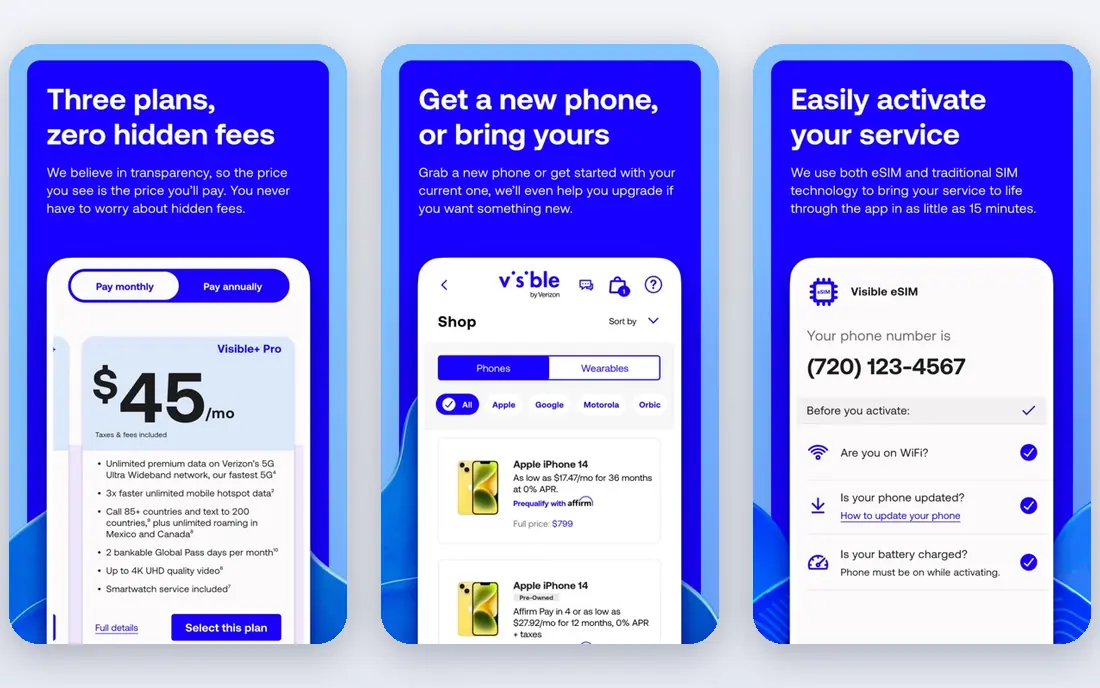
Visible keeps the pitch simple, and that simplicity is the point. You pay one flat monthly price for unlimited data, and the taxes and fees that often surprise buyers on other plans are already included. For a single line on the Verizon network, that makes Visible hard to beat on price alone.
The trade-off is support. There are no stores to walk into, so help comes through the app and online chat. If you are comfortable setting up your own phone and troubleshooting online, that trade is easy to accept. If you want a person in a store to move your number and set up your device, a different plan in this list will suit you better.
- Taxes and fees included in the price
- Unlimited data on the Verizon network
- No annual contract
- Online and app support only
- Hotspot speeds on the base plan are limited
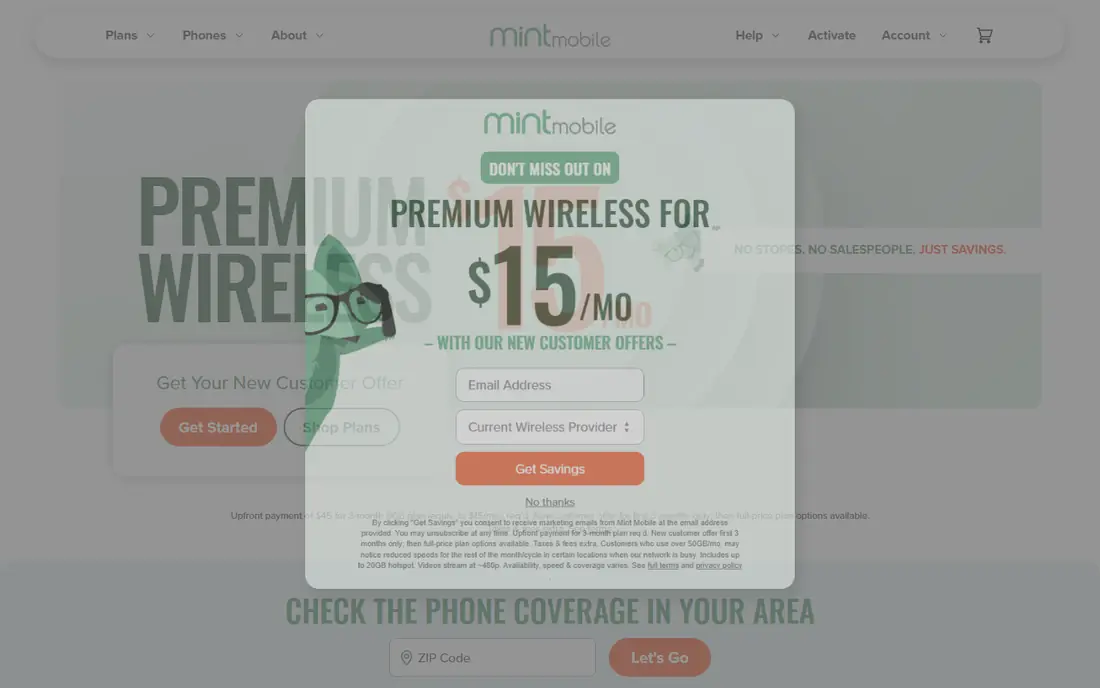
Mint Mobile rewards commitment. Its lowest unlimited price applies when you pay for 12 months up front, which brings the monthly equivalent down well below most major carrier plans. That structure suits people who know they will stay on the same network for a year and who want to lock in a lower rate.
The catch is cash flow and flexibility. Paying a year ahead ties up money, and leaving early means you have already paid for months you may not use. Taxes and fees are also added, so the checkout total is higher than the advertised monthly figure. Check both numbers before you buy, and start with a shorter term if you are unsure about T-Mobile coverage at your home and workplace.
- Low monthly cost when paid for 12 months
- Runs on the T-Mobile network
- Plans available in stores and online
- Best price requires a 12-month prepayment
- Taxes and fees are added on top
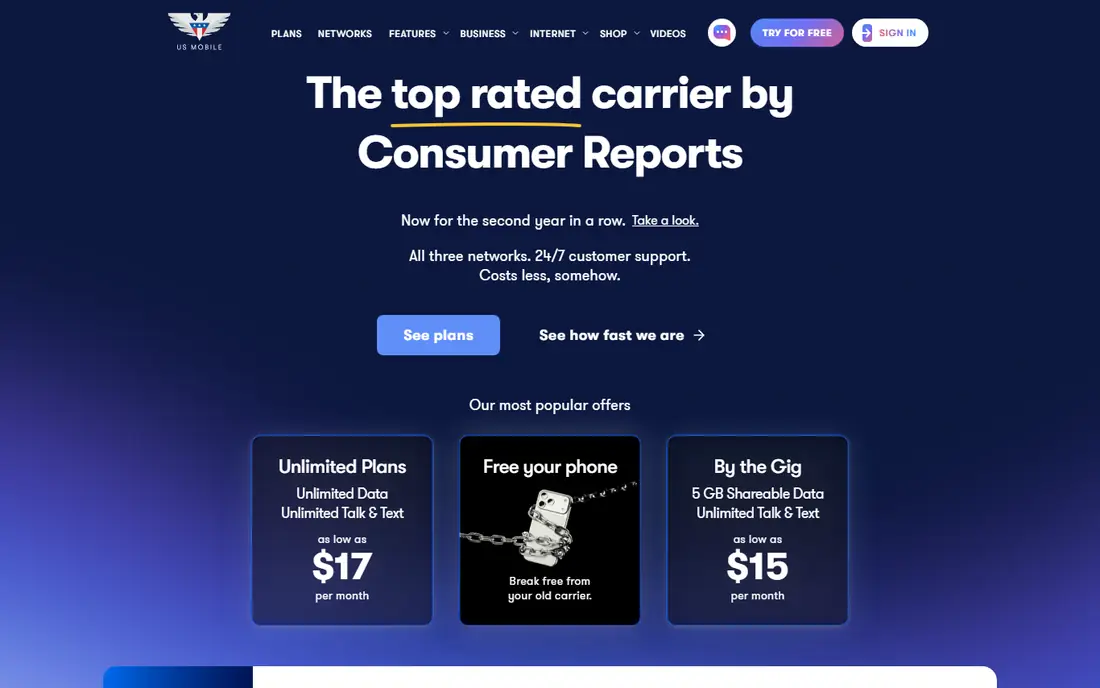
US Mobile stands out because it lets you pick the network that works best where you live, rather than forcing one carrier on every customer. That choice matters more than any perk, because a cheap plan on a weak network is a poor deal no matter how low the price is. The company also offers light plans for people who use little data, which many unlimited-focused brands ignore.
The downside is complexity. Prices and features can differ depending on the network you choose, so two US Mobile customers may not have identical plans. Read the plan page for your chosen network carefully, and confirm hotspot allowances and international features before you switch. For most buyers, the network choice is worth that extra reading.
- Choice of major networks
- Taxes and fees included on many plans
- Low-cost light plans for light users
- Plan details vary by network choice
- Online-first support
T-Mobile is the premium pick in this list for households that want perks alongside service. Higher plans bundle streaming services and travel benefits, and multi-line pricing brings the per-line cost down sharply as you add lines. If your family already pays separately for a bundled streaming service, that bundle can narrow the price gap with prepaid plans.
For a single line, though, T-Mobile is hard to justify on price alone. The entry unlimited plan costs roughly double the cheapest prepaid unlimited options here, and taxes and fees add more. Buy T-Mobile for the stores, the device financing, and the perks, not because it is the cheapest line you can get.
- Strong family pricing on multi-line plans
- Bundled streaming perks on higher plans
- Retail stores nationwide
- Taxes and fees added on many plans
- Single-line prices are high compared with prepaid brands
Verizon appeals to buyers who want help in person and a network with a long record in rural areas. Its stores are easy to find, its staff can handle transfers and device setup, and its plan range covers a basic unlimited option through premium tiers with more hotspot data and perks. That range makes it easier to stay with one carrier as your needs change.
The price is the honest drawback. Premium Verizon plans sit at the top of this list, and the best device deals usually tie you to a plan for two or three years with a trade-in. If you bring your own phone and skip the premium tier, Verizon becomes more competitive. If you chase the headline device deal, read the full term first.
- Large store network
- Flexible plan options
- Strong rural coverage in many areas
- Premium plans are expensive
- Device deals often require a trade-in and a long commitment
AT&T makes the most sense for families and for households that already use AT&T for home internet. Multi-line discounts cut the per-line price a lot, and bundling can add further savings in areas where it is offered. The network itself is a solid choice in many cities and suburbs, and store support is widely available.
As a single line, AT&T is one of the priciest options here, and that is before taxes and fees. Buyers who only need one line and do not need premium perks will usually save money with Cricket, which uses the AT&T network, or with another prepaid brand. AT&T earns its place here for families and bundle buyers, not for bargain single lines.
- Family plans bring per-line costs down
- Retail stores nationwide
- Bundled options with home internet in some areas
- Single-line prices are high
- Taxes and fees are added on top
Cricket gives you AT&T network coverage with simpler pricing and a store to visit when you need help. Taxes and fees are included on many plans, which makes the advertised price close to the price you actually pay. That transparency is a real advantage over major carrier plans where the final bill can look quite different from the ad.
The compromise is priority. At busy times, Cricket customers may see slower speeds than AT&T postpaid customers on the same tower. Most people will not notice this day to day, but heavy users in crowded areas might. If your main need is dependable coverage at a fair price with a store nearby, Cricket is a strong middle ground.
- Taxes and fees included on many plans
- Retail stores
- Runs on the AT&T network
- Data speeds may be lower than AT&T postpaid at busy times
- Premium perks are limited
Metro by T-Mobile pairs T-Mobile coverage with store support and taxes-included pricing. That combination suits buyers who like the prepaid price but still want to talk to someone face to face. Plans start low, and the brand often runs switcher deals that lower the first months further, though those deals change often.
Read the terms of any switcher deal before you count on it long term, because the regular price after the promotion is what you will pay for most of the year. Metro also lacks some premium perks found on T-Mobile postpaid, such as the larger streaming bundles. For everyday unlimited use with in-store help, it remains one of the better value options in this list.
- Taxes and fees included
- Retail stores
- Runs on the T-Mobile network
- Premium features are limited
- Device deals may require a new line or port-in
Google Fi is the flexible pick. Its Flexible plan charges a base price plus a per-gigabyte data charge up to a cap, which suits light users who spend most of their day on Wi-Fi. Its international coverage is also a genuine advantage for frequent travelers, with service in many countries without swapping SIM cards.
Heavy data users should compare Fi Unlimited against Visible and Mint, because Fi costs more for unlimited data. Phone compatibility matters too, since some features work best on supported devices. If you travel often or use little mobile data, Fi can save money and hassle. If you stream a lot on mobile data, a cheaper unlimited plan will serve you better.
- Flexible plan for light data users
- International coverage in many countries
- Runs on the T-Mobile network
- Unlimited plans cost more than the cheapest prepaid options
- Best experience is on Pixel and other supported phones
How we picked these
We compared official plan pages, pricing pages, and network information from each carrier, along with public plan comparisons checked in October 2026. We favored plans that are actually available to new US customers today, with clear starting prices and a real network behind them. We left out short-lived promotions that would be gone before most readers could use them, and we noted where taxes and fees change the final price.
We did not claim hands-on network testing. Coverage, speed, and support quality vary by location, so we treated the network each brand uses and the support channel it offers as core facts in every pick. Prices change often in this market, so confirm the final total at checkout for your ZIP code before you switch.
What to check before you switch
Start with coverage at the places you actually use your phone, meaning home, work, and your commute. A national coverage map is less useful than a week of real use, so use a trial or a short-term plan when a brand offers one. Check whether your phone is free to use on another network and compatible, because a locked phone can block a switch even when the plan looks perfect.
Next, add up the true monthly cost. Include taxes and fees, any device payment, and the cost of a plan tier that gives you enough hotspot data if you tether a laptop. A plan that looks cheap but forces you to buy a hotspot add-on every month is not cheap. Finally, check the exit terms. Prepaid plans usually let you leave monthly, while postpaid device deals can lock you in for years, so the cheapest headline deal can become the most expensive choice if you need to leave early.
Frequently asked questions
What cell phone company has the best deals right now?
There is no single winner for every buyer, because the best deal depends on how many lines you need and which network covers your area. For a single unlimited line, Visible and Mint Mobile usually lead on price. For families, T-Mobile, Verizon, and AT&T multi-line plans often beat buying separate prepaid lines once perks are counted.
What is the best deal for new cell phone service?
New customers should look at switcher promotions, but judge them by the regular price that follows the promotion. A low first-month price means little if the plan jumps sharply in month two. Also check whether the deal requires a trade-in, a new line, or a specific plan tier, since those conditions change the real cost.
Are prepaid plans as good as major carrier plans?
For coverage, prepaid brands use the same major networks, so coverage is often similar. The differences show up in data priority at busy times, customer support channels, device financing, and bundled perks. If those extras matter to you, a major carrier plan may be worth the higher price. If they do not, prepaid usually saves money.
How much data do most people need?
Light users who mainly use Wi-Fi can manage on a small plan or a flexible plan. People who stream video, use navigation daily, or tether a laptop should choose unlimited or a large data allowance. Check your current usage in your phone settings before you pick a tier, rather than guessing.
Should I pay for a year up front to get the best cell phone service deal?
Paying up front lowers the monthly equivalent, but only if you are confident about the network and the service. Start with a monthly plan or a short term if you are trying a new brand. Move to an annual prepayment once you know the coverage works for you, since the savings are real but the money is committed.
Do taxes and fees really change the deal that much?
Yes, they can add several dollars per line per month on major carrier plans, while some prepaid brands include them in the advertised price. Always compare the final checkout total across plans, not just the headline monthly figure. That one step often changes which plan is actually cheapest.
Sources
See where you really rank - block by block
ProMapRanker scans Google Maps across a grid of your service area. Simple monthly plans from $19, white-label on every plan.
Start freeKeep reading
 zeffy payment processor stripe alternatives
Zeffy and Stripe Alternatives for Nonprofits in 2026
Explore zeffy payment processor stripe alternatives for nonprofits. We compare 8 fundraising platforms on fees, donor tools, and nonprofit focus. Check fees.
Read → workday alternatives
Workday Alternatives in 2026
Workday alternatives compared: we review 8 HR and payroll platforms that replace Workday, with pricing, strengths and honest limits for each team size.
Read → what's the best weather app
What's the Best Weather App in 2026
Wondering what's the best weather app? We compare 10 free and paid apps for forecasts, radar, alerts, and Colorado mountain weather for everyday and storm use.
Read →