 ProMapRanker
Best Brand Reputation Management Tools in 2026

Key takeaways
- Reputation work has three parts: getting reviews, answering them, and watching mentions and listings. No single cheap tool does all three equally well.
- Multi location pricing is usually per location, so multiply any sticker price by your location count before budgeting.
- Mention tools such as Brand24 and Mention catch web and social conversation, while review suites such as Birdeye focus on reviews, listings, and messaging.
- Responding to negative reviews in public needs care. Acknowledge the issue, avoid sharing private details, and move the resolution to a private channel.
- Free tools such as Google Alerts are a useful safety net, but they miss review sites and social posts that paid tools catch.
Quick comparison
| Pick | Great for | Pricing starts at | Free tier | |
|---|---|---|---|---|
 Birdeye | Multi location review suite | See website | No | Visit |
 Brand24 | Web and social mention monitoring | From $199 per month | Free trial | Visit |
 Mention | Media and social monitoring | See website | Free trial | Visit |
 Reputation | Enterprise review and listing analytics | See website | No | Visit |
 Podium | Text based review requests | See website | No | Visit |
 Yext | Listings accuracy at scale | See website | No | Visit |
 ReviewTrackers | Review analytics and benchmarking | From $89 per month | Free trial | Visit |
 Sprout Social | Social listening and engagement | From $199 per user per month | Free trial | Visit |
 Google Alerts | Free basic mention alerts | Free | Yes | Visit |
The best brand reputation management tools
We compared official feature pages, pricing pages, and public product descriptions for tools that manage reviews, listings, mentions, and sentiment.
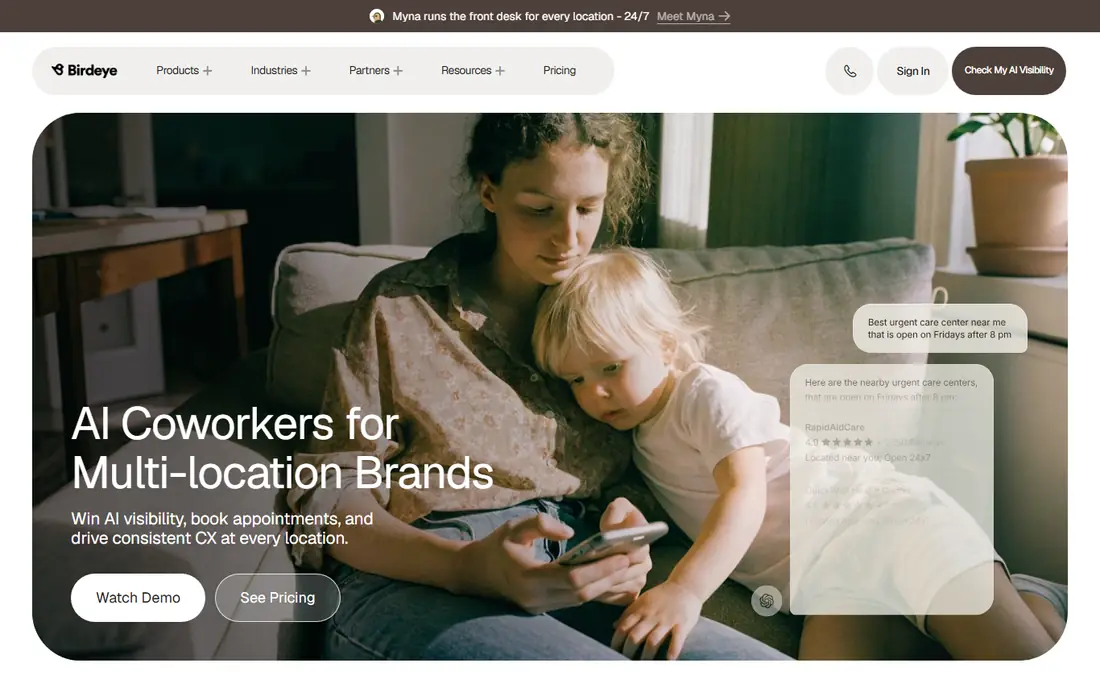
Birdeye is the suite most multi location brands compare first. It generates review requests, monitors reviews across sites, manages listings, and centralizes messaging, so a central team can see reputation across many locations without logging into each profile. That scale is its main advantage.
Cost and complexity are the trade. Pricing is quote based and often per location, so a 20 location business pays far more than the headline suggests. Single location firms may get the core value from a simpler tool. For multi location brands that treat reputation as a growth channel, Birdeye is the default evaluation.
- Reviews, listings, surveys, and messaging in one suite
- Strong multi location reporting
- Wide CRM and POS integrations
- Quote based pricing by location
- Annual contracts in many cases
- More than a single location business needs
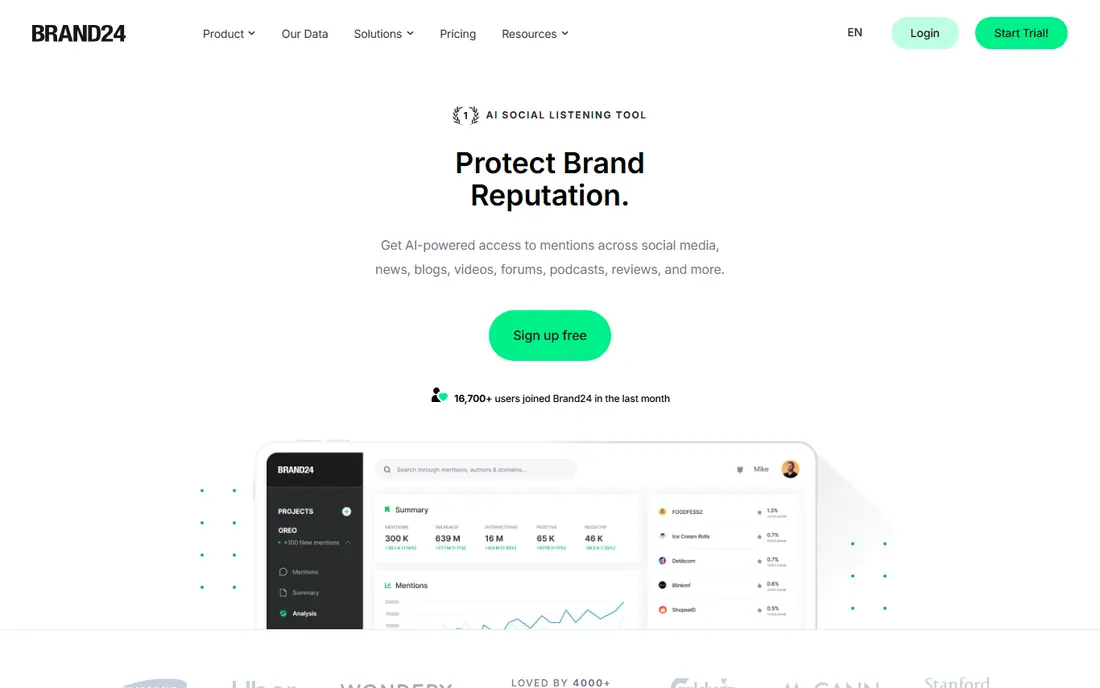
Brand24 watches what people say about a brand across social, news, blogs, forums, podcasts, and reviews. Its sentiment analysis and spike alerts help PR and marketing teams spot a crisis early, before a story spreads. Competitor tracking also shows how a brand compares in share of voice.
It is a monitoring tool first, not a full review generation suite. Teams that need review requests and listing management will pair it with another tool. Mention limits also matter, so check volume against your brand size. For mention and crisis monitoring, Brand24 is a strong, clear choice.
- Broad web and social mention coverage
- Sentiment analysis and anomaly alerts
- Competitor and influencer tracking
- Mention caps on lower plans
- Review management is not its main strength
- Noise filtering needs tuning
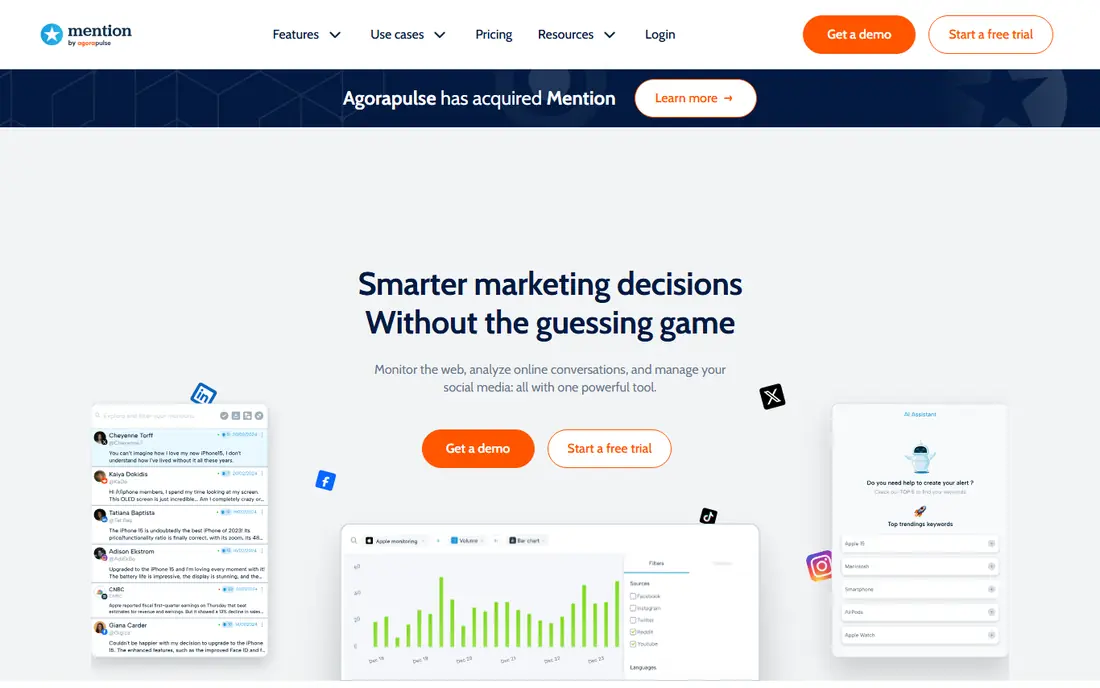
Mention suits PR teams and agencies that need precise media monitoring. Its Boolean search lets teams build exact queries, filter noise, and track brands, competitors, and topics across web and social sources. Alerts help a team react when a mention spikes.
Entry plans limit historical data and mention volume, so larger brands need a higher tier. It also focuses on monitoring more than review generation. For teams that live in media coverage and social conversation, Mention offers control and depth.
- Real time monitoring across many sources
- Boolean search and noise filtering
- Spike alerts for crisis moments
- Pricing varies by plan and mentions
- Historical data can be limited on entry plans
- Interface can feel dated to some users
Reputation, formerly Reputation.com, serves large multi location firms that need detailed analytics by location, department, and region. Its sentiment analysis and benchmarking help central teams see which locations need help and which practices work. That granularity matters when hundreds of locations roll up into one brand score.
Small firms will find it oversized and quote driven. The value shows up at scale, where a central team needs consistent reporting and governance. For enterprise reputation programs, Reputation is a leading evaluation alongside Birdeye.
- Location and department level analytics
- Competitor benchmarking
- Strong fit for regulated and multi location firms
- Quote based pricing
- Enterprise sales process
- More than small firms need
Podium fits service businesses that talk to customers by text, such as dental, auto, home services, and medical practices. It sends review requests by SMS, collects reviews, and centralizes messages so staff can reply from one inbox. That text first flow matches how many local customers prefer to communicate.
Pricing is quote based, and firms that do not use SMS heavily may get less value. It also overlaps with Birdeye on reviews and messaging, so teams should compare feature depth for their specific sites. For text led local businesses, Podium is a practical pick.
- SMS review requests that customers actually open
- Unified inbox for messages and reviews
- AI suggested review responses
- Quote based pricing
- Best for service businesses that sell by text and phone
- Some features depend on tier
Yext solves a quiet reputation problem: wrong phone numbers, hours, and addresses across directories. Its platform pushes accurate business facts to many sites and tracks listings health, so customers find the right details. Review monitoring adds a reputation layer on top of that listings base.
It is not a full social listening suite, so brands that need deep mention analysis will pair it with Brand24 or Mention. Per location pricing also adds up for large networks. For multi location firms where listing accuracy drives foot traffic and calls, Yext is a strong foundation.
- Listings accuracy across many directories
- Knowledge graph for business facts
- Review monitoring alongside listings
- Quote and per location pricing
- More listings focused than full social listening
- Setup needs clean business data
ReviewTrackers centralizes reviews from many sites, helps teams respond faster, and surfaces recurring themes in what customers say. That theme view turns scattered reviews into product and service fixes, such as a repeated complaint about wait times or billing. Competitor benchmarking adds context for how a brand compares.
It does not try to be a full suite with messaging, payments, and surveys in the same depth as Birdeye. For teams whose main need is review monitoring, response, and analysis, ReviewTrackers offers a focused and affordable path.
- Centralized review monitoring and response
- Theme analysis from review text
- Competitor benchmarking
- Less broad than a full suite with messaging and payments
- Pricing rises with locations
- Some integrations depend on plan
Sprout Social suits brands and agencies that manage reputation through social channels. Its listening tools track mentions and sentiment, while publishing and inbox tools let teams respond and engage from the same platform. That joined social workflow helps teams act on a mention, not just read it.
Review generation and listings are not its core, so local firms may pair it with a review tool. Per user pricing also means a large social team should budget carefully. For social led reputation work, Sprout Social is a leading choice.
- Strong social listening and sentiment tagging
- Publishing and engagement in one tool
- Crisis alerts and reporting for teams
- Per user pricing adds up for large teams
- Review site coverage is not its main strength
- Advanced listening needs higher tiers
Google Alerts is the free starting point every brand should set up. It sends email alerts when Google indexes new web or news content matching a brand name, product, or executive. That safety net catches some stories that a team would otherwise miss.
It is not a reputation system. It misses many reviews and social posts, offers no sentiment or reporting, and can be noisy. Use it alongside a paid monitoring or review tool, not instead of one. For a zero cost first step, Google Alerts is still worth setting up today.
- Free and easy to set up
- Email alerts for new web and news mentions
- Useful safety net alongside paid tools
- Misses many review and social posts
- No sentiment analysis or reporting
- Alerts can be noisy or incomplete
How we picked these
We compared official feature pages, pricing pages, and public product descriptions, and we favored tools that are still sold and supported in October 2026. We looked for a clear reputation job, such as review generation, mention monitoring, listings accuracy, or social listening, rather than a general marketing tool. We did not claim hands on testing that did not happen, and we used See website where a vendor does not publish a simple list price.
How to run reputation work week by week
Start with a monitoring routine. Check new reviews and mentions each morning, answer new reviews within one business day where possible, and flag any spike in negative sentiment for a same day review. Keep responses short, factual, and polite in public, and move personal details and resolutions to a private channel.
Next, build review generation into the customer journey. Ask at the moment of satisfaction, such as after a completed service or a resolved support case, and make the request easy with a direct link. Do not offer incentives for positive reviews, and do not ask staff to post fake reviews, since that risks platform removal and trust loss. Finally, review themes monthly. Group feedback by topic, fix the top recurring issue, and report the change back to the team. Reputation improves when the underlying service improves, not when only the response improves.
Frequently asked questions
What is brand reputation management software?
It is software that helps a business monitor, generate, and respond to reviews, mentions, and listings across the web. Some tools focus on reviews and listings, others focus on social and media mentions, and suites combine both. The goal is to see what customers say, respond well, and fix recurring problems.
How much do reputation management tools cost?
Costs range from free for Google Alerts to $89 per month for ReviewTrackers and $199 per month for Brand24 at entry level, with Sprout Social from $199 per user per month. Multi location suites such as Birdeye, Podium, Yext, and Reputation are quote based and often priced per location, so multiply by location count.
Should a small business use Birdeye or a simpler tool?
A single location business often gets enough value from a simpler tool such as ReviewTrackers, Podium, or Brand24 plus Google Alerts. Birdeye fits better when a business has many locations and needs central reporting, listings, and messaging in one suite. Start simple and upgrade when location count grows.
How should I respond to a negative review?
Acknowledge the concern without arguing, apologize for the experience in general terms, and invite the reviewer to a private channel to resolve it. Avoid sharing private account details in public, and do not post a defensive reply that future customers will read as the brand voice. A calm, helpful reply helps future readers more than winning one argument.
Can reputation software remove bad reviews?
No legitimate tool can remove genuine reviews on demand. Platforms remove reviews only when they break platform rules, such as fake content or prohibited content. The honest path is to resolve issues, generate more genuine reviews over time, and respond well to criticism so future customers see the full picture.
Sources
See where you really rank - block by block
ProMapRanker scans Google Maps across a grid of your service area. Simple monthly plans from $19, white-label on every plan.
Start freeKeep reading
 zoho books alternatives
Best Zoho Books Alternatives in 2026
Compare the best zoho books alternatives for small business accounting, from QuickBooks Online and Xero to FreshBooks, Wave, and Sage in 2026, with pricing.
Read → zluri alternatives
Best Zluri Alternatives in 2026
Compare zluri alternatives for 2026, with SaaS management platforms for app discovery, spend tracking, renewals, and automation for IT, finance and procurement.
Read → zerobounce alternatives
Best ZeroBounce Alternatives in 2026
Best zerobounce alternatives for list hygiene: compare 8 email verification tools for bulk cleaning, real-time checks and catch-all handling in 2026 today.
Read →