 ProMapRanker
Best Automation Tools for E-Commerce


Easiest automation for any store · Pricing starts at: $19.99/user/month (billed annually) or $29.99/user/month (billed monthly)
Key takeaways
- Make Core at $9 a month gives you 10,000 operations a month, which is the most generous volume per dollar on this list.
- Zapier is the easiest tool to learn, but its Professional plan starts at $19.99 a user a month and the price rises steeply with task volume.
- Shopify Flow costs nothing extra on a Shopify plan, so Shopify stores should start there before buying another tool.
- n8n is the only tool here with a free self-hosted edition, and its cloud plan starts at 20 euros a month.
- Alloy Automation publishes no price, and its Shopify listing shows a Business plan at $2,500 a month, so it is priced for high-volume brands.
Quick comparison
| Pick | Great for | Pricing starts at | Free tier | |
|---|---|---|---|---|
| Zapier | Easiest automation for any store | $19.99/user/month (billed annually) or $29.99/user/month (billed monthly) | Yes | Visit |
 Make | Most operations per dollar | $9/month (billed annually) or $12/month (billed monthly) | Yes | Visit |
 n8n | Free self-hosted automation | €20/month (billed annually) or €24/month (billed monthly) | Yes | Visit |
 Shopify Flow | Free automation inside Shopify | $0 | Yes | Visit |
 Alloy Automation | High-volume Shopify brands | quote only | No | Visit |
 MESA | Simple Shopify workflows | $12/month | Yes | Visit |
 Klaviyo | Email and SMS flows for stores | $20/month | Yes | Visit |
 HubSpot Marketing Hub | Marketing automation with CRM | $20/seat/month | Yes | Visit |
The best automation tools for e-commerce
Automation saves an ecommerce team hours a week by moving orders, emails, inventory, and customer data between apps without manual work. The eight tools below were checked against vendor pricing pages in October and November 2026. Prices are shown with the task or operation allowance included, since that allowance decides the real monthly cost.
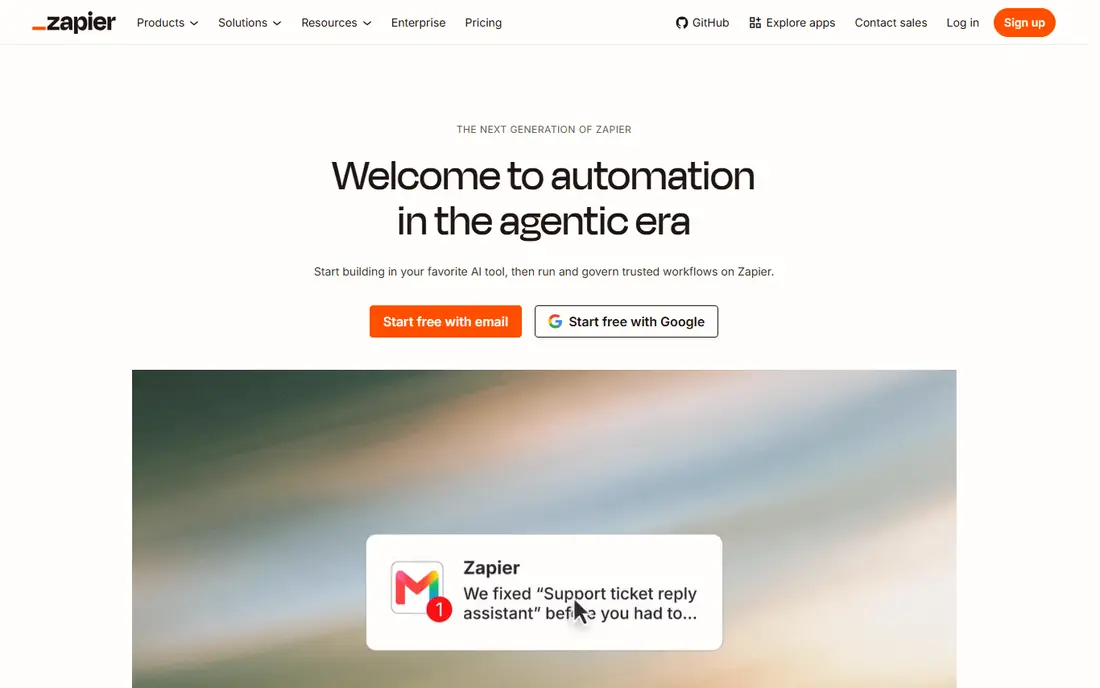
Zapier is the best-known automation tool, and it earns that position with the largest integration library and the simplest builder. The Professional plan costs $19.99 per user a month billed annually, or $29.99 billed monthly, and includes 750 tasks a month. A task is one successful action, such as creating an order in a spreadsheet or sending a message to Slack. The free plan costs nothing and includes 100 tasks a month, which is enough to test one or two workflows.
The price rises fast with volume. Two thousand tasks a month costs $49 a month on annual billing, and a busy store can use thousands of tasks a week once orders, refunds, and emails are automated. The free plan allows two-step Zaps only, with 15-minute polling, so a workflow that needs several steps or instant triggers must be on a subscription plan. Zapier fits a store that wants the widest choice of integrations and the easiest setup, and it is the most expensive option here at high volume.
- Largest app library with thousands of integrations
- Easiest builder for beginners
- Free plan allows two-step Zaps only with 15-minute polling
- Price rises steeply with task volume
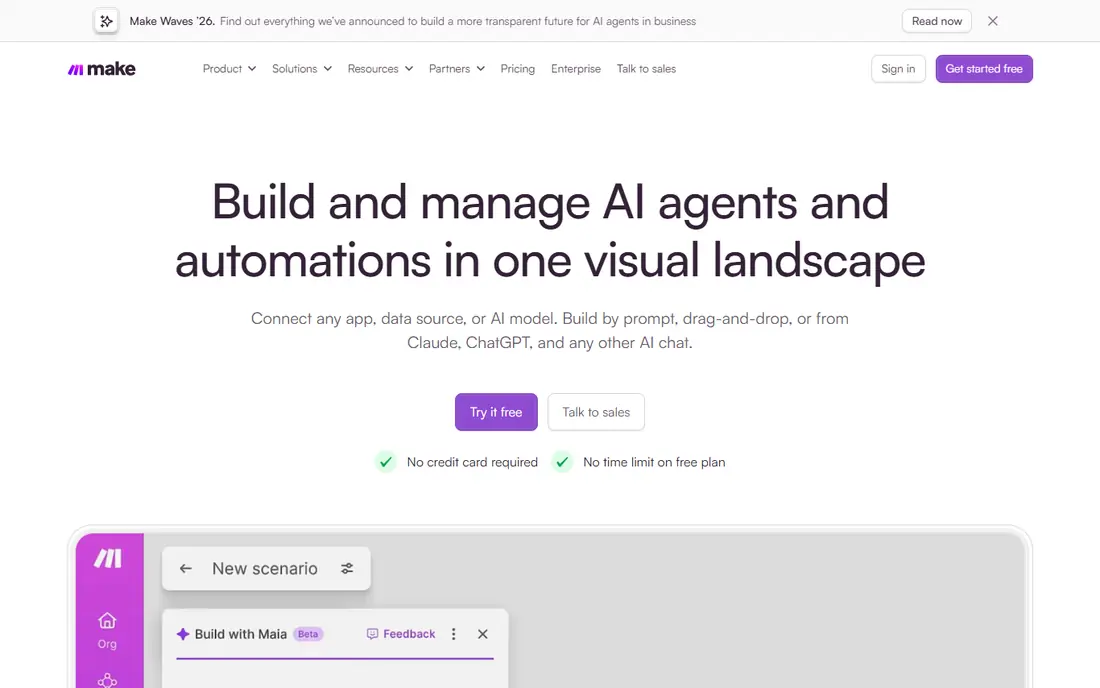
Make, formerly Integromat, is the best value on this list for most stores. The Core plan costs $9 a month billed annually, or $12 a month billed monthly, and includes 10,000 operations a month, where an operation is one action inside a scenario. That is more than 13 times the task allowance of Zapier Professional at less than half the price. The free plan costs nothing and includes 1,000 operations a month with 2 active scenarios. The visual builder shows each step of a workflow as a connected diagram, which makes complex flows easier to follow than a list of steps.
The limits are in the free plan and the tier structure. The free plan caps at 2 active scenarios and 15-minute minimum scheduling, so a store with several workflows needs Core. All subscription tiers start at the same 10,000 operations, so higher tiers buy features such as faster scheduling and more users, not more volume. Make fits a store that runs many workflows and wants the lowest cost per operation, and it is the strongest pick for a budget buyer.
- Core plan includes 10,000 operations a month for $9
- Visual builder shows the whole workflow
- Free plan caps at 2 active scenarios and 15-minute scheduling
- Higher tiers buy features, not volume
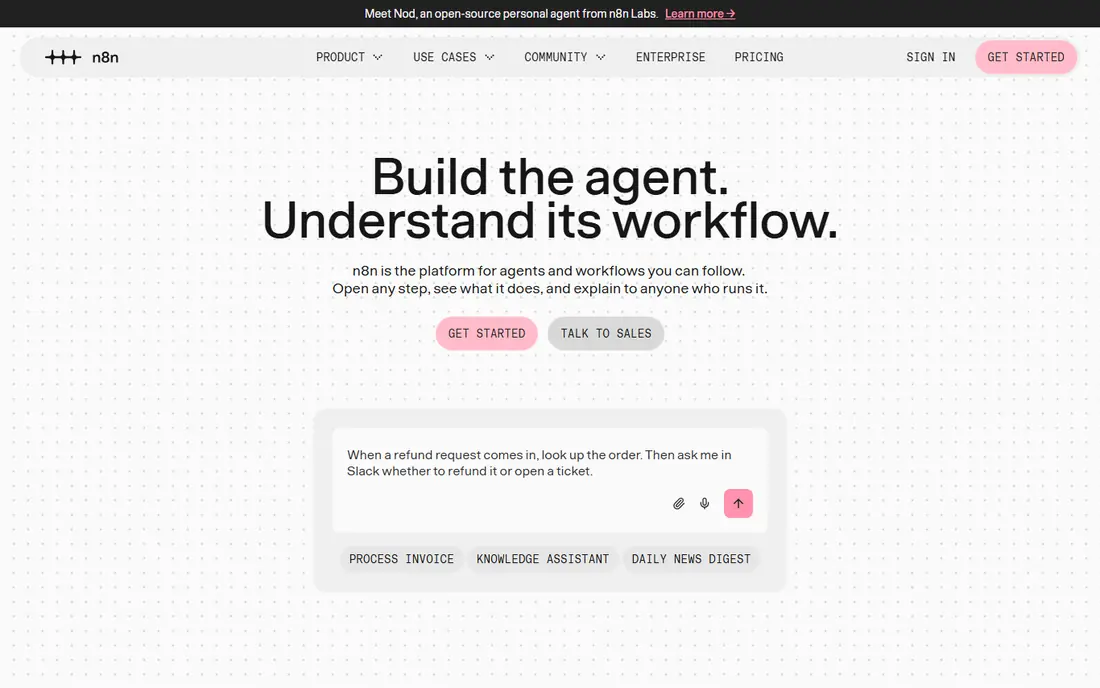
n8n is the open option on this list. The Community Edition is free to self-host with unlimited executions, and you pay only for the server that runs it. The Cloud Starter plan costs 20 euros a month billed annually, or 24 euros billed monthly, and includes 2,500 executions a month. An execution is one run of a workflow, and the plan includes 5 concurrent executions and 7-day insights retention. n8n supports code steps, webhooks, and hundreds of integrations, so a technical team can build workflows that no-code tools cannot.
The cloud limits are tight on the entry plan. Starter allows only 1 shared project, 5 concurrent executions, and 7 days of insights retention, and SSO, Git version control, and environments need the Business plan at 667 euros a month billed annually. Prices are published in euros, not dollars, so the dollar cost depends on the exchange rate. n8n fits a technical team that wants free self-hosted automation or full control over its workflows, and it is less suited to a non-technical owner who wants a simple setup.
- Community Edition is free and self-hosted with unlimited executions
- Full control over data and code
- Starter allows only 1 shared project and 7-day insights retention
- SSO and Git need the Business plan
Shopify Flow is a free app for Shopify stores, and it costs nothing extra on any Shopify plan, from Basic at $39 a month to Plus. It automates store tasks such as tagging high-value orders, hiding out-of-stock products, notifying staff about large orders, and segmenting customers. Because it runs inside Shopify, it needs no separate subscription and no connection setup, and it reads order, customer, and inventory data directly.
The limit is scope. Shopify Flow only works inside Shopify, so it cannot move data to apps outside the store without another tool. The Send HTTP Request action, which connects Flow to outside systems, needs the Grow plan at $105 a month or higher. Run history is kept for only 14 days, so you cannot review old runs for long. Shopify Flow fits any Shopify store, and it should be the first automation a Shopify owner tries before buying a separate tool.
- Free app on every Shopify plan
- Built for store tasks such as tagging orders and managing inventory
- Only works inside Shopify
- HTTP request action needs the Grow plan at $105 a month
Alloy Automation is built for high-volume Shopify and Shopify Plus brands. It connects the store with the warehouse, the email platform, the loyalty program, and the help desk, and it is designed for workflows that run thousands of times a day. The vendor site publishes no list price, and there is no public pricing page, so the only way to know the cost is a sales conversation. The Shopify App Store listing shows a Business plan at $2,500 a month for 100,000 actions a month, which gives a sense of the price level.
That price puts Alloy out of reach for most small stores. Third-party directories report a wide range of figures, from $50 to $599 a month, but none of those is confirmed on the vendor site, so we do not present them as facts. A free version is reported by some directories, but it is not confirmed on the vendor site either. Alloy fits a high-volume brand that needs deep Shopify workflows and can pay for them, and it is not a fit for a small store shopping on price.
- Built for Shopify Plus brands with deep store workflows
- Handles high order volumes
- No list price published on the vendor site
- Shopify listing shows a Business plan at $2,500 a month
MESA is a Shopify app for simple store workflows. The Basic plan costs $12 a month and includes 500 tasks a month, and the Flex plan at $29 a month includes 10,000 tasks. The Starter plan is free and includes 50 tasks a month, and subscription plans include a 7-day free trial. Pricing is published on the Shopify App Store listing rather than on a separate pricing page. MESA covers common store tasks such as order tagging, inventory alerts, and customer follow-up, with a builder that is simpler than Zapier or Make.
The gap between tiers is the main drawback. The free plan covers only 50 tasks a month, which a busy store can use in a day, and the next step up jumps from 500 tasks at $12 to 10,000 tasks at $29, with no tier in between. A store that needs 1,000 tasks a month must pay for 10,000. MESA fits a Shopify store that wants simple workflows at a low price and does not need the wider integration library of Zapier or Make.
- Built for Shopify with a simple builder
- Free Starter plan with 50 tasks a month
- Free plan covers only 50 tasks a month
- The next tier jumps from 500 to 10,000 tasks
Klaviyo is the email and SMS platform most ecommerce stores use, and its flows are a form of automation. The Email plan costs $20 a month for 251 to 500 active profiles, with 5,000 sends a month, and Email plus SMS starts at $35 a month for the same tier. The free plan covers up to 250 active profiles, 500 emails a month, and 150 SMS credits. Flows include abandoned cart, welcome series, post-purchase, and win-back, all built around store data such as orders and browsing.
The cost driver is the billing model. Klaviyo bills on all active profiles, not just the contacts you email, so the price rises with list size even if you mail a small segment. At 10,000 profiles the Email plan costs about $150 a month. Free-plan email support lasts only the first 60 days, so new users should test support early. Klaviyo fits a store that wants email and SMS flows tied directly to purchase data, and it is the best pick here for marketing automation rather than general workflow automation.
- Purpose-built flows for abandoned carts and welcome series
- Free plan covers 250 profiles
- Billing is on all active profiles, so list size drives cost fast
- Free-plan email support lasts only 60 days
HubSpot Marketing Hub starts at $20 per seat a month for the Starter plan, with 1,000 marketing contacts, and the list price is the regular rate, though promos of $7 to $10 a seat appeared in October 2026. The free plan costs nothing and covers up to 2 users and 2,000 emails a month, with the HubSpot CRM included. Starter adds forms, landing pages, and simple automation, and it suits a small store that wants a CRM and email in one place.
The catch is the jump to real automation. The free plan allows only 1 automated action and carries HubSpot branding, and full marketing automation needs the Professional plan at $890 a month billed monthly, or $800 a month billed annually, plus a mandatory $3,000 one-time onboarding fee. That makes HubSpot the most expensive path to serious automation on this list. HubSpot fits a store that already uses the HubSpot CRM and plans to grow into Professional, and it is a poor fit for a store that only needs simple workflows.
- Free CRM included
- Free plan covers 2 users and 2,000 emails a month
- Real marketing automation needs Professional at $890 a month plus a $3,000 onboarding fee
Pick by monthly order volume
| Monthly orders | Pick | Starting price | Why it fits |
|---|---|---|---|
| Under 100 | Shopify Flow | $0 | Free on your Shopify plan, covers the basic store tasks |
| Under 100, not on Shopify | Make | $9/month | 10,000 operations a month for less than Zapier |
| 100 to 1,000 | MESA | $12/month | Simple Shopify workflows at a low flat price |
| 100 to 1,000, multi-channel | Zapier | $19.99/user/month | Widest integration library, easiest builder |
| 1,000 or more | Alloy Automation | quote only | Built for high-volume Shopify brands with deep workflows |
How we chose
We compared vendor pricing pages, product documentation, and plan feature tables for each tool, using reads dated August to November 2026. Prices are the list prices shown on the vendor pricing page, with the task or operation allowance stated. Where a vendor hides its price, we wrote quote only instead of repeating a third-party estimate. We compared the limits that decide real cost, such as task caps, seat counts, and the jump between tiers. We did not run hands-on tests, and we did not rank tools by review scores.
What to check before you buy
- Count your monthly tasks first. A store that automates orders, refunds, and emails can use thousands of tasks a month, and the price rises with volume.
- Check what counts as a task. Zapier counts one successful action, Make counts one operation, and n8n counts one workflow run, so the same workload can cost very different amounts.
- Check the free plan limits. Zapier free allows two-step Zaps only, Make free caps at 2 scenarios, and MESA free covers only 50 tasks a month.
- Confirm the seat math. Zapier Professional is priced per user, and HubSpot Starter is priced per seat, so a team of five pays five times the headline price.
- Check the onboarding fee. HubSpot Professional adds a mandatory $3,000 one-time onboarding fee, which dwarfs the monthly price in year one.
- Try the free tool first. Shopify Flow costs nothing extra on a Shopify plan, and it covers the basic store tasks before you buy anything else.
Frequently asked questions
What is the best automation tool for ecommerce?
Make is the best value for most stores, with 10,000 operations a month for $9 on the Core plan. Zapier is the easiest to learn and has the largest integration library, starting at $19.99 a user a month. Shopify stores should start with Shopify Flow, which is free on every Shopify plan, and only buy another tool when Flow cannot do the job.
Is Zapier worth it for a small store?
Zapier is worth it if you need integrations that other tools do not have, or if you want the simplest builder. The free plan covers 100 tasks a month, which is enough to test one or two workflows. At higher volumes the price rises fast, and Make gives you far more operations for less money, so compare your monthly task count before you commit to Zapier.
Can I automate my Shopify store for free?
Yes. Shopify Flow is free on every Shopify plan and automates tasks such as tagging orders, hiding out-of-stock products, and notifying staff about large orders. MESA also has a free Starter plan with 50 tasks a month, and Make has a free plan with 1,000 operations a month. A small store can automate its core tasks without spending anything.
How many tasks does an ecommerce store need each month?
A small store with under 100 orders a month usually needs 500 to 1,000 tasks a month, which fits the free plans from Make and MESA. A store with 1,000 orders a month can need 5,000 to 10,000 tasks, since each order can trigger several actions. Count the actions per order, not the orders, and check the task allowance against that number.
What is the cheapest ecommerce automation tool?
Make Core at $9 a month is the cheapest subscription plan with a useful allowance, at 10,000 operations a month. MESA Basic at $12 a month is also cheap for Shopify stores. Shopify Flow is free on a Shopify plan, and n8n Community Edition is free if you host it yourself. The cheapest option depends on whether you count the Shopify plan or the server cost.
Sources
See where you really rank - block by block
ProMapRanker scans Google Maps across a grid of your service area. Simple monthly plans from $19, white-label on every plan.
Start freeKeep reading
 best chimney sweep software
Best Chimney Sweep Software: 8 Tools Compared
Compare the best chimney sweep software for scheduling, quotes and invoicing. See starting prices, free trials and the right pick for your crew size now.
Read → best childcare management software
Best Childcare Management Software
Compare the best childcare management software for centres and preschools, with billing, attendance, parent messaging, and learning tools in one clear guide.
Read → best channel manager software for hotels
Best Channel Manager Software for Hotels
Compare the best channel manager software for hotels in 2026, with real prices, channel counts and PMS links, so you can stop double bookings and sell rooms.
Read →