 ProMapRanker
Best App to Learn Mandarin in 2026

Key takeaways
- HelloChinese is the strongest structured starting point for beginners, with speech recognition and tone practice from the first lessons.
- Duolingo suits habit building, but its Mandarin course is shallower than specialist apps for grammar and characters.
- Pimsleur suits commuters who want speaking practice, while Skritter suits learners who want to master character writing.
- No single app covers everything: most learners need a speaking app, a character tool and real reading or conversation practice.
- Prices vary by plan length and app store region, so check the price shown in the app before you subscribe.
Quick comparison
| Pick | Great for | Pricing starts at | Free tier | |
|---|---|---|---|---|
 HelloChinese | Structured beginners | Free | Yes | Visit |
 Duolingo | Daily habit building | Free | Yes | Visit |
 ChineseSkill | Beginner games and lessons | Free | Yes | Visit |
 LingoDeer | Grammar-led learning | See website | No | Visit |
 Pimsleur | Audio speaking practice | $14.99 per month | Free trial | Visit |
 Rosetta Stone | Immersive image learning | See website | No | Visit |
 SuperChinese | Short daily lessons | See website | Yes | Visit |
 Skritter | Character writing | $14.99 per month | Free trial | Visit |
 LingQ | Reading and listening | See website | Yes | Visit |
 Memrise | Vocabulary building | Free | Yes | Visit |
The best apps to learn Mandarin
Mandarin is tonal, which means pitch changes meaning, and it uses characters rather than an alphabet. The best app for you depends on which of those challenges you need most help with right now. Beginners usually need tone and pinyin first, then characters, then real conversation.
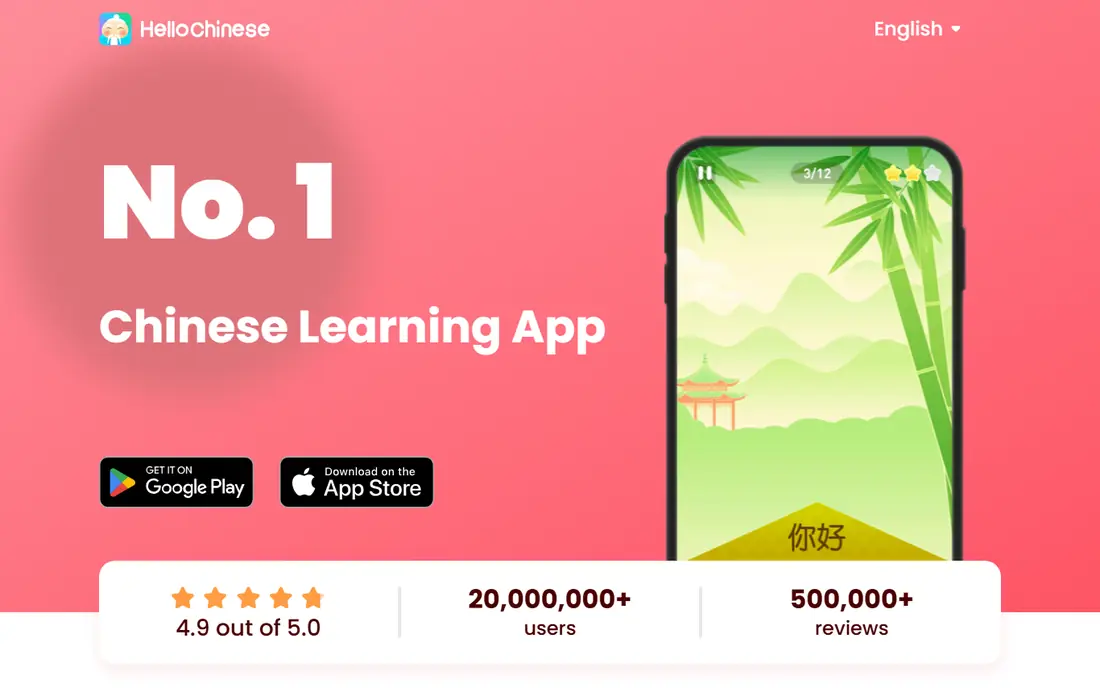
HelloChinese is our pick for most beginners because it forces you to speak from day one. Speech recognition gives feedback on tones, which matters more in Mandarin than in many other languages, because a wrong tone can change the word entirely. Lessons move in a clear order from pinyin to basic characters to short conversations, so you always know what comes next.
The limit is depth at higher levels. HelloChinese covers beginner and lower-intermediate material well, but advanced learners will need reading, tutoring or immersion tools beyond it. Premium plans give access to full lessons and extra features, and prices vary by plan length, so check the app for the current rate. For the first months, HelloChinese gives a stronger foundation than a general language app.
- Speech recognition from early lessons
- Clear path from pinyin to characters
- Tone practice built into lessons
- Content thins out at higher levels
- Full access needs a paid plan
- Advanced learners will outgrow it
Duolingo is the easiest app to start with, because lessons are short, free and designed to be done every day. Its streaks, levels and bite-size drills help people who struggle to study consistently. For a complete beginner who wants to learn a few phrases before a trip, Duolingo is a low-risk first step.
The trade-off is depth. Its Mandarin course covers basic vocabulary and sentences, but grammar explanations are limited and character learning is not as systematic as specialist apps. Many learners use Duolingo to build a habit, then add HelloChinese or a tutor for speaking and grammar. Treat Duolingo as a habit builder, not a complete Mandarin course.
- Free core lessons
- Short daily sessions build a habit
- Gamified streaks keep learners returning
- Mandarin grammar explanations are thin
- Character teaching is limited
- Progress can feel slow for serious learners

ChineseSkill takes a similar beginner path to HelloChinese, with structured lessons, games and pronunciation practice. It covers pinyin, tones, vocabulary and basic grammar in a sequence that suits learners who like variety in each lesson. The free content is enough to judge whether the teaching style fits you before paying.
Where it falls short is long-term depth. Like many beginner apps, it does not carry learners as far as a tutor, a reading app or an advanced course. The interface also feels less polished than newer rivals. Still, for a beginner who wants a free, game-led alternative to Duolingo, ChineseSkill is a solid option.
- Beginner-friendly lessons with games
- Covers pinyin, tones and basic characters
- Free core content
- Less depth than HelloChinese at higher levels
- Interface feels older
- Paid plan is needed for full content
LingoDeer stands out for grammar. Where Duolingo often leaves learners guessing why a sentence is built a certain way, LingoDeer explains sentence structure and grammar points in a clear sequence. That suits learners who want to understand Mandarin, not just repeat phrases. Lessons cover vocabulary, grammar and sentence building in a logical order.
The app is less strong on live speaking practice, so pair it with a tutor or a speech-focused app if speaking is your priority. Pricing varies by plan length and region, so we list it as See website. For learners who like structure and explanations, LingoDeer is one of the best specialist choices.
- Clear grammar explanations for Asian languages
- Structured lessons for Mandarin
- Offline learning available
- Prices vary by plan and region
- Less speaking practice than HelloChinese
- Content is less broad than general apps
Pimsleur is an audio-first method, and that focus is its strength for Mandarin tones. Lessons use call-and-response drills that make you speak before you can hide behind multiple-choice answers. That habit helps tones become automatic, which is hard to build from reading alone. The format also fits commutes, walks and other times when you cannot look at a screen.
The limit is reading. Pimsleur does not teach characters in its core audio lessons, so you will need a second tool for reading and writing. Its level ceiling is also lower than a full course. Use Pimsleur as ear and mouth training, then add HelloChinese, Skritter or a reading app for the rest of the language.
- Audio lessons build speaking and listening reflexes
- Call-and-response format forces you to produce tones
- Good for commutes
- No character reading in the core audio course
- Ceiling is lower than a full course
- Monthly cost adds up over time
Rosetta Stone teaches through pictures, audio and context rather than translation, which pushes learners to connect Mandarin words directly with meaning. That immersion can help early listening and speaking, and speech recognition gives feedback on pronunciation. Live lessons on active subscriptions add a human element that self-paced apps lack.
The same method can frustrate learners when grammar or abstract meaning needs a clear explanation. Without translation, some concepts take longer to grasp, and many learners supplement Rosetta Stone with a grammar app or tutor. Pricing also varies by term, from monthly to lifetime options, so check the current plan page. Rosetta Stone suits learners who like visual immersion and steady, self-paced study.
- Image-based immersion without translation
- Speech recognition
- Live lessons on active subscriptions
- Grammar explanations are limited
- Abstract concepts can be hard without translation
- Pricing varies by term
SuperChinese is built around short, daily lessons that take about ten minutes, which suits learners who want steady progress without long study sessions. Its review system uses spaced repetition to bring back words before you forget them, and lessons follow a structured path from beginner material upward. The free tier lets you test the style before paying.
Depth is the main question. Some learners find SuperChinese less detailed than HelloChinese, especially for grammar and character writing. Pricing also varies by region and plan, so we list it as See website. For a learner who wants a gentle daily routine and short lessons, SuperChinese is a practical pick.
- Bite-size lessons that fit a busy day
- AI review and spaced repetition
- Structured path for beginners
- Less depth than HelloChinese for some learners
- Pricing varies by region
- Advanced content is thinner
Skritter does one job very well: teaching you to write Chinese characters. It shows stroke order, checks your writing, and uses spaced repetition to keep characters in memory. For learners who want to read and write, not just speak, that focus matters, because characters are the hardest part of Mandarin for many beginners.
Skritter is not a complete course. It does not teach conversation, grammar or listening in the same depth as HelloChinese or Pimsleur, so it works best as a companion tool. The monthly price is also high for a single skill, though annual plans lower the monthly cost. If characters are your weak point, Skritter is the best specialist tool on this list.
- Stroke order teaching for characters
- Spaced repetition for writing and vocabulary
- Focused character practice
- Not a full Mandarin course on its own
- Monthly cost is high for a single-skill tool
- Needs a speaking app alongside it
LingQ suits learners who have passed the beginner stage and want to read and listen to real Mandarin. You can study from its library or import articles, books and other content you care about, and the app tracks vocabulary as you read. That approach helps intermediate learners move from textbook sentences to real language.
Beginners may find LingQ less helpful, because it assumes some basic vocabulary and grammar. The free plan is limited, and the interface can feel busy compared with a guided course. Pricing varies by plan, so check the current page before subscribing. For reading-led learners, LingQ is a strong second-stage tool.
- Large library of reading and listening material
- Import your own articles and books
- Vocabulary tracking built in
- Free plan is very limited
- Interface can feel busy
- Less structured than a beginner course
Memrise focuses on vocabulary, using short videos of native speakers and spaced repetition to help words stick. That makes it useful for building a base of everyday Mandarin words and phrases, especially when paired with a structured course. The free tier covers core learning, so you can test it without paying.
It is not a full course on its own. Grammar teaching is limited, and the Mandarin material does not go as deep as HelloChinese or LingoDeer for sentence building. Use Memrise to grow vocabulary between lessons, not as your only app. For learners who forget words quickly, its repetition system is a real help.
- Free core vocabulary lessons
- Native speaker videos
- Spaced repetition for words and phrases
- Less structured grammar teaching
- Mandarin course depth varies
- Full features need a paid plan
How we picked these
We compared official feature pages, app store listings and pricing information, and we favored apps that are active in October 2026 and that cover the main Mandarin skills: tones, pinyin, characters, grammar, speaking and reading. We did not claim hands-on testing, and we listed prices as See website where plan prices varied by region or billing term. We included both general apps and specialist tools, because no single app covers every skill well.
How to build a Mandarin study routine
Start with one structured app for your first three months, and use it daily for a short session you can sustain. Add a second tool only when you hit a clear limit, such as character writing or listening practice. A common pairing is HelloChinese for structure, Skritter for characters, and Pimsleur for speaking on commutes.
Set a realistic daily goal, such as 15 minutes, and protect it rather than aiming for an hour you will skip. Practice tones out loud, not just by tapping answers, because tone errors change meaning in Mandarin. After a few months, add reading through LingQ or graded readers, and add conversation through a tutor or language exchange when you can hold basic sentences.
Frequently asked questions
What is the best app to learn Mandarin for beginners?
HelloChinese is the strongest beginner pick, because it combines speech recognition, tone practice and a clear path from pinyin to characters. Duolingo and ChineseSkill are useful free starting points, but they offer less depth for tones and grammar. Start with HelloChinese, then add a character or speaking tool as needed.
What is the best Chinese learning app for speaking?
Pimsleur and HelloChinese are the strongest for speaking, for different reasons. Pimsleur builds speaking reflexes through audio drills, while HelloChinese gives speech feedback inside structured lessons. A tutor adds live conversation that no app fully replaces, so consider tutoring once you can hold basic sentences.
Is Duolingo good for learning Mandarin?
Duolingo is good for building a daily habit and learning basic phrases, but it is not a complete Mandarin course. Its grammar explanations are thin, and its character teaching is limited. Use it as a habit builder alongside a specialist app such as HelloChinese or LingoDeer.
What is the best app for learning Chinese characters?
Skritter is the best specialist tool for character writing, because it teaches stroke order and uses spaced repetition for writing. HelloChinese also teaches characters, but less deeply. Pair Skritter with a speaking and grammar app for a complete routine.
How long does it take to learn Mandarin with an app?
It depends on daily time, prior language experience and your goal. A daily 15 to 30 minute routine can build basic conversation in several months, while reading and fluent conversation take much longer. Apps help most when paired with real listening, reading and conversation practice.
Are free Mandarin apps enough?
Free tiers are enough to start and to test whether an app fits your learning style. Most free plans limit lessons, features or daily progress, so serious learners usually pay for at least one structured app. Start free, then pay for the app you actually use every day.
Sources
See where you really rank - block by block
ProMapRanker scans Google Maps across a grid of your service area. Simple monthly plans from $19, white-label on every plan.
Start freeKeep reading
 zeffy payment processor stripe alternatives
Zeffy and Stripe Alternatives for Nonprofits in 2026
Explore zeffy payment processor stripe alternatives for nonprofits. We compare 8 fundraising platforms on fees, donor tools, and nonprofit focus. Check fees.
Read → workday alternatives
Workday Alternatives in 2026
Workday alternatives compared: we review 8 HR and payroll platforms that replace Workday, with pricing, strengths and honest limits for each team size.
Read → what's the best weather app
What's the Best Weather App in 2026
Wondering what's the best weather app? We compare 10 free and paid apps for forecasts, radar, alerts, and Colorado mountain weather for everyday and storm use.
Read →