 ProMapRanker
Best Anime Streaming Service in 2026


Anime-first viewing and simulcasts · Pricing starts at: $9.99 per month
Key takeaways
- Crunchyroll is the default anime-first service, with the largest anime library and seasonal simulcasts.
- HIDIVE is the best second service for exclusives and niche titles that Crunchyroll does not carry.
- Netflix, Hulu, and Prime Video suit casual viewers who already subscribe for other shows.
- Tubi and RetroCrush offer genuinely free anime, though their libraries skew older and rotate over time.
Quick comparison
| Pick | Great for | Pricing starts at | Free tier | |
|---|---|---|---|---|
| Crunchyroll | Anime-first viewing and simulcasts | $9.99 per month | Free trial | Visit |
 Netflix | Anime originals and exclusives | $8.99 per month | No | Visit |
 Hulu | Anime plus general TV | $11.99 per month | No | Visit |
 HIDIVE | Exclusive simulcasts and dubs | $7.99 per month | Free trial | Visit |
 Prime Video | Prime members who watch anime casually | $14.99 per month | Free trial | Visit |
 Max | Studio Ghibli and anime films | See website | No | Visit |
 Disney+ | Family-friendly anime selection | See website | No | Visit |
 Tubi | Free anime | Free | Yes | Visit |
 RetroCrush | Free retro anime | Free | Yes | Visit |
The best anime streaming service
Anime is now spread across specialist services and general streaming platforms, so the best service depends on how much anime you watch and which titles matter to you. Specialist services carry simulcasts and deep catalogues, while general services offer exclusives and a broader library for mixed households. The list below covers both, plus two free options.
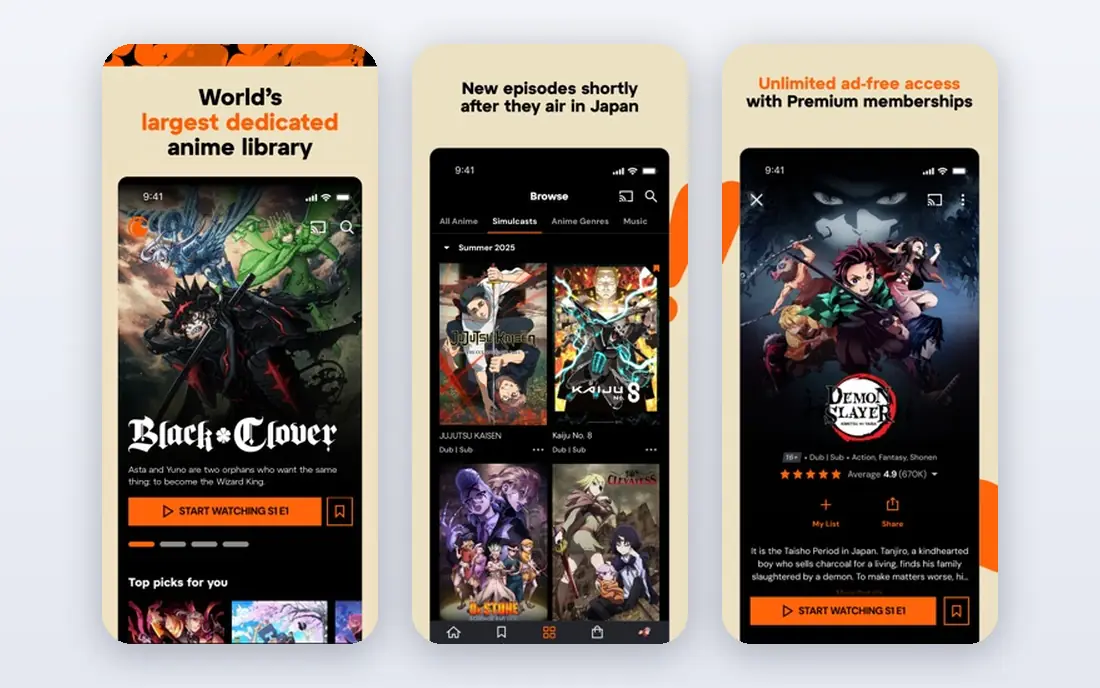
Crunchyroll is the starting point for anyone who watches anime regularly. It carries a large catalogue of series and films, with seasonal simulcasts that arrive close to Japanese broadcast, plus a manga and news presence for fans who follow the medium closely. Sub and dub options are extensive, thanks in part to its absorption of Funimation content.
The entry Fan plan covers one stream, so households that watch on several devices at once will need a higher tier. The catalogue is still not complete, since licensing splits titles across services. For a dedicated anime viewer, though, Crunchyroll remains the default first subscription.
- Largest dedicated anime library
- Seasonal simulcasts close to Japanese broadcast
- Extensive sub and dub options
- Higher tiers needed for more streams and offline viewing
- Interface can feel crowded
- No service carries every title
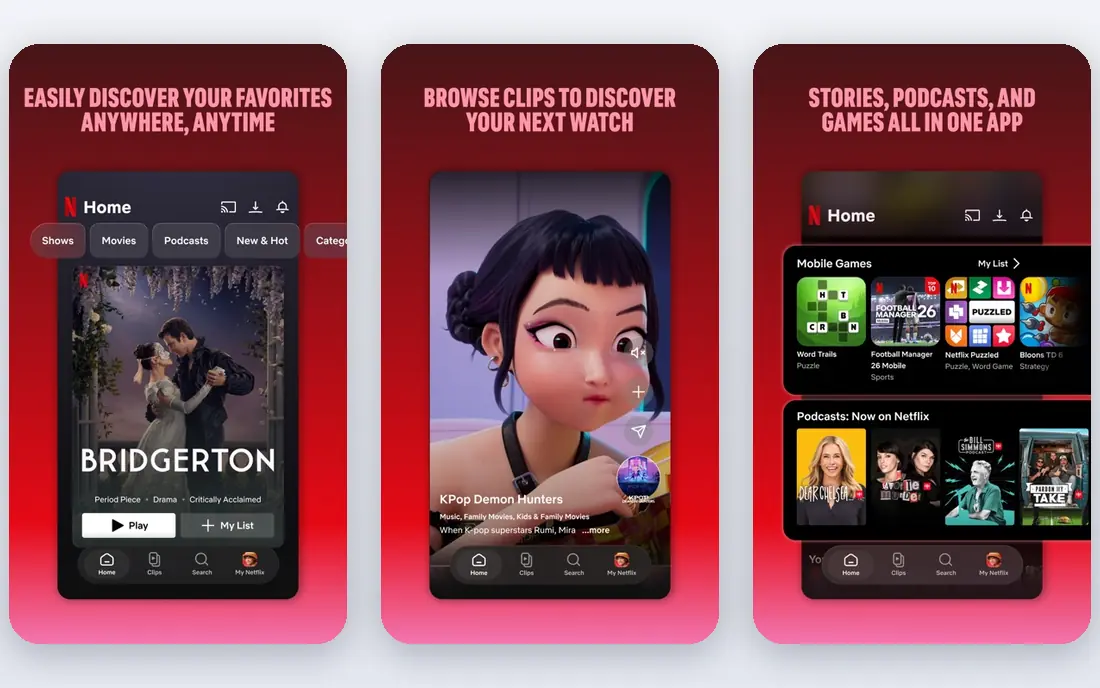
Netflix is the best general service for anime originals. It funds and licenses exclusive series and films that do not appear elsewhere, and its anime selection includes popular titles that appeal to newcomers as well as long-time fans. For a household that already subscribes, that anime selection is a bonus rather than a separate cost.
The trade-off is timing and depth. Many Netflix anime titles arrive in batches rather than as weekly simulcasts, and the overall anime catalogue is smaller than a specialist service. If you follow seasonal shows week by week, Netflix alone will leave gaps. As a complement to Crunchyroll, it is excellent.
- Strong anime originals and exclusives
- High production values and dub options
- Works well for mixed households
- Anime catalogue is smaller than Crunchyroll
- Releases often arrive in batches rather than weekly simulcasts
- Catalogue varies by region
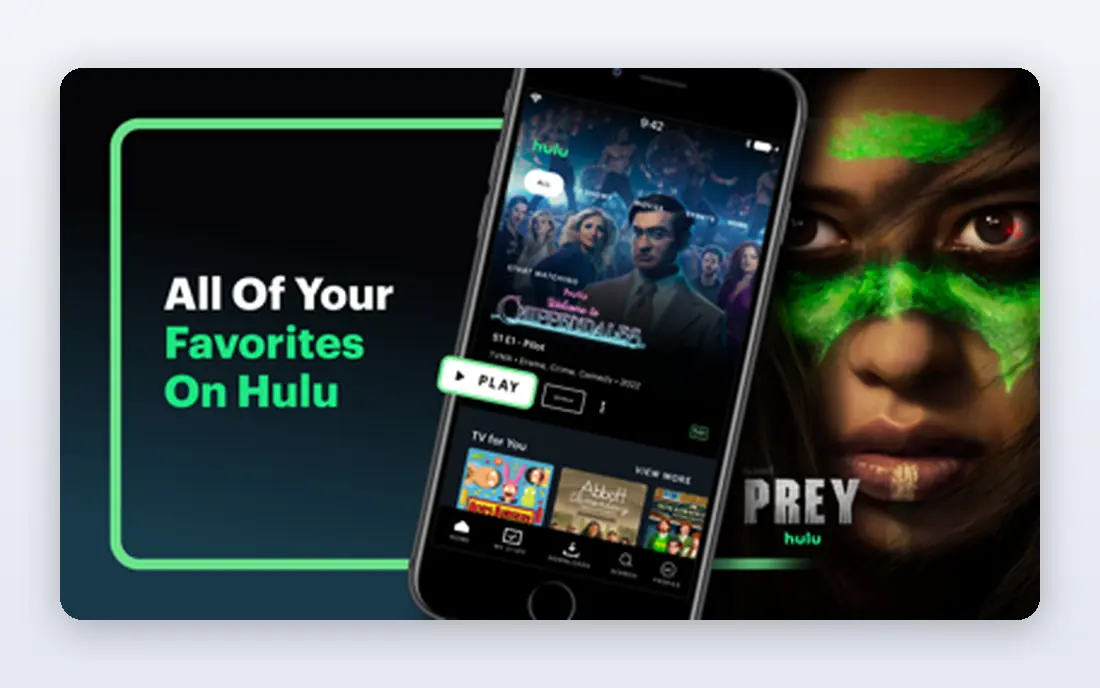
Hulu suits viewers who want anime alongside general TV and films, rather than an anime-only service. Its anime selection includes popular series and dubbed titles, and it works well in a bundle with Disney+ for US households. That bundle value matters, since many viewers already pay for general streaming.
Hulu is US-only, which limits it for international viewers, and its anime catalogue is not as deep or as simulcast-focused as Crunchyroll. Entry plans include ads, with a premium no-ads option at a higher price. For a mixed household, Hulu is a practical anime source, but dedicated fans will still want a specialist service too.
- Large general TV library alongside anime
- Strong dub support
- Useful Disney bundle options in the US
- US-only service
- Anime is not its main focus
- Ads on the entry plan unless you pay for premium
HIDIVE is the specialist second service for fans who want titles that Crunchyroll does not carry. It streams exclusive simulcasts and dubs, with a curated catalogue that leans toward niche and fan-favourite series. At $7.99 per month, it is an affordable addition for viewers who follow a wide seasonal slate.
On its own, HIDIVE is too narrow for most viewers, since its catalogue is much smaller than Crunchyroll. That is why the common setup for serious fans is Crunchyroll plus HIDIVE. Together they cover far more seasonal shows than either service alone, for a combined cost that is still modest.
- Exclusive titles not on Crunchyroll
- Simulcasts and dubs for niche series
- Lower price than larger services
- Smaller catalogue than Crunchyroll
- Best as a second service rather than a sole source
- Offline viewing rules vary
Prime Video makes sense if you already pay for Prime for delivery and other benefits. Its anime selection includes popular series and some exclusives, and it costs nothing extra beyond the Prime membership. For a casual viewer who watches a few anime titles a year, that is enough.
Discovery is the weak point, since anime is buried inside a huge general catalogue, and some titles require an extra purchase even with Prime. Serious fans will find the simulcast coverage thin. Treat Prime Video as a supplement, not as your main anime service.
- Included with a Prime membership
- Some exclusive anime titles
- 4K viewing on supported titles
- Anime discovery is weak
- Some titles need extra purchase
- Not a specialist anime service
Max earns its place here for films rather than series. In the US, it carries the Studio Ghibli collection, which alone makes it worth a short subscription for film fans. Its general library also includes other anime films and popular series, though series depth is limited compared with specialist services.
It is not a simulcast service, and viewers who follow weekly series will need Crunchyroll or HIDIVE as well. Check current pricing on the vendor site, since streaming prices change often. For a film-focused anime fan, Max is a useful rotation pick.
- Studio Ghibli film collection in the US
- Strong film catalogue alongside general shows
- High-quality streaming
- Limited anime series depth
- No simulcast focus
- Price needs checking on the vendor site
Disney+ carries a smaller anime selection, but it includes family-friendly titles and some exclusives that appeal to younger viewers and mixed households. Its bundle with Hulu in the US can make the combined cost more attractive, especially for families that already use Disney+ for other shows.
Anime fans should not subscribe to Disney+ for anime alone, since the catalogue is limited and simulcasts are not its focus. As part of a bundle, though, it adds value. Check current plan and bundle pricing on the vendor site before subscribing.
- Family-friendly catalogue
- Some anime exclusives and popular titles
- Bundle options with Hulu in the US
- Anime selection is limited
- Not a simulcast service
- Pricing varies by plan and bundle
Tubi is the best free starting point for anime, with a rotating library that includes classics and popular series at no subscription cost. It is ad-supported, so viewing includes breaks, but the price is hard to argue with for casual viewers or anyone testing whether anime suits them. Its library has grown over time and now rivals older paid catalogues in some areas.
The trade-off is rotation and timing. Titles can leave, and current-season simulcasts are not part of the offer. For free, legal anime, though, Tubi is a strong first stop, and it pairs well with a paid service for new releases.
- Free with ads
- Rotating anime library with classics and popular titles
- No subscription needed
- Library rotates, so titles can leave
- Ads interrupt viewing
- No current-season simulcasts
RetroCrush is the free service for fans of older anime. Its catalogue focuses on retro and classic titles, from vintage series to cult films, which are often hard to find on mainstream services. That curation is its appeal, since it preserves and presents anime history rather than chasing the latest season.
It will not satisfy viewers who want current simulcasts, and its library is smaller than Tubi. For a fan who loves classic anime, or a newcomer who wants to explore the medium's history, RetroCrush is a delightful free addition. It also works well as a second free service alongside Tubi.
- Free retro and classic anime
- Curated vintage catalogue
- Paid tier removes ads in some setups
- Focus on older titles, not new releases
- Smaller library than Tubi
- Availability varies by region
How we picked these
We compared official pricing pages, service catalogues, and public service comparisons for anime streaming in the US in October 2026. We kept services that are currently available, carry a meaningful anime selection, and offer a free, trial, or paid route to watch. We did not test every title on every service, since licensing changes by region and date, so we describe catalogue strengths in general terms and advise checking a specific title before subscribing.
How to build a sensible anime setup
Start with how much anime you watch. Casual viewers who watch a few titles a year can rely on Netflix, Hulu, or Prime Video if they already subscribe, plus Tubi for free titles. That setup costs nothing extra and covers popular and classic anime well.
Regular viewers should start with Crunchyroll, then add HIDIVE if the seasonal titles you want are split across the two services. That pairing covers most simulcasts for a combined monthly cost that is still lower than many general streaming bundles. Add Netflix or Max for a month when an exclusive or a film collection interests you, then cancel until the next title appears.
Finally, check subs, dubs, and device support before you pay. Some services offer stronger dub catalogues, while others favour subtitles. Offline viewing, stream limits, and ad rules also vary by plan, so confirm those details on the vendor site for the plan you would actually buy.
Frequently asked questions
What is the best streaming service for anime?
Crunchyroll is the best anime-first service for most fans, thanks to its large library and seasonal simulcasts. HIDIVE is the best second service for exclusives, while Netflix is best for originals and casual viewers.
What are the best free anime streaming apps?
Tubi and RetroCrush are the best free options, with Tubi offering a broader rotating library and RetroCrush focusing on retro classics. Both are ad-supported in their free versions, and neither offers current-season simulcasts.
What are the best anime platforms for dubs?
Crunchyroll and Hulu offer strong dub catalogues, thanks to extensive dubbed series and, in Crunchyroll's case, Funimation content. HIDIVE also offers dubs for many of its exclusive titles, so check a specific series before subscribing.
Is Crunchyroll worth it if I already have Netflix?
Yes, if you watch anime regularly or follow seasonal shows, since Netflix anime is smaller and often arrives in batches. If you only watch a few anime titles a year, Netflix plus a free service such as Tubi may be enough.
Can I watch anime for free legally?
Yes, Tubi and RetroCrush offer free legal anime with ads, and Crunchyroll has offered a free tier or free episodes in some setups. Availability varies by region and date, so check the service site for current free options.
Sources
See where you really rank - block by block
ProMapRanker scans Google Maps across a grid of your service area. Simple monthly plans from $19, white-label on every plan.
Start freeKeep reading
 zeffy payment processor stripe alternatives
Zeffy and Stripe Alternatives for Nonprofits in 2026
Explore zeffy payment processor stripe alternatives for nonprofits. We compare 8 fundraising platforms on fees, donor tools, and nonprofit focus. Check fees.
Read → workday alternatives
Workday Alternatives in 2026
Workday alternatives compared: we review 8 HR and payroll platforms that replace Workday, with pricing, strengths and honest limits for each team size.
Read → what's the best weather app
What's the Best Weather App in 2026
Wondering what's the best weather app? We compare 10 free and paid apps for forecasts, radar, alerts, and Colorado mountain weather for everyday and storm use.
Read →