 ProMapRanker
Best AI Search Optimization Tools in 2026


Enterprise AI visibility programs · Pricing starts at: See website
Key takeaways
- Otterly.AI is the cheapest credible entry point, starting at twenty-nine dollars per month, while Profound suits enterprises with larger prompt sets.
- Scrunch stands out for turning citation gaps into shipped content, rather than stopping at a visibility score.
- Most tools track a handful of engines at the entry tier, so check which engines and how many prompts your plan actually covers.
- Prices move fast in this category, and several vendors now gate pricing behind a demo, so confirm the current plan before you budget.
Quick comparison
| Pick | Great for | Pricing starts at | Free tier | |
|---|---|---|---|---|
| Profound | Enterprise AI visibility programs | See website | Free trial | Visit |
 Scrunch | Turning citation gaps into content fixes | $250 per month | Free trial | Visit |
 Peec AI | Clean dashboards and citation analysis | See website | Free trial | Visit |
 Otterly.AI | Budget AI visibility tracking | $29 per month | Free trial | Visit |
 Brandlight | Brand visibility reporting | See website | Free trial | Visit |
 Goodie AI | Answer-engine visibility for growing teams | See website | Free trial | Visit |
 Rankscale | Budget tracking across many engines | $20 per month | Free trial | Visit |
 AthenaHQ | Action-focused monitoring with credits | $295 per month | Free trial | Visit |
The best AI search optimization tools
AI search optimization means getting cited when ChatGPT, Gemini, Perplexity, and Google AI Overviews answer a question, not just ranking in blue links. The tools below track mentions, citations, and share of voice across those engines, and the best ones connect the data to content work.
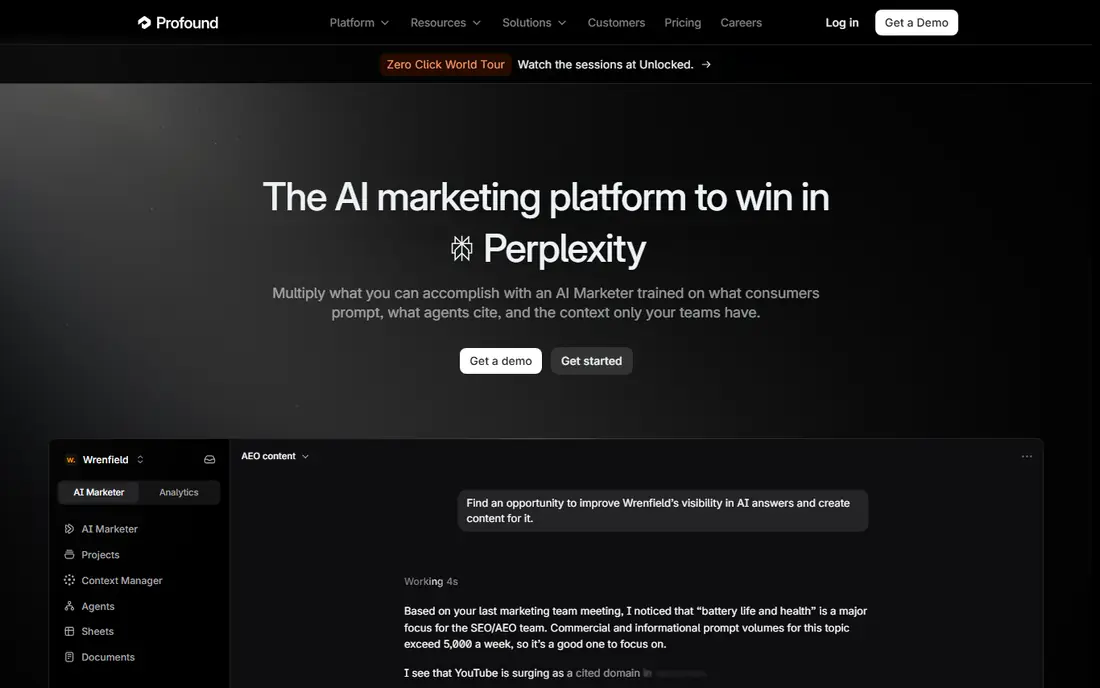
Profound is the enterprise name most large brands ask about first, and its depth justifies that attention. It tracks prompts across many engines, attributes citations to specific pages, and breaks visibility down by topic, region, and competitor. For a company managing several brands or a large prompt set, that granularity turns a vague visibility score into work a content team can plan around.
The catch in 2026 is access. Profound withdrew its lower self-serve plans, and pricing now centers on a free trial plus custom enterprise packages, so small teams cannot simply sign up with a card. Setup also takes more effort than a budget tracker, since prompt sets and breakdowns need real thought. If you have the budget and the team to use it, Profound is the deepest tool here. If you do not, start cheaper and upgrade later.
- Broad engine coverage on higher tiers
- Deep citation attribution
- Strong analytics for large brands
- Pricing is now largely quote-based
- Entry plans were withdrawn in 2026
- Heavier setup than budget tools
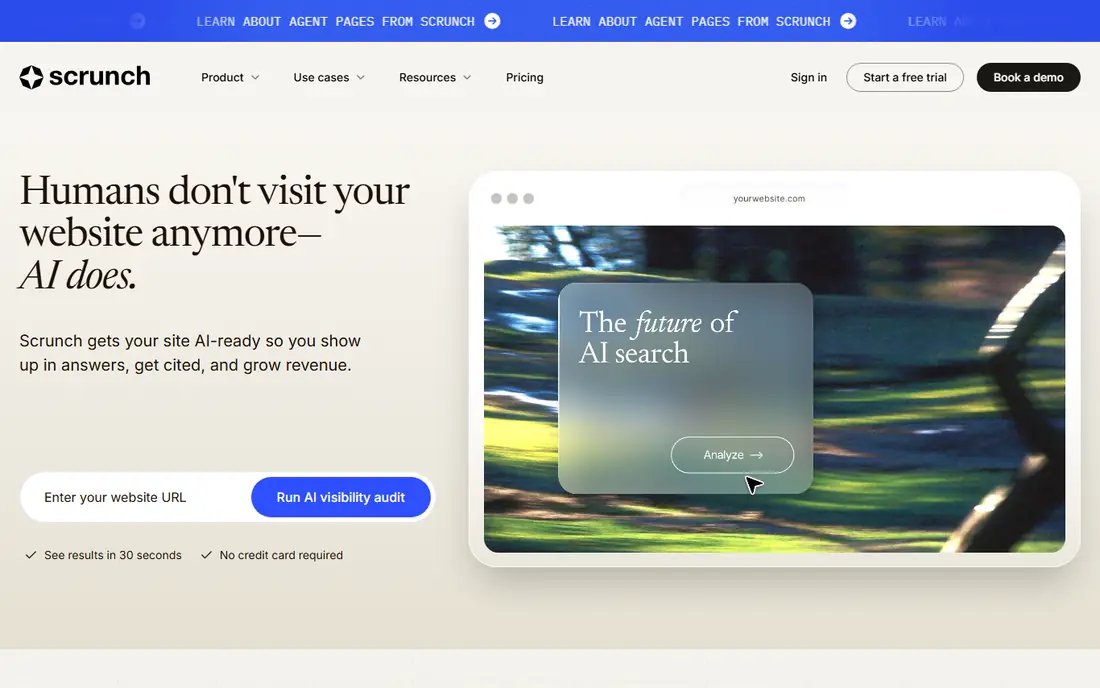
Scrunch earns its place by going one step past measurement. It tracks how AI engines cite your brand across personas and customer journeys, then pairs that with diagnostics on how AI crawlers reach your content. The result is a clearer path from a missed citation to a specific page fix, which is what most teams actually need after the first month of reporting.
The price reflects that ambition. Plans start at two hundred fifty dollars per month on annual billing, which puts Scrunch out of reach for solo marketers. Setup also takes longer, since crawler diagnostics and persona prompts need configuration. But for teams that already track visibility and now want to act on it, Scrunch is the most complete optimizer on this list rather than just another tracker.
- Persona and journey tracking
- Crawler and agent-traffic diagnostics
- Content actions tied to gaps
- Starting price is high for small teams
- Setup takes longer than simple trackers
- Annual billing for the lowest rate
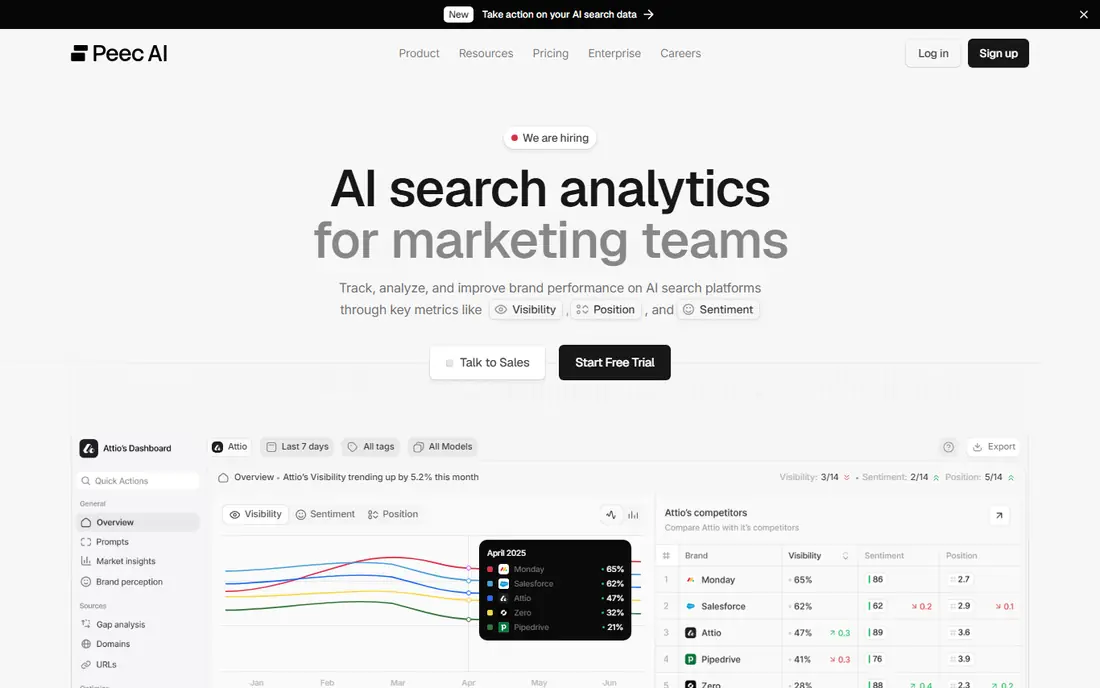
Peec AI is the tool we would hand to a marketing lead who needs a report a chief executive can read in two minutes. Dashboards show share of voice, citations, and brand perception without drowning the reader in prompt-level detail, and source analytics show which pages engines actually cite. Unlimited users on plans helps agencies and larger teams share access without seat math.
Pricing is the frustration. Peec no longer shows full rates to logged-out visitors, and third-party reports put entry plans near eighty-five to ninety-five euros per month, with extra models costing more. Entry tiers also cover only a few engines, so check the model list before buying. If clean reporting matters more than the widest engine list, Peec is still easy to recommend.
- Clear executive-friendly reporting
- Source and citation analytics
- Unlimited users on plans
- Public pricing is limited
- Entry plans cover only a few models
- Costs rise with more engines
Otterly.AI is the cheapest credible way into AI search tracking, starting at twenty-nine dollars per month. Setup takes minutes, dashboards are clean, and every plan covers the major engines, which is more than some pricier rivals offer at entry level. For a small team that wants to know whether ChatGPT and Perplexity mention them at all, Otterly answers that question without a sales call.
Limits show up quickly if you scale. The entry tier covers only a small prompt set, and Google AI Mode tracking costs extra, with add-on pricing that varies by tier. Reporting is also simpler than Profound or Scrunch, with less depth on citation attribution. Still, as a first tool in a new category, Otterly is the sensible starting point, and you can move up when prompt volume demands it.
- Lowest entry price here
- Fast setup
- Covers major engines on every plan
- AI Mode tracking is a paid add-on
- Prompt limits are tight at the entry tier
- Reporting is simpler than enterprise tools
Brandlight takes a brand-first angle on AI search, reporting how often engines surface your brand, how that compares with competitors, and which prompts drive the mentions. That framing suits brand and communications teams who care about presence and sentiment more than page-level SEO fixes. Reports are built to share, which helps when visibility work needs buy-in beyond the marketing team.
The main drawback is transparency. Pricing sits behind a demo, so you cannot compare it cleanly with Otterly or Scrunch without a sales conversation, and public detail on plan limits is thinner than for larger rivals. If brand reporting is your core need, request the demo and ask for prompt limits in writing. If you need self-serve pricing today, pick a tool with a public plan table.
- Brand-focused visibility reports
- Competitor comparison
- Prompt and citation tracking
- Pricing is demo-gated
- Smaller public track record than leaders
- Feature depth varies by plan
Goodie AI focuses on the same core job as the rest of this list: showing where your brand appears in AI answers and where rivals win instead. Share-of-voice reporting and content gap insights give growing teams a practical next step, and the interface is built for marketers rather than analysts. For a team moving from classic SEO tools into AI visibility, that approach feels familiar.
Pricing transparency is again the weak point, since full rates are not published for every plan, so budget planning needs a sales conversation. Goodie is also a newer vendor than Profound or Semrush, so its public track record is shorter. Ask for a trial on your own prompt set before committing, and compare its citation data against a second tool for a month if the numbers will drive budget decisions.
- Answer-engine tracking across major platforms
- Share-of-voice reporting
- Content gap insights
- Pricing is not fully public
- Newer vendor with a shorter track record
- Some features need higher tiers
Rankscale is the budget pick for teams that want the widest engine list for the least money. Entry plans start at about twenty dollars per month and include AI Mode alongside other engines, with scheduling from hourly to monthly. For agencies tracking a few clients or a small brand watching many surfaces, that breadth per dollar is hard to beat.
The credit model needs attention. Plans use credits rather than a flat prompt count, so heavy prompt sets burn through allowance faster than the headline price suggests. Reporting is also simpler than enterprise platforms, with less depth on attribution. Still, if your priority is covering many engines cheaply and you can live with credit math, Rankscale is the best value on this list.
- Very low entry price
- Wide engine list including AI Mode
- Flexible scheduling
- Credit-based limits can confuse
- Reporting depth trails enterprise tools
- Smaller vendor
AthenaHQ pairs broad monitoring with an action center that turns visibility gaps into recommended content fixes. It covers many models, including ChatGPT, Perplexity, AI Overviews, AI Mode, Gemini, Claude, Copilot, and Grok on paid plans, which suits teams tracking a full answer-engine mix. Credit-based billing also flexes better than fixed prompt counts when prompt volume varies by month.
The starting price of two hundred ninety-five dollars per month puts AthenaHQ firmly in the professional tier, and the credit system takes a week or two to understand. Small teams with a handful of prompts will not use what they pay for. For larger teams that want monitoring plus a clear fix list in one platform, AthenaHQ is a strong alternative to Scrunch.
- Broad model coverage
- Action center with recommended fixes
- Credit flexibility for varied prompt sets
- High starting price
- Credit model adds a learning curve
- Overkill for tiny prompt sets
How we picked these
We compared official feature pages, pricing pages, and public reviews for each platform, and we checked engine coverage at the entry tier rather than the headline tier. Tools made the list only if they still operate in October 2026 and track AI answer engines directly, not just classic search rankings. We did not run hands-on trials, and where pricing was gated, we say so rather than guessing a figure.
How to choose the right platform
Start with your prompt set, not the vendor feature list. Write down the twenty to fifty questions buyers actually ask, then check how many prompts each plan covers and which engines it includes at that tier. A cheap plan that covers only one engine is a poor deal if your buyers use three. Next, decide whether you need tracking alone or tracking plus fixes, since Scrunch and AthenaHQ cost more precisely because they add the second half. Finally, trial two tools on the same prompt set for a month. Citation numbers differ between vendors, so a side-by-side trial tells you more than any sales deck will.
Frequently asked questions
What is the best AI search optimization platform for a small team?
Otterly.AI is the best starting point for small teams, with entry pricing at twenty-nine dollars per month and fast setup. Rankscale is a close alternative if you need more engines covered at a similar price.
What is the best tool for AI search optimization at enterprise scale?
Profound leads for enterprises, with deep citation attribution and broad engine coverage on higher tiers. Scrunch is the better pick if your priority is turning gaps into content work rather than reporting alone.
How is AI search optimization different from classic SEO?
Classic SEO targets rankings in a list of links, while AI search optimization targets citations inside generated answers. That means structured facts, clear pages, and consistent brand mentions matter more, and success is measured in citations and share of voice.
Which engines should an AI search tool track?
At minimum, look for ChatGPT, Google AI Overviews, Google AI Mode, Gemini, and Perplexity, since those cover most buyer questions today. Add Claude and Copilot if your buyers use them, and check that your plan includes them rather than the top tier only.
Do these tools also fix my content?
Some do and some do not. Scrunch and AthenaHQ pair tracking with recommended fixes, while most budget trackers report only. If you want fixes, pay for that feature rather than expecting a tracker to write the content for you.
How much do AI search optimization tools cost?
Entry prices here run from about twenty dollars to nearly three hundred dollars per month, with several enterprise tools priced by quote. Prompt counts, engine coverage, and credit limits decide the real cost, so compare plans on those three factors.
Sources
See where you really rank - block by block
ProMapRanker scans Google Maps across a grid of your service area. Simple monthly plans from $19, white-label on every plan.
Start freeKeep reading
 zeffy payment processor stripe alternatives
Zeffy and Stripe Alternatives for Nonprofits in 2026
Explore zeffy payment processor stripe alternatives for nonprofits. We compare 8 fundraising platforms on fees, donor tools, and nonprofit focus. Check fees.
Read → workday alternatives
Workday Alternatives in 2026
Workday alternatives compared: we review 8 HR and payroll platforms that replace Workday, with pricing, strengths and honest limits for each team size.
Read → what's the best weather app
What's the Best Weather App in 2026
Wondering what's the best weather app? We compare 10 free and paid apps for forecasts, radar, alerts, and Colorado mountain weather for everyday and storm use.
Read →