 ProMapRanker
Best AI SDR Tools in 2026: 8 Tools Compared

Key takeaways
- Apollo is the best starting point for small teams, because it combines a large contact database with sequences and AI help in one subscription.
- Clay is the strongest choice when your main problem is data quality, since it pulls from many providers and builds custom enrichment workflows.
- AiSDR, Artisan, 11x, and Salesforge aim at hands-off outbound, but they differ in how much human review they allow before messages go out.
- Regie.ai and Amplemarket fit teams that want AI help inside a structured prospecting and engagement workflow, not a fully autonomous agent.
- Prices in this market change fast and many enterprise plans are quoted, so confirm seat minimums, credit limits, and contract terms before you sign.
Quick comparison
| Pick | Great for | Pricing starts at | Free tier | |
|---|---|---|---|---|
 Apollo | All-in-one prospecting on a budget | $49 per month | Yes | Visit |
 Clay | Deep enrichment and custom workflows | $149 per month | Yes | Visit |
 AiSDR | Full-cycle autonomous outbound | See website | No | Visit |
 Regie.ai | AI prospecting for human-led teams | $49 per month | Yes | Visit |
 Artisan | Autonomous outbound with review controls | See website | No | Visit |
 11x | Fully autonomous AI SDR agents | See website | No | Visit |
 Salesforge | Multichannel autonomous outbound | $499 per month | No | Visit |
 Amplemarket | Signal-driven multichannel outreach | See website | No | Visit |
The best AI SDR tools
An AI SDR tool should do more than write a cold email. The best options find the right accounts, keep contact data current, personalize outreach from real signals, and hand warm replies to a human at the right moment. We compared platforms that cover different parts of that job, from data and enrichment to fully autonomous outreach.
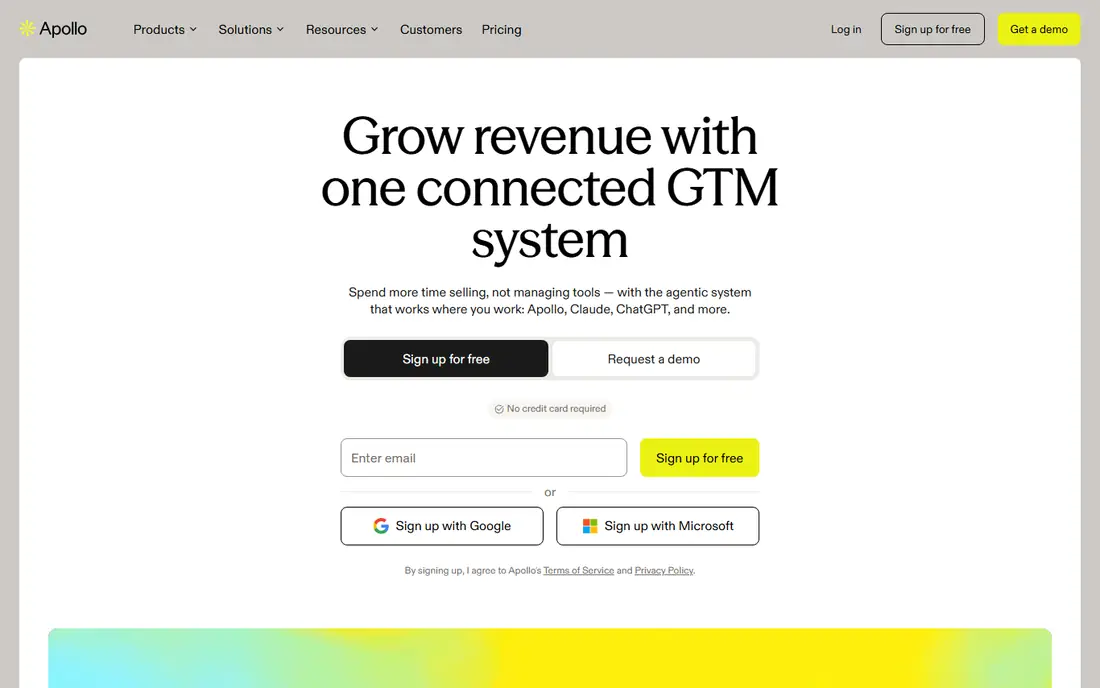
Apollo is our pick for most small and mid-size teams because it covers the basics without buying three separate tools. You can search for contacts, build lists, run email sequences, and use AI suggestions for subject lines and first lines, all from one account. The free tier lets a solo rep test the database and workflow before paying, which is rare in this market.
The catch is that entry pricing is not the full story. Credit limits, sequence volume, and add-ons affect what a team actually pays each month, and contact data still needs spot checks in niche industries. Still, when budget and simplicity matter more than deep custom workflows, Apollo is the easiest place to start.
- Large contact database plus sequences in one tool
- AI writing help for outreach
- Free tier for getting started
- Data accuracy varies by segment
- Advanced features and credits scale the real cost above the entry price
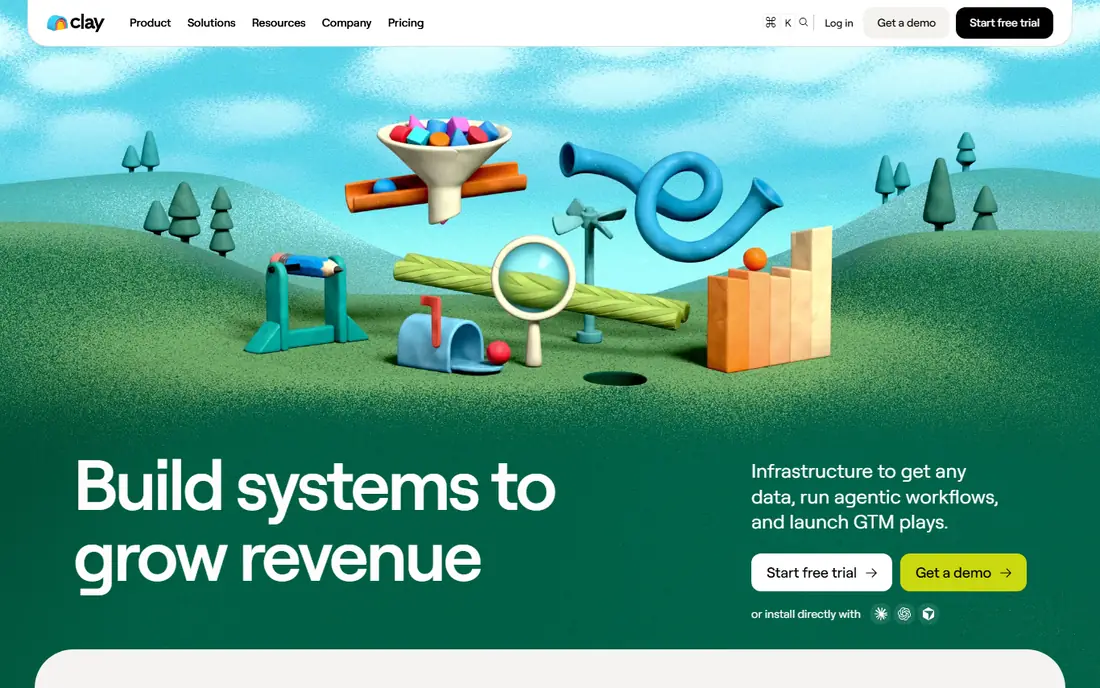
Clay is not a simple sequence tool. It is a workspace where you bring in a list, enrich it from many data sources, score it, research each prospect with AI agents, and then send the result to your CRM or outreach tool. Teams that struggled with stale or thin contact data often find Clay fixes the root problem, rather than just writing nicer emails to the wrong people.
That power comes with a learning curve. A team needs someone who will own the workflows, test providers, and watch credit use. Clay is overkill if you only need a list and a sequence. It is the right pick when data quality and targeting are the bottleneck holding outbound back.
- Access to many data providers in one place
- AI research agents for per-prospect research
- Flexible tables and workflows
- Takes time to learn and build well
- Credit costs can rise fast on large lists
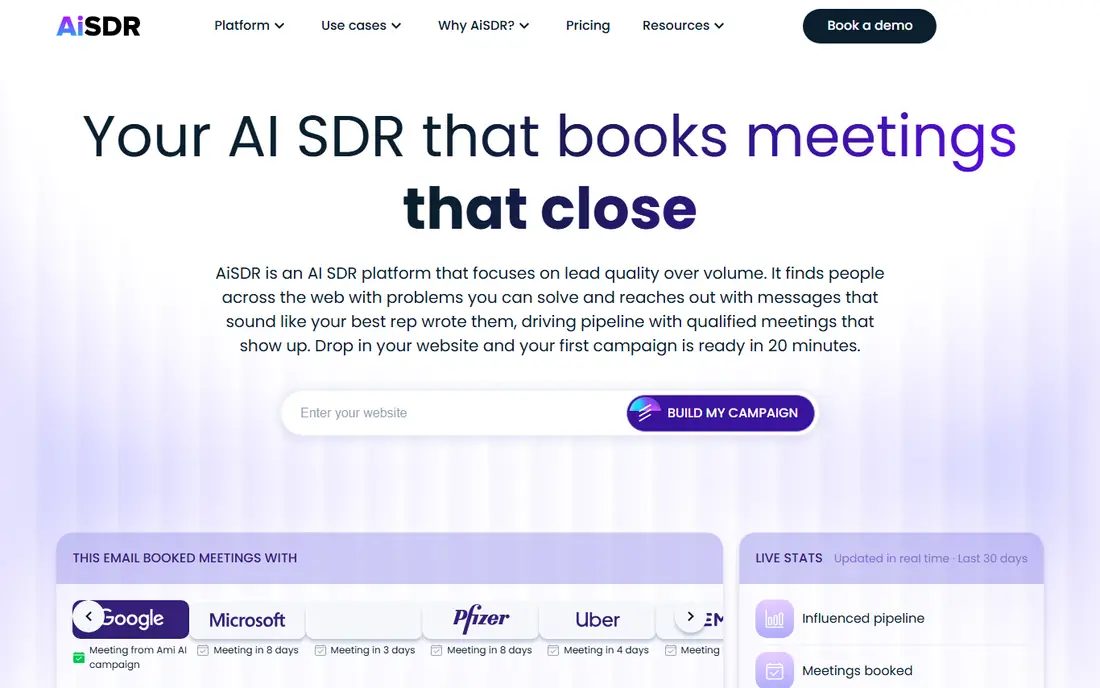
AiSDR positions itself as a full-cycle AI SDR: it finds prospects, writes personalized outreach, sends it, and handles replies with human oversight where you set it. That appeals to teams that want pipeline without hiring a full SDR team, and it suits founders and small sales teams with a clear ideal customer profile.
The main risk is control. Autonomous outreach can damage a brand fast if targeting is loose or messaging is off, so set tight lists, review early campaigns closely, and keep a human in the loop for replies that signal real interest. Pricing varies by scope, so get a written quote that spells out volume, channels, and what human review is included.
- Handles sourcing, writing, sending, and reply handling
- Human review options for campaigns
- Covers email and LinkedIn
- Pricing is not published in a simple plan list
- Autonomous sending needs careful brand and compliance review
Regie.ai fits teams that want AI to speed up prospecting without handing the whole job to an autonomous agent. Its agents help with research, list building, and message drafting, and reps stay in charge of sending and follow-up. That balance suits sales leaders who are wary of fully automated outreach but still want to cut research time.
Pricing needs care. The entry plan looks affordable, but team plans can include seat minimums and paid add-ons for dialing and other features. Map your team size against those minimums before you compare Regie.ai with a simpler tool, and test if reps actually use the AI output or rewrite most of it.
- AI agents for prospecting and research
- Parallel dialer and engagement tools on higher plans
- Free tier for basic use
- Higher plans carry seat minimums that raise the real cost
- Enterprise features need a sales conversation
Artisan, known for its Ava agent, sells an AI employee model for outbound work. Ava can prospect, personalize, send, and follow up, with controls that let teams set how much autonomy it gets. For a team with a tight ideal customer profile and a clear offer, that can add outbound capacity without adding headcount.
The same warning applies as with other autonomous tools: results depend heavily on list quality and message approval in the first weeks. Artisan is not a fit for teams that have not yet proven their message with human reps, since automation will scale whatever message you give it, good or bad. Get pricing in writing, including data limits and support.
- AI agent built for outbound and inbound workflows
- Built-in data for prospecting
- Configurable approval controls
- Quote-based pricing
- Autonomous model needs strong ICP definition and oversight
11x, known for its Alice agent, is aimed at companies that want outbound run as an autonomous system rather than a rep-assisted workflow. Alice can handle email outreach and phone conversations, qualify interest, and book meetings, which suits larger teams with high outbound volume and a mature sales process.
This is the most enterprise option in this list, and its cost and contract terms reflect that. Small teams will usually find Apollo or Clay plus a human rep a better value. Larger teams should run a controlled pilot with clear meeting-quality criteria, since booked meetings alone do not prove pipeline value if qualification is weak.
- Autonomous agents for email and voice outreach
- Built for scale at larger companies
- Focused on booking meetings
- High cost and annual commitments reported for enterprise plans
- No self-serve trial for most buyers
Salesforge, through its Agent Frank product, offers autonomous prospecting, outreach, and meeting booking across email and LinkedIn. It also puts weight on sending infrastructure, including mailbox setup and deliverability, which matters when volume rises. Teams that already have a proven offer and want to scale it across channels will get the most from it.
The risk is volume without relevance. More sends do not fix a vague ideal customer profile, and poor targeting can hurt domain reputation over time. Start with a narrow list, watch reply quality and bounce rates, and keep human review on early campaigns even when the tool can run on its own.
- Autonomous agent across email and LinkedIn
- Mailbox and deliverability tooling
- Built for scaling outbound volume
- Monthly cost is high for solo founders
- Volume focus can tempt teams into weak targeting
Amplemarket suits teams that want AI to help reps act on signals, such as hiring changes, funding news, or website activity, rather than blasting a cold list. Its copilot drafts outreach from those signals, and sequences can run across email, LinkedIn, and phone from one place. That signal-first approach often produces better replies than generic personalization.
Setup is the work here. Signals need tuning to your market, or reps will chase noise. Pricing is also quoted and can include minimum users, so small teams should confirm the total cost before committing. For mid-market teams with a clear signal strategy, Amplemarket is a strong consolidated choice.
- Many buying signals for prioritization
- Multichannel sequences across email, LinkedIn, and phone
- AI copilot for reps
- Quote-based pricing with user minimums on some plans
- Setup takes time to tune signals to your market
How we picked these
We compared vendor pricing pages, product descriptions, and current 2026 roundups of AI SDR tools. We kept tools that are live, cover prospecting or outreach with AI in a real way, and serve a distinct need, from budget all-in-one prospecting to fully autonomous agents. Where pricing conflicted across sources or was only quoted, we wrote See website rather than publishing a number we could not verify.
How to choose an AI SDR tool
Start with your bottleneck, not with the most automated tool you can find. The right choice follows from what is actually slowing pipeline today.
Fix data before you automate sending
If lists are stale or thin, Clay or Apollo will help more than an autonomous sender. Clean data, clear titles, and verified emails raise reply rates for every tool downstream. Test a sample list for accuracy before you buy at scale.
Decide how much autonomy you want
Human-led tools such as Regie.ai and Amplemarket keep reps in control of sending, while AiSDR, Artisan, 11x, and Salesforge take on more of the job themselves. More autonomy saves time but raises brand risk, so match autonomy to how proven your message is. New offers need human review; proven offers can take more automation.
Check the real monthly cost
Entry prices rarely show credit limits, seat minimums, data add-ons, or contract length. Ask for the total cost for your team size and expected monthly volume, including overages. A tool that looks cheap at entry can cost more than a quoted platform once credits and seats are counted.
Pilot on meeting quality, not just volume
Run a short pilot with a narrow list and track qualified meetings, reply quality, and bounce rates, not just sends and opens. Set a human review step for the first campaigns, and stop or retune quickly if replies show confusion about your offer. Good AI SDR tools should improve targeting and relevance, not just output volume.
Frequently asked questions
What is the best AI SDR tool for a small team?
Apollo is usually the best starting point, because it combines contact data, sequences, and AI writing help at a price small teams can afford. Clay is a strong second choice when data quality is the main problem. Fully autonomous tools are often too costly and too hands-off for a small team that is still proving its message.
Can an AI SDR replace a human SDR?
It can replace parts of the job, such as list building, research, and first drafts, but it does not replace judgment on complex deals. Human reps still handle discovery, objections, and relationship building better than autonomous agents. The best setups use AI to create more qualified conversations, then hand those conversations to people.
How much do AI SDR tools cost?
Entry prices range from free tiers at Apollo, Clay, and Regie.ai to $49 per month for paid Apollo and Regie.ai plans, $149 per month for Clay, and $499 per month for Salesforge. AiSDR, Artisan, 11x, and Amplemarket are largely quote-based, and enterprise costs can run into thousands per month. Always confirm seat minimums and credit limits.
Do AI SDR tools work for LinkedIn outreach?
Several do, including AiSDR, Artisan, Salesforge, and Amplemarket, which support LinkedIn alongside email. LinkedIn outreach still needs careful limits and human-sounding messages, since aggressive automation can trigger account restrictions. Use LinkedIn as one channel in a multichannel sequence, not as a bulk blasting tool.
What should I check before buying an AI SDR tool?
Check data accuracy for your market, the level of human review allowed, deliverability tooling, CRM integration, and the full contract cost. Ask how the tool handles opt-outs, bounces, and replies, and who owns the data if you cancel. Run a pilot with a narrow list before rolling it out to a full team.
Which AI SDR software is best for enterprise teams?
11x and Regie.ai are built with enterprise scale in mind, and Amplemarket fits mid-market to enterprise teams that want signal-driven outreach. Enterprise buyers should weigh seat minimums, security review, CRM depth, and support quality alongside automation features. A pilot with meeting-quality targets matters more than a feature checklist at this size.
Sources
See where you really rank - block by block
ProMapRanker scans Google Maps across a grid of your service area. Simple monthly plans from $19, white-label on every plan.
Start freeKeep reading
 best contact center software
Best Contact Center Software in 2026
We compared the best contact center software on channels, AI tools, pricing and scale, so you can pick a platform that fits your team size and budget in 2026.
Read → best compliance management software
Best Compliance Management Software in 2026
Compare the best compliance management software in 2026, with framework coverage, automation, audit support and pricing models explained clearly for teams.
Read → best commercial property management software
Best Commercial Property Management Software in 2026
Compare the best commercial property management software for offices, retail, and mixed portfolios, with pricing, accounting, leasing, and honest trade-offs.
Read →