 ProMapRanker
Best AI Mode Analysis Software in 2026


AI Mode tracking without seat limits · Pricing starts at: See website
Key takeaways
- Rankshift and Rankscale cover AI Mode on every plan, which matters because many tools charge extra for it or reserve it for higher tiers.
- Otterly.AI is the cheapest entry point for AI Mode analysis, though AI Mode itself is a paid add-on there.
- Semrush and SE Ranking suit teams that already pay for an SEO suite and want AI Mode data next to classic rankings.
- Citation numbers differ between vendors, so trial two tools on the same prompt set before letting the data drive budget decisions.
Quick comparison
| Pick | Great for | Pricing starts at | Free tier | |
|---|---|---|---|---|
| Rankshift | AI Mode tracking without seat limits | See website | Free trial | Visit |
 Rankability | Agencies wanting actions plus tracking | $97 per month | Free trial | Visit |
 Findrix | Defensible AI Mode numbers for small teams | $49 per month | Free trial | Visit |
 LLMrefs | Low-cost tracking across many engines | $79 per month | Free trial | Visit |
 SE Ranking | SEO suite users wanting AI Mode data | See website | Free trial | Visit |
 Semrush AI Visibility Toolkit | Semrush users adding AI Mode | $99 per month | Free trial | Visit |
 Ahrefs Brand Radar | Ahrefs users wanting a light AI signal | $199 per month | Free trial | Visit |
 Evertune AI | Brand visibility across AI surfaces | See website | Free trial | Visit |
The best AI Mode analysis software
Google AI Mode answers questions in a conversational, research-style format, and brands need to know whether they appear in those answers, which sources get cited, and how that changes over time. The eight tools below analyze AI Mode visibility specifically, alongside other AI answer surfaces, rather than treating it as a footnote to classic search.
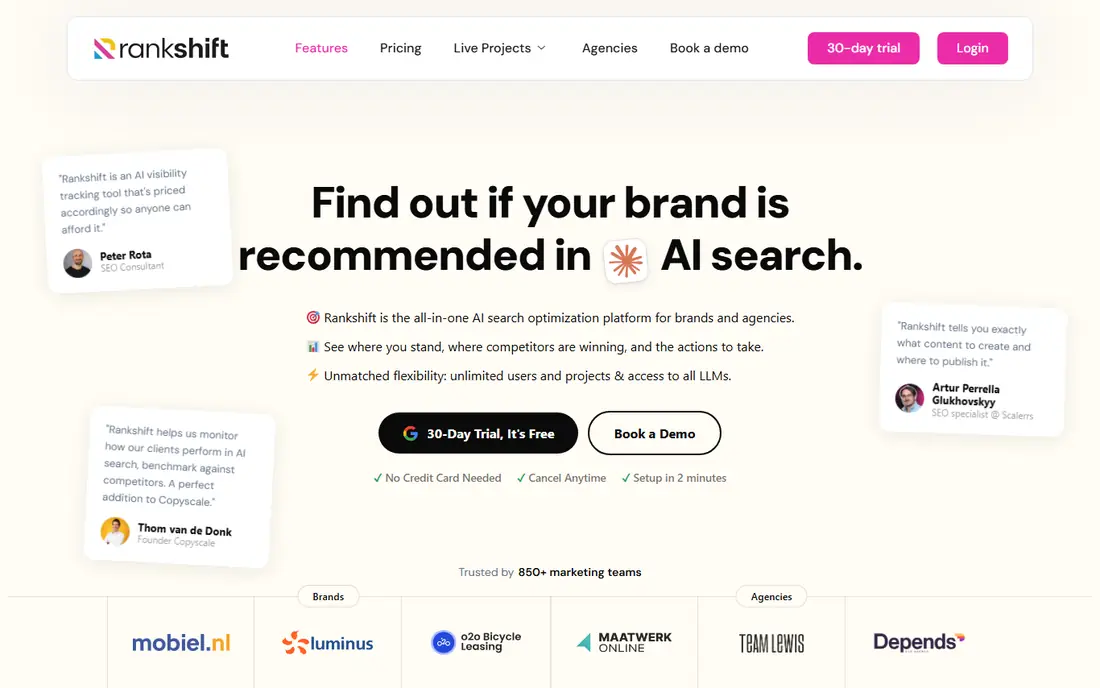
Rankshift built its pitch around a gap many rivals leave open: AI Mode tracking without seat or project limits. Teams and agencies can track AI Mode next to ChatGPT, Gemini, Perplexity, and other engines from the same dashboard, with daily or weekly scheduling and an action center that flags what to fix. Crawler analytics add a useful second signal, showing how AI systems reach your content.
Pricing starts near seventy-seven euros per month on monthly billing, with a discount on annual plans, and credit limits vary by tier, so heavy prompt sets need a higher plan. As a newer vendor, Rankshift has a shorter public track record than Semrush or Ahrefs. Still, for teams that care about AI Mode first and hate seat math, it is the most focused tool on this list.
- AI Mode alongside other engines on every plan
- No seat or project limits on plans
- Crawler analytics included
- Pricing is in euros, so dollar costs shift
- Credit limits apply by tier
- Newer vendor than suite rivals
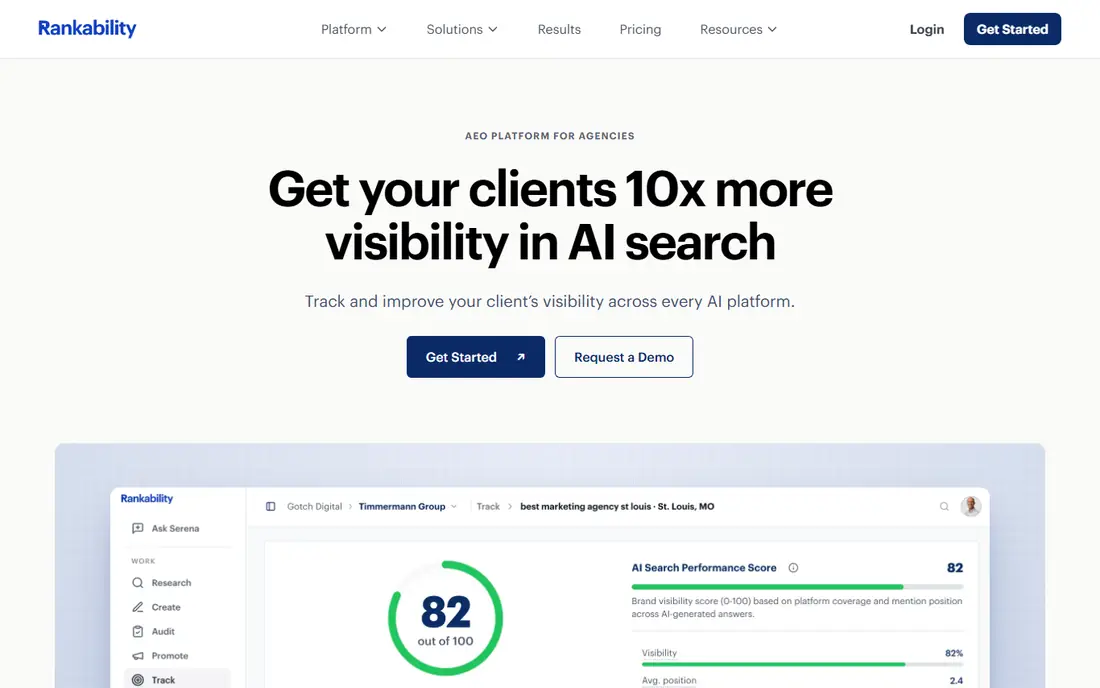
Rankability pairs AI Mode tracking with a repeatable action workflow, which is what agencies need when a client asks what happens next. It tracks ChatGPT, AI Overviews, AI Mode, Perplexity, and Gemini, then turns gaps into tasks a team can ship. Reports are built to share with clients, which helps agencies justify the work each month.
Starting prices run from ninety-seven dollars per month, with plan limits on prompts and projects, so solo marketers may find it steep for a single brand. The workflow focus also means less raw analyst depth than enterprise platforms. For agencies that want tracking plus a clear fix list for AI Mode, Rankability is a strong, practical pick.
- Clear next steps tied to visibility gaps
- Covers AI Mode plus major engines
- Agency-friendly reporting
- Starting price suits agencies more than solo users
- Prompt limits apply
- Reporting depth varies by plan
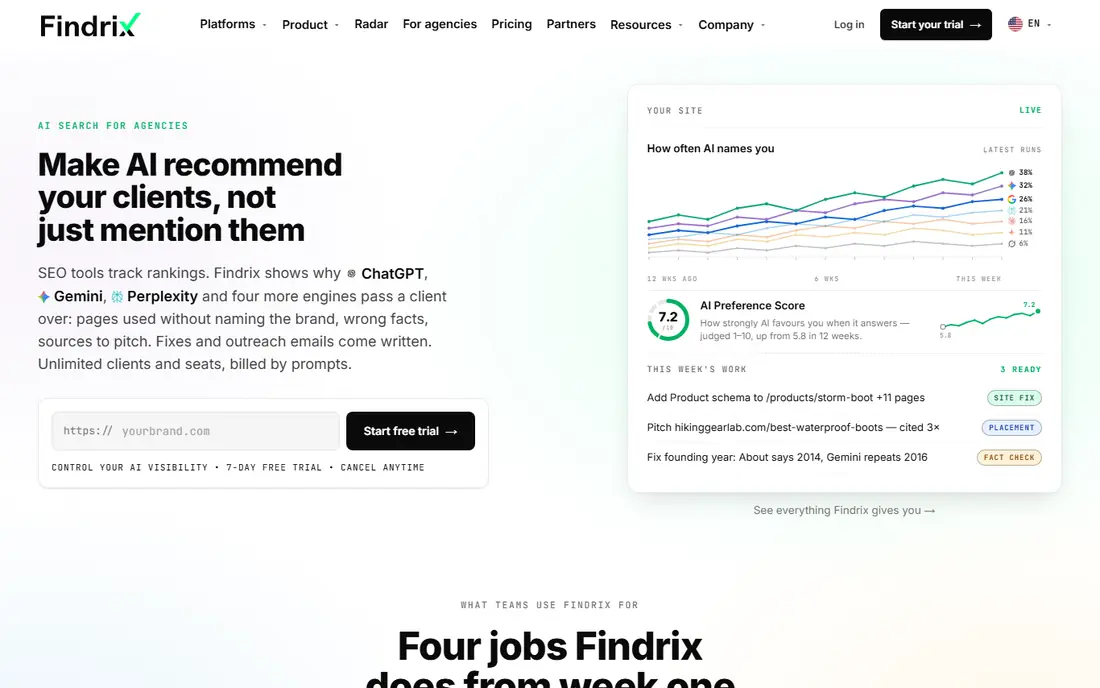
Findrix stands out for measurement discipline. It runs calibration checks to set a noise band for its numbers, locks a fixed prompt set so results stay comparable over time, and tracks AI Overviews and AI Mode as separate surfaces rather than blending them. For a small team that needs numbers it can defend in a meeting, that rigor matters more than a large feature list.
The trade-off is scale. Its prompt database is smaller than Semrush, and integrations are fewer than larger suites offer. Starting prices run from forty-nine dollars per month, which is fair for the discipline on offer. If your AI Mode reporting will face tough questions, Findrix gives you the method notes to answer them.
- Calibration runs to set a noise band
- Fixed prompt sets for consistent tracking
- AI Overviews and AI Mode tracked separately
- Smaller prompt database than suite tools
- Newer vendor
- Fewer integrations than larger platforms
LLMrefs suits teams that want broad engine coverage without enterprise pricing. Starting at seventy-nine dollars per month, it tracks prompts across ChatGPT, Gemini, Claude, Perplexity, AI Overviews, and more, with a keyword-level focus that feels familiar to classic SEO users. Setup is lightweight, so a small team can start tracking within a day.
Depth is the limit. Reporting is simpler than Profound or Scrunch, with less citation attribution and fewer action workflows. As a smaller vendor, it also has a thinner public track record. Still, for the price per engine covered, LLMrefs is one of the best value options here, especially for teams tracking many surfaces on a tight budget.
- Low cost per engine covered
- Keyword-level tracking
- Covers ChatGPT, Gemini, Claude, Perplexity, and AI surfaces
- Lightweight interface with less depth
- Smaller vendor
- Reporting is simpler than enterprise tools
SE Ranking adds AI Mode analysis to a classic SEO platform, which suits teams that already track rankings, backlinks, and site health there. Its AI Search add-on covers five engines including AI Mode, with white-label reporting that agencies can share with clients. Keeping AI Mode data next to classic rankings helps teams see the full search picture in one place.
Cost math needs care. The base plan starts near one hundred twenty-nine dollars per month, and the AI Search add-on starts near eighty-nine dollars per month for a set of checks, with each prompt on each engine counting as a check. Tracking one prompt across five engines therefore uses five checks. If you already pay for SE Ranking, the add-on is a sensible step. If you do not, a standalone tracker may cost less.
- AI Mode data inside a full SEO suite
- White-label reporting for agencies
- Per-check pricing flexibility
- AI Search is a paid add-on to a base plan
- Per-check costs add up across engines
- Setup needs care
Semrush AI Visibility Toolkit brings AI Mode and other answer-engine data into the SEO suite many teams already use. A large prompt database supports discovery, daily updates keep trends fresh, and reports sit next to keyword, traffic, and competitor data. For a team that already pays for Semrush, that single login is worth a lot.
Pricing is per domain, starting at ninety-nine dollars per month billed annually for the toolkit, on top of a base Semrush plan, with a limited prompt set at entry level. Agencies tracking many domains will see costs multiply. Still, if Semrush already anchors your SEO work, adding its AI Mode toolkit is the lowest-friction way to watch AI answers.
- AI Mode data next to full SEO data
- Large prompt database
- Familiar Semrush reporting
- Per-domain pricing adds up for agencies
- Add-on cost sits on top of a base plan
- Prompt limits at entry tier
Ahrefs Brand Radar suits teams that want a light, credible AI Mode signal inside a tool they already trust. It grounds prompt work in real query data, tracks brand mentions across AI surfaces, and reports in the clean Ahrefs style that SEO teams know. For a team that mainly needs to know whether AI answers mention them, it answers that question without a new platform.
The price structure limits its appeal as a first AI tool. Brand Radar costs about one hundred ninety-nine dollars per index on top of a base Ahrefs plan, and its AI Mode depth trails specialist trackers. Buy it when you already pay for Ahrefs and want AI visibility as an add-on signal. Buy a specialist when AI Mode is the main job.
- Grounds prompts in real query data
- Clean Ahrefs reporting
- Useful brand mention tracking
- Add-on pricing per index on top of a base plan
- Lighter AI Mode depth than specialists
- No standalone low-cost entry
Evertune AI takes a brand-measurement angle on AI Mode analysis, reporting how often AI surfaces mention your brand, how that compares with rivals, and how perception shifts over time. Survey-style brand measurement options add a research layer that pure trackers lack, which suits brand teams that need more than a citation count.
Pricing sits behind a demo, so you cannot compare it cleanly with public-plan rivals without a sales conversation, and as a newer vendor its public track record is shorter. Ask for prompt limits, engine coverage, and AI Mode specifics in writing during the demo. If brand visibility is your core question, Evertune offers a distinct angle worth testing.
- Brand visibility across AI answer surfaces
- Competitor comparison
- Survey-style brand measurement options
- Pricing is demo-gated
- Newer vendor with a shorter track record
- Feature depth varies by plan
How we picked these
We compared official feature pages, pricing pages, and public reviews for each tool, and we favored products still operating in October 2026 that analyze Google AI Mode directly rather than only classic search or general AI chat. We checked whether AI Mode sits on the entry tier or behind an add-on, since that changes the real price. We did not run hands-on trials, and where pricing was gated, we say so rather than guessing.
How to judge AI Mode numbers
Start with a fixed prompt set drawn from real buyer questions, then run it in two tools for a month and compare. Citation counts will differ, since vendors query engines differently and engines vary their answers, so look for direction and gaps rather than exact agreement. Check that AI Overviews and AI Mode are reported separately, since blending them hides where you actually appear. Finally, tie the data to pages: a citation to a thin page is a content opportunity, while a missed citation on a core question is a priority fix.
Frequently asked questions
What is the best AI Mode analysis tool for a small team?
Findrix suits small teams best, with disciplined measurement from forty-nine dollars per month. Rankscale-style budget trackers from our AI search guide are also worth comparing if price matters most.
What is the best AI Mode analysis tool for agencies?
Rankshift suits agencies that hate seat limits, while Rankability suits agencies that want tracking tied to client actions. SE Ranking fits agencies already inside its SEO suite with white-label needs.
How is AI Mode different from AI Overviews?
AI Overviews are short answers shown above classic search results, while AI Mode is a conversational, research-style search experience with deeper follow-up. Tools should report them separately, since visibility in one does not guarantee visibility in the other.
Do I need a separate tool for AI Mode if I already use an SEO suite?
Not always. Semrush, SE Ranking, and Ahrefs all add AI Mode data to their suites, which may be enough for a light signal. A specialist tracker earns its cost when AI Mode becomes a core channel rather than a side metric.
How much does AI Mode analysis software cost?
Entry prices here run from about forty-nine dollars to nearly two hundred dollars per month, plus base plan costs for suite add-ons. Prompt counts, engine coverage, and per-check pricing decide the real cost.
Why do AI Mode numbers differ between tools?
Engines vary their answers between queries, vendors query them differently, and prompt sets differ. Treat numbers as directional, trial two tools on the same prompts, and judge trends over weeks rather than single days.
Sources
See where you really rank - block by block
ProMapRanker scans Google Maps across a grid of your service area. Simple monthly plans from $19, white-label on every plan.
Start freeKeep reading
 zeffy payment processor stripe alternatives
Zeffy and Stripe Alternatives for Nonprofits in 2026
Explore zeffy payment processor stripe alternatives for nonprofits. We compare 8 fundraising platforms on fees, donor tools, and nonprofit focus. Check fees.
Read → workday alternatives
Workday Alternatives in 2026
Workday alternatives compared: we review 8 HR and payroll platforms that replace Workday, with pricing, strengths and honest limits for each team size.
Read → what's the best weather app
What's the Best Weather App in 2026
Wondering what's the best weather app? We compare 10 free and paid apps for forecasts, radar, alerts, and Colorado mountain weather for everyday and storm use.
Read →